90s Sound Cards: How Gravis Ultrasound Max and a MIDI Keyboard Created Multimedia Shows to Boost PC Sales
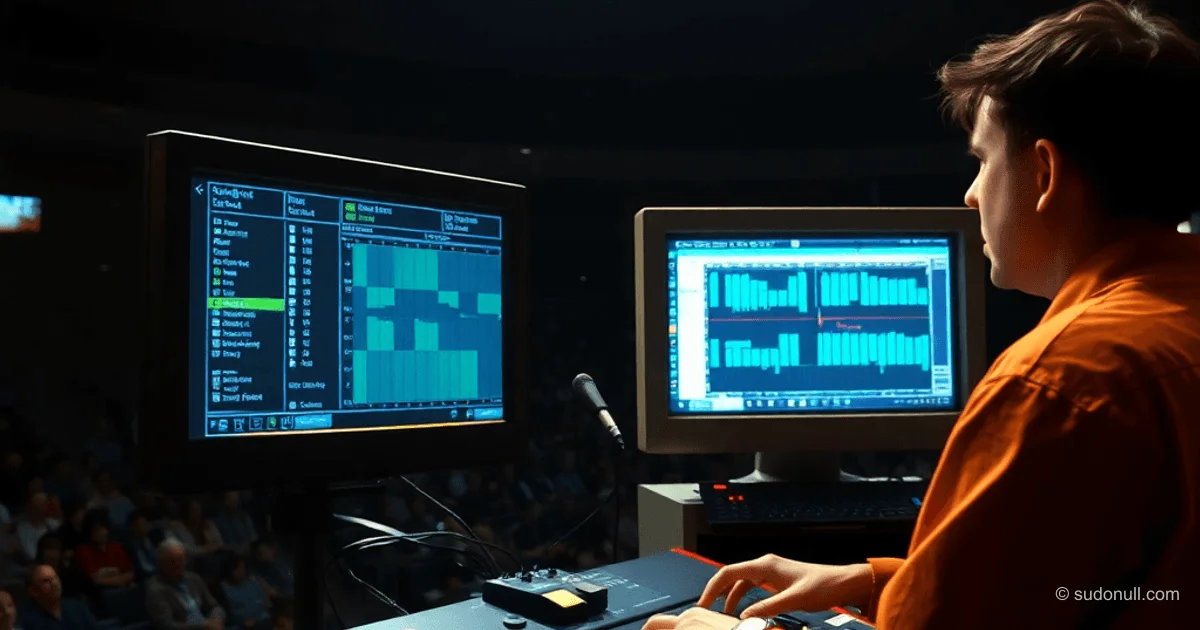
In an era when computers were associated solely with text editors and simple games, a team in Omsk proved that PCs could be the center of a multimedia show. Using the Gravis Ultrasound Max sound card and Roland A-33 MIDI keyboard, they turned exhibition stands into platforms for demonstrating professional sound—and changed the personal computer sales market.
Technical Foundation of the Multimedia Breakthrough
The key element of the project was the Gravis Ultrasound Max sound card—a device considered a technological marvel in the 1990s. Unlike standard Sound Blaster cards, it supported 32-voice synthesis, 16-bit sound at 44.1 kHz, and a built-in MIDI synthesizer. This allowed audio playback at professional studio levels, which was crucial for demonstrating PC capabilities beyond games and office tasks.
Connecting the Roland A-33 added interactivity: 61 keys with weighted action, full MIDI controller and expression pedal support created the feel of working with a real instrument. Paired with the Midisoft Recording Session editor, the team could:
- Assign each track a separate instrument from the GM library
- Adjust stereo panorama and volume in real time
- Edit notes and their duration via a graphical interface
- Transpose parts without loss of sound quality
The Gravis Ultrasound Max architecture featured its own DSP processor, which handled audio independently of the CPU. This allowed running complex projects even on 486 processors without performance drops—a critical advantage for trade show demos.
Show Preparation Process: From Idea to Implementation
Show development proceeded in three stages. First, the team set up the technical base: installing Ultrasound Max drivers, calibrating the MIDI port, and integrating the Roland A-33 with the editor. IRQ line conflicts arose here—a typical issue for DOS systems, where manual interrupt setup was mandatory.
On the second stage, musical parts were created. Anton, responsible for sound, used a "jamming with himself" method: recording a base part, looping it, and then overlaying new layers in real time. This required precise synchronization via MIDI clock, which ensured a stable tempo even when switching between instruments.
The third stage was visual integration. Lighting effects were tied to audio tracks via simple DMX controller scripts. For example, when the bass track reached a certain volume level, a strobe light activated. This created a "live" interaction effect between sound and lighting.
Why It Worked: Psychology of Technology Perception
The show's success was built on three principles that remain relevant even for modern IT presentations:
- Demonstrating the "impossible"—in 1995, audiences didn't expect a PC to reproduce stereophonic sound with detail comparable to professional studios. Gravis Ultrasound Max with its 512 KB onboard memory for samples gave a quality edge over competitors.
- Interactivity as proof—inviting viewers to participate (e.g., glissando improvisation) dispelled suspicions of using a backing track. The MIDI protocol allowed instant processing of keyboard input without latency.
- Emotional tie to pop culture—references to the guitar duel scene from Crossroads created an instant emotional response. Technical specs took a backseat when audiences recognized the melodies.
Equipment choice was critically important. The Roland A-33 with its 128-step ADC converter ensured precise transmission of key velocity dynamics, impossible on budget keyboards of the era. This made improvisation feel natural—listeners could sense the difference between a light touch and a powerful chord.
Lessons for Modern IT Specialists
Today, when PCs' multimedia capabilities seem taken for granted, this 90s case offers valuable insights:
- Importance of low-level optimization. Gravis Ultrasound Max worked via direct memory access (DMA), bypassing Windows drivers. In an era of high ASIO stack latency, this provided a 20–30 ms advantage—a critical parameter for live performance.
- Flexibility of the MIDI protocol. Even in 2024, MIDI 1.0 remains the standard due to its implementation simplicity. Modern developers often overlook that its 31.25 kbit/s rate is not a limitation but an advantage for low-power embedded devices.
- "First impression" effect. In the 90s, viewers saw computers as a "black box." Today, AR/VR developers face a similar issue: the key is to create a "wow" moment that overrides technical shortcomings.
Audience feedback stories are especially telling. Ten years later, musicians inspired by the show wrote that it was then they decided to buy their first computer. This proves that tech demos should create not just interest, but personal engagement.
Key Takeaways
- Gravis Ultrasound Max remained the quality benchmark until PCI sound cards appeared, thanks to its latency-free hardware synthesis.
- The MIDI protocol, developed in 1983, is still used in professional DAWs due to its minimal overhead.
- Successful technology demos require a combination of technical precision and emotional impact—a formula relevant for modern AI solution presentations too.
- In the 90s, low-level hardware setup (IRQ, DMA) was an essential skill for IT specialists, much like today's requirements for embedded systems work.
- Perception context is critical: a computer in 1995 Omsk inspired awe as a creative tool, whereas today only breakthrough interfaces produce a similar effect.
— Editorial Team







No comments yet.