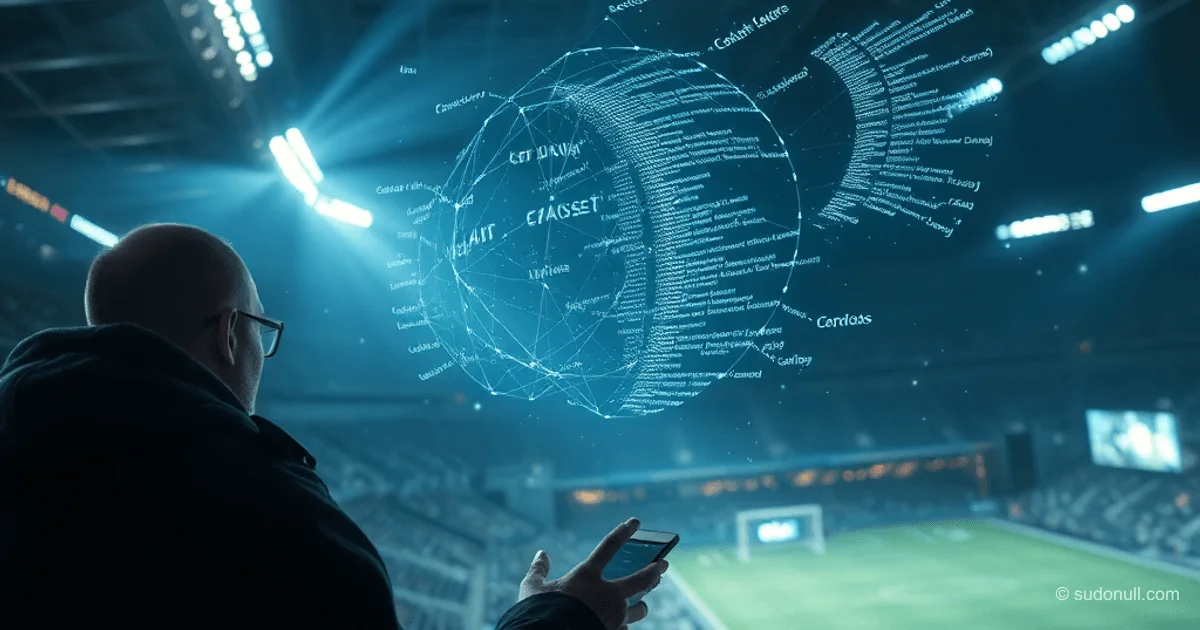
# Layers of Reality: How Physical Decomposition Shapes IT Architectures
Modern IT systems require a deep understanding of structural principles. The method of decomposing layers of reality, borrowed from fundamental physics, offers a powerful tool for analyzing and designing complex architectures. In this article, we'll explore how philosophical approaches to studying the Universe can be applied to software development and infrastructure, maintaining technical rigor without simplifications.
Physics as the Foundation of Systems Thinking
The classical approach to studying reality through layer decomposition directly correlates with methods for designing distributed systems. When physicists analyze the transition from macroscopic objects to quantum fields, developers apply a similar principle when moving from user interfaces to low-level protocols. The key difference is that in physics, layers exist objectively, whereas in IT, we construct abstraction boundaries ourselves.
In quantum field theory, particles are viewed as excitations of fundamental fields. This model resembles event-driven architectures, where events (like quanta of energy) are generated and processed by independent components. For example, a message bus in a microservices system functions like field interactions: data is transmitted through an intermediate layer without direct dependencies between sender and receiver.
It's important to understand that decomposition is not a mechanical split. Just as in physics, where moving to a new layer requires a paradigm shift (from classical mechanics to quantum), in IT each architectural abstraction implies a change in the computation model. Transitioning from a monolith to microservices is not just code splitting, but a shift in the philosophy of component interactions.
Quantum Analogies in Software Engineering
The concept of virtual particles in the quantum vacuum finds reflection in design patterns. Consider an implementation of the Observer pattern through an analogy with quantum fluctuations:
class QuantumField:
    def __init__(self):
        self.observers = []
        self.vacuum_energy = 0

    def fluctuate(self, energy):
        self.vacuum_energy += energy
        self._notify_observers(energy)

    def add_observer(self, observer):
        self.observers.append(observer)

    def _notify_observers(self, energy):
        for observer in self.observers:
            observer.update(energy)

# Sale nablyudatelya
class ParticleObserver:
    def update(self, energy):
        print(f"Withzdana virtualnaya chastitsa with energiey {energy} GeV")
This code demonstrates how local changes (energy fluctuations) generate events processed by independent components. Just like in quantum theory, where virtual particles emerge and vanish, observers in the system react to transient states without preserving context between calls.
The principle of the unity of matter holds particular value. In physics, the same carbon exhibits different properties in diamond, graphite, or DNA. Similarly in IT, the same byte of data can represent a number, a character, or a pointer depending on the execution context. This requires developers to have a deep understanding of data semantics at each abstraction level.
Living Systems and Resilient Architectures
Biological systems demonstrate properties that are critically important for modern distributed applications:
- Homeostasis — maintaining stability amid external disturbances (autoscaling in the cloud)
- Emergence — complex behavior arising from simple rules (consensus algorithms)
- Adaptivity — structural changes under load (service mesh)
- Local order in global chaos — fault isolation through circuit breakers
The cellular organization of living organisms directly correlates with microservices architecture principles. Each cell is autonomous but interacts through clearly defined interfaces (like REST APIs). The system maintains integrity even when individual components fail — similar to fault tolerance in distributed systems.
The concept of metabolism is of particular interest. In biology, this is the flow of energy and materials; in IT, it's data processing and resource management. Modern serverless architectures implement this principle through stateless request processing with minimal resource consumption between calls.
Key Takeaways
- Layer decomposition requires a paradigm shift at each abstraction level, not mechanical splitting
- Quantum analogies help design event-driven systems with predictable event semantics
- The principle of the unity of matter reminds us of contextual data interpretation in multi-level architectures
- Biological mechanisms of homeostasis and adaptivity are directly applicable to resilient systems
- Understanding fundamental physical principles expands the toolkit for systems design
Practical Implementation of the Principles
Applying physical concepts in IT requires a rigorous methodology. When transitioning to a new abstraction level, it is necessary to:
- Define system invariants that persist through decomposition (analogous to conservation laws in physics)
- Identify boundary conditions where the current model breaks down (like classical mechanics at relativistic speeds)
- Build bridges between levels through clearly defined interfaces
- Account for the overhead of data transformation between layers
Consider implementing an anomaly detection system inspired by quantum measurements. In quantum mechanics, observation affects the system — similarly, in monitoring, metric collection creates load. Solution:
// Quantum-inspired anomaly detection
func NewMonitor(threshold float64) *Monitor {
    return &Monitor{
        threshold:    threshold,
        waveFunction: make(map[string]float64),
    }
}

func (m *Monitor) Observe(metric string, value float64) {
    // Kollaps volnovoy funktsii when izmerenii
    m.waveFunction[metric] = value
    if value > m.threshold {
        m.triggerAlert(metric, value)
    }
}

func (m *Monitor) triggerAlert(metric string, value float64) {
    // Kvantovoe zaputyvanie for korrelyatsii wydarzeń
    correlated := m.findCorrelations(metric)
    AlertSystem.Send(AnomalyEvent{
        Metric:      metric,
        Value:       value,
        Correlations: correlated,
    })
}
This approach accounts for monitoring's impact on the system and uses event correlation like quantum entanglement. Such a model is especially effective for distributed systems, where local anomalies can indicate global issues.
Final takeaway: the method of decomposing layers of reality is not a metaphor, but a working methodology. Understanding fundamental physical principles enables creating more robust and predictable IT systems. The key challenge is not to transplant concepts mechanically, but to adapt them through the lens of computational paradigms while preserving the essence of physical laws.
— Editorial Team









No comments yet.