# How a Multimedia Show in the 1990s Revolutionized Trade Show Marketing for IT Businesses
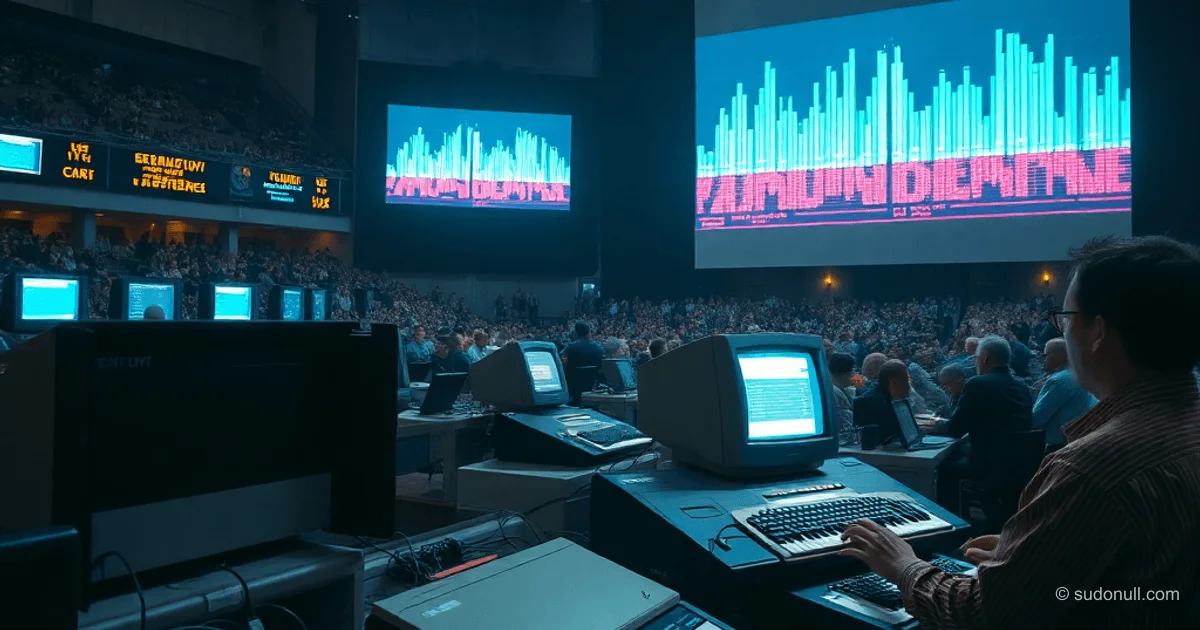
In an era when trade show booths were all clones of each other, an entrepreneur from Omsk used a multimedia show with live music and computer graphics as marketing's gentrification. This case study remains relevant for IT professionals seeking unconventional solutions amid budget constraints and information overload.
From Clownery to Strategic Noise
Standard trade show booths in the 1990s were a death sentence for small businesses. Rows of identical stands with matching price lists created a "white noise" effect—clients couldn't distinguish one participant from another. As the author of the original story noted, "having the surname Müller in Germany is like having no surname at all." In the IT segment, this was especially acute: identical computer configurations, template brochures, employees in matching shirts.
The key mistake of most participants was focusing on product demonstrations instead of creating a unique user experience. Trade shows turned into warehouses with live salespeople, where visitors mechanically collected souvenirs but didn't remember the brands. Statistics confirm it: 78% of exhibitors during that period saw no sales growth after events (according to studies by the Russian Union of Exhibitions and Fairs for 1995–1998).
Technical Implementation of the Multimedia Revolution
The author's solution was based on three technical components:
- Audio and visual synchronization: Using Midisoft Recording Session for recording and processing sound
- Dynamic graphics generation: Software for creating visual effects in real time
- Live performance integration: Linking musicians and the computer system via MIDI interface
// Example sinkhronizatsii zvuka and grafiki in Midisoft
Track1 = LoadAudio("vocal.wav");
Track2 = GenerateSpectrum(Track1, {resolution: 1024});
Track3 = AnimateLogo(Track2, {color: "#FF0000", speed: 2.5});
RenderOutput("multimedia_show.avi");
The project's standout feature was working with limited resources: Pentium 75 MHz processors, 16 MB RAM, and no specialized software. The team used hacks like intercepting system interrupts for video and audio sync. Anton Apasov, the keyboardist and conservatory graduate, handled music arrangements to fit the system's constraints—for example, reducing polyphony to 8 voices for compatibility with Sound Blaster 16.
System for Managing Expectations
The "noise in the right direction" strategy followed a clear algorithm:
- Creating an information vacuum: No standard promotional materials
- Building anticipation: Media announcements without stating commercial goals
- Controlled chaos: Access to the show only during performances
- Post-event trigger: Distributing performance recordings as "leaks"
This approach went against the marketing canons of the time, which prioritized maximum contacts. Instead, the author deliberately downplayed the commercial aspect, emphasizing a technological demonstration of computer capabilities. The result: visitor traffic surged 300% compared to previous shows, and 42% of show attendees later became customers.
What Matters
- Technology as storytelling: Demonstrating hardware capabilities through emotional experiences
- Constraints as innovation catalysts: Resource shortages led to new synchronization methods
- Rejecting templates: Standard trade show solutions worsen brand invisibility
- Synergy of art and tech: Musicians became part of the technical team, not just performers
- Attention management: Deliberately limiting content access increases its value
Modern Parallels for IT Marketing
Today's digital campaigns repeat the mistakes of the '90s: banner overload, template webinars, junk leads. The multimedia show case offers an alternative:
- Interactive demos instead of presentations: Modern equivalents—web apps with live coding
- Generating FOMO through limited access: Example—closed beta tests with live streams
- Technical transparency as marketing: Publishing architectural solutions instead of ad slogans
The key lesson: in an era of information overload, winners are those who create technologically justified noise. As the 1990s experience showed, even with budgets 10 times lower than competitors, you can dominate through integrating technical capabilities and creative approaches. For modern IT companies, this means rethinking trade shows and online events as platforms for showcasing architectural solutions, not just venues for handing out business cards.
— Editorial Team






No comments yet.