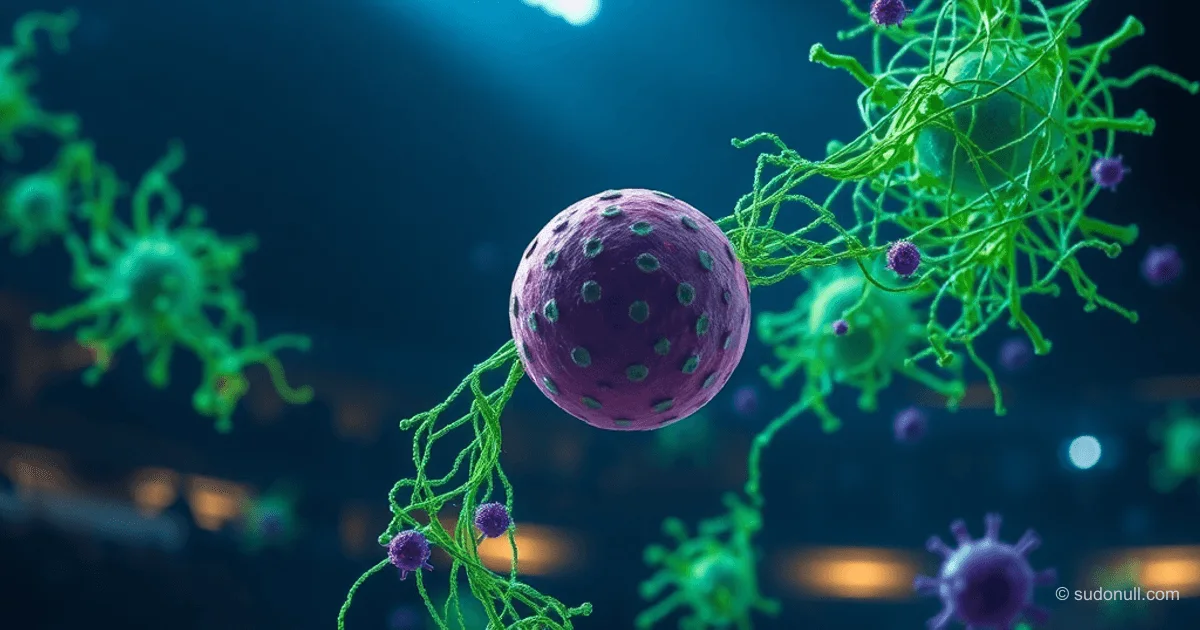
# NETosis: How Neutrophils Turn DNA into Immune Traps
Neutrophils use their own DNA as a weapon against pathogens, forming extracellular traps (NETs). This mechanism, discovered in 2004, showcases an evolutionarily honed tactic for combating infections. Let's dive into the process details, its dual role in pathogenesis, and prospects for medical applications.
Mechanism of NET Formation: From Decondensation to Extrusion
The NETosis process starts with a radical overhaul of the neutrophil nucleus. Histones detach from DNA, triggering chromatin decondensation. The nuclear membrane breaks down, mixing DNA with granule contents—cationic proteins, myeloperoxidase, and neutrophil elastases. In suicidal NETosis, the cell dies, fully releasing a trap up to 15 micrometers long. Vital NETosis happens without cell death: the neutrophil pinches off distinct nuclear segments, preserving its phagocytic activity.
Key stages of NET formation:
- Activation via TLR receptors or cytokines
- Rise in cytosolic calcium levels
- Activation of NADPH oxidase with ROS production
- Histone citrullination by PAD4 enzyme
- Chromatin decondensation
- Nuclear envelope breakdown
- Mixing of DNA with granular components
- Extrusion of the trap through the plasma membrane
Dual Role of NETs in Pathogenesis
These traps efficiently neutralize large pathogens: fungal hyphae, bacterial biofilms, and parasites like leishmania. Microbes get physically entangled in the DNA scaffold, exposed to a concentrated hit from proteases. However, excessive NETosis sparks pathological processes:
- Thrombosis via factor XII activation
- Boosting of atherosclerotic plaques
- Sepsis progression
- Worse outcomes in COVID-19
- Bacterial protection in meningitis (e.g., Neisseria meningitidis)
Circulating NETs in the blood are especially dangerous. Their components act as DAMP signals, kicking off an inflammation cascade. In rheumatoid arthritis, NET fragments drive antibody production against citrullinated proteins.
Evolutionary Perspective and Therapeutic Targets
The NETosis mechanism is highly conserved across vertebrates and even found in Dictyostelium—social amoebae. This highlights the ancient origins of the strategy. Current research targets controlling pathological NETosis:
- DNases—enzymes that break down the trap scaffold (e.g., dornase alfa for cystic fibrosis)
- PAD4 inhibitors—block histone citrullination (in preclinical trials)
- Antibodies to NET components—neutralize myeloperoxidase or neutrophil elastase
- ROS modulators—reduce oxidative stress via NADPH oxidase
It's crucial to tailor therapy carefully: suppressing NETosis can raise infection risk, as seen in PAD4-deficient mouse studies. The best approach is localized trap neutralization at the pathology site without broadly dampening immunity.
Key Takeaways
- NETosis isn't an alternative to phagocytosis but a complementary tool for big pathogens
- Vital NETosis lets neutrophils stay functional after releasing traps
- Excessive NETosis links to 30+ conditions, including thrombosis and autoimmune diseases
- Therapeutic strategies need precision to maintain anti-infection defenses
- The process's evolutionary conservation underscores its biological importance
Promising avenues include NETs as biomarkers for sepsis severity and nanocariers to deliver DNases right to inflammation hotspots. Mastering NETosis regulation paves the way for new immunomodulators that fight inflammation while keeping antimicrobial defenses intact.
— Editorial Team










No comments yet.