# Object-Oriented Programming: Natural Foundation of Thinking or Artificial Construct?
Object-oriented programming is often seen as an invention of programming languages, but its roots go much deeper—in the nature of human thinking itself. Let's debunk myths about OOP and prove that the object paradigm existed long before C++ or Java came along, with its principles embedded not just in code, but in everyday communication.
OOP Emerged Long Before OO Languages
A common misconception: object orientation appeared with the advent of C++. In reality, its elements were present in systems even before the era of OO languages. Just look at system calls in Unix-like operating systems. Take the write() function: it demonstrates key OOP principles without a single line of C++.
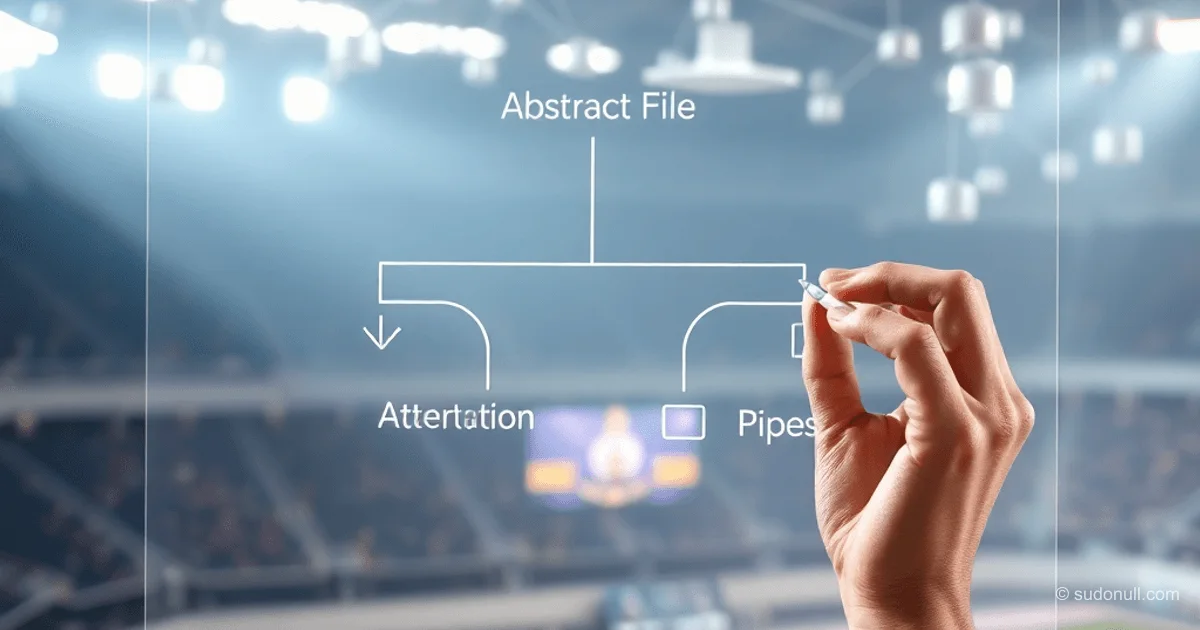
This system call hides the implementation from the user (encapsulation), supports different types of objects (files, sockets, devices—polymorphism), and allows inheriting behavior (for example, writing to TCP and UDP sockets uses shared data transmission mechanisms—inheritance). The hierarchy of abstractions looks like this:
- Abstract file
- Socket
- UDP
- TCP
- Disk file
- Device
- Block
- Character
- Pipe
The same pattern appears in C libraries. For example, regular expressions via the TRex library:
TRex _trex_compile(const TRexChar pattern, TRexChar error);
void trex_free(TRex exp);
TRexBool trex_match(TRex exp, const TRexChar text);
TRexBool trex_search(TRex exp, const TRexChar text, const TRexChar** out_begin, const TRexChar** out_end);
Here, you can clearly see the TRex class with a constructor, destructor, and methods. Polymorphism is absent due to the library's simplicity, but the structure is object-oriented. OOP wasn't invented—it was formalized by programming languages, while in C code and system APIs, it existed de facto.
Cognitive Basis of the Object Paradigm
The main argument for OOP lies outside programming: human thinking is fundamentally classificatory. Every noun, verb, or adjective defines a class or property:
- "Red"—an object with a specific color (interface
IColorful) - "Swim"—a vehicle implementing behavior
IMovable - "Furniture"—an abstract class specified as "chairs" or "sofas"
English reflects this logic through articles: the indefinite article (a table) introduces a class, the definite (the table)—a specific instance. This structure directly matches OOP principles. Object-oriented programming isn't a nod to fashion; it's a reflection of the brain's natural way of processing information.
However, the real world is more complex than any classification. An object can belong to multiple classes at once (a table is furniture, a wooden item, and a flotation device during a flood). Rigid OOP hierarchies often fail to account for this multidimensionality, leading to artificial constraints. But this isn't a flaw in the paradigm—it's a consequence of any modeling: a perfect map of the world is the world itself. Simplification is inevitable, and OOP is just one tool for managing complexity.
Why OOP Won't Disappear
The myth that OOP will be supplanted by functional programming ignores a key fact: paradigms don't replace each other—they complement one another. Functional approaches excel at data processing, but the object model remains indispensable where entity interactions dominate (GUIs, distributed systems, games).
Criticism of OOP's "artificiality" using examples like Dog/Cat classes is unfair. Real-world examples are in system APIs and libraries, where objects model physical or abstract entities (files, network connections, transactions). The problem isn't the paradigm, but superficial application. Deep integration of OOP with cognitive processes ensures its relevance as long as people create software.
Key Points
- OOP existed in system APIs and C libraries long before specialized languages appeared
- Object structure reflects the natural way humans classify things
- The rigidity of OOP hierarchies isn't a paradigm flaw, but a necessity for simplification in modeling
- Programming paradigms don't replace each other—they complement based on the task
- The key criterion for choosing a paradigm is fit for the problem domain, not trends
In conclusion: OOP isn't a passing trend—it's a fundamental tool rooted in human perception itself. Its evolution continues through hybrid approaches (e.g., object-functional languages), but the core principles will remain relevant. Developers must understand not just the syntax, but the philosophy of the paradigm to avoid templated solutions and build architectures that match real system entities.
— Editorial Team









No comments yet.