May 31, 2011 at 19:58
Intel at Computex 2011: Ultrabook, New Atoms, and Many, Many Tablets
Greetings to all from cloudy but very hot Taiwan, where the world's largest computer exhibition Computex has begun to work today. For five days, the largest IT companies will display the most diverse hardware - from chips to turnkey systems with all the stops. By tradition, Intel always announces something important at Computex: for example, it was there, in 2008, for the first time that Intel Atom processors for netbooks (N270 / 230) and the first small computers on them were shown. The year 2011 was no exception - in Taipei today they talked about the Ultrabook concept and new plans for the development of the Atom family.
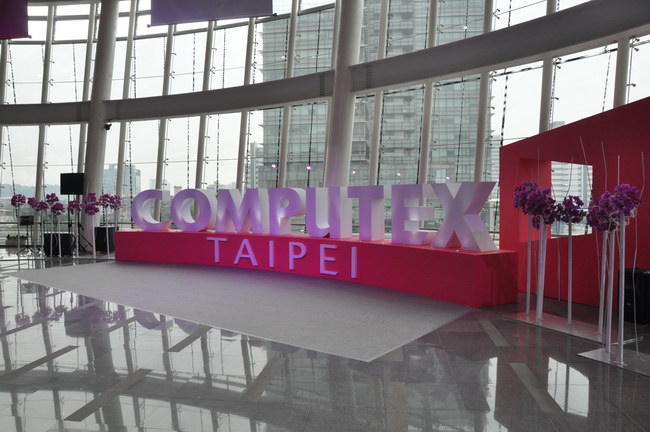
Just in case, I’ll clarify that Computex settled precisely in Taiwan for a reason. It is in this small island state that dozens of famous IT companies and thousands of less well-known were born. Asus, Acer, MSI, Foxconn, HTC, Gigabyte, Powercolor, XFX, Palit, Sapphire - you will not list all with all your desire. Factories were located in Taiwan for a very long time, but over time, almost all of them moved to Greater China, and development centers and especially complex manufacturing facilities remained in Taiwan. The importance of the state in the industry is so high that iron manufacturers from all over the world flock to Computex, including, by the way, Russia as well (for example, Wexler shows its own readers and tablets at the exhibition). Old-timers remember the times when Computex fit in one building, but now its showrooms are scattered throughout Taipei, and two are located in the recently rebuilt huge exhibition center Nangang Exhibition Hall. It is there on the fourth floor that the Intel stand is located.
The announcement of new Intel initiatives was made by Senior Vice President Sean Maloney. We met him two years ago in St. Petersburg, and, frankly speaking, I was shocked by the lifestyle of this man. Sean spends almost all his time on the road — in airplanes, trains, and cars. A few nights in one place - and again on the road! So it is very natural that the Ultrabook story was entrusted to him.

What is the point?
To quote Sean’s speech verbatim, “devices of a new category will combine the performance of modern laptops with the features inherent in tablet computers, offering a high-performance and safe environment for working in a thin, light and elegant case.” That is, in fact, we are talking about two devices in one without compromising functionality and comfort. Conveniently? Perhaps yes, because I'm already a little annoyed by the need to take on a business trip both a tablet and a laptop. The first is needed to communicate in numerous social networks, read the news and respond briefly and quickly to letters, but you can’t do without the second if you want to write a large post on Habr and process a couple of dozen illustrations for it. Complementing, they complement each other, but the total weight is tangible.
The new Ultrabook category will include thin and lightweight devices whose thickness does not exceed 2 centimeters, and the price - attention - should be within $ 1000. This is really very cool, because now for such an amount you can’t get a really compact and productive model, especially if you want something with a touch screen. The first "ultrabooks" promise to launch on sale by the New Year holidays, and the first such device has already been announced - Asus UX21.
It is worth noting that the subtlety, lightness and relative cheapness will appear not by a wave of a magic wand. In the "ultrabooks" will be used next-generation processors, which for the time being have only the code name Ivy Bridge. This is, I recall, the first CPUs made using 22 nm technology using Tri-Gate transistors. The significantly accelerated graphics core, as well as the “native” support for USB 3.0 and Thunderbolt at the chipset level will appear in the Ultrabook. In 2013, the Ivy Bridge will be replaced by the even more energy-efficient Haswell family, which will reduce the average value of the thermal package by half in comparison with current performance.
Atomic future
Since 2008, Computex always says something new about Intel Atom kids. This time they didn’t break the tradition. According to Sean, in just three years, Atoms will change production technology from the current 45 nm to 14 nm, making stops at 32 and 22 nanometers. This, in fact, is a big leap forward, because since 2008 this family has been manufactured using the same technology. It is clear that "and so good." But improving the process will significantly reduce power consumption and, importantly, the cost (the more CPU fits on the plate, the cheaper each of them is).
Well, in the very near future we are waiting for a meeting with the “atoms” from the 32-nanometer Cedar Trail family, which allows us to reduce the size of the devices and create netbooks with a passive cooling system. The new models will have a number of special features, including Intel Rapid Start (quick exit from standby mode), Intel Smart Connect (installing updates in standby mode), as well as Intel Wireless Display and PC Synch, which allow wireless synchronization on various devices. Finally, it is expected that the battery life of devices on the new platform will exceed 10 hours in active mode and will be several weeks in standby mode. Good thing, what can I say. True, it is not entirely clear - on which battery will such indicators be achieved? My heart feels, which is certainly not on the standard three-cell.
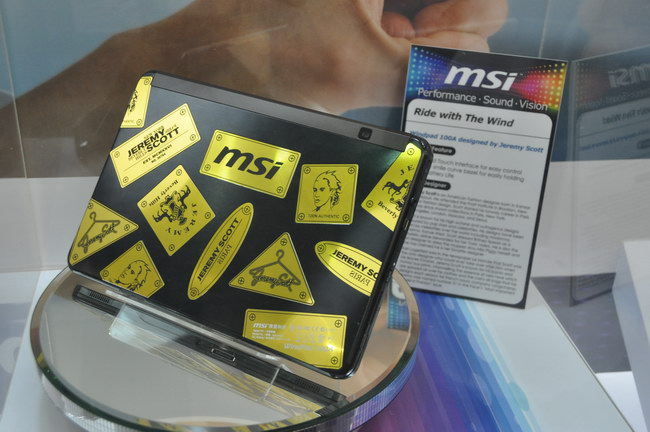
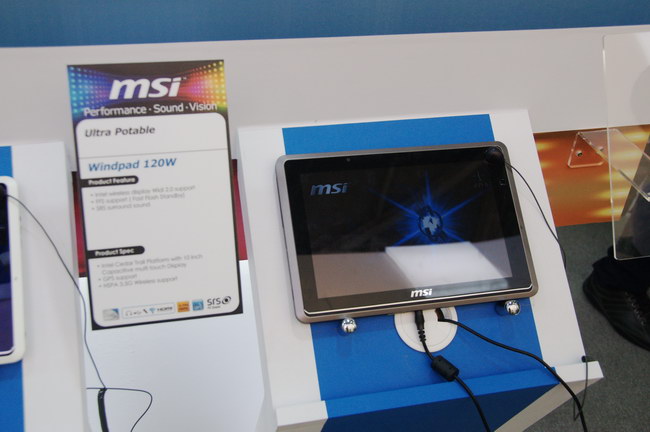
MSI was one of the first to launch tablets on Intel Atom. And at one time, the Wind netbook was the very first on this processor.
And Sean also talked about Medfield - the first 32-nanometer “atomic” platform for smartphones and tablets. Honestly, as for smartphones, I personally have an assumption that they will only seriously deal with switching to 22 nanometers, and for now, Medfield will allow creating tablets with a thickness of not more than 9 millimeters and weighing less than 680 grams. Of course, like netbooks, tablets will work with passive cooling. Production of Atom Medfield is scheduled to begin before the end of this year, and the appearance of the first devices is expected in the first half of next.
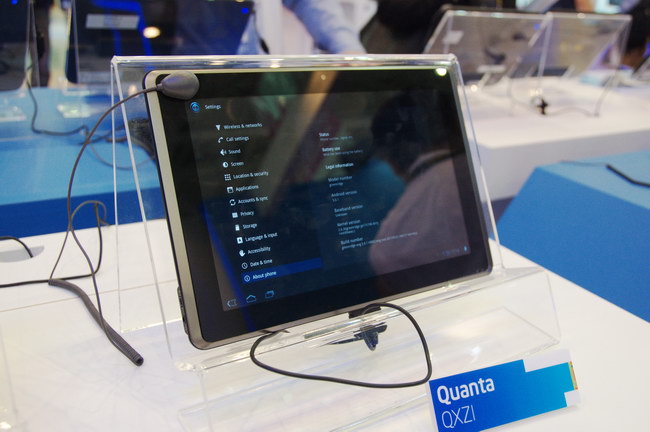
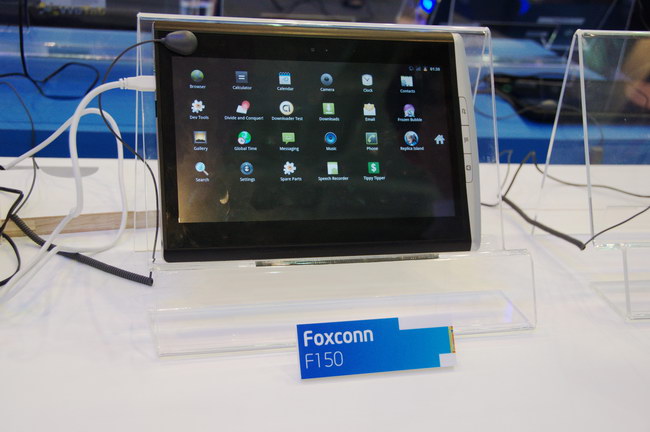
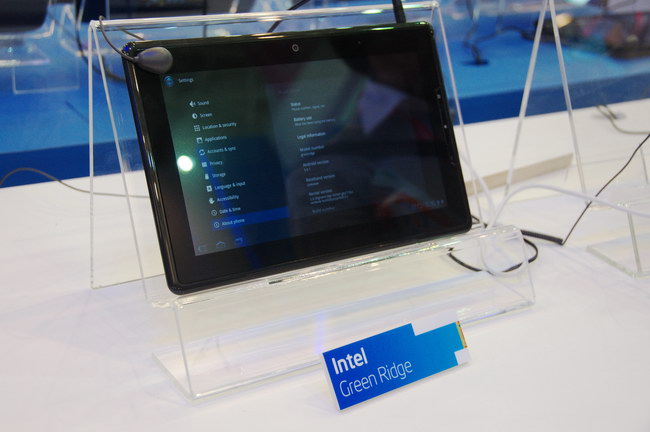
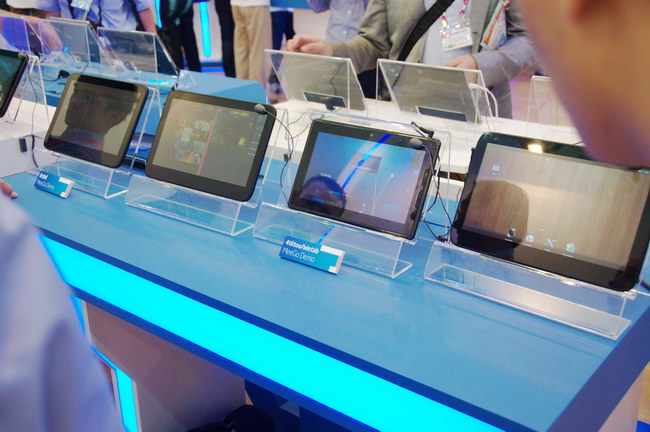
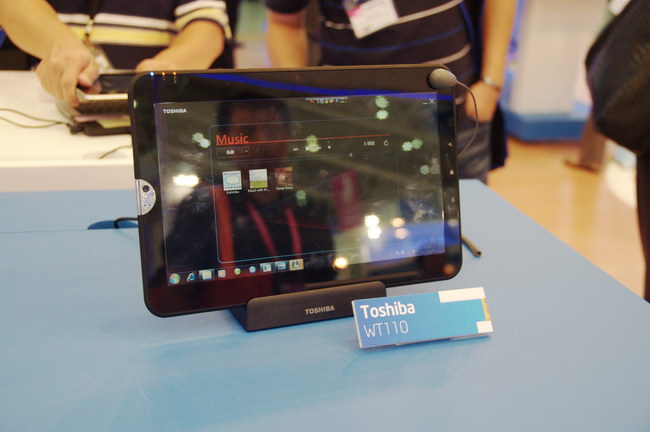
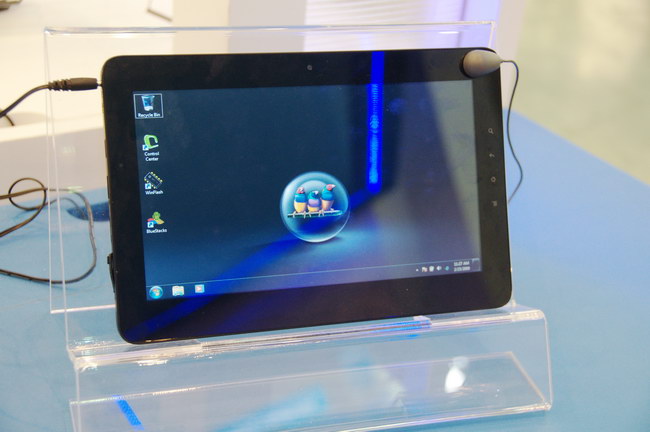
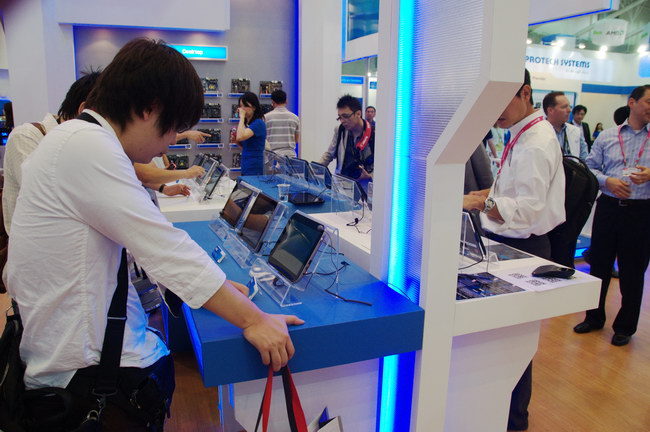
Meanwhile, the number of tablet PCs on the current, 45-nanometer "atoms" makes a strong impression. You know, the first twenty pieces I rushed to photograph from different angles. And then he suddenly realized that EVERYONE is doing them now. I remember in 2008 I was surprised that netbooks rushed to release even those companies that had not been noticed in the manufacture of finished systems. For example, the company did ten years of a video card, and then suddenly - a netbook flaunts on the stand. Boring, ugly, but quite efficient. And now the same story: everybody got the promise of the direction, but really finished and convenient devices are obtained from those who had experience in the manufacture of laptops and smartphones. But the rest, however, are not discouraged.
In connection with the tablets, two things surprised me.
First, how thoroughly has the MeeGo system moved forward. What I saw at the Intel booth really looks quite beautiful and thoughtful, but it works quickly and without jerking. Compared to what I saw in March in Russia , heaven and earth. Perhaps the fact is that now everything works on the final version of MeeGo 1.2, and in March only a raw pre-release was available.
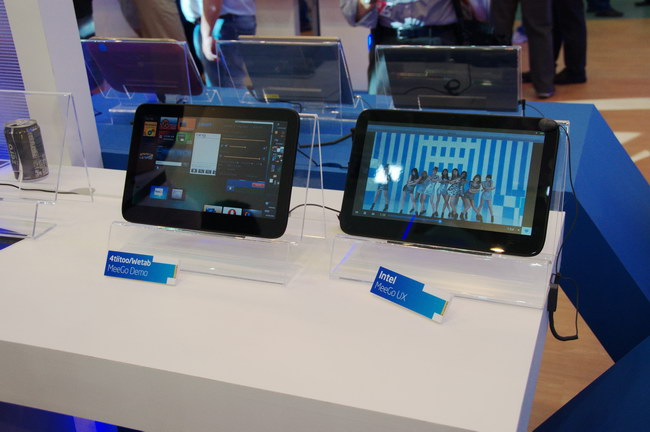
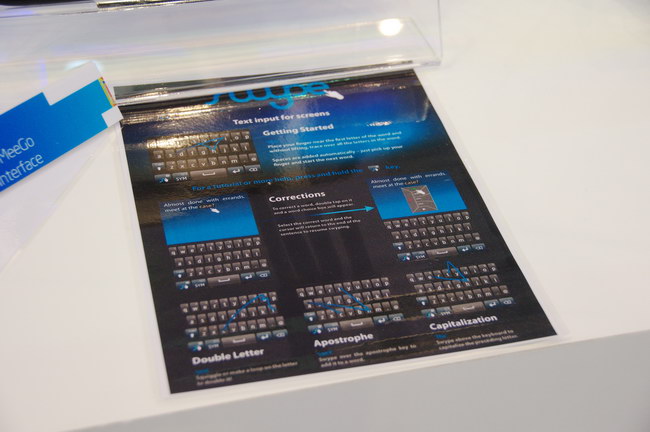
Yes, they also made a version of the Swype keyboard for MeeGo, which raises the convenience of typing on the touchscreen to a new height.
Secondly, there are a lot of tablets with Atom inside and Android 3.0 on board. Yes, on version 2.2 / 2.3 there is still more. But given the uniformity of the hardware platform in most "atomic" tablets, mass migration is just around the corner.
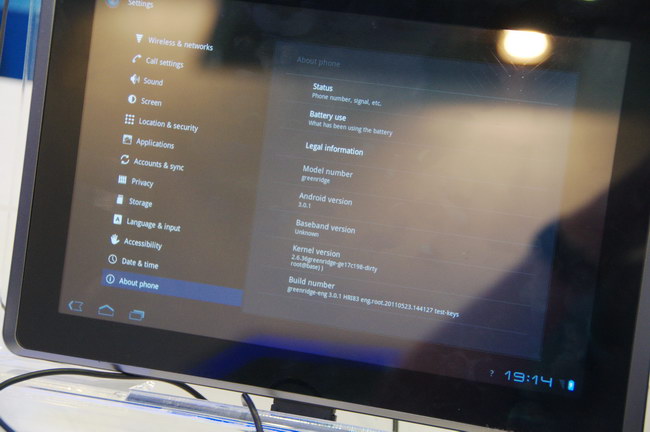
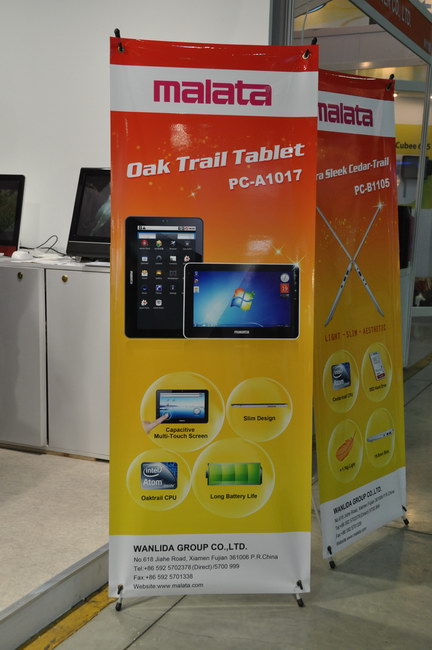
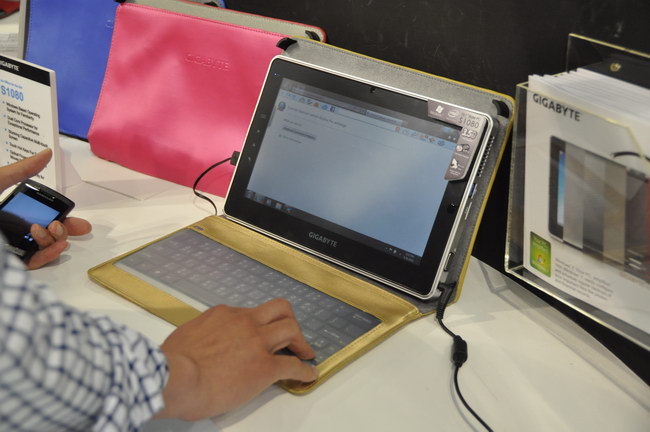
So that you do not suspect me of exaggerating the popularity of Atoms in tablets, here are a few photos. Let me remind you that on about the twentieth device I was simply tired of shooting :) And please forgive me for the flimsy screens: there were many people who wanted to touch, and the booth employees simply did not have time to erase the prints.

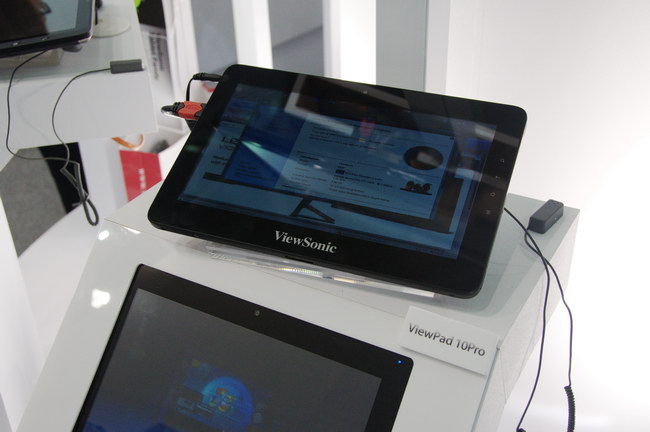
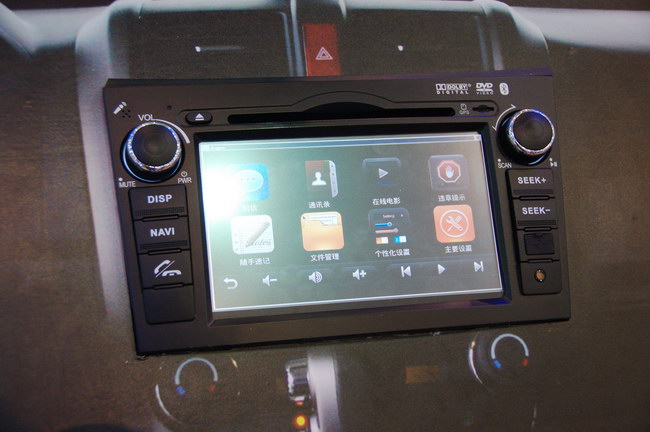
But it’s not tablets that Atom’s popularity is multiplying. So, at Computex 2011 showed a prototype car multimedia system, working on a bunch of guess which processor and MeeGo.
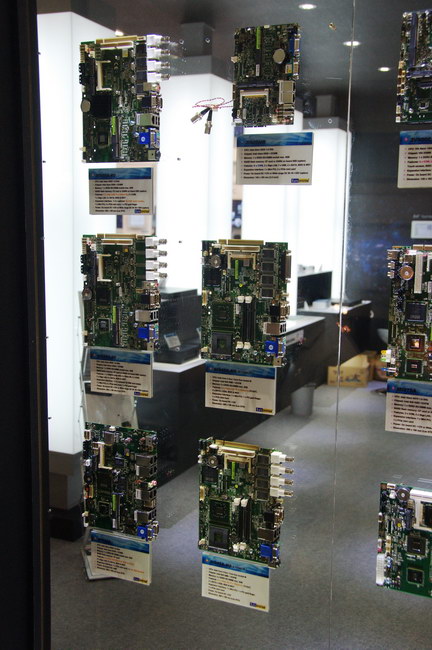
In addition, small scarves were observed in abundance for various home media players and set-top boxes. Moreover, if there is a suspicion that Atom’s performance is not enough, the Core 2 Duo can fit in the same form factor, only power consumption will noticeably increase.

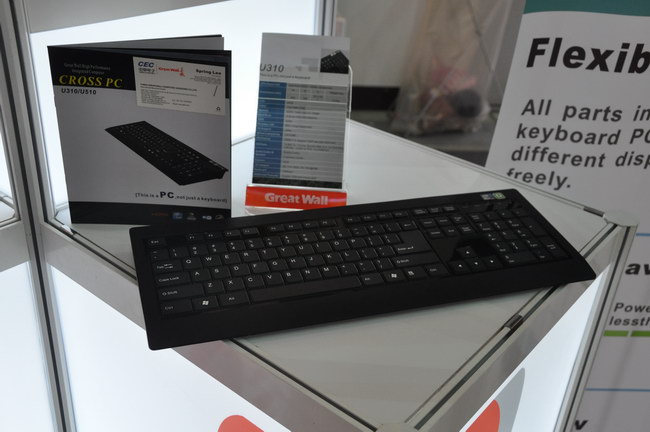
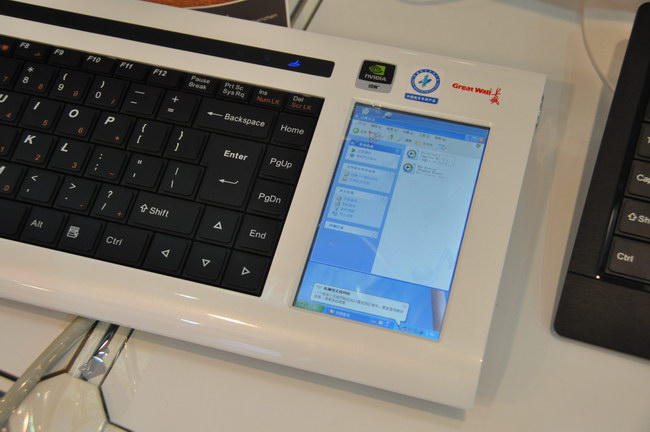
Want to significantly save space on the table and under it? Buy a computer keyboard on a dual-core Atom and ION platform. Previously, only Asus had this, but now the production has been started by vigorous Chinese. By the way, I wonder if the Great Wall brand is related to Chinese SUVs.
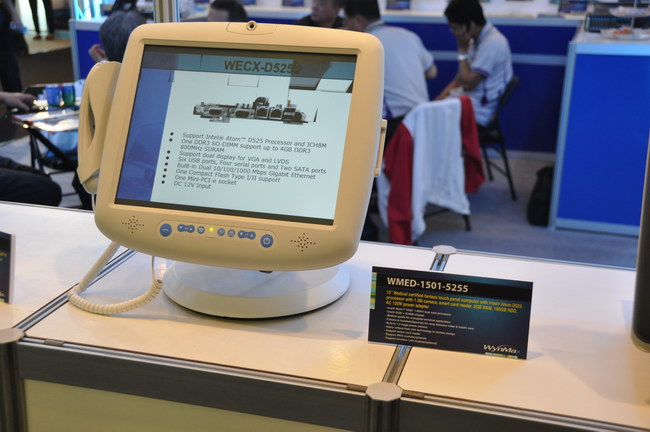
Now in Western countries, a system of remote diagnostics and counseling for the elderly is widely introduced. Here you are, such a machine on Atom.
And finally - the photo is a little abstract. Walking past the ECS booth, I noticed very beautiful video cards. He probably stood for about fifteen minutes and admired their natural design, rounded outlines, and good-quality materials. Something in them was an eye-catching sight. I even wanted to take a couple of samples.

I’ll go again tomorrow.
Just in case, I’ll clarify that Computex settled precisely in Taiwan for a reason. It is in this small island state that dozens of famous IT companies and thousands of less well-known were born. Asus, Acer, MSI, Foxconn, HTC, Gigabyte, Powercolor, XFX, Palit, Sapphire - you will not list all with all your desire. Factories were located in Taiwan for a very long time, but over time, almost all of them moved to Greater China, and development centers and especially complex manufacturing facilities remained in Taiwan. The importance of the state in the industry is so high that iron manufacturers from all over the world flock to Computex, including, by the way, Russia as well (for example, Wexler shows its own readers and tablets at the exhibition). Old-timers remember the times when Computex fit in one building, but now its showrooms are scattered throughout Taipei, and two are located in the recently rebuilt huge exhibition center Nangang Exhibition Hall. It is there on the fourth floor that the Intel stand is located.
The announcement of new Intel initiatives was made by Senior Vice President Sean Maloney. We met him two years ago in St. Petersburg, and, frankly speaking, I was shocked by the lifestyle of this man. Sean spends almost all his time on the road — in airplanes, trains, and cars. A few nights in one place - and again on the road! So it is very natural that the Ultrabook story was entrusted to him.
What is the point?
To quote Sean’s speech verbatim, “devices of a new category will combine the performance of modern laptops with the features inherent in tablet computers, offering a high-performance and safe environment for working in a thin, light and elegant case.” That is, in fact, we are talking about two devices in one without compromising functionality and comfort. Conveniently? Perhaps yes, because I'm already a little annoyed by the need to take on a business trip both a tablet and a laptop. The first is needed to communicate in numerous social networks, read the news and respond briefly and quickly to letters, but you can’t do without the second if you want to write a large post on Habr and process a couple of dozen illustrations for it. Complementing, they complement each other, but the total weight is tangible.
The new Ultrabook category will include thin and lightweight devices whose thickness does not exceed 2 centimeters, and the price - attention - should be within $ 1000. This is really very cool, because now for such an amount you can’t get a really compact and productive model, especially if you want something with a touch screen. The first "ultrabooks" promise to launch on sale by the New Year holidays, and the first such device has already been announced - Asus UX21.
It is worth noting that the subtlety, lightness and relative cheapness will appear not by a wave of a magic wand. In the "ultrabooks" will be used next-generation processors, which for the time being have only the code name Ivy Bridge. This is, I recall, the first CPUs made using 22 nm technology using Tri-Gate transistors. The significantly accelerated graphics core, as well as the “native” support for USB 3.0 and Thunderbolt at the chipset level will appear in the Ultrabook. In 2013, the Ivy Bridge will be replaced by the even more energy-efficient Haswell family, which will reduce the average value of the thermal package by half in comparison with current performance.
Atomic future
Since 2008, Computex always says something new about Intel Atom kids. This time they didn’t break the tradition. According to Sean, in just three years, Atoms will change production technology from the current 45 nm to 14 nm, making stops at 32 and 22 nanometers. This, in fact, is a big leap forward, because since 2008 this family has been manufactured using the same technology. It is clear that "and so good." But improving the process will significantly reduce power consumption and, importantly, the cost (the more CPU fits on the plate, the cheaper each of them is).
Well, in the very near future we are waiting for a meeting with the “atoms” from the 32-nanometer Cedar Trail family, which allows us to reduce the size of the devices and create netbooks with a passive cooling system. The new models will have a number of special features, including Intel Rapid Start (quick exit from standby mode), Intel Smart Connect (installing updates in standby mode), as well as Intel Wireless Display and PC Synch, which allow wireless synchronization on various devices. Finally, it is expected that the battery life of devices on the new platform will exceed 10 hours in active mode and will be several weeks in standby mode. Good thing, what can I say. True, it is not entirely clear - on which battery will such indicators be achieved? My heart feels, which is certainly not on the standard three-cell.
MSI was one of the first to launch tablets on Intel Atom. And at one time, the Wind netbook was the very first on this processor.
And Sean also talked about Medfield - the first 32-nanometer “atomic” platform for smartphones and tablets. Honestly, as for smartphones, I personally have an assumption that they will only seriously deal with switching to 22 nanometers, and for now, Medfield will allow creating tablets with a thickness of not more than 9 millimeters and weighing less than 680 grams. Of course, like netbooks, tablets will work with passive cooling. Production of Atom Medfield is scheduled to begin before the end of this year, and the appearance of the first devices is expected in the first half of next.
Meanwhile, the number of tablet PCs on the current, 45-nanometer "atoms" makes a strong impression. You know, the first twenty pieces I rushed to photograph from different angles. And then he suddenly realized that EVERYONE is doing them now. I remember in 2008 I was surprised that netbooks rushed to release even those companies that had not been noticed in the manufacture of finished systems. For example, the company did ten years of a video card, and then suddenly - a netbook flaunts on the stand. Boring, ugly, but quite efficient. And now the same story: everybody got the promise of the direction, but really finished and convenient devices are obtained from those who had experience in the manufacture of laptops and smartphones. But the rest, however, are not discouraged.
In connection with the tablets, two things surprised me.
First, how thoroughly has the MeeGo system moved forward. What I saw at the Intel booth really looks quite beautiful and thoughtful, but it works quickly and without jerking. Compared to what I saw in March in Russia , heaven and earth. Perhaps the fact is that now everything works on the final version of MeeGo 1.2, and in March only a raw pre-release was available.
Yes, they also made a version of the Swype keyboard for MeeGo, which raises the convenience of typing on the touchscreen to a new height.
Secondly, there are a lot of tablets with Atom inside and Android 3.0 on board. Yes, on version 2.2 / 2.3 there is still more. But given the uniformity of the hardware platform in most "atomic" tablets, mass migration is just around the corner.
So that you do not suspect me of exaggerating the popularity of Atoms in tablets, here are a few photos. Let me remind you that on about the twentieth device I was simply tired of shooting :) And please forgive me for the flimsy screens: there were many people who wanted to touch, and the booth employees simply did not have time to erase the prints.
But it’s not tablets that Atom’s popularity is multiplying. So, at Computex 2011 showed a prototype car multimedia system, working on a bunch of guess which processor and MeeGo.
In addition, small scarves were observed in abundance for various home media players and set-top boxes. Moreover, if there is a suspicion that Atom’s performance is not enough, the Core 2 Duo can fit in the same form factor, only power consumption will noticeably increase.
Want to significantly save space on the table and under it? Buy a computer keyboard on a dual-core Atom and ION platform. Previously, only Asus had this, but now the production has been started by vigorous Chinese. By the way, I wonder if the Great Wall brand is related to Chinese SUVs.
Now in Western countries, a system of remote diagnostics and counseling for the elderly is widely introduced. Here you are, such a machine on Atom.
And finally - the photo is a little abstract. Walking past the ECS booth, I noticed very beautiful video cards. He probably stood for about fifteen minutes and admired their natural design, rounded outlines, and good-quality materials. Something in them was an eye-catching sight. I even wanted to take a couple of samples.
I’ll go again tomorrow.