May 28, 2011 at 21:01
Kenko Extension Tubes
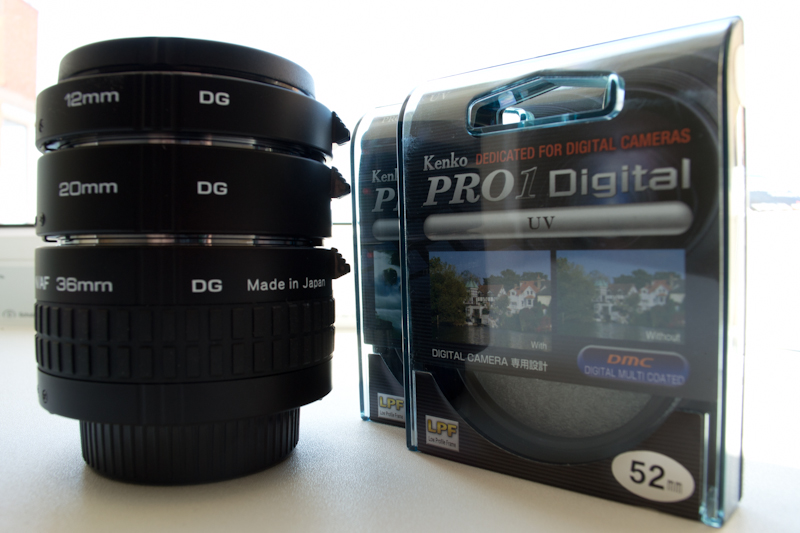
For amateur photographers who crave macro photography, but do not have enough money for a telephoto lens, there is an interesting alternative - the so-called “extenders” of a standard lens. Being one of such amateur photographers, I want to share my impressions of buying this feature, two Kenko filters in addition, as well as the experience of my first order on ebay.
Purchase and package
After buying a Nikon D3100 , like any new-made photo novice who gets a mirror toy in my hands, I got goose bumps from every photo, from watching entertaining video tutorials on YouTube, from knowing HDRI and ... from macro photography. The final restless desire to try the “macro miracles” came about after watching a stunning and impressive YouTube video from the famous photographer Brian Peterson: Cooking Oil Close-Up Photography . It was then, based on his advice, that it was decided to buy Kenko Extension Tubes. And the lack of this feature in Kiev online stores finally prompted me to “buy something on ebay,” which I have long wanted.
On the advice of friends, the only thing I paid attention to when choosing a seller, apart from the price, of course, was only one factor: how many similar goods had already been successfully delivered by the seller.
In addition, I immediately decided to buy myself two filters, from the same Kenko. The seller calculated the cost of delivery as $ 13 for the first product + $ 10 for each subsequent one. To my surprise, in one short correspondence I managed to persuade the seller to send everything for $ 13 and in one box - because the filters are small, I said, and sound logic triumphed.
Also, I was not too lazy to ask about the quality of the packaging, and asked to use the most ordinary and cheap postage. The seller convinced me that the packaging would be very protective, the price was underestimated by more than two to avoid duty, and no Fedex or DHL.
The result is excellent:
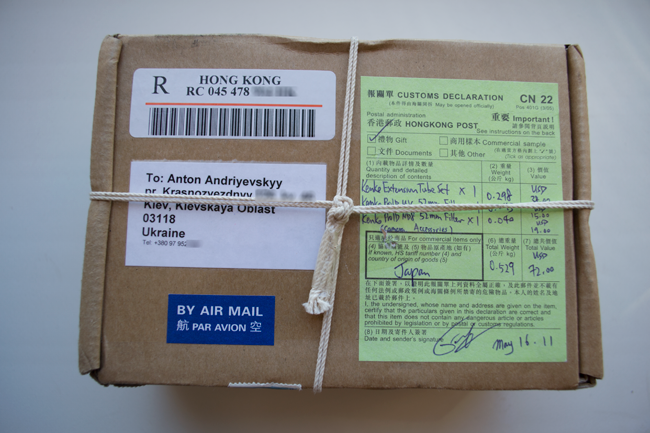
* the package arrived from Hong Kong in 13 days
* the package is really protective
* the total declared value is $ 72 against the real ~ $ 210
* working tracking by the package number, both on the sites of Hong Kong and our postal service.
So, the box is really solid:
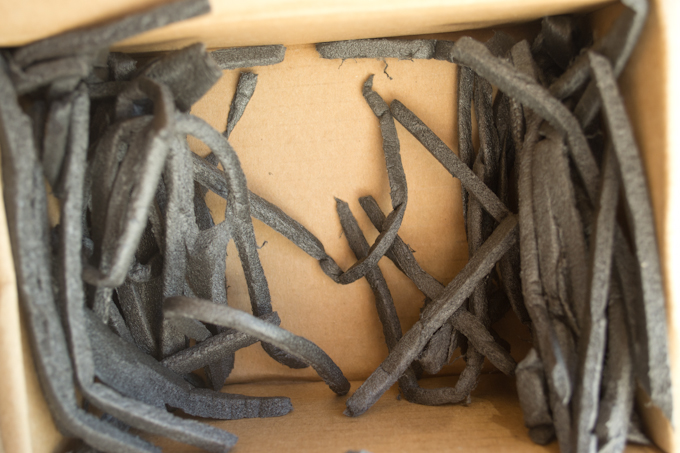
Inside there is foam rubber, and all the goods are carefully packed in the same oilcloth with pimples:

First meeting
A couple of pictures after unpacking. Kenko Extension Tubes consist of three parts extending the lens by 12, 20 and 36 mm. respectively. They can be combined as you like. Attached is an instruction explaining the connection with the lens, and containing a table of magnification values for different combinations of these three parts.

Readable instructions here .
Filters on the lens - each in its own box:
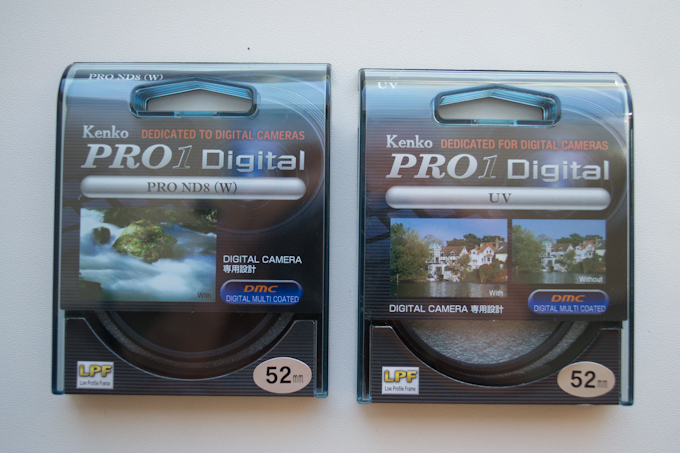
And this photo, my girlfriend says, is very similar to powder advertising:

Experiments: Extension Tubes
So, at the maximum approximation WITHOUT extension cords and the minimum possible distance with the ability to focus, the antiperspirant jar looks like this:
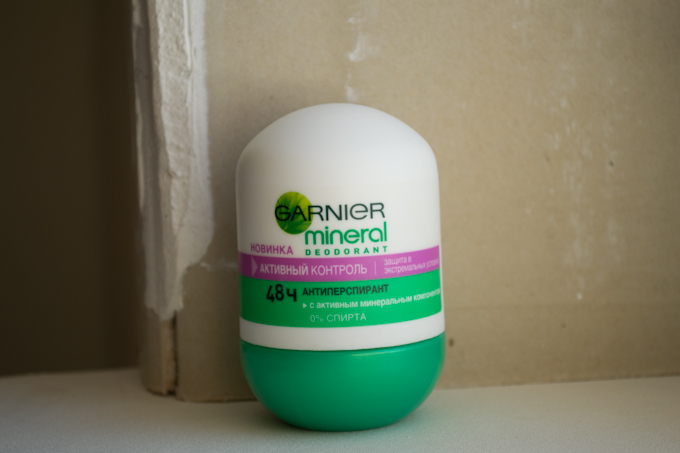
With an extension of 12mm:
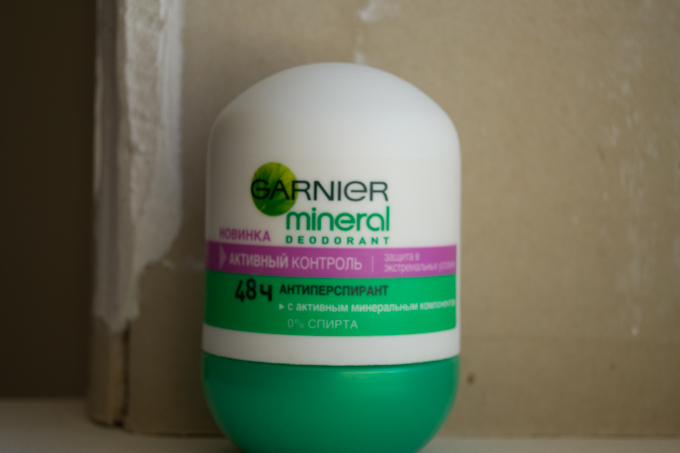
(focus 55 + 12mm, iso100, 1/60 sec, f / 5.6)
With two extension cords: 12mm + 20mm:

(focus 55 + 20 + 12mm, iso100, 1/30 sec, f / 5.6)
With all extenders: 12mm + 20mm + 36mm:

(focus 55 + 36 + 20 + 12mm, iso100, 1/4 sec, f / 9, tripod)
Maximum Elongation - More Examples
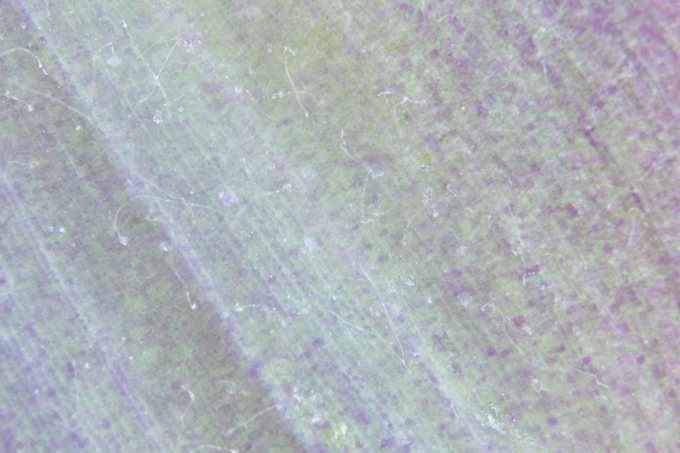
One and the same leaflet, however with focus on the leaflet itself and its hairs:

Minimum elongation
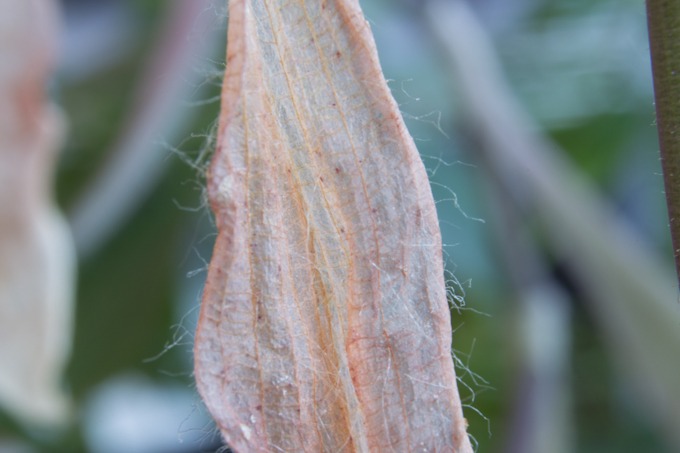
After a couple of dozen photographs, I made a preliminary conclusion: for photographs of objects visible to the human eye in close-up (like a leaf or strawberry), a minimal extension cord is enough. For photographs of the same structure, backgrounds, etc. - Use the maximum extension cord. Here is an example of a photograph of a dried leaf with a minimum extension cord, which turned out to be unexpectedly beautiful, much more beautiful than all living things:
Experiments: Neutral Filter
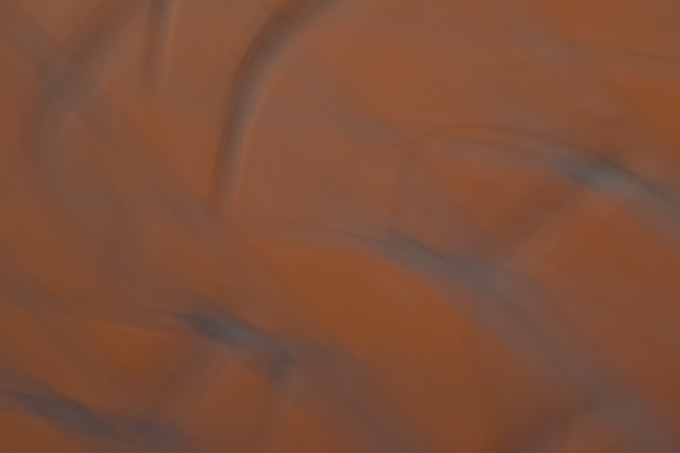
The neutral filter should not affect color reproduction and distort objects. Its sole purpose is to reduce the amount of light entering the lens. This will make it possible to increase shutter speed (how long the lens is open) and can be useful both for tricks with “twisting” the image, and for capturing motion, such as water, in bright daylight. That is why one of the films that I ordered in addition is neutral. As an example, like this, you can twist a brick wall (by scrolling the lens and zoom during a half-second photo):
Experiments: UV Filter
The UV filter promises to remove haze and other “clutter” when photographing landscapes in open areas. Unfortunately, the following two photos from the balcony did not seem to show any difference (left without filter):

Conclusion
Kenko Extension Tubes seems to have opened up horizons for me of the unknown beauty of macro photography. However, this is not a telezoom lens that brings you closer. When lengthening the lens in this way, without lenses, you need to get closer to the subject. At maximum lengthening, I was able to focus only one or two centimeters from the subject. However, the price is several times less than a telephoto lens. Well, for starters - I'm satisfied!