Lockheed Martin Shows Plan for Martian Orbital Station and Descent Vehicle

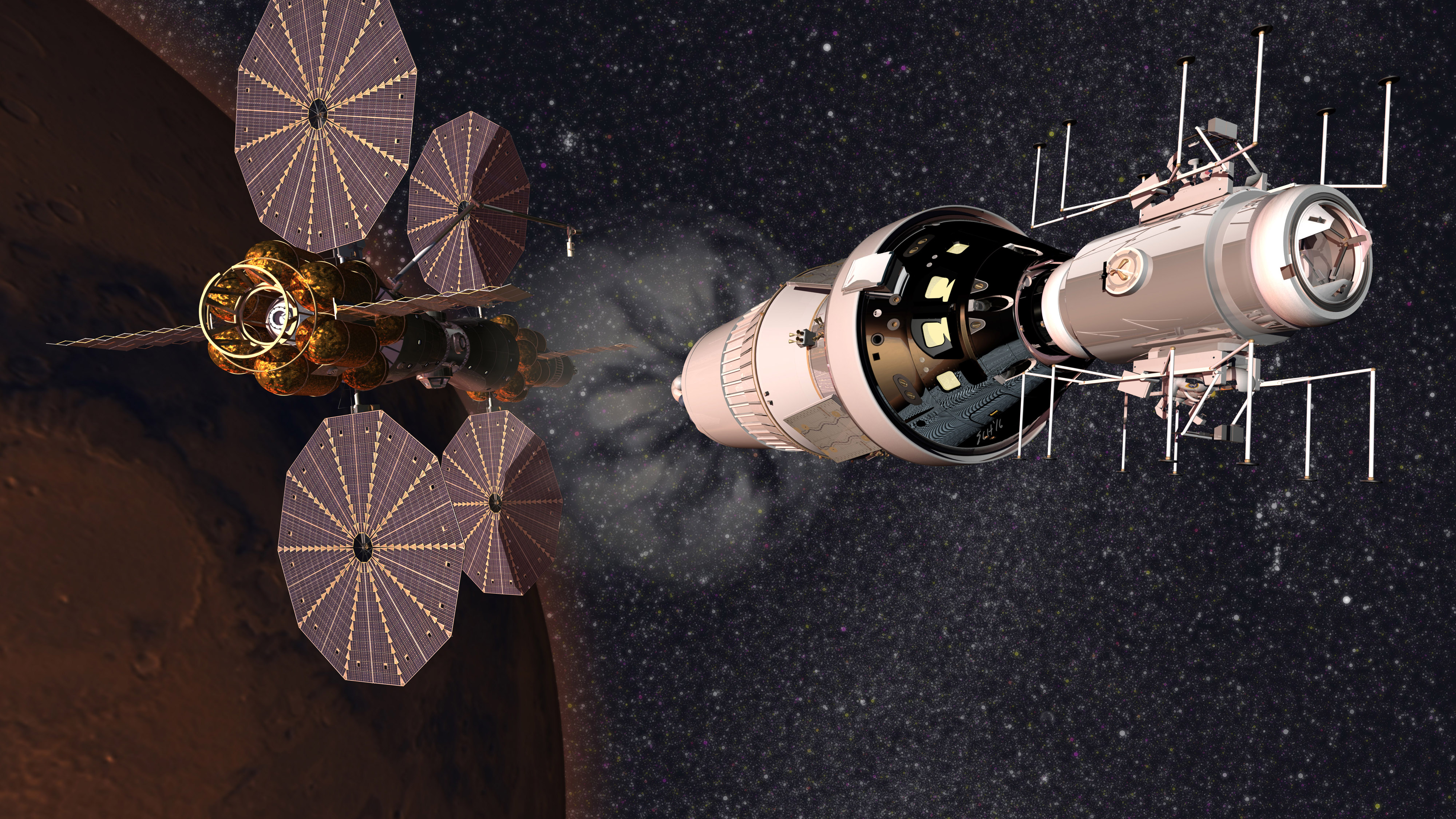
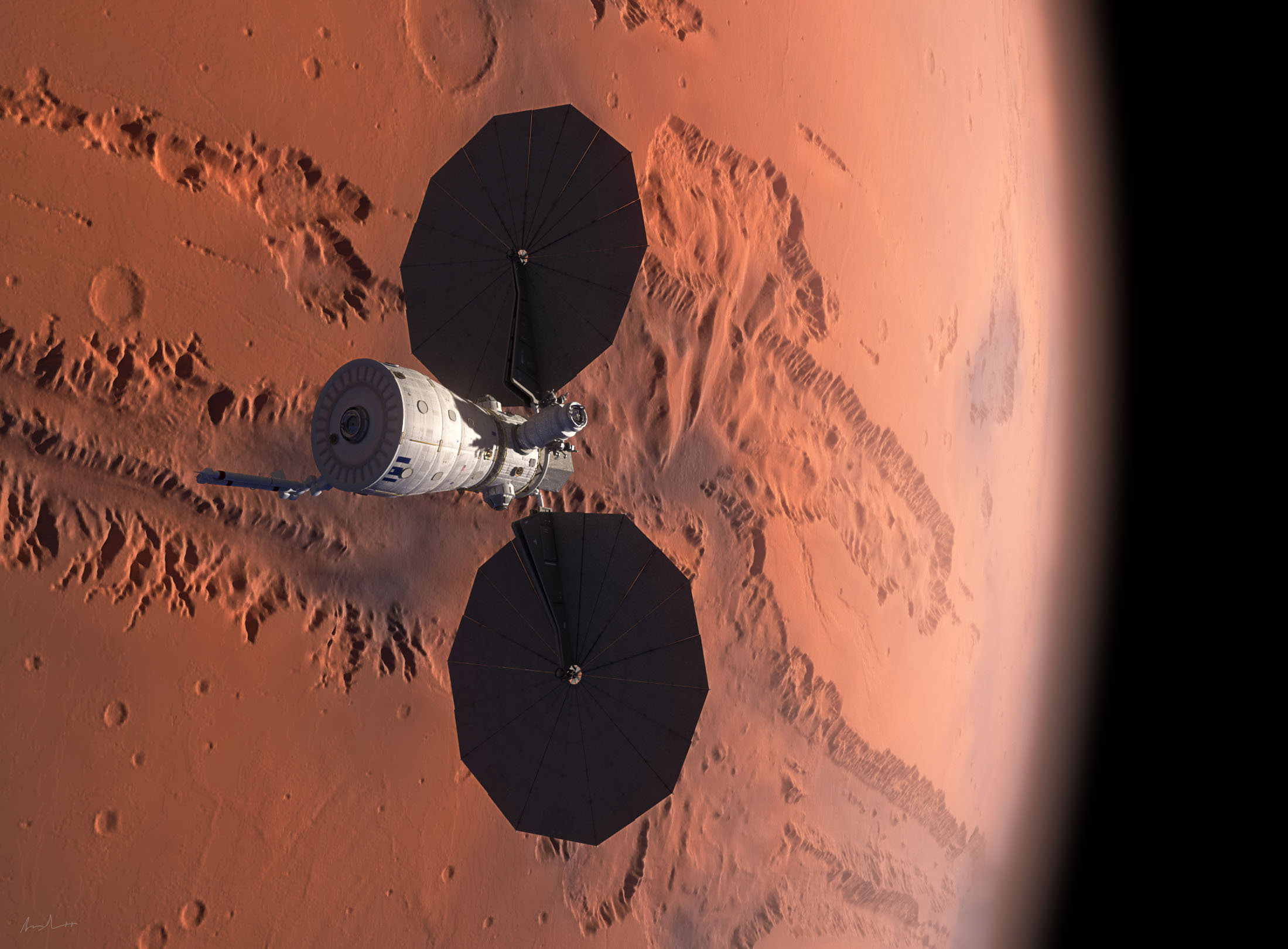
Mars Base Camp orbital station with the following modules: two Orion ships (one as an expedition module, the second as a control center), tanks with liquid oxygen and liquid hydrogen (at the same time protecting the crew from radiation), a residential module, a science laboratory, solar panels, radiators for cooling, cryogenic propulsion system (used for transport from the Moon to Mars and expeditions around Deimos and Phobos). Render: Lockheed Martin
Yesterday at the 68th International Astronautical Congress in Adelaide, there was a Martian day. Ilon Mask spoke about the plans to build a Martian city , and Lockheed Martin showed its vision of the Mars Base Campwhich she hopes to bring to life at the request of NASA. This is a more distant project than Ilona Mask, but with government funding (if Lockheed Martin does get NASA in a row). In terms of time, it is consistent with the previously announced deadlines for the construction of the near-moon platform Deep Space Gateway , which will become a platform for launching transport and passenger ships to Mars.

Expedition module Mars Base Camp. Render: Lockheed Martin Expedition Module Mars Base Camp. Render: Lockheed Martin Unlike the SpaceX plan, Lockheed Martin represents the base camp as an orbiting station with a constant human presence. It is from here that the astronauts will conduct research, sometimes descending to the surface of the planet for research purposes. Mars Baseball Camp Mars Laboratory. Render: Lockheed Martin Lockheed Martin introduced the concept of an orbital station and manned descent vehicle. Mars Base Camp lander. The single-stage rocket uses the Orion ship systems on the command deck. Render: Lockheed Martin
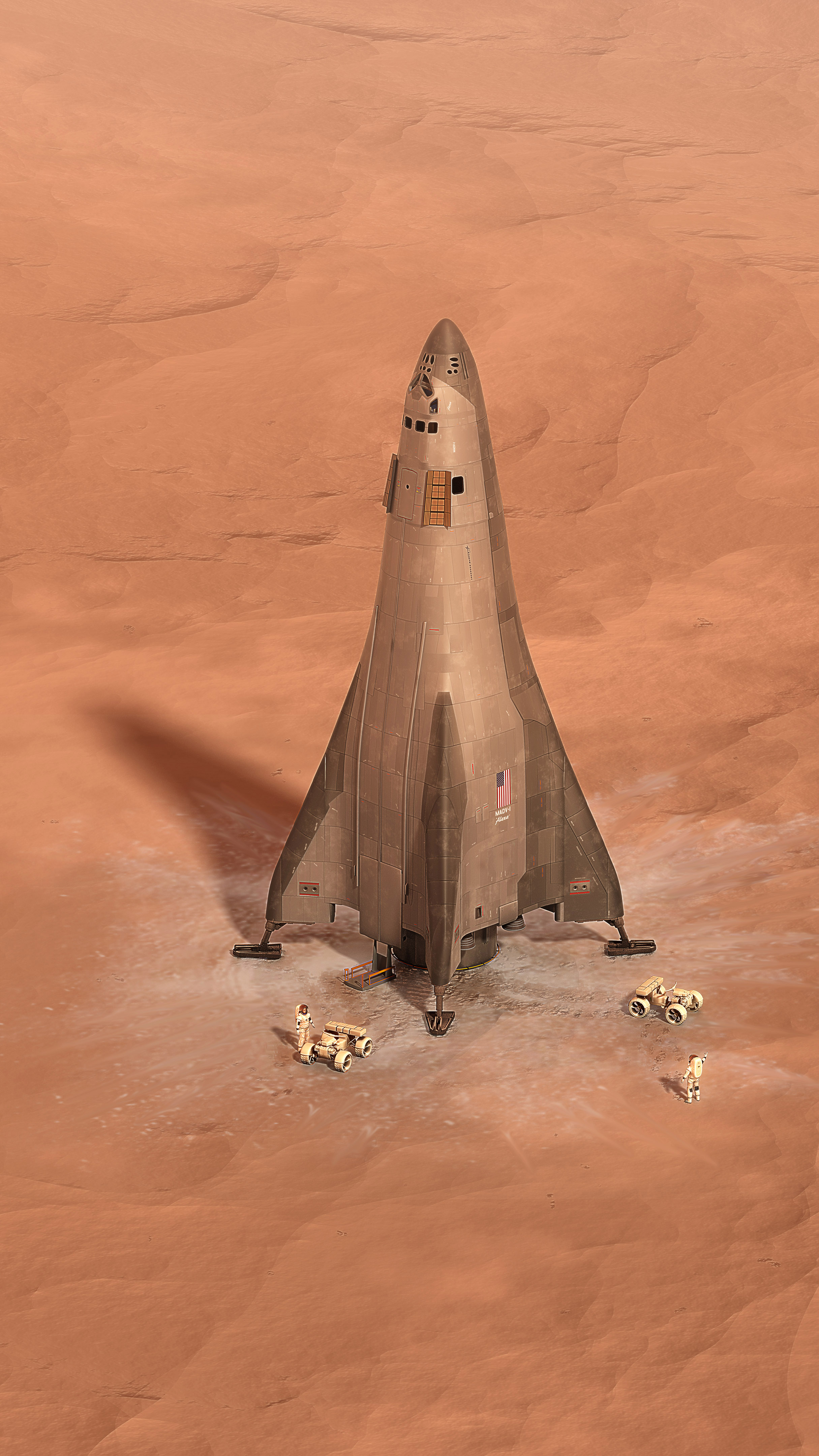
The descent vehicle is capable of landing on the surface and ascending to the orbital station, joining with it. The docking of the space station and the Mars Base Camp descent vehicle. Render: Lockheed Martin As stated in a press release
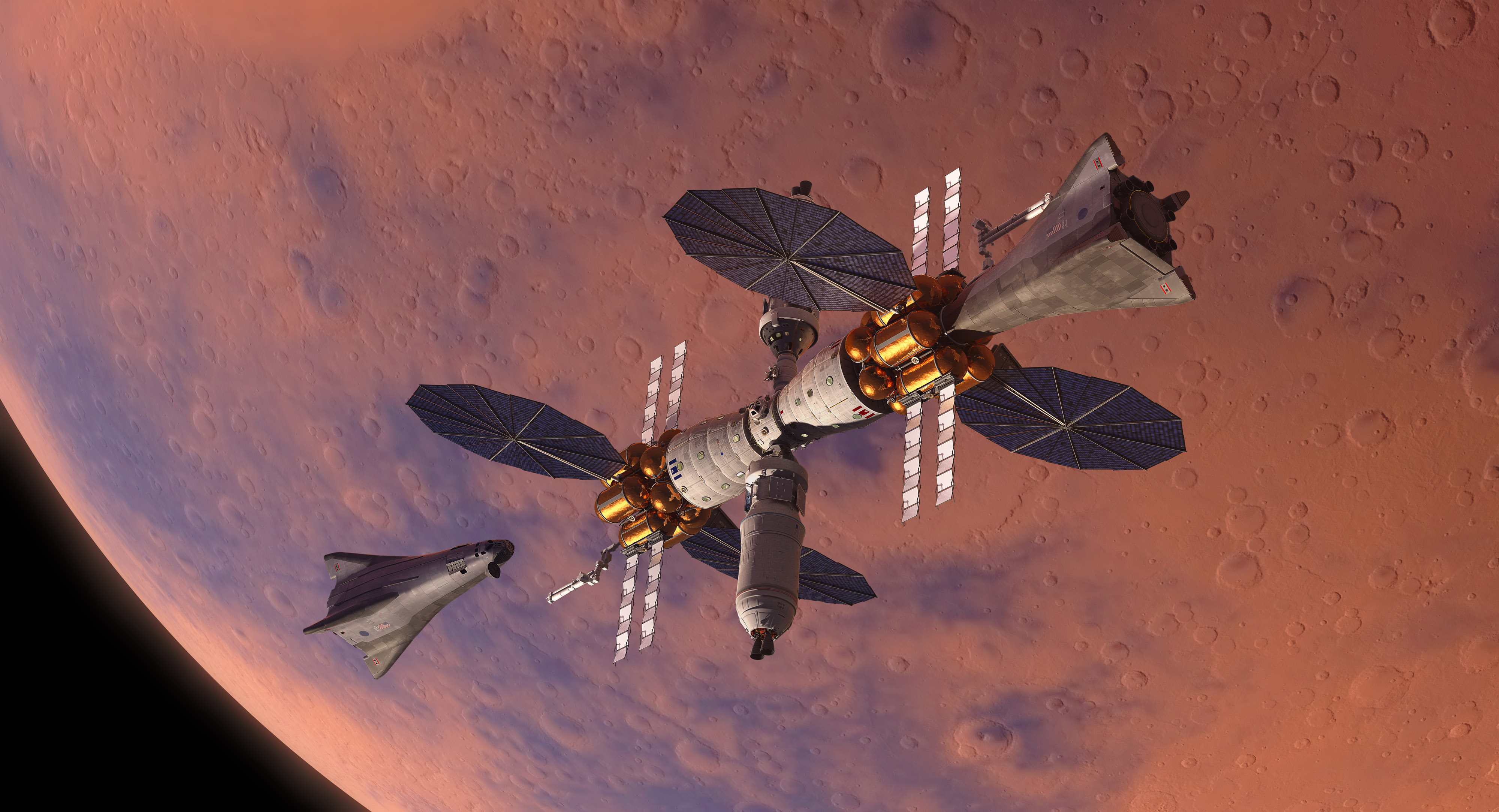
Lockheed Martin, the project is coordinated with Deep Space Gateway - the circumlunar platform, where the first modules are planned to be launched in 2024-2026. The timing of the Martian mission is not precisely defined. Depending on the success of the construction of the lunar spaceport and the development of the Deep Space Transport (DST) spacecraft, this may happen at the earliest in the early 2030s. Deep Space Transport is a reusable electric and chemical vehicle specially designed for flying in deep space. The ship will take people from the lunar spaceport, take them to Mars or to another destination - and then return back to the Moon. Here the ship can be repaired, filled - and sent on the next flight.
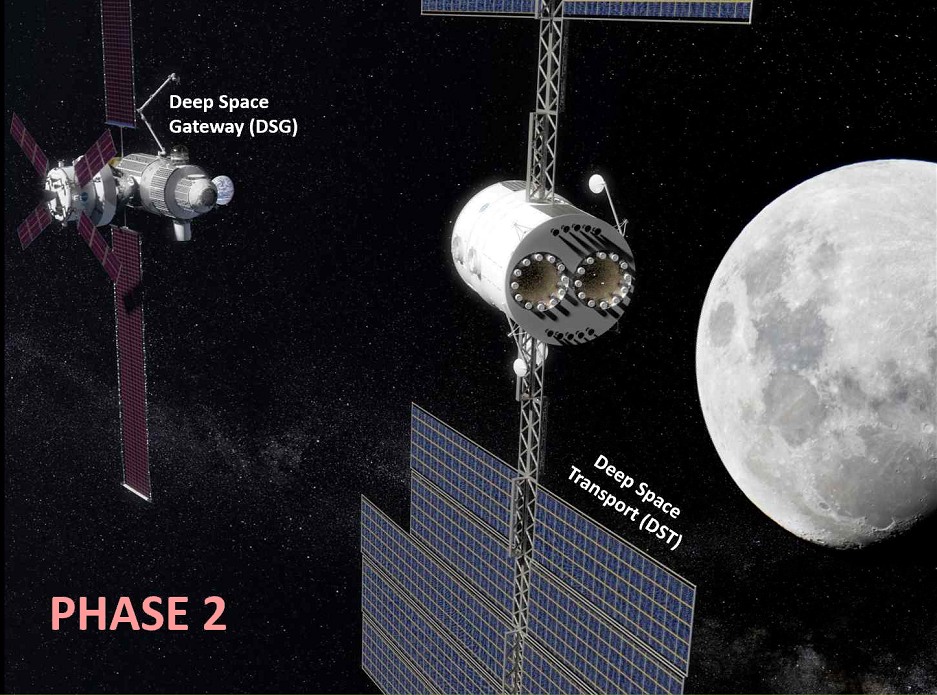
Testing of the ship will take place in the next decade, and at the end of the 2020s, NASA plans to conduct one-year tests of Deep Space Transport with the crew. Astronauts will spend 300-400 days in the near-moon space. This mission will be a dress rehearsal before sending astronauts to Mars. That is, earlier than in the early 2030s, the Mars mission of NASA cannot take place.
For comparison, Ilon Mask planned for 2022 the first cargo missions to Mars, and for 2024 - the landing of colonists.
Lockheed Martin's offer is far from being so ambitious. It includes only three points:
- Transportation of astronauts from the Earth to the Martian orbit.
- Perform research.
- Search for landing sites on the surface of Mars.
According to Lockheed Martin's plan, the descent vehicle will be a reusable single-stage ship that is somewhat similar to the reusable Shuttle or Buran. He will allow him to descend to the surface and spend up to two weeks there before climbing back to the base.
"Sending people to Mars has always been part of science fiction, but today we have the opportunity to make it a reality," said Lisa Callahan, vice president and general manager of the commercial civil space division at Lockheed Martin. - In partnership with NASA, our plan is designed with the equipment that is in development or production. We are pleased to announce the presence of the Orion spacecraft in working form and ready for a test flight of Exploration Mission-1, and then to Mars. ”
The three-week research mission called Exploration Mission-1 (EM-1) will be unmanned. The launch of the SLS with the Orion spacecraft will take place from the launch complex 39B at the cosmodrome of the Space Center. Kennedy, presumably in 2019. Orion will straighten the solar panels in orbit and head for the moon. The impulse to the ship will be given by the Interim Cryogenic Propulsion Stage (ICPS) intermediate cryogenic propulsion system, which is located on the SLS launch vehicle directly under the Orion ship, as the upper rocket stage. This will be the very first stage of the great road, which in the end should lead humanity to Mars. It’s not long to wait.
Mars Base Camp Presentation