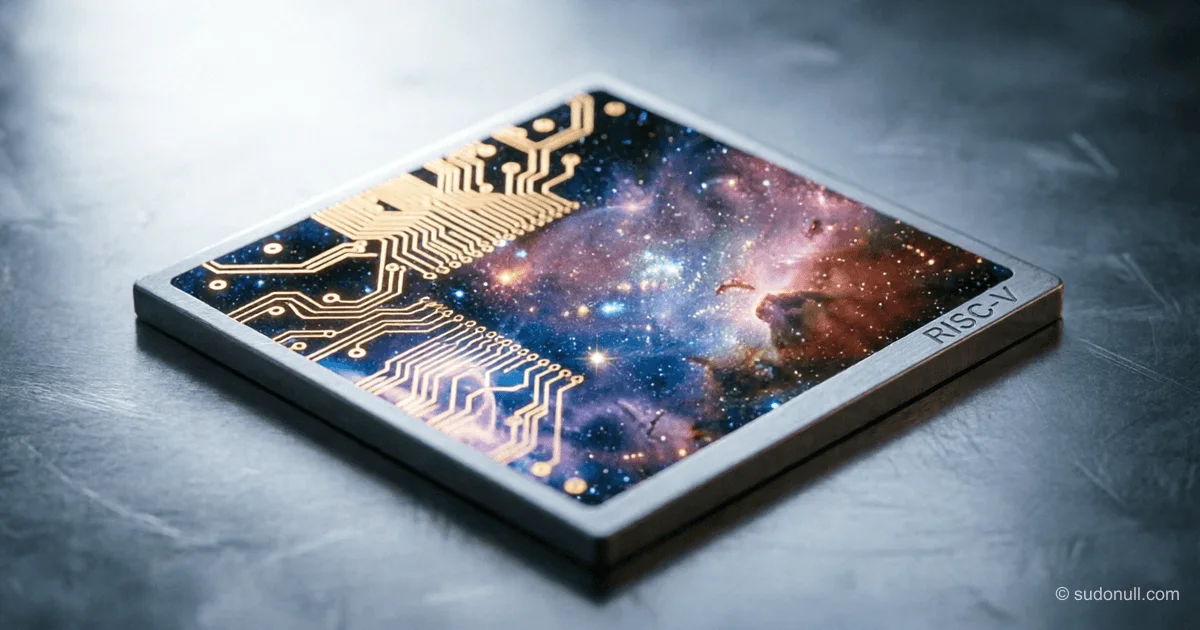
NASA Tests New Radiation-Hardened AI Chip for Deep Space
NASA's Jet Propulsion Laboratory has begun testing a processor that is 100 times more powerful than current counterparts. The chip will allow spacecraft to make decisions autonomously without communication with Earth.
As someone who has long followed not just space exploration but specifically the "silicon innards" of this process, I view this news not with the excitement of an ordinary person, but with the cold squint of an engineer. What the media presents as a "chip for Mars" is actually the final chord in a paradigm shift. We are stopping "calling" space and starting to send full-fledged data centers capable of making decisions without us. And this is not just an upgrade; it's a break in the architecture of everything we knew about spaceflight.
The Essence: What's Really Happening
There is no "development right now." The chip has already been created. What we see on May 20, 2026, is not the start of R&D, but a formal confirmation that the prototype in the hands of engineers at the Jet Propulsion Laboratory (JPL) has shown performance 500 times higher than current levels in tests. But the main sensation is not the performance, but that NASA has finally decided to break the vicious cycle of "space conservatism." Previously, we selected processors for satellites on the principle of "reliability at any cost," flying on chips from the 90s architecture (e.g., RAD750, which costs tens of thousands of dollars with a laughable clock speed). Now JPL and Microchip Technology are pushing the launch of the PIC64-HPSC on the open RISC-V architecture. This means abandoning proprietary shackles, cheap customization, and, more importantly, allowing ordinary "earthly" IT specialists into space, not just the closed caste of aerospace contractors with access to secret blueprints.
Timeline and Context
Let's break down the timeline, because this "sudden" news has too long a tail that is overlooked.
- 2018-2020: Classic missions, like the Perseverance rover, use dedicated FPGAs and ancient processors, causing analysis of a single image to take hours, and mission autopilots are comparable in intelligence to insects. Communication delay (up to 20 minutes to Mars) makes direct control impossible. This is not a convenience issue; it's a dead end.
- 2022: NASA announces a tender for HPSC (High Performance Spaceflight Computing). Microchip wins, not some Boeing or Lockheed Martin. Insiders understand: the vector shifts from "platform hardware" to "silicon." The project initially receives modest funding, but with a focus on RISC-V and modularity.
- February 2026: Start of "combat" tests at JPL. Engineers send a test email with the subject "Hello Universe," clearly referencing the origins of programming.
- May 2026: Leak of test data. The increase is not 100 times (as conservatively planned), but 500. The chip withstands extreme temperatures and radiation without entering "safe mode," which was the bane of missions. And here's the most important point that is being kept quiet: the tests included not only "proton shooting" but also running high-precision planetary landing scenarios in real time. That is, the chip already knows how to do what it should do on Mars.
Who Wins and Who Loses
Here the balance of power shifts tectonically.
Winners:
- Microchip Technology. They gain the status of monopoly supplier of brains for deep space for the next 10 years. But the main thing is the goldmine on Earth. A chip that survives the radiation hell of Jupiter is ideal for creating "black boxes" for aviation, nuclear power plant safety systems, and medical implants that cannot be "power-cycled." This is a market of tens of millions of devices, where a chip price of $5,000–10,000 per unit will be considered cheap compared to the cost of failure.
- Scientific community. Previously, 90% of data "died" in space because the transmission channel to Earth is narrow and compression is crude. Now, AI onboard will be able to select only relevant scientific data. This saves hundreds of millions of dollars for programs like Europa Clipper.
Losers:
- Lobby of traditional military contractors (Lockheed Martin, Northrop Grumman). Their business model was built on the fact that creating a "satellite computer" is a custom project taking 5 years and $200 million. If NASA legitimizes a commercial, relatively mass-produced chip from Microchip, all these giants will have to urgently rewrite their sky-high price lists, because "brains" cease to be a unique detail and become a component.
- Boeing Starliner and other troubled projects. With such autonomy, the chip does not need constant control from Earth, which negates part of the functionality of expensive flight control centers. Layoffs of administrative staff, whose work boiled down to micromanaging every satellite orbit, will become inevitable within 90 days of adopting this chip as a standard.
What the Media Isn't Saying
No one wants to write that this chip is a direct threat to human spaceflight in its current form. If a lander with a new "brain" can perfectly land on Europa or Enceladus without a joystick in human hands, then why send fragile bodies that require food, air, and radiation protection? Each such robotic mission will cost 10 times less than a crewed one, and the risks of losing the crew will be zero. This puts an end to ambitious programs to send humans to distant planets, shifting budgets strictly to autonomous probes controlled by this very chip.
Forecast: Next 30 Days and 90 Days
30 days (by June 19, 2026): Expect a resonant statement from SpaceX. Musk cannot ignore such a leap. Either he will announce that future Starships for Mars will be equipped with a version of this chip (closing the loop on his infrastructure), or, if access is restricted, we will see a Twitter scandal about "clumsy government bureaucrats" hindering the progress of private space.
90 days (by August 18, 2026): Mass audits and revisions of certification standards for commercial satellites will begin. Insurance companies (Lloyd's and others) insuring OneWeb or Kuiper launches will require operators to answer the question: "If there is a chip that is 500 times better at detecting debris approach, why are you using old junk?" This will lead to a wave of launch delays, as satellite manufacturers (Airbus, Thales) rush to redesign platforms for the new chip, sacrificing schedules for safety. We stand on the threshold of a world where in space it will no longer be possible to justify an accident with the words "the computer didn't react in time." Responsibility will finally fall on the hardware.
— Editorial Team









No comments yet.