Special project: Solar power station on autocamp. Part 1
All parts of the camper journey
The idea of summer travel leaves no one indifferent. The more interesting to travel unusual, sometimes associated with the place of arrival, and sometimes for the purpose of the journey itself. A year ago, I told you how I participated in a project to install a solar power plant on a raft . Then the company broke away from civilization for two weeks, but did not remain without electricity, even afloat. This year I was able not only to participate in another interesting project, but also to take advantage of the fruits of my labor.
So, imagine avtokemper with solar power. I want to tell not so much about solar energy, but about how it is to live in a camper in nature.
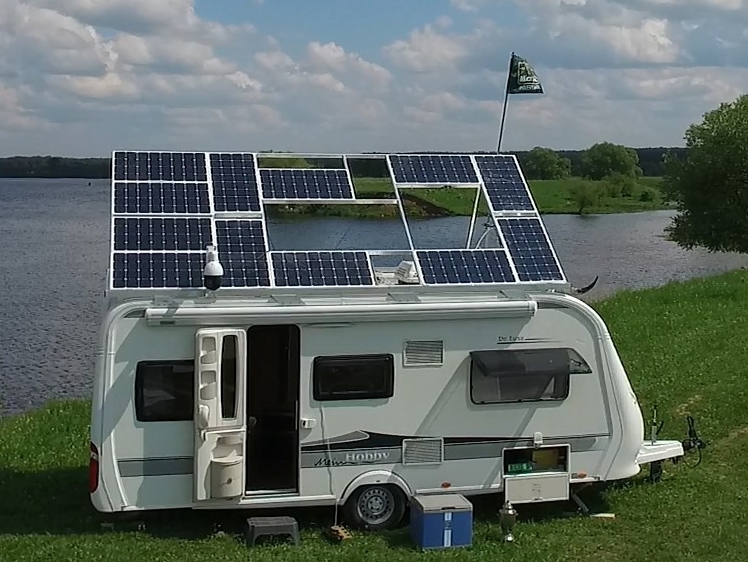
When a few years ago I made a Eurotrip across Europe, I noticed for myself the tremendous popularity of autocampers and campgrounds with European tourists. We traveled in caravans, families, we even took motorcycles, quads, and sometimes even cars with us separately.
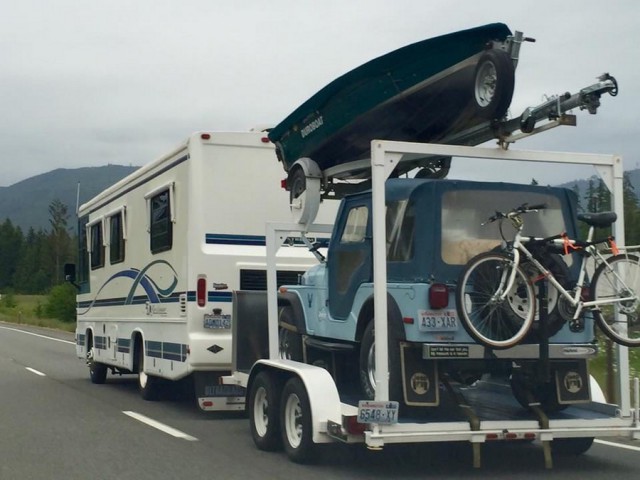
It was then that I wanted to travel in such a camper and experience the mobile home myself. Well, dreams come true! This year I had the chance to live in such a camper.
It should be noted that there are motorhomes and trailers. A motorhome is a home on a jeep, truck or bus wheeled chassis. The bottom line is that such a house can move independently.

A trailer is a home on a reinforced chassis that needs a vehicle for transportation.

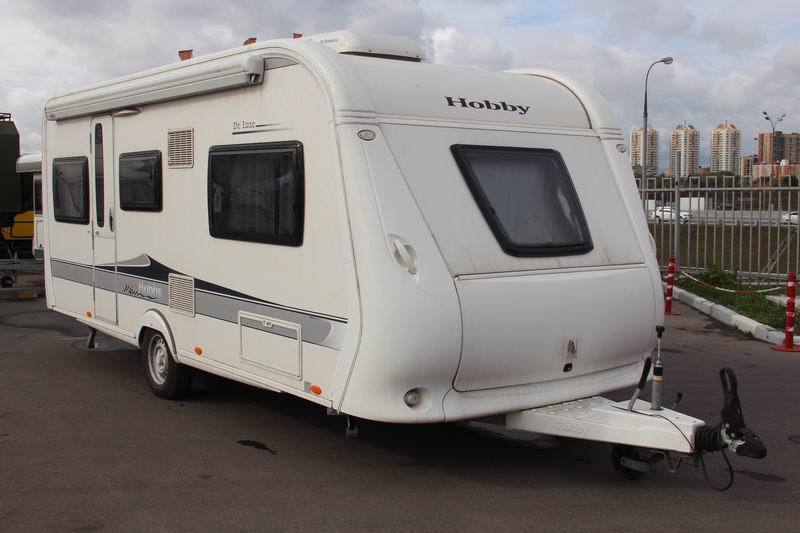
The trailer was more suitable for our purpose, so the choice fell on the model Hobby 495 DeLuxe. We had to work on it, retrofit and begin testing. It fell into our hands as follows: The
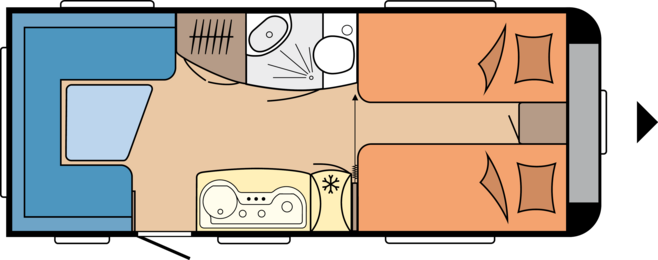
layout is quite interesting: 4 beds, a shower, a toilet, a closet, a stove, a sink and a fridge. That is really a house, albeit in a reduced form.
The main task sounded simple: you need an autonomous mobile home. Therefore, the first thing with which it was decided to start is electricity supply. It is in Europe every 30 km (on average) auto-camping with a prepared platform, where you can connect to the outlet, plumbing and sewage, and in Russia for such words can be beaten here and there. Therefore, we started with autonomous electricity.
Power supply
The easiest option is to buy a gas generator. But what is this rest when something constantly rumbles under your ear? And it happens that you need to charge a laptop or smartphone - do not start the generator for the sake of it! Therefore, our choice fell on a solar power station.
My experience shows that in Russia there is a manufacturer of high-quality and reliable equipment for solar energy - this is the company MicroART. Well, since there is work experience, it remains only to calculate everything correctly and leave a request for equipment.
Any system begins with calculations, what equipment will be used and how long autonomy is envisaged. Since we have a mobile object, complete autonomy is envisaged. Electric appliances will include: built-in refrigerator (170 W), TV (40 W), lighting (up to 300 W), air conditioning (1.2 kW) and various hand-held equipment from power tools to personal gadgets.
The result of the calculations resulted in the following requirements: an inverter with a power of 6 kW, solar batteries for 1200 W and batteries that are not afraid of shaking, as they will travel in a trailer along the roads of our vast country.
The final set looked like this:
- Inverter MAP DOMINATOR 6 kW (peak up to 9 kW)
- Solar controller KES DOMINATOR MPPT 200/100 (at 24V can produce up to 2.4 kW)
- 12 100 W light panels or 6 200 W sets . Here it is necessary to clarify that 1 classic panel per 100 W weighs 8.3 kg, and a flexible panel of the same capacity 1.15 kg. Therefore, in weight gain more than 7 times! To this we will return
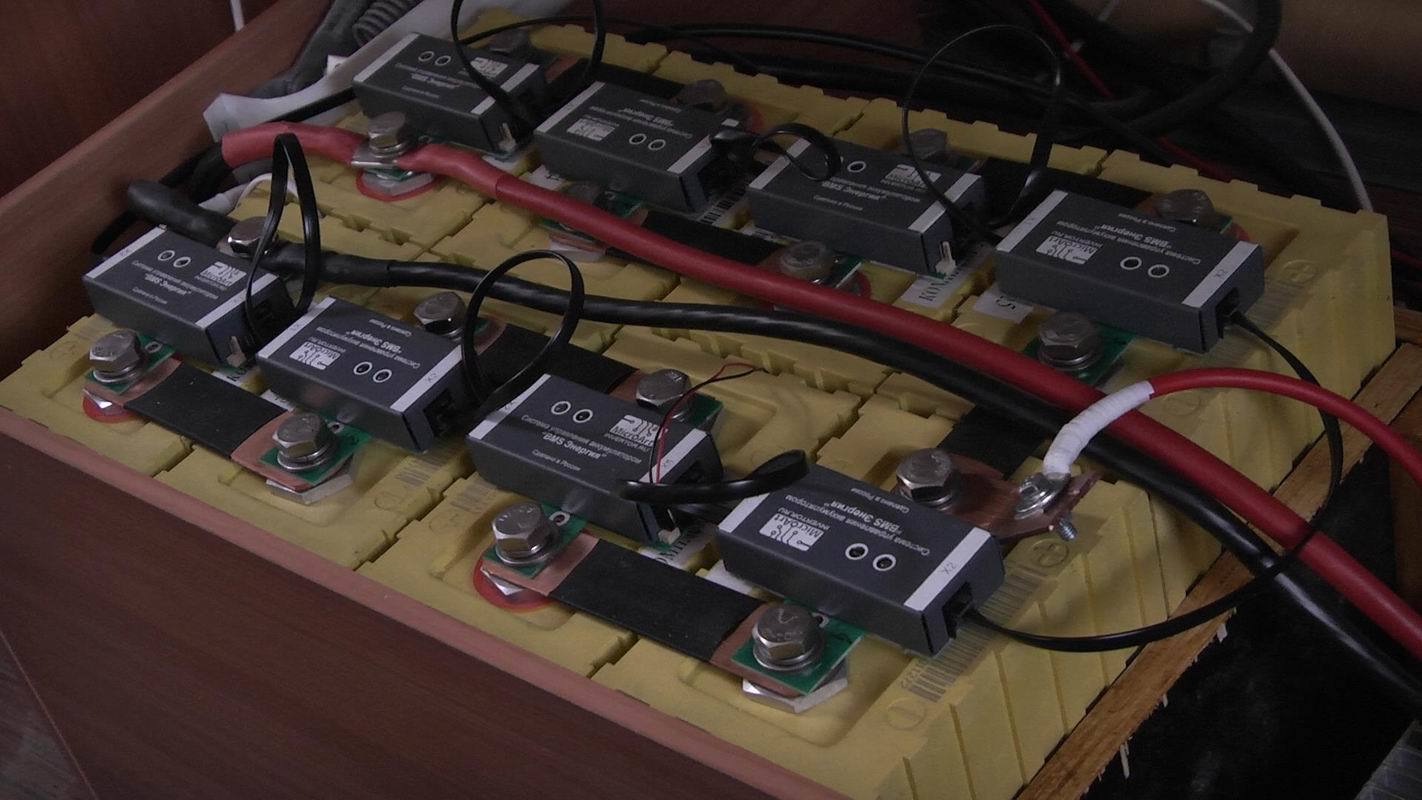
- 8 LiFePO4 batteries with BMS to get an assembly of 24V 240 Ah
Now I will explain why it was decided to stop on this set. The camper has a base of aluminum-plywood walls. That is, their carrying capacity is not very large. And piling up a hundred kilograms of solar batteries on the roof of a camper is not the best idea - not only does the load on the roof and walls increase, but the center of gravity also rises. Therefore, we chose flexible solar panels that do not have glass in their basis and the weight of all the panels was some 13.8 kg. These panels can give us up to 1200 watts of energy at the optimum position of the sun.
Let's go to the batteries. Lithium-iron phosphate batteries are “dry” in the sense that they do not have a liquid electrolyte, so they do not spill over during our travels. In addition, they easily carry deep discharges and the number of charge-discharge cycles they have the maximum of the available batteries. Yes, and their weight is two times less when compared with similar lead-acid.
As for the inverter, it was possible to limit the 3 kW model and build a system for 12 volts, but we decided to make sure, because the starting current from the air conditioner is three or more times greater than the nominal. That is, a 1 kW air conditioner at start-up will consume 3 or more kilowatts. In addition, we knew that outdoor recreation will be with a lot of friends and guests, so there will be a lot of light, sometimes music, and we really wanted to organize an open-air cinema.
We started with the installation of solar panels, and inside we installed a solar controller, an inverter and batteries. The inverter is specially taken with a microcomputer, which allows you to monitor the status of the system through the Internet.
Then went to the installation of the inverter. He was placed in a niche wardrobe and rigidly fixed in place. Since the case itself is metallic and everything inside it is fixed well, there were no problems with this. The electrics of a typical unmodified camper are simple: there is a 12V battery that feeds all the lighting. Also installed stabilizer for connecting to an external network. We also have our own power source and we connected it after the stabilizer, while retaining the possibility of connecting the camper to an external outlet.
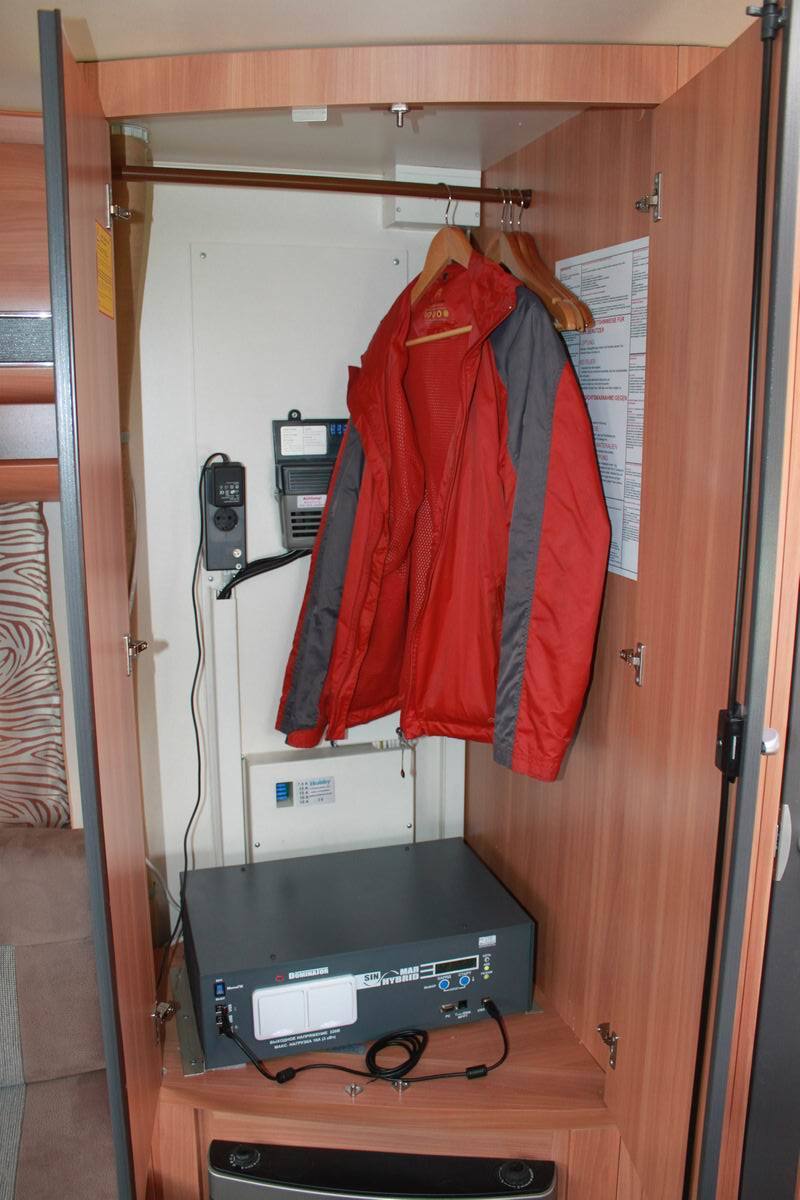
The solar controller was installed already tested, with currents up to 100 Amps. From solar batteries 60 settlement Amperes should come. Hanged it on the wall so that you can watch how much power comes from the panels. At the same time, closer to the battery to reduce losses in the wires.

LiFePO4 batteries are necessarily equipped with balancers so that the charge of the batteries is the same. The batteries themselves are located in a niche under one of the beds.
 "
" Plumbing
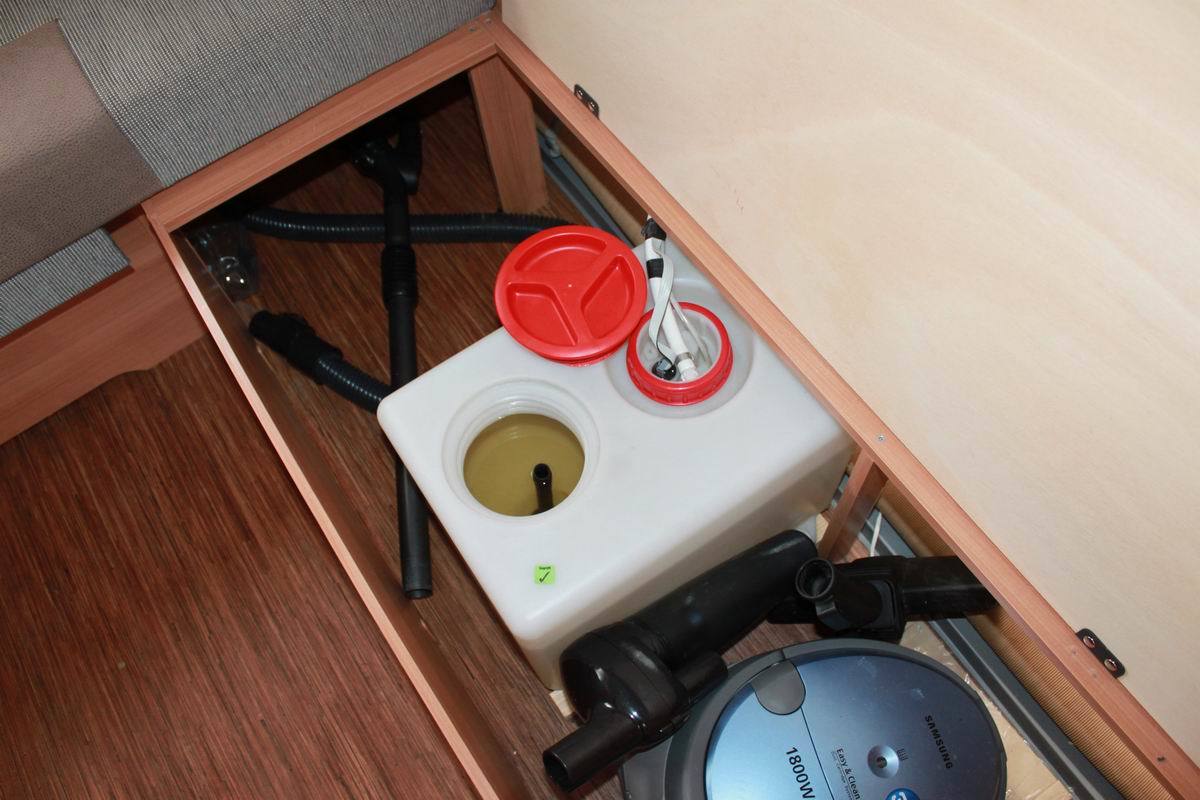
The camper has its own plumbing system. Built-in 20-liter tank with overflow and pump. That is, it will not be able to overflow when filling the tank, and when the valve is opened, the pump will deliver water to the mixer. The tank is under one of the beds and can be filled , both inside and outside the camper. The water is supplied both to the washbasin / shower and to the kitchen. The water trickle is small, so the tank lasts a long time. The toilet has its own drain system, so the water from the tank is not activated.
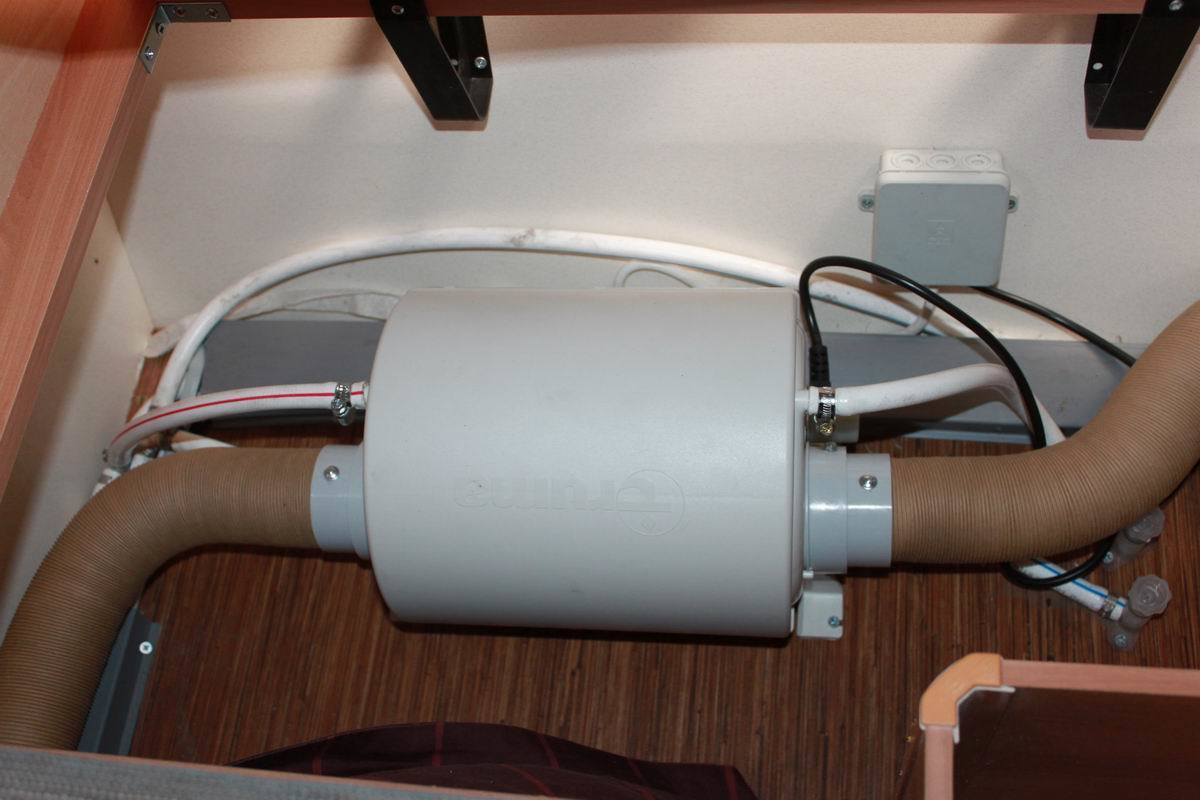
There is a boiler for 5 liters, which is heated by electricity or hot air from the built-in stove. There are gas-heated boilers, but a simpler model is installed in this camper.
We stayed on the river bank and in order not to carry water in canisters, we took along a mobile water purification system. This is a small suitcase that uses triple filtration (fine filter, carbon filter and UV lamp) and allows you to get drinking water from virtually any body of water at the outlet. Called MIV Crystal. It is convenient because it has a built-in pump, so there was no need to lift water from the river, but simply lifted the hose and filled the camper's tank with water if necessary. The charge of the built-in battery is enough to filter a few hundred liters of water. In general, I liked the suitcase, we will take it on a trip. If you need a detailed review - I can do in the next part.

Bathroom
In any journey you want to keep fresh and clean. In our camper the combined bathroom, that is a toilet and a shower in one booth. And if it is more or less clear with a shower - a watering can from a sink on a long hose, and at the bottom a plastic bottom with a sink, then you need to talk about the toilet separately.
The toilet in the camper consists of two parts: a tank with drain liquid and a tank with waste. Interestingly, this system has nothing to do with plumbing and sewage, in order not to pollute the environment. Outside, the tank and the filler neck look like this. Upper mouth for draining, lower waste tank.

Conclusion
In short, I talked about the technical equipment of the house for autonomous residence. Moreover, this camper provides year-round living thanks to the built-in stove - you just need to remember to fill the gas cylinder. If the community is interested in the internal structure of the camper, the nuances of the systems and the arrangement, then I will do a separate material about it. And next time I will tell you how not to get bored at the camper, how to provide yourself with a landline phone and the Internet away from all possible wires, and also what difficulties may lie in wait for the owner of an autocamper.