May 29, 2019 at 10:14
NB-IoT Stolen Bike Tracking
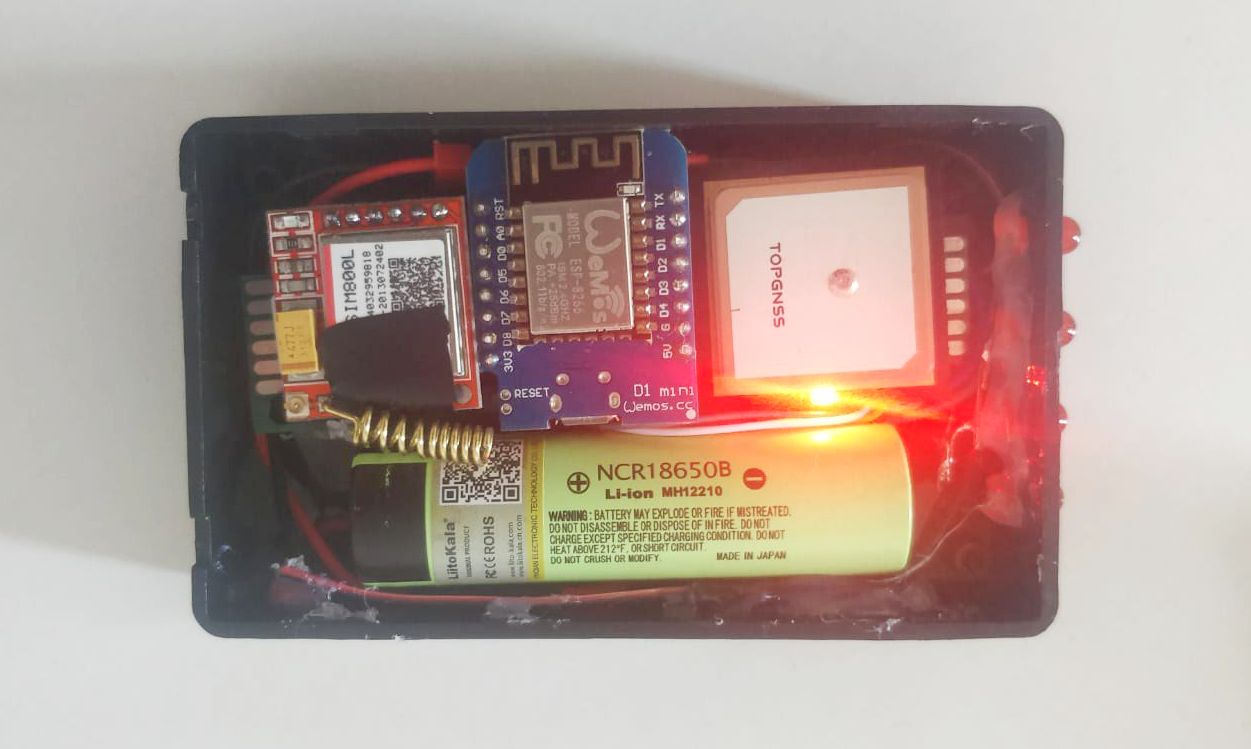
The Internet of things is everywhere, even bicycles. You can make a small tracker with support for the NB-IoT protocol with your own hands. At any time, this gadget will answer your request via the Internet and inform the GPS coordinates of the bike. And best of all, such a tracker works all year on one battery. And this is not the limit: other NB-IoT sensors can work up to ten years on a single charge. Low power consumption is the main advantage of the NB-IoT bike tracker over standard GSM / GPS solutions. Our device spends most of the time in sleep mode and consumes a minimum of energy.
The NB-IoT standard provides switching between cellular stations. Theoretically, the tracker will send you data from almost anywhere in the world (where NB-IoT networks are deployed), so the attacker will not be able to escape. The main thing is to successfully hide the tracker on a bicycle so that the thief does not turn it off.
Assembly instructions for a device called BikePin are published on Hackaday.io.
NB-IoT Protocol
First, let's say a few words about the NB-IoT (Narrow Band Internet of Things) protocol, which is likely to be widely used in the future. This is a cellular standard for telemetry devices with low data volumes. Developed by the 3GPP consortium, the first working version of the specification was presented in June 2016. The NB-IoT network can be deployed both on the equipment of LTE cellular networks, and separately, including over GSM. Hundreds of thousands of NB-IoT devices can connect to one base station.
The NB-IoT standard promises a real revolution in the Internet of Things market. With its help, various devices will be connected to cellular networks:
- security alarms;
- industrial sensors;
- resource consumption meters;
- smart home devices;
- medical devices.
And such bicycle GPS trackers too.
In order to better implement NB-IoT, the GSMA consortium in 2016 adopted the Embedded SIM (eSIM) specification for integrated SIM cards, which allows integrating SIM card functionality into modem electronics, as well as the optional Remote SIM Provisioning (RSP) standard, which describes the infrastructure and interaction algorithms trusted centers for the issuance of SIM parameters, a mobile operator and a consumer of communication services.
According to forecasts, by 2025, about 75 billion connected NB-IoT devices are expected in the world.
Will the NB-IoT bike tracker work in Russia?
Yes it will.
All major Russian telecom operators have been testing the technology for two years, and at the end of 2018, MTS was the first to cover all Russian million-plus cities with the NB-IoT network .
The network is supported by most base stations of the LTE standard. However, other operators are not far behind: in October-November 2018, Megafon and Vimpelcom announced the launch of networks . Moreover, the Beeline network immediately supports two competing standards for the Internet of things - NB-IoT and the "American" LTE Cat-M.

To connect SIM-cards via NB-IoT protocol, operators offer special rates: from 150 rubles. per year with a traffic limit of 1 MB. For our tracker, this is quite enough. Although a mandatory SIM card and a paid subscription are, of course, a disadvantage of NB-IoT.
There are three types of SIM cards: a regular NB-IoT SIM card, a thermo SIM card that ensures the smart device’s stable operation in extreme climatic conditions, and a SIM chip for miniature devices.
BikePin Tracker
BikePin runs on the Atmega328 processor, a GPS module is installed on the board to obtain coordinates at the user's request, NB-IoT module and real-time clock (RPC).
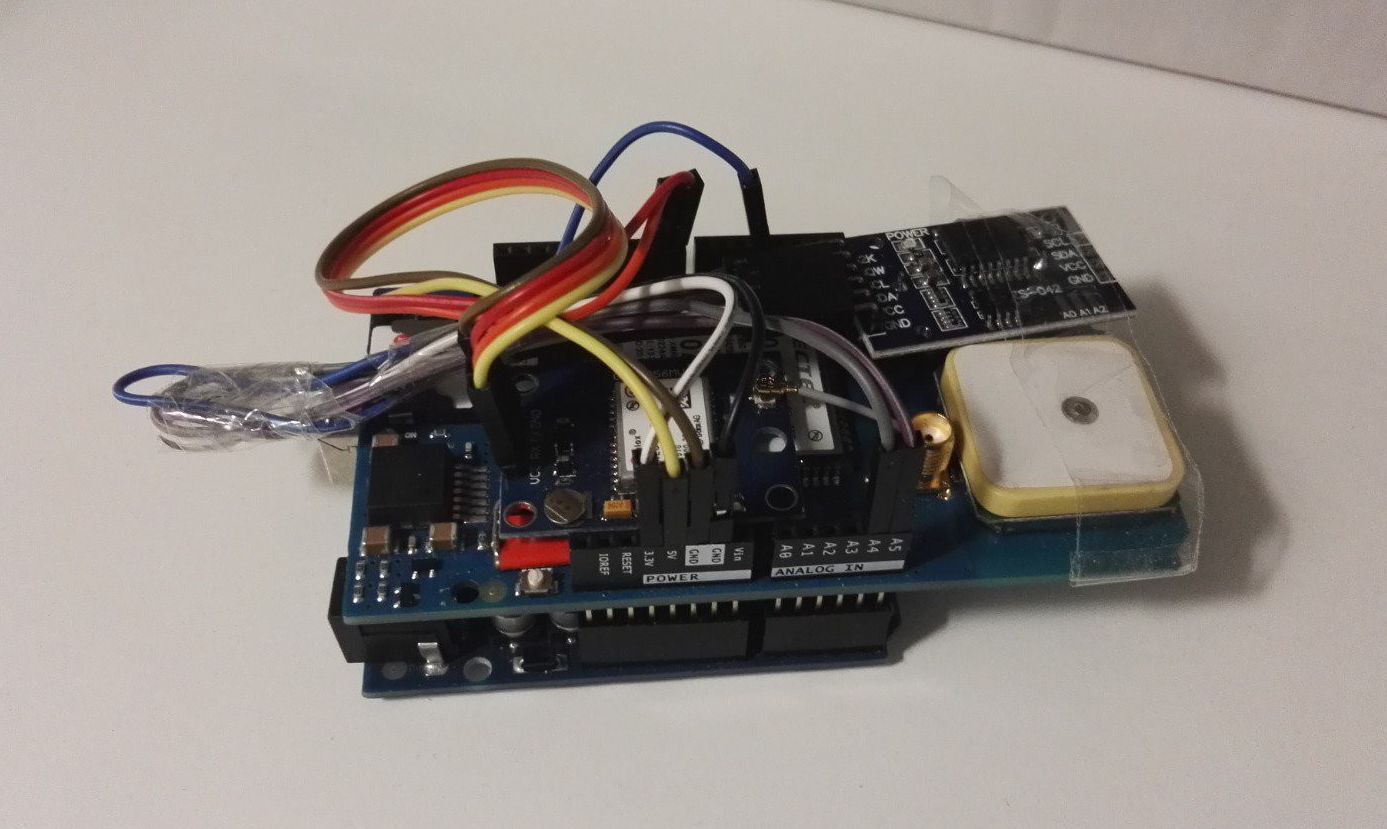
Component list
- Arduino Mini Pro (ATmega328)
- SIM7000 (NB-IoT module)
- GN-801 (GPS module)
- Li-ion 1000mAh battery
- Wemos D1 mini board
The module is able to receive signals and respond to commands at a distance of 10-15 km from the base station.
Developer Marin Vukosav has posted on Github the source code for an app to remotely control your gadget over the Internet, take readings and keep history.


The tracker works using the MQTT (Message Queuing Telemetry Transport) protocol, the device sends data only in response to a received request.
So far, BikePin is at the concept stage. The dimensions of the Wemos D1 mini board do not allow it to be hidden normally. Marine Vukosav says that, ideally, I would like to disguise the device as a rear light, which is mounted under the seat, or in the gear shift on the steering wheel. But for this you need to reduce the size.
According to the author, commercial companies in the future may establish mass production of such devices. Then they will become more miniature. Perhaps bicycle manufacturers will even begin to install them in a regular manner. For example, inside the frame.
In principle, such a tracker is suitable not only for bicycles, but also for tracking pets or children. For example, for a dog collar or a children's bracelet. NB-IoT support can be deployed in drones. The self-powered module will show the whereabouts of the drone, even if it has crashed or the battery has run out.
If the tracker runs all year on a single battery, then this is very convenient. It remains to wait for the sale of inexpensive components to miniaturize this concept.

SPECIAL CONDITIONS for PKI solutions for enterprises are valid until 11.30.2019 under the promo code AL002HRFR for new customers. For details, contact the managers +7 (499) 678 2210, [email protected].