April 18, 2019 at 12:30
Space Data Center. Summing up the experiment
Friends, on Cosmonautics Day our small server successfully flew into the stratosphere! During the flight, the server aboard the stratospheric balloon distributed the Internet, shot and transmitted video and telemetry data to the ground. And we are eager to tell how everything went and what were the surprises (well, how without them?).
A little background and useful links, for those who missed everything:
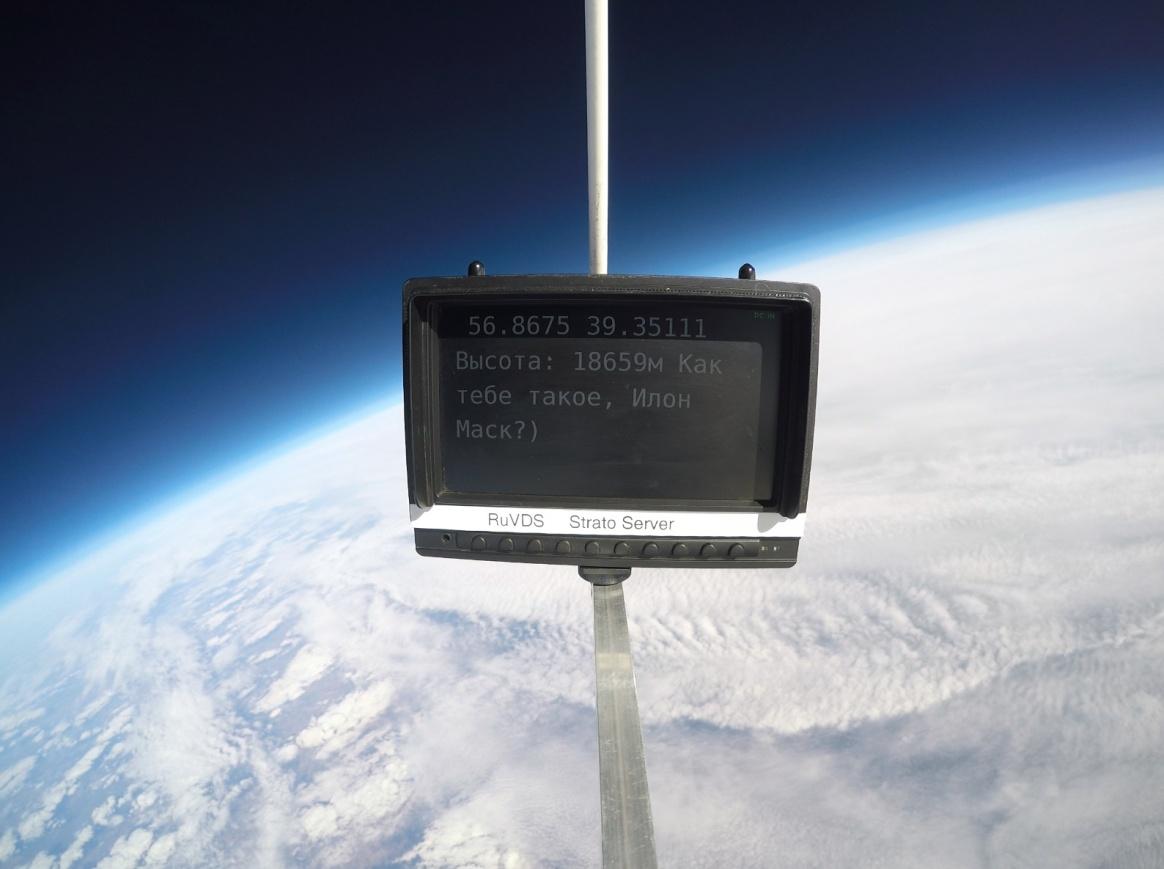
Since we really wanted to launch on Cosmonautics Day and received official permission to use airspace on that day, we had to adapt to the weather. And so that the wind did not take out the stratospheric balloon beyond the boundaries of the allowed zone, we had to limit the height of the rise - instead of 30 km we climbed 22.7. But this is already the stratosphere, and about twice as high as passenger planes fly today.
Internet connection with the stratosphere balloon was quite stable throughout the flight. Your messages were received and displayed, and we filled in the pauses with quotes from Gagarin’s talks with the Earth 58 years ago :)
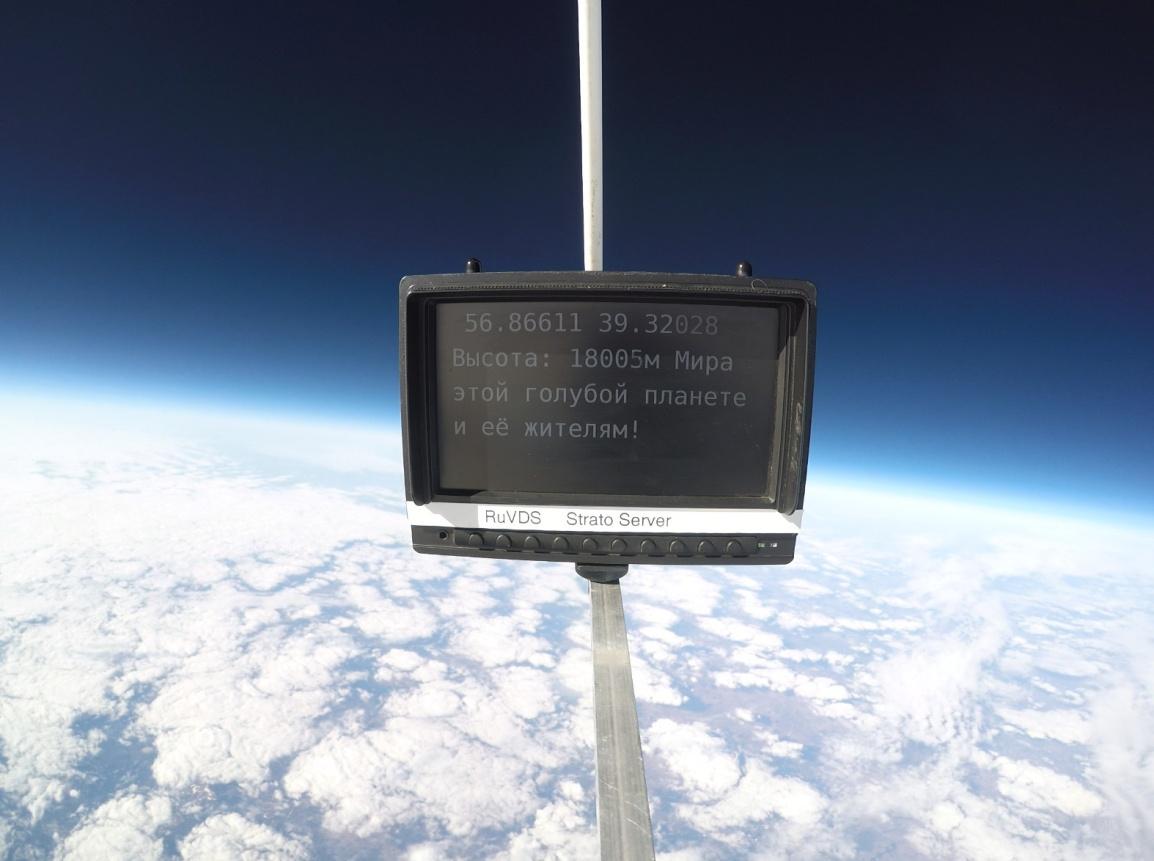
According to telemetry, it was -60 0 С overboard , and inside the pressurized box it reached -22 0 С, but everything worked stably.
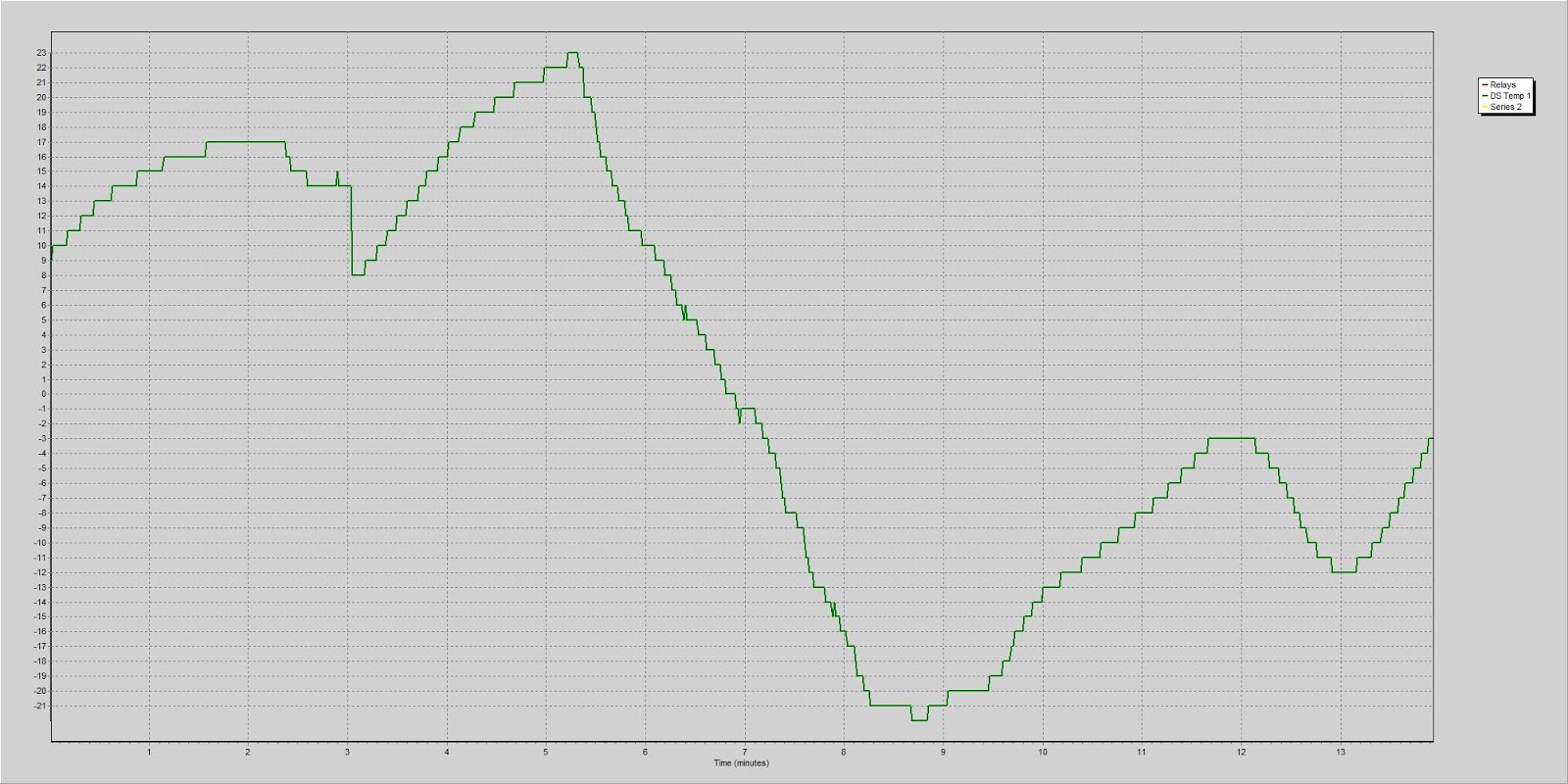
Graph of temperature changes inside (here and further on the X scale, tens of minutes are postponed):
Another experimental digital high-speed transmitter was installed on board. This is our attempt to make high-speed Wi-Fi, and so far we are not ready to disclose the details of its design. Using this transmitter, we wanted to broadcast video online. Indeed, despite the cloudiness, the video signal from GoPro on board the stratospheric balloon was received by us at a distance of up to 30 km. But having accepted the video in our MCC, it was not possible to transfer it to the Internet on the ground ... Now we will tell you why.
We’ll soon show the video recordings of the flight from the onboard cameras, but for now you can watch the online recording from the probe
The main surprise awaited us: the very bad work of the 4G modem in our MCC, because of which it was not possible to transmit video online. Although the probe successfully received and transmitted messages via the Internet, they were received by the server - we received service acknowledgments from it and saw their display on the screen through a video broadcast. We had concerns about communications with satellites and signal transmission to Earth, but no one expected such an ambush that mobile 4G Internet would be a weak link.

And not in some remote place, but not far from Pereslavl-Zalessky, in an area that, according to the cards of MTS and MegaFon, is well covered with 4G. In our mobile MCC there was a tricked-out Kroks ap-205m1-4gx2h router, into which two SIM-cards were inserted, and which had to summarize traffic on them so that we could fully broadcast video to the Internet. We even installed external panel antennas with a gain of 18 dB. But this piece of iron worked disgustingly. Kroks support service was able to advise us only to fill in the latest firmware, but this did not help, and the speed of two 4G SIM cards turned out to be much worse than the speed of one SIM card in a regular USB modem. So, if you can tell which piece of iron next time it’s better to organize data transfer with the summation of 4G channels, write in the comments.

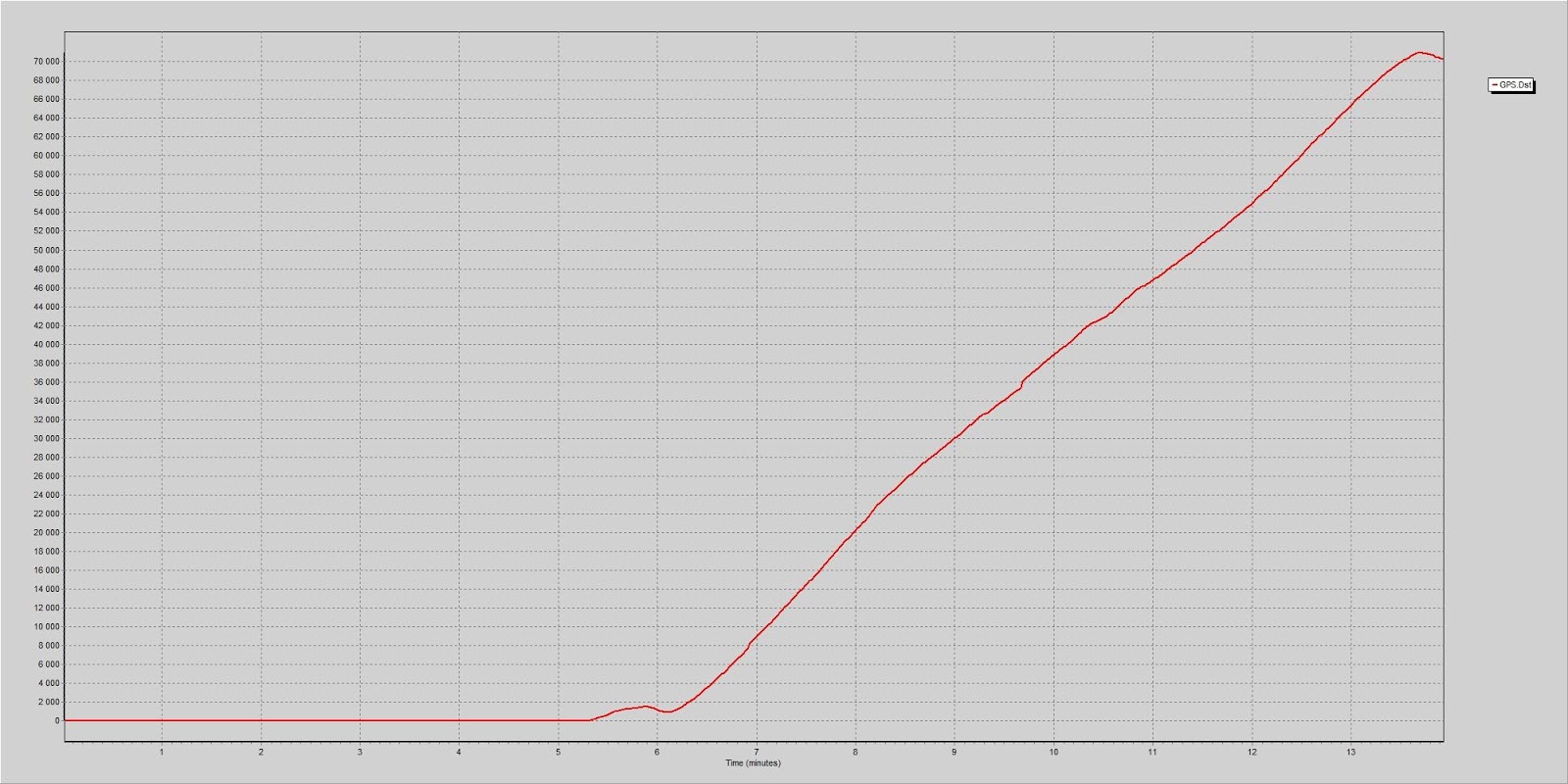
Our trajectory calculations turned out to be quite accurate, no surprises arose. We were lucky, the stratospheric balloon landed on soft peat soil 10 meters from the reservoir and 70 km from the launch site. GPS distance chart:
And so did the vertical speed of the stratospheric balloon:

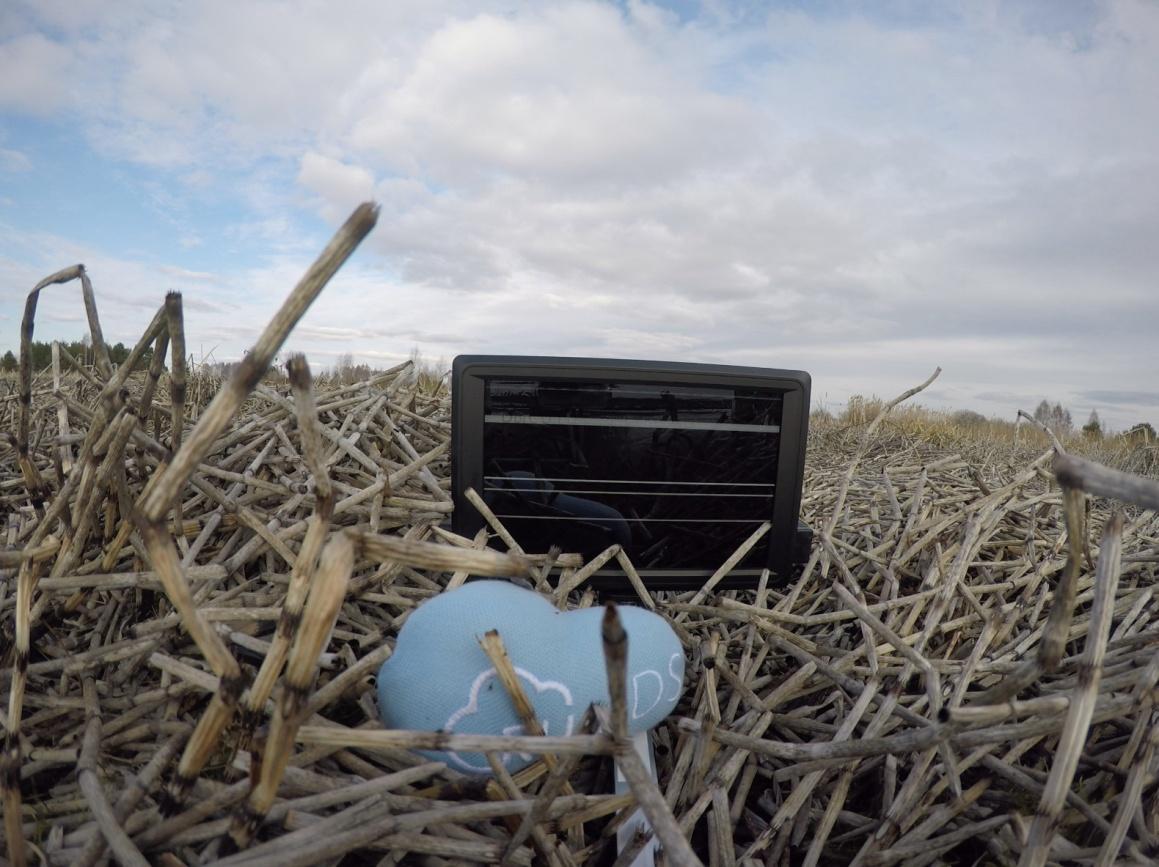
True, one of the two landing displays did not survive (yes, there were two of them, like GoPro cameras; duplication is a good way to increase reliability), the video shows how it went stripes and turned off. But all the rest of the equipment suffered a landing without any problems.
The server operation scheme was as follows: on the landing page, you could send text messages to the server through the form. They were transferred via HTTP protocol through 2 independent satellite communication systems to a computer suspended under a stratospheric balloon, and the latter transmitted this data back to Earth, but not in the same way via satellite, but via radio. Thus, we understood that the server generally receives data, and that it can distribute the Internet from the stratosphere. On the same landing page, a flight chart of a stratospheric balloon was displayed, and points of receipt of each of your messages were marked on it. That is, you could in real time track the route and the height of the "transcendental server".

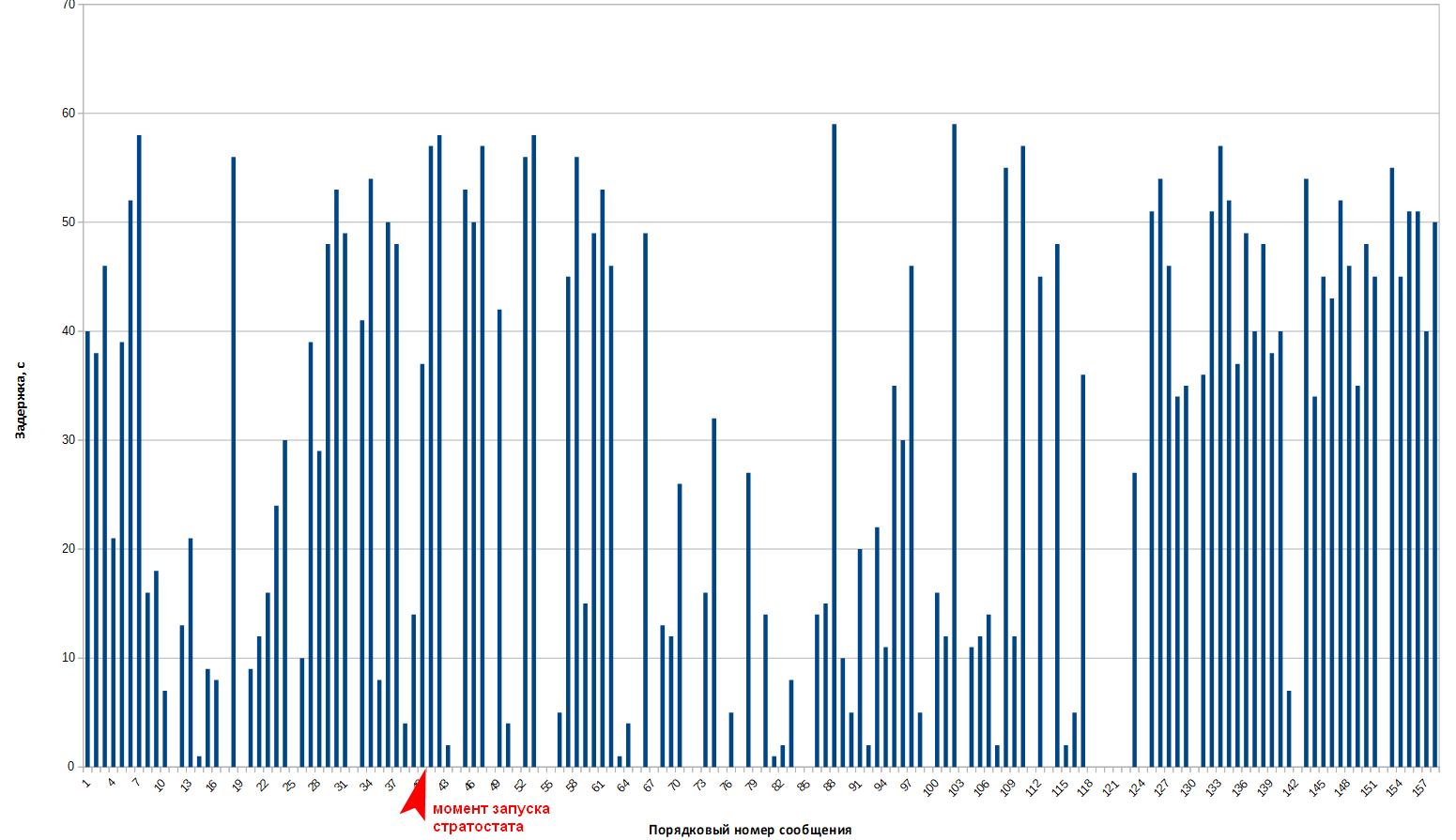
In total, our participants sent 166 messages from the landing page, of which 125 (75%) were successfully delivered to the server. The delay range between sending and receiving turned out to be very large, from 0 to 59 seconds (average delay 32 seconds).
We did not find any noticeable correlation between the height and the level of delay:

From this graph it can be seen that the level of delay did not depend on the distance from the launch site, that is, we honestly transmitted your messages via satellites and not from the ground:
The main conclusion from of our experiment, that we can receive and distribute the Internet signal from stratospheres, and such a scheme has the right to exist.
As you recall, we promised to compare the connection between Iridium and GlobalStar (we didn’t receive the “Messenger” modem on time). The stability of their work in our latitudes was almost the same. Above the clouds, reception is fairly stable. It is unfortunate that the representatives of the domestic system “Gonets” checked something there, prepared it, but could not provide anything for testing.
Now, we are planning the next project, even more complex. We are currently working on various ideas, for example, whether we should organize a high-speed laser communication between two stratostats to use them as repeaters. In the future, we want to increase the number of access points and ensure a stable Internet connection speed of up to 1 Mbps in a radius of 100-150 km, so that in the next launches there will no longer be any problems with transferring online video to the Internet.
- A post on how to coordinate the flight of the probe into the stratosphere (which we encountered in practice at launch).
- As we did the “ iron part ” of the project - for fans of geek porn, with details and code.
- The project website , where it was possible to monitor the movement of the probe and telemetry in real time.
- Comparison of space communication systems that we used in the project.
- Text translation of the server launch into the stratosphere.
Since we really wanted to launch on Cosmonautics Day and received official permission to use airspace on that day, we had to adapt to the weather. And so that the wind did not take out the stratospheric balloon beyond the boundaries of the allowed zone, we had to limit the height of the rise - instead of 30 km we climbed 22.7. But this is already the stratosphere, and about twice as high as passenger planes fly today.
Internet connection with the stratosphere balloon was quite stable throughout the flight. Your messages were received and displayed, and we filled in the pauses with quotes from Gagarin’s talks with the Earth 58 years ago :)
According to telemetry, it was -60 0 С overboard , and inside the pressurized box it reached -22 0 С, but everything worked stably.
Graph of temperature changes inside (here and further on the X scale, tens of minutes are postponed):
Another experimental digital high-speed transmitter was installed on board. This is our attempt to make high-speed Wi-Fi, and so far we are not ready to disclose the details of its design. Using this transmitter, we wanted to broadcast video online. Indeed, despite the cloudiness, the video signal from GoPro on board the stratospheric balloon was received by us at a distance of up to 30 km. But having accepted the video in our MCC, it was not possible to transfer it to the Internet on the ground ... Now we will tell you why.
We’ll soon show the video recordings of the flight from the onboard cameras, but for now you can watch the online recording from the probe
The main surprise awaited us: the very bad work of the 4G modem in our MCC, because of which it was not possible to transmit video online. Although the probe successfully received and transmitted messages via the Internet, they were received by the server - we received service acknowledgments from it and saw their display on the screen through a video broadcast. We had concerns about communications with satellites and signal transmission to Earth, but no one expected such an ambush that mobile 4G Internet would be a weak link.
And not in some remote place, but not far from Pereslavl-Zalessky, in an area that, according to the cards of MTS and MegaFon, is well covered with 4G. In our mobile MCC there was a tricked-out Kroks ap-205m1-4gx2h router, into which two SIM-cards were inserted, and which had to summarize traffic on them so that we could fully broadcast video to the Internet. We even installed external panel antennas with a gain of 18 dB. But this piece of iron worked disgustingly. Kroks support service was able to advise us only to fill in the latest firmware, but this did not help, and the speed of two 4G SIM cards turned out to be much worse than the speed of one SIM card in a regular USB modem. So, if you can tell which piece of iron next time it’s better to organize data transfer with the summation of 4G channels, write in the comments.
Our trajectory calculations turned out to be quite accurate, no surprises arose. We were lucky, the stratospheric balloon landed on soft peat soil 10 meters from the reservoir and 70 km from the launch site. GPS distance chart:
And so did the vertical speed of the stratospheric balloon:
True, one of the two landing displays did not survive (yes, there were two of them, like GoPro cameras; duplication is a good way to increase reliability), the video shows how it went stripes and turned off. But all the rest of the equipment suffered a landing without any problems.
Conclusions on the experiment and the quality of Internet communications.
The server operation scheme was as follows: on the landing page, you could send text messages to the server through the form. They were transferred via HTTP protocol through 2 independent satellite communication systems to a computer suspended under a stratospheric balloon, and the latter transmitted this data back to Earth, but not in the same way via satellite, but via radio. Thus, we understood that the server generally receives data, and that it can distribute the Internet from the stratosphere. On the same landing page, a flight chart of a stratospheric balloon was displayed, and points of receipt of each of your messages were marked on it. That is, you could in real time track the route and the height of the "transcendental server".
In total, our participants sent 166 messages from the landing page, of which 125 (75%) were successfully delivered to the server. The delay range between sending and receiving turned out to be very large, from 0 to 59 seconds (average delay 32 seconds).
We did not find any noticeable correlation between the height and the level of delay:
From this graph it can be seen that the level of delay did not depend on the distance from the launch site, that is, we honestly transmitted your messages via satellites and not from the ground:
The main conclusion from of our experiment, that we can receive and distribute the Internet signal from stratospheres, and such a scheme has the right to exist.
As you recall, we promised to compare the connection between Iridium and GlobalStar (we didn’t receive the “Messenger” modem on time). The stability of their work in our latitudes was almost the same. Above the clouds, reception is fairly stable. It is unfortunate that the representatives of the domestic system “Gonets” checked something there, prepared it, but could not provide anything for testing.
Future plans
Now, we are planning the next project, even more complex. We are currently working on various ideas, for example, whether we should organize a high-speed laser communication between two stratostats to use them as repeaters. In the future, we want to increase the number of access points and ensure a stable Internet connection speed of up to 1 Mbps in a radius of 100-150 km, so that in the next launches there will no longer be any problems with transferring online video to the Internet.