
 February 19, 2019 at 11:00
6 interesting augmented reality (AR) application ideas
- Transfer

Note lane: in his article, the original title of which is “6 Interesting Augmented Reality Concepts” , Nick Babich put together a valuable selection of ideas for using AR, which will be interesting even to those who have nothing to do with development. Among the concepts there are really working products, and something we can see in the near future.
Augmented Reality (AR) is a technology that places graphic or text objects in real time in the outside world.
In this article, I want to share some innovative and inspiring examples of using augmented reality. All the concepts that you will become familiar with later have something in common - they are not really useful . These ideas simplify our daily activities or offer a whole new user experience.
Note: although I believe that AR glasses are the future of augmented reality, in the article I want to talk about both them and mobile applications with AR (MAR - mobile AR).
1. Rethinking passenger experience at the airport and cockpit
Before the flight
“Is my baggage checked in according to the hand baggage allowance?” Is one of the most common questions we ask ourselves at the airport.
The following AR mobile app concept helps you easily measure your bags to avoid awkward moments.
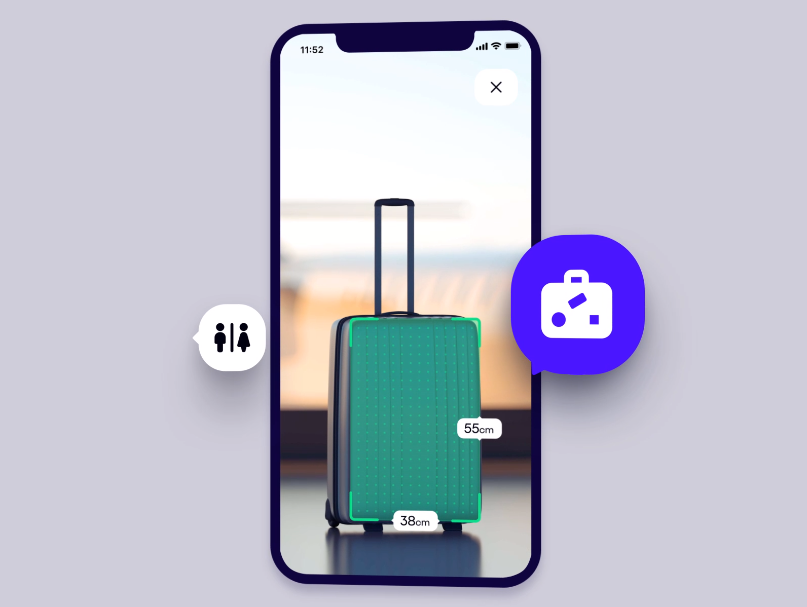
Source: Lukáš Straňák
During the flight
This Airbus iflyA380 passenger mobile app concept helps you easily find your seat on the plane. You can also check where your plane flies right now.
Note: unlike the other concepts described in this article, Airbus iflyA380 is a real-life application that you can download and try out.
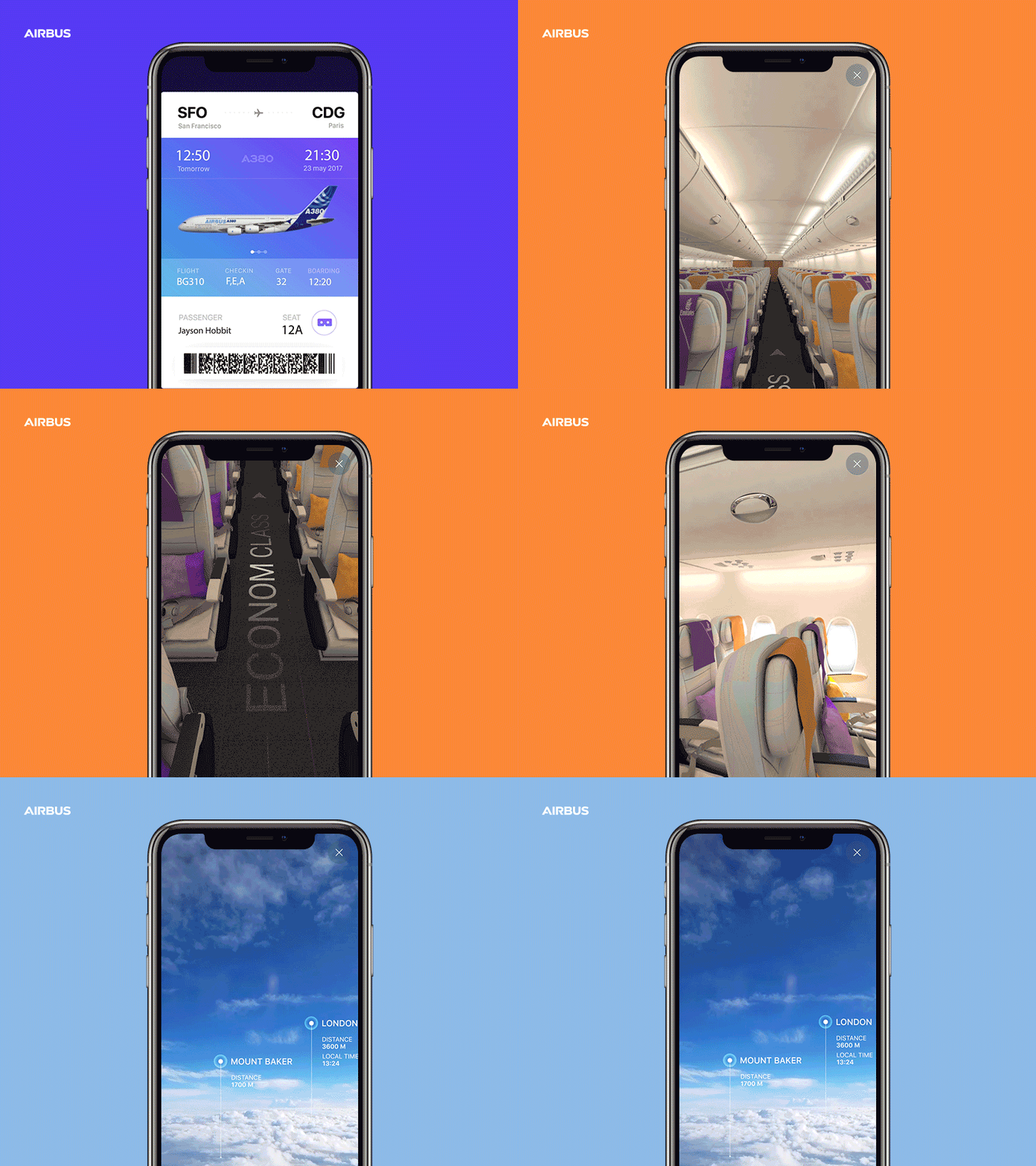
Posted by: Gleb Kuznetsov
After flight
Your plane has just landed in another country. You get out of it and don’t know where to go. It’s familiar, right?
The following application will try to help you with virtual cards. It shows you where the taxi rank or bus stop is located and offers you some useful information while you go.
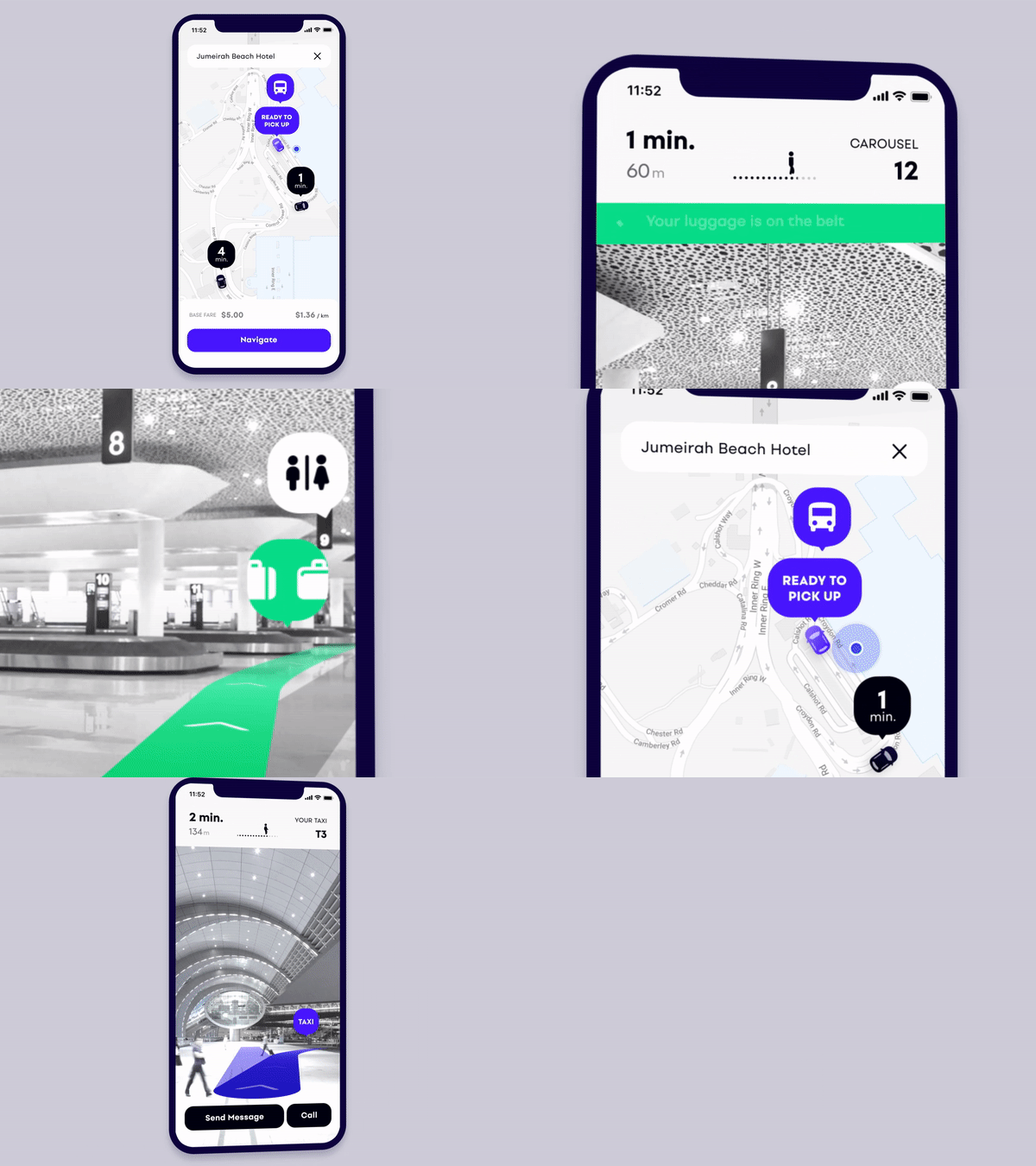
Posted by: Adrian Reznicek
2. Shopping with AR
Online stores today occupy a huge part of the market. In 2018, approximately 1.79 billion people worldwide bought goods online , and approximately 40% of these purchases were made from a mobile phone. Therefore, it is so important to optimize the purchase process for smartphone users.
Search for goods, as in Shazam
When we hear music and want to know the artist, we use the Shazam application for this. But when we see a product, we may not know who created it. And even if we know the manufacturer, you still have to look for where it is sold.
Instead of forcing the consumer to drive text into the search engine in the old-fashioned way, we can use the phone’s camera to easily make a purchase. Below you see the concept of an AR application that recognizes the image from the phone’s camera in real time and finds goods online.
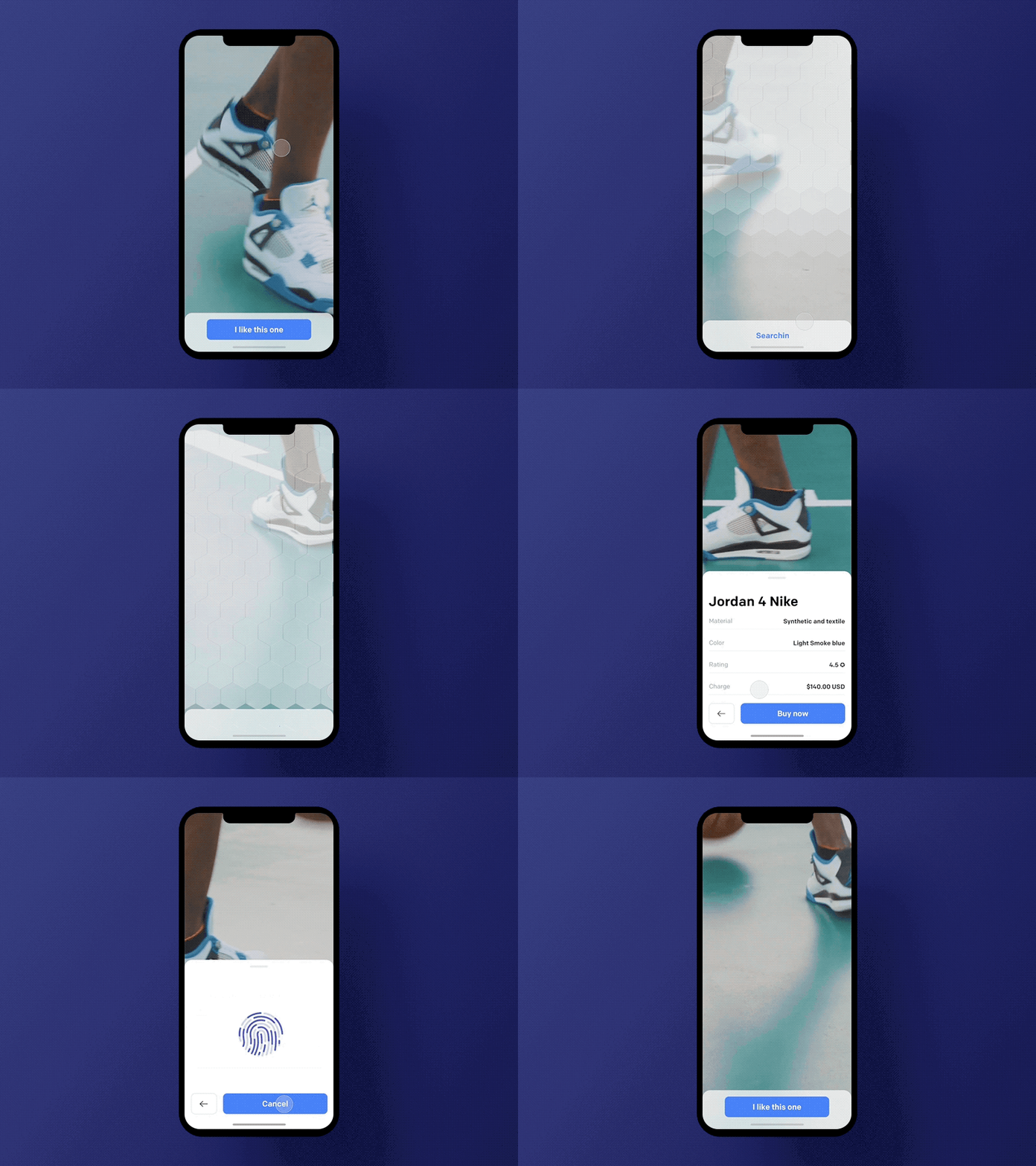
Posted by: Johny vino
Virtual fitting room
What do most people do when they find an attractive product? They want to try it on. Trying on is especially important when we buy clothes and accessories (for example, sunglasses), because you need to make sure whether these things are going to us or not.

Source: Aleksei Kipin
Virtual fitting can be used not only online, but also in retail stores. This is doubly beneficial:
- the visitor does not have to install the application to use the virtual fitting service;
- Using a virtual fitting room will allow less frequent visits to a real fitting room. You can simply go to the mirror in the store and enjoy new looks.

AR mirror at Timberland store. Source: lemonorange
Virtual fitting also works great in the beauty industry. MAC Cosmetics recently introduced augmented reality mirror in its stores that can create virtual makeup. All you need to do is go to the mirror and try on different images developed by MAC Cosmetics.

Source: Digitaltrends
3. Improving the education system
The reality surrounding us opens up unlimited opportunities for learning. Here are just a few examples of how we can improve educational processes:
Anatomy study
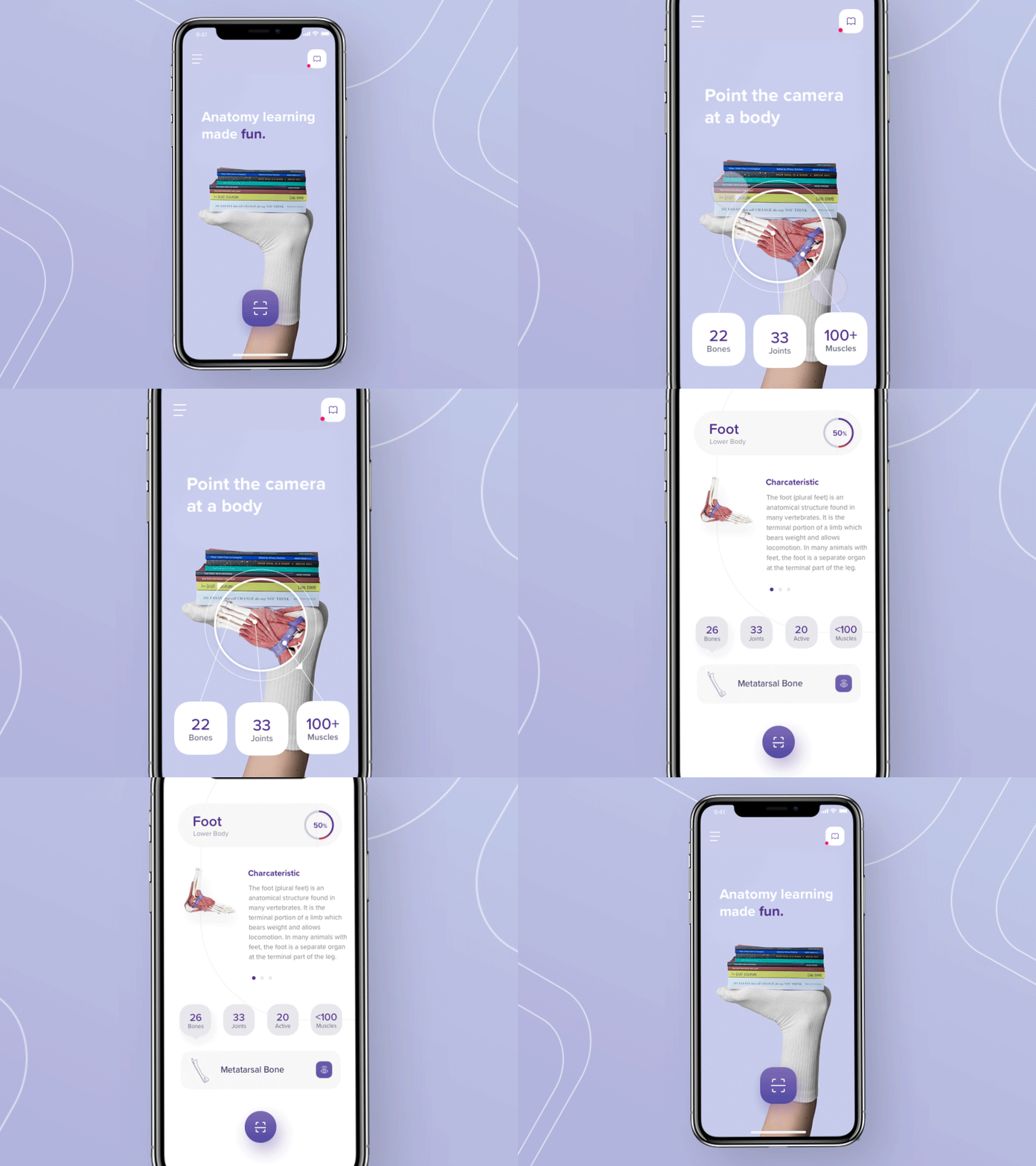
Learning anatomy from books is pretty boring. You look at the pictures and are forced to imagine how they look in reality. Everything changes when we use AR.
Below you see a concept called Anatomic. Anatomic allows you to scan yourself or your friends using your mobile phone and explore the anatomical details of the human body.
Posted by: Maciej Dyjak
Get rid of paper instructions
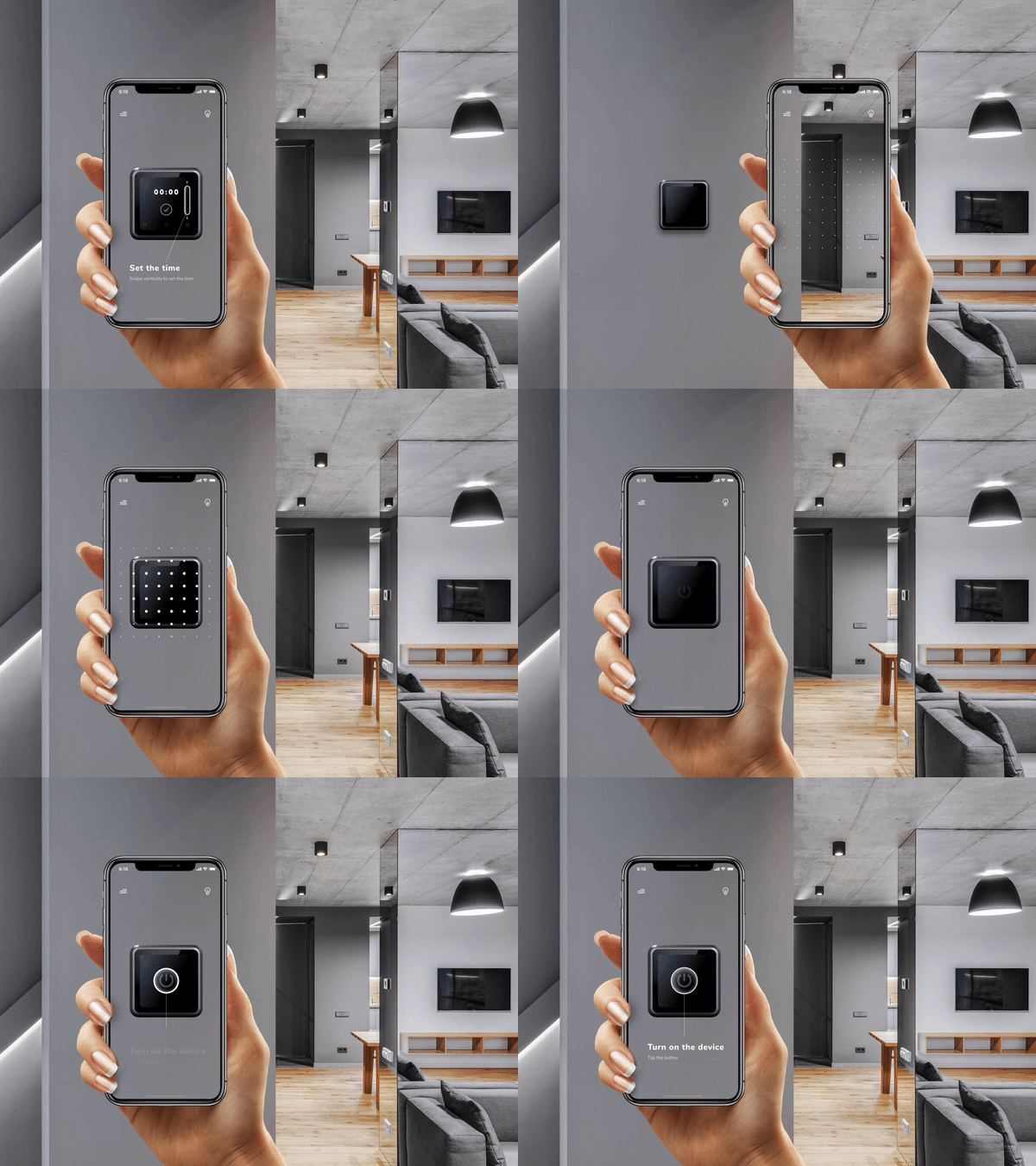
No one likes to read instructions. People do not buy a product in order to learn how it works, but to use it to complete the desired task as soon as possible.
Augmented reality can provide interactive instructions and help customers use the product for the first time.
Source: Andrej Roman
4. Take photos using AR lenses
One of the most frequent actions of a mobile phone user is a photograph. When we change mobile phones to AR glasses, we will have to take photos in a new way. Most likely, AR applications will use eye tracking (eye tracking) in conjunction with gestures.

Posted by: Aurélien Salomon ➔
5. Face recognition
Face recognition technology is used in many industries: security, medicine, the entertainment industry, etc. Many of us use this technology every day (for example, to unlock our smartphone).
However, face recognition combined with augmented reality technologies can set a whole new level for mobile applications. For example, use AR and AI (Artificial Intelligence) to combine the image of a human face with a camera and information about a real person.
Here are some ideas where this might come in handy:
- It will help to know the right person.
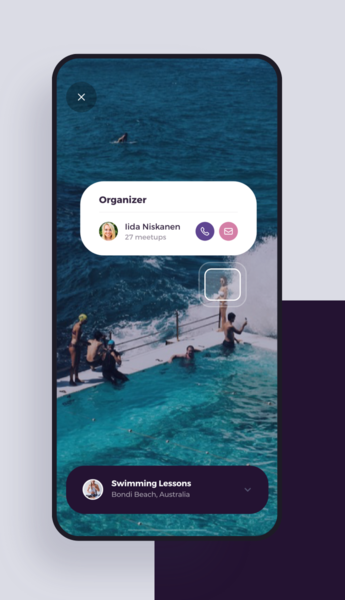
Imagine you are at a big sporting event. You need to find an organizer girl, but how can you recognize her among two hundred people? Especially if today she dressed differently than usual. AR will help you. Point the phone’s camera at a group of people and you’ll see their names.
Source: Aurélien Salomon ➔
- Your face is your social page.
You can create a social network of a completely new generation, where your face will become your page. Users will scan their faces and add personal information.

Source: Techcrunch
Note: Face Recognition technology will undoubtedly provoke a discussion about privacy. We have yet to answer the question of whether face recognition is a threat to our privacy.
6. Advanced personalization with facial tracking technology
What if we can adapt the proposed content not only based on the user's past actions, but also on his current mood ? I'm talking about creating applications that recognize emotions. For example, a news application that monitors the expression on the face of the reader and understands what he likes from what he reads and what doesn't, and based on these data offers more personalized content.

Face recognition and analysis of expression in mobile applications. Source: Facebook (FacioMetrics).
Useful Resources for AR Designers and Developers
I created a collection of resources that will be useful to everyone who does research in the field of AR. The collection is constantly updated: Augmented reality | UX Pro
Note trans .: dokatny image belongs to Ikea.