December 2, 2015 at 11:03
Investigation: Did the UBS Trader Manage the World's Largest Financial Conspiracy (Part 2)
- Transfer
Translator's note: In our blog on Geektimes, we talk about working in the stock market, describe how various technologies influence it, and also analyze situations that help to better understand the structure of the finance industry. Today we bring to your attention the first part of the adapted translation of the Bloomberg LongRead about the story of Tom Hayes, a former UBS bank trader, the lucky “Rain Man” stock market, who was in the center of the scandal and got a 14-year prison term for manipulating the LIBOR rate. The first part of the material is presented here .
A worried friend of Hayes sent him an article from the Wall Street Journal, but he ignored it as irrelevant: the LIBOR dollar fraud had nothing to do with his trading portfolio with the LIBOR in yen. In September 2008, by the time the Lehman Brothers went bankrupt, Hayes's system worked even better than before. Money markets — the cardiovascular system of the financial industry — slowed down as banks refused to give loans to each other and set aside their funds, in fear of expecting one of their colleagues not to survive this night. Every day, the compilers of the LIBOR bet had no idea what value should be published, and in the end they became even more dependent on the opinions of brokers, who, in turn, were bribed by Hayes.
The only problem was their payment, which had to be so high that they remained loyal to Hayes. September 18, when the market froze in anticipation, a small window arose during which the markets of Tokyo and London were opened. During this window, Hayes could not find deals that were large enough to pay everyone who was supposed to receive a fixed salary for his work. And then a new thought came to his mind. He called one of his brokers and offered to conduct a so-called fictitious transaction, during which both parties establish transactions through a broker so that none of the parties receives anything from this transaction, while debiting the commission to the intermediary's account. Such operations are prohibited by many firms,
Additional explanations were required before the broker realized what exactly Hayes was offering him, but he liked the idea. “Well, let's see what can be done from this,” the broker replied laughing. “Wow, damn it!” Hayes persuaded two traders from JPMorgan and RBS to take part in the deal. The first decided to just help. The latter, in exchange for his services, asked Hayes to pay lunch for his colleagues at a nearby restaurant in the amount of £ 500. Hayes later agreed with the broker over the phone that he would pay him in the future (JPMorgan and RBS refused to comment on what happened).
Over the next 11 months, Hayes spent a total of more than 470 thousand pounds on payments to his brokers, a third of which became members of his network. If Hayes could manipulate the LIBOR betting system in order to maintain his profit at a critical moment of the biggest crisis of his time, now it seemed to him that he was capable of anything.
Its success began to attract the attention of other market players. In the summer of 2008, Goldman Sachs offered Hayes an advance payment of three million dollars. Hayes refused this offer, explaining to his colleagues that he wants to remain faithful to the company that brought him to Tokyo. However, he himself believed that he was not ready to work in the most prestigious investment bank in the world.
A year later, in June 2009, he agreed to meet with Chris Sesere, a well-known Citigroup trader, in the chic, dimly lit jazz bar of the Grand Hyatt Tokyo. Sesere took a beer for himself, while Hayes drank orange juice and listened to Sesere talking about creating the world's largest derivatives trading business, with Hayes supposed to take the lead. Like Goldman Sachs, Cesere offered Hayes $ 3 million in advance if he accepted his offer. Hayes agreed this time. Sesere later boasted to colleagues that he had found a "real beast."
While Hayes’s prestige was growing rapidly, the work of McGonagle and his CFTC team had not progressed at all. After numerous attempts to obtain data from the banks on the formation of the rate, the regulatory authorities had a number of important facts, but in most cases they were directly refused the request. Moreover, several months after the financial crisis, the law enforcement body spent most of its time examining whether commodity speculators were responsible for a sharp jump in crude oil prices.
At this time in London, the BBA trading organization, which regulated the LIBOR value, began to take accelerated measures to curb rumors about the manipulation of the rate. In an interview with the Wall Street Journal and other publications, the lobbying organization said that the scandal surrounding the benchmark rate was the result of a misunderstanding of the situation by journalists, rather than illegal actions by banks. In addition, the British law enforcement agencies did not show interest in clarifying the circumstances of the case. They were too busy saving the financial system from collapse (FSA, SFO and BBA refused to comment on what happened).
By the beginning of 2010, only one company had assisted the CFTC in the investigation of the LIBOR rate case and brought at least some benefit - Barclays. A British bank hired former CFTC head Greg Mosek to serve as an attorney to help investigate the case after discovering clear evidence of LIBOR manipulation. Mosek was in good relations with his former colleagues and felt that it would be better to take into account the evidence, but continue to search for a more reliable way to resolve the situation.
After the new administration came to the White House, the CFTC was headed by Gary Gensler, who had previously held senior positions at Goldman Sachs, and his fortune was estimated at $ 60 million. Barack Obama instructed Gensler, who describes himself as “a short, bald Jew from Baltimore,” to regulate the derivatives market, which by that time was considered by many to be the cause of the exacerbation of the crisis. After Gensler took office in May 2009, his goal was to "give importance" to a government body. The LIBOR case was most consistent with this goal, and he was eager to resume the investigation. In March, he received a package that fulfilled all his wishes.
It was a CD from Barclays. Gensler, his close associates and law enforcement officers sat on shabby sofas and chairs in a waiting room near his office - the only place where there was a working CD player - to listen to the recording. A telephone conversation between two Barclays mid-level managers that occurred eighteen months earlier during one of the most stressful periods of the crisis was recorded on disk. A man with a characteristic English accent asked his subordinate to start lowering the LIBOR rate in their bank. After the objections of the junior employee, the first one stated that the order came from the top of the bank's board, which acted according to the instructions transmitted by the Bank of England.
On this record broke off. There was dead silence near Gensler’s office. The conversation was so straightforward that it seemed as if both people knew that they were being eavesdropped on, as one of the CFTC employees later said. After several unsuccessful months, they had materials in their hands that could help them solve this case. If Barclays employees openly discussed the LIBOR manipulation, it is logical to assume that other banks could do the same (Barclays management declined to comment on what happened).
The CFTC usually cherished its business by preventing other organizations from interfering in them. But now, having a Barclays disc in their hands, investigators understood that they had no choice but to provide materials to the Ministry of Justice. Its representatives could force companies to cooperate with the investigation and bring criminal charges to individuals. Steve Obi, Head of CFTC Law Enforcement, has contacted Robertson Park, a high, sociable attorney in a senior position in the US Department of Justice. Obi and Park worked on some business together for several years, and from time to time they loved to meet and talk over a beer.
“Rob, drop everything you do now and listen to me,” Obi said. He brought the phone to the speakers of his computer and turned on the conversation recording from Barclays. When the recording ended, the first thing Park said was: “Damn it!”
Journalists daily criticized the criminal department of the Ministry of Justice, as he could not follow the activities of banks, thereby exacerbating the critical situation in the country. Now he had the opportunity to explain his actions to the press. Within a month, Park assembled a team for his own investigation of the situation with LIBOR. The British had to intervene. LIBOR, perhaps, was established by bankers in London and regulated by the BBA, but the FSA all this time tried not to intervene in matters that, in the opinion of its leadership, led to great costs and political confusion. Since 2008, the main objective of the FSA has been to receive data from banks and transfer it to the hands of CFTC. This time, after a series of negotiations, the FSA agreed to cooperate with its American counterparts.
Thanks to this collaboration, the CFTC managed to bring 16 banks to court, forcing them to provide evidence on the case and conduct a survey of their staff. Among other things, the regulatory body advised banks to contact third-party law firms to investigate the LIBOR case and report their results by the end of the year.
Within weeks, whole packages of evidence began to arrive at the CFTC. Investigators McGonagle and Obi spent all their time in offices, bending over their desks, filing documents in catalogs and listening to audio recordings. The walls were filled with posters with the management structure of various departments in various banks. The concepts used by traders to indicate the timing of trading futures contracts and changing the structure of the enterprise were gradually deciphered.
One of the banks summoned to court was UBS. At his headquarters in Zurich, lawyers worked with huge archives of correspondence and email, using phrases such as “lower by 6 meters” and “favor” to search. It turned out that the name of one trader was featured more often than others.
Before proceeding to trade at Citigroup, Hayes had to go through a three-month trial period. All this time he was preparing for a new attack on LIBOR. He agreed to transfer the young trader Hayato Hoshino from Citi Tokyo to London and established contacts with local LIBOR drafters: so Hayes could continue to influence his bet size. In addition, Hayes began to establish relations between his bank and the group of drafters of TIBOR, the Tokyo interbank offer rate. In October, Hayes traveled to London to meet in person with people who set this bet at Citi.
Hayes was taken to the headquarters of Citi's European office in Canary Wharf and introduced to Andrew Tursfield, head of cash operations. The first thing Hayes said was: “Nice to meet you. You can help us with LIBOR. ”
Tursfield was a serious Englishman who spent more than twenty years in the risk management department at Citi. A balding man with glasses with a nasty voice and pedantic manners looked more like an accountant than a banker. He liked to consider himself the custodian of the company's balance sheets.
Hayes was unshaven, battered, and scattered. He told Tursfield how the UBS cash operations department regulated the movement of its rate to adjust it to itself, and boasted of its connections with the rate founders in other banks, as well as how they exchange services. Hayes tried to impress Tursfield, but underestimated this man and the situation as a whole. Tursfield immediately disliked Hayes and the next day called his manager, worried about the newcomer to the company. “Whatever the head of your department,” Tursfield said, “he should closely monitor his actions and how open they are.” Hayes, in his own words, impressed Tursfield as a “street vendor,” as the talkative bouncers are called in the world of finance.

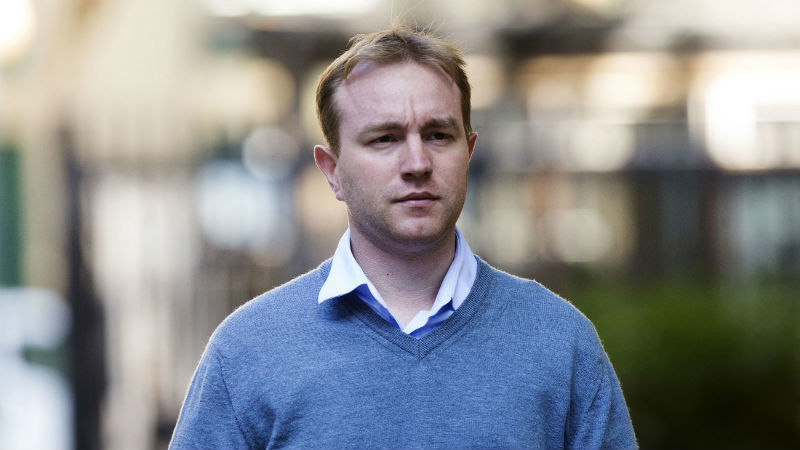
June 20, 2013. Tom Hayes at the Westminster Court in London
Hayes irritated the most inappropriate person. Citi had already collaborated with the CFTC LIBOR betting fraud investigation, and in March 2009 Tursfield even gave investigators a link to a presentation from 18 slides on how the bet is calculated. Hayes, in turn, was not particularly worried about the meeting and could not even remember the name of Tursfield.
In December, when Hayes did appear at Citi's Tokyo office, located in the Shin-Marunouchi Building, his plans were revealed. The rate compilers at the bank have repeatedly told him that they cannot take his opinion into account when calculating LIBOR. Even his former comrades turned away from him. Rumors of a CFTC investigation began to spread quickly, and everyone began to worry. “Recently I turned to him, and he asked me not to ask him anything else, but, buddy, I will try again and again,” said one of the brokers Hayes, who began to bother him. “Recently, everyone began to behave somehow strange.”
Hayes, among other things, managed to make a number of unsuccessful bets in the market, and his financial losses began to grow. In June, after one of Hayes’s colleagues at Citi quit and handed over the details of Hayes’s trading portfolio to his former UBS boss, they teamed up against Hayes with other players in the market and began looking for his weaknesses. As a result of joint efforts to shift the market in the opposite direction, they forced Hayes to lose $ 100 million.
At the end of one of the worst months of his career, Hayes was already falling into despair. On June 25, sitting at his desk over financial statements, which were worse than ever, Hayes picked up the phone and dialed Hoshino's London number. Despite the fact that he was repeatedly told that the founders of the bet did not want to talk about LIBOR anymore, Hayes ordered his subordinate to try to negotiate with them again. At the end of the month, he could conclude a major deal, and for this, the value of the reference rate should have grown.
Choosing Hoshino's assistants, Hayes brutally miscalculated. The humble young man, known among his colleagues as “little Hoshino,” actually never contacted the founders of the bet when Hayes asked him to. With his poor English, the young trader was simply afraid of them. This time, Hayes was more persistent than usual. Immediately after lunch, Hoshino walked around the trading floor, went to the workplace of the LIBOR founder and passed on a message from Hayes. This was a fatal mistake. The CFTC has just summoned Citi executives to court and instructed him to see if derivatives traders are trying to manipulate the LIBOR rate. Knowing the pressure on the bank from the CFTC, the betting founder told Hoshino that his actions were unlawful and reported the incident to Tursfield, who, in turn,
Over the next few months, Citi lawyers interrogated Hayes for a total of more than 12 hours. Management assured Hayes that everything would be all right and that this was only part of a larger investigation. Then, on September 6, when Hayes was heading to his office, he was asked to go into the usual meeting room. There, he met with two Citi managers, Andrew Morton and Brian McCappin, who hired him less than a year ago. They sat at the table with serious faces. Citigroup's chief legal adviser and head of the human resources department of a bank branch in Japan were also present there (Morton, McCappin, Tursfield and Hoshino did not respond to a request to comment on the incident that was sent to Citigroup).
After Hayes sat down at the table, McCappin told him that the bank’s management had been following him for several months and had a number of facts about the manipulation of rates. These actions were contrary to the rules of the bank, and this meant that management was forced to fire him. Hayes was simply amazed. A week ago, he was still trading and discussing action strategies with McCappin in his office.
As usual with him, Hayes quickly came to his senses. “Well, it’s rather strange that you are firing me, because you are also involved in this,” recalls Hayes, who then spoke to McCappin.
“He was just not involved in this,” the legal adviser replied instantly. “He did not have his own trading positions.”
Hayes was willing to argue with this and said that as the head of Citi Investment Bank in Japan, McCappin was fully responsible for every transaction made. He then launched an amazing retaliatory attack. “How much are you willing to pay me to leave quietly?” - he asked. “Otherwise, I will make a real scandal out of this event.”
Citi management did not expect this. Managers asked Hayes to leave the room to discuss his contract. A little later, they called him and said that he would not get a penny. But they were allowed to leave Hayes his advance of three million dollars.
Over the next few months, Hayes did his best to improve his life. A few days after his dismissal, he returned to England and married Ty. They played a luxurious wedding at the Four Seasons Hotel on the outskirts of Hampshire. In 2011, they had their first child, whom their parents named Joshua. Then they bought a six-bedroom house, once owned by a parish priest, in a modest village near London. They paid him £ 1.2 million ($ 1.9 million) in cash, without paying a mortgage, judging by the records in the land book. Hayes enrolled in an MBA, and Tye continued to work as a lawyer. Together they began to build their dream: they added a new wing to the house and decided to install an automatic gate six feet high to be completely safe.
Meanwhile, US investigators continued to work on their case. Hays heard rumors about the progress of the investigation, but he did not suspect that he was one of the main targets. He sent a Facebook message to Mirhat Alikulov, a trader with whom he worked together at the Tokyo UBS for many years, and a few weeks later they phoned. Hayes decided to go straight to the point and asked if the bank was going to negotiate with the Ministry of Justice. Unbeknownst to Hayes, Alikulov made a call from the office of his criminal lawyer in Washington on the tapped line, which the FBI set up so that it seemed like the call was coming from Tokyo. As easy as possible, Alikulov asked Hayes what he was going to do. Alikulov, against whom a number of fraud allegations were also directed, made a deal with the investigation: the FBI agreed to close the lawsuit against him, if he tells everything and helps to catch Hayes. If Hayes suggested he lie to a government agency, then he could be accused not only of fraud, but also of resistance to the authorities.
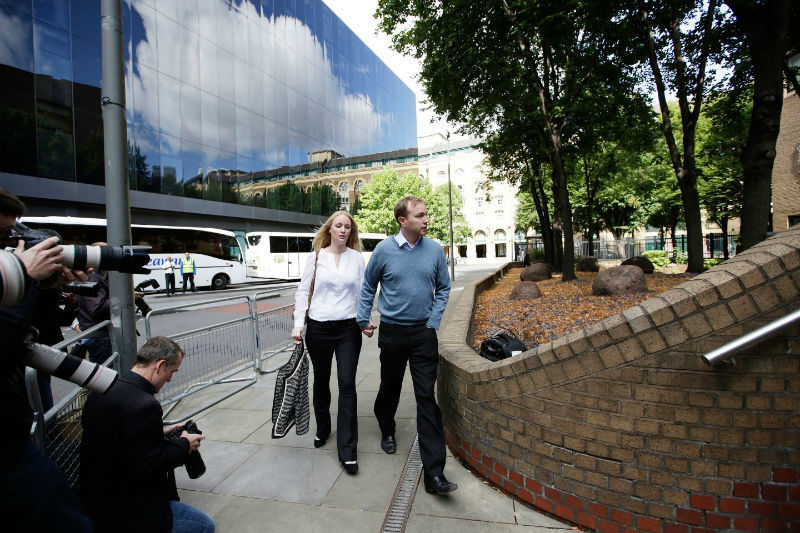
July 29. Tom Hayes and his wife Sarah are heading to the Royal Southwark Royal Courthouse in London.
Hayes stopped, as if he knew it was a trap. “The US Department of Justice, friend, you know, these are dudes who, well, in short, they put people behind bars,” Hayes blurted out. “Why do you need to talk to them at all?” (Alikulov, responding through his lawyer, declined to comment on this situation).
In 2012, two weeks before Christmas on Tuesday at 7 a.m., Hayes heard a knock on the door. More than ten police officers and investigators from the Department of Combating Major Financial Frauds Serious Fraud Office, SFO] burst into the house, dared everything in its path, taking away computers and documents. Hayes was arrested. He was taken to a police station in London, where they said he was suspected of plotting for fraud.
Hayes refused to answer questions and was released. Eight days later, as Hayes later recalled in his testimony, he watched TV, and then the news broadcast went to a press conference from Washington. In front of many cameras, the US Attorney General Eric Holder said that UBS was fined $ 1.5 billion and will be responsible for manipulating the LIBOR rate in the Japanese branch of the bank. In addition, the Department of Justice has filed a criminal charge against Hayes and his former colleague Roger Darin and was awaiting their extradition to the United States. Hayes did not even suspect this.
He tried to study all the facts against him. Investigators from three continents had thousands of emails and audio recordings exposing Hayes. The only way to avoid extradition to the United States and subsequent punishment, according to lawyer Hayes, was to assist the British authorities, plead guilty and expose everyone with whom he collaborated. The British were happy to accept this deal. They later launched an investigation, but, nevertheless, wanted to hear the accused’s confession in their native land.
At this point, Hayes began to actively cooperate with the investigation. Over the next three months, Hayes's life reverted to its usual rut. At least once a week, he went to SFO, located near Trafalgar Square. At the entrance, he usually signed in the form of a fictitious surname, for example, a famous football player from his favorite team Queens Park Rangers, then he took the elevator to the fourth floor, walked past vending machines and went into his confession room - a bright room in which only a table, a projector, his lawyer and two investigators in suits. They did not even have to make him speak.
“The first thought that arises in your head,” said Hayes then, “is how to make a little more money, how to push and push the boundaries, you know? How can I enter this intermediate zone and expand my field of action. - He stopped to catch his breath. “But the whole point is greed: you want to take possession of every cent that you can get, because this is the only way others judge you.” This is your measure of performance. ”
A short, stocky investigator began to ask him: “While you began to lead the process, what do you think: did you realize what exactly ...”
Hayes seemed to enjoy reliving moments from the past. He spoke faster and faster, describing the happy moments when he was collecting his positions, negotiating the best price with brokers and setting traders against each other. “Trading in large volumes of derivatives,” he said at one of the interrogations, “is like a huge living organism. After several years of trading, you begin to feel how everything is interconnected. ”
In June, after 82 hours of interrogation, Hayes was formally charged. He identified more than 20 people as conspirators of the conspiracy, including his half-brother. (O'Leary, Pierre, Hoshino, and McCappin were not charged). The list included traders from JPMorgan, RBS, Deutsche Bank and HSBC, as well as brokers of the two largest interdealer offices. Hayes believed that the extradition of his accomplices was a justifiable act. Knowing that he faces a much shorter period in the UK compared to US laws, Hayes said he feels like a person who has been diagnosed with cancer, and then reported that he is completely healthy.
While the LIBOR scandal was gaining in popularity, the same summer, due to headlines flying around the world, Hayes' relief was replaced by anger. During his confessions, investigators showed him evidence that did not go out of his head. Despite the understanding that they pointed to the seriousness of the charges, he believed that these facts also indicated the injustice of the situation as a whole. Hayes spent the whole summer at a table in his house, sorting through documents that only increased his bewilderment: emails from management justifying his actions; copies of protocols indicating manipulations before he joined the company; even papers that, in his opinion, resembled intra-bank instructions for circumventing systems. Anger accumulated in him. LIBOR manipulations have been widespread practice.
On October 9, when the SFO summed up the case against Hayes and his accomplices, a white envelope was handed over to the building. The letter was sent by Hayes’s lawyers: “In order to comply with the rules of etiquette, we are forced to report that Mr. Hayes will declare in court that he is not guilty of anything,” the letter read. “So now he's officially moving away from the current process.” Avoiding extradition to the United States, the talented trader took the greatest risk in his life: he refused the deal and entrusted his fate to the hands of a random jury in a London court.
On May 26, 2015, seven years after the start of the investigation, the first person accused of manipulating the LIBOR headquarters nervously walked through a filled room and took his place in the Royal Court of Southwark building, built of ordinary red brick on the banks of the Thames. Hayes was dressed in cotton pants and a dark sweater, he was not wearing a tie, his blond hair, oddly enough, was neatly laid. Hayes looked modest and did not look like an aggressive trader, as the prosecution was going to present him. His mother looked at him from a reserved place in the midst of a crowd of journalists.
The jury, seven men and five women, were aware of Asperger's syndrome found in Hayes at the beginning of the hearing. This disease did not, according to the judge, affect the defendant’s ability to distinguish between honest and dishonest acts, but this may explain the harshness of his answers. For health reasons, Hayes was allowed to sit at the table, along with a team of his lawyers, and not alone in the dock - a closed glass box in the center of the room. A mediator sat next to him during the whole trial, whose duties it was to monitor the defendant's signs of stress and ask him to calm down if he began to feel irritation, which was often accompanied by sharp movements of the head and writing notes to his lawyers.
SFO Chief Prosecutor Mukul Chawla, dressed in a dark robe, a large, good-natured man with a shock of gray hair and an electronic cigarette, which he smoked during the break, restrainedly presented the case of Hayes. “Perhaps you believe that, judging by the evidence, the motive for the crime was obvious,” Chawla said in the introduction. - Greed. Mr. Hayes longed to earn and save as much money as possible. The more he earned for his employers, the higher they would appreciate his services, and therefore would pay him even more. ”
There was no doubt what crime Hayes committed. However, in order to get him found guilty, Chawla had to prove that the defendant understood that he was committing fraud. The prosecutor’s main weapon was the words of the trader.
When it was Hayes' turn, he began to deny what was said in a conversation with SFO employees, saying that his involvement was greatly exaggerated - so he tried to guarantee an investigation into his case in the UK. Within two weeks of testifying, Hayes denied allegations that he acted unfairly, since the practice of influencing the LIBOR movement was so widespread in the financial sector that he did not even suspect that he was conducting illegal activities. His lawyer backed up his statements with documents confirming that UBS managers forced him to take certain actions, and the BBA approved a deliberate reduction in rates during the crisis.
At one point, Hayes burst into tears. “I don’t think I did anything bad,” he claimed, looking at his wife sitting on the balcony. Her blond hair was neatly braided at the back, and her hands were folded in her lap. She nodded to him in support.
When the prosecution turned on an audio recording in which Hayes talked about how he traded his contracts in the market, he smiled, lost in his memory. “It was probably the worst job in the world,” Hayes said. “She can make you drop off the bridge.” She can make you feel nauseous every time you come to work. ” And yet, the most difficult in this situation, according to him, was the fact that he was forbidden to engage in his activities. “I was, and to a lesser extent, remain obsessed with markets, financial markets, and miss my previous job very much,” he said. - I miss my previous career. She was an important part of my life. ”
By the end of the first week of Hayes' appearances in court, the case, which seemed so obvious, was now eluding Chawla. The young man appeared before the court as straightforward, amiable and naive - rather as a victim of the system than as the organizer of a crime.
But all the hopes of Hayes collapsed during cross-examination. When he was asked to confirm the simplest facts, for example, with what documents he traded, the trader began to evade answers and began to express dissatisfaction. He was tense, squinting and clenching his jaw. When Chawla provided Hayes with evidence against him, Hayes changed the subject of the conversation, condemning the prosecution for lack of a thorough analysis, and claiming to be a victim of a struggle between the UK and US authorities, that he was “a fugitive from American justice.” Here the judge said his word, ordering Hayes to answer questions and refrain from verbose statements. One of the participants of the defense side complained to the reporter during the break: "Two years of my life in a couple of minutes went down the drain."
Ten weeks after the trial began, the jury retired to convict. Five days later, they announced a unanimous decision: the defendant is guilty on all counts.
Half an hour later, Hayes was already walking back to the filled, but quiet courtroom for the last time. This time he could not leave the dock. Before entering the hall, he asked the guard if he could kiss his wife goodbye. Dressed in a blue shirt and blue sweater, with a sleeping bag in his hands, Hayes was placed in a glass chamber.
Hayes had almost no reaction when the judge announced that he was imprisoned for 14 years - one of the harshest sentences for office workers in the UK. His wife shook her head, bending to her knees, and held the hand of mother Hayes, who was trembling, looking in front of her.
Hayes is now in Her Majesty's Prison in Wandsworth, a fortress built south of the Thames back in the Victorian era and known for its poor conditions and unfriendly inhabitants. In October [ article published in September 2015 - approx. perev. ] Six brokers accused of abusing their influence on banks, trying to help Hayes move the LIBOR rate in the right direction, will be forced to walk along the same steps of the Royal Southwestern Court, attending their trials. SFO says it will privately indict Hayes accomplices in the coming months.
The LIBOR investigation, launched by McGonagle and his colleagues at CFTC, turned into fines for approximately twelve companies. The amount of fines amounted to 10 billion dollars. More than a hundred traders and brokers have been fired or left the realm of finance themselves. For those who remained to work in banking, the trading platform of the “post-Hayesian” era looks very different, more restrained. Inspired by their success in the LIBOR manipulation case, law enforcement agencies have successfully implemented a study of manipulation in the markets of foreign currencies, precious metals and derivatives.
Banks have acquired valuable personnel in legal departments for compliance with legal norms. Vouchers paid by enterprises to the French Val d'Isere and paid dinners at Le Gavroche disappeared. Traders today live in fear that their past conversations will be discovered and used against them. The outflow of a large amount of funds from the banking sector has recently been attributed to the presence of a financial crisis. But, as you know, none of the Wall Street workers have yet been jailed in a risky mortgage case. Since Hayes is behind bars, and his accomplices are queuing up for the dock, the LIBOR and related collusion cases are faced with the same, if not higher, requirements in the framework of the new low-key reality.
A worried friend of Hayes sent him an article from the Wall Street Journal, but he ignored it as irrelevant: the LIBOR dollar fraud had nothing to do with his trading portfolio with the LIBOR in yen. In September 2008, by the time the Lehman Brothers went bankrupt, Hayes's system worked even better than before. Money markets — the cardiovascular system of the financial industry — slowed down as banks refused to give loans to each other and set aside their funds, in fear of expecting one of their colleagues not to survive this night. Every day, the compilers of the LIBOR bet had no idea what value should be published, and in the end they became even more dependent on the opinions of brokers, who, in turn, were bribed by Hayes.
The only problem was their payment, which had to be so high that they remained loyal to Hayes. September 18, when the market froze in anticipation, a small window arose during which the markets of Tokyo and London were opened. During this window, Hayes could not find deals that were large enough to pay everyone who was supposed to receive a fixed salary for his work. And then a new thought came to his mind. He called one of his brokers and offered to conduct a so-called fictitious transaction, during which both parties establish transactions through a broker so that none of the parties receives anything from this transaction, while debiting the commission to the intermediary's account. Such operations are prohibited by many firms,
Additional explanations were required before the broker realized what exactly Hayes was offering him, but he liked the idea. “Well, let's see what can be done from this,” the broker replied laughing. “Wow, damn it!” Hayes persuaded two traders from JPMorgan and RBS to take part in the deal. The first decided to just help. The latter, in exchange for his services, asked Hayes to pay lunch for his colleagues at a nearby restaurant in the amount of £ 500. Hayes later agreed with the broker over the phone that he would pay him in the future (JPMorgan and RBS refused to comment on what happened).
Over the next 11 months, Hayes spent a total of more than 470 thousand pounds on payments to his brokers, a third of which became members of his network. If Hayes could manipulate the LIBOR betting system in order to maintain his profit at a critical moment of the biggest crisis of his time, now it seemed to him that he was capable of anything.
Its success began to attract the attention of other market players. In the summer of 2008, Goldman Sachs offered Hayes an advance payment of three million dollars. Hayes refused this offer, explaining to his colleagues that he wants to remain faithful to the company that brought him to Tokyo. However, he himself believed that he was not ready to work in the most prestigious investment bank in the world.
A year later, in June 2009, he agreed to meet with Chris Sesere, a well-known Citigroup trader, in the chic, dimly lit jazz bar of the Grand Hyatt Tokyo. Sesere took a beer for himself, while Hayes drank orange juice and listened to Sesere talking about creating the world's largest derivatives trading business, with Hayes supposed to take the lead. Like Goldman Sachs, Cesere offered Hayes $ 3 million in advance if he accepted his offer. Hayes agreed this time. Sesere later boasted to colleagues that he had found a "real beast."
While Hayes’s prestige was growing rapidly, the work of McGonagle and his CFTC team had not progressed at all. After numerous attempts to obtain data from the banks on the formation of the rate, the regulatory authorities had a number of important facts, but in most cases they were directly refused the request. Moreover, several months after the financial crisis, the law enforcement body spent most of its time examining whether commodity speculators were responsible for a sharp jump in crude oil prices.
At this time in London, the BBA trading organization, which regulated the LIBOR value, began to take accelerated measures to curb rumors about the manipulation of the rate. In an interview with the Wall Street Journal and other publications, the lobbying organization said that the scandal surrounding the benchmark rate was the result of a misunderstanding of the situation by journalists, rather than illegal actions by banks. In addition, the British law enforcement agencies did not show interest in clarifying the circumstances of the case. They were too busy saving the financial system from collapse (FSA, SFO and BBA refused to comment on what happened).
By the beginning of 2010, only one company had assisted the CFTC in the investigation of the LIBOR rate case and brought at least some benefit - Barclays. A British bank hired former CFTC head Greg Mosek to serve as an attorney to help investigate the case after discovering clear evidence of LIBOR manipulation. Mosek was in good relations with his former colleagues and felt that it would be better to take into account the evidence, but continue to search for a more reliable way to resolve the situation.
After the new administration came to the White House, the CFTC was headed by Gary Gensler, who had previously held senior positions at Goldman Sachs, and his fortune was estimated at $ 60 million. Barack Obama instructed Gensler, who describes himself as “a short, bald Jew from Baltimore,” to regulate the derivatives market, which by that time was considered by many to be the cause of the exacerbation of the crisis. After Gensler took office in May 2009, his goal was to "give importance" to a government body. The LIBOR case was most consistent with this goal, and he was eager to resume the investigation. In March, he received a package that fulfilled all his wishes.
It was a CD from Barclays. Gensler, his close associates and law enforcement officers sat on shabby sofas and chairs in a waiting room near his office - the only place where there was a working CD player - to listen to the recording. A telephone conversation between two Barclays mid-level managers that occurred eighteen months earlier during one of the most stressful periods of the crisis was recorded on disk. A man with a characteristic English accent asked his subordinate to start lowering the LIBOR rate in their bank. After the objections of the junior employee, the first one stated that the order came from the top of the bank's board, which acted according to the instructions transmitted by the Bank of England.
On this record broke off. There was dead silence near Gensler’s office. The conversation was so straightforward that it seemed as if both people knew that they were being eavesdropped on, as one of the CFTC employees later said. After several unsuccessful months, they had materials in their hands that could help them solve this case. If Barclays employees openly discussed the LIBOR manipulation, it is logical to assume that other banks could do the same (Barclays management declined to comment on what happened).
The CFTC usually cherished its business by preventing other organizations from interfering in them. But now, having a Barclays disc in their hands, investigators understood that they had no choice but to provide materials to the Ministry of Justice. Its representatives could force companies to cooperate with the investigation and bring criminal charges to individuals. Steve Obi, Head of CFTC Law Enforcement, has contacted Robertson Park, a high, sociable attorney in a senior position in the US Department of Justice. Obi and Park worked on some business together for several years, and from time to time they loved to meet and talk over a beer.
“Rob, drop everything you do now and listen to me,” Obi said. He brought the phone to the speakers of his computer and turned on the conversation recording from Barclays. When the recording ended, the first thing Park said was: “Damn it!”
Journalists daily criticized the criminal department of the Ministry of Justice, as he could not follow the activities of banks, thereby exacerbating the critical situation in the country. Now he had the opportunity to explain his actions to the press. Within a month, Park assembled a team for his own investigation of the situation with LIBOR. The British had to intervene. LIBOR, perhaps, was established by bankers in London and regulated by the BBA, but the FSA all this time tried not to intervene in matters that, in the opinion of its leadership, led to great costs and political confusion. Since 2008, the main objective of the FSA has been to receive data from banks and transfer it to the hands of CFTC. This time, after a series of negotiations, the FSA agreed to cooperate with its American counterparts.
Thanks to this collaboration, the CFTC managed to bring 16 banks to court, forcing them to provide evidence on the case and conduct a survey of their staff. Among other things, the regulatory body advised banks to contact third-party law firms to investigate the LIBOR case and report their results by the end of the year.
Within weeks, whole packages of evidence began to arrive at the CFTC. Investigators McGonagle and Obi spent all their time in offices, bending over their desks, filing documents in catalogs and listening to audio recordings. The walls were filled with posters with the management structure of various departments in various banks. The concepts used by traders to indicate the timing of trading futures contracts and changing the structure of the enterprise were gradually deciphered.
One of the banks summoned to court was UBS. At his headquarters in Zurich, lawyers worked with huge archives of correspondence and email, using phrases such as “lower by 6 meters” and “favor” to search. It turned out that the name of one trader was featured more often than others.
Before proceeding to trade at Citigroup, Hayes had to go through a three-month trial period. All this time he was preparing for a new attack on LIBOR. He agreed to transfer the young trader Hayato Hoshino from Citi Tokyo to London and established contacts with local LIBOR drafters: so Hayes could continue to influence his bet size. In addition, Hayes began to establish relations between his bank and the group of drafters of TIBOR, the Tokyo interbank offer rate. In October, Hayes traveled to London to meet in person with people who set this bet at Citi.
Hayes was taken to the headquarters of Citi's European office in Canary Wharf and introduced to Andrew Tursfield, head of cash operations. The first thing Hayes said was: “Nice to meet you. You can help us with LIBOR. ”
Tursfield was a serious Englishman who spent more than twenty years in the risk management department at Citi. A balding man with glasses with a nasty voice and pedantic manners looked more like an accountant than a banker. He liked to consider himself the custodian of the company's balance sheets.
Hayes was unshaven, battered, and scattered. He told Tursfield how the UBS cash operations department regulated the movement of its rate to adjust it to itself, and boasted of its connections with the rate founders in other banks, as well as how they exchange services. Hayes tried to impress Tursfield, but underestimated this man and the situation as a whole. Tursfield immediately disliked Hayes and the next day called his manager, worried about the newcomer to the company. “Whatever the head of your department,” Tursfield said, “he should closely monitor his actions and how open they are.” Hayes, in his own words, impressed Tursfield as a “street vendor,” as the talkative bouncers are called in the world of finance.
June 20, 2013. Tom Hayes at the Westminster Court in London
Hayes irritated the most inappropriate person. Citi had already collaborated with the CFTC LIBOR betting fraud investigation, and in March 2009 Tursfield even gave investigators a link to a presentation from 18 slides on how the bet is calculated. Hayes, in turn, was not particularly worried about the meeting and could not even remember the name of Tursfield.
In December, when Hayes did appear at Citi's Tokyo office, located in the Shin-Marunouchi Building, his plans were revealed. The rate compilers at the bank have repeatedly told him that they cannot take his opinion into account when calculating LIBOR. Even his former comrades turned away from him. Rumors of a CFTC investigation began to spread quickly, and everyone began to worry. “Recently I turned to him, and he asked me not to ask him anything else, but, buddy, I will try again and again,” said one of the brokers Hayes, who began to bother him. “Recently, everyone began to behave somehow strange.”
Hayes, among other things, managed to make a number of unsuccessful bets in the market, and his financial losses began to grow. In June, after one of Hayes’s colleagues at Citi quit and handed over the details of Hayes’s trading portfolio to his former UBS boss, they teamed up against Hayes with other players in the market and began looking for his weaknesses. As a result of joint efforts to shift the market in the opposite direction, they forced Hayes to lose $ 100 million.
At the end of one of the worst months of his career, Hayes was already falling into despair. On June 25, sitting at his desk over financial statements, which were worse than ever, Hayes picked up the phone and dialed Hoshino's London number. Despite the fact that he was repeatedly told that the founders of the bet did not want to talk about LIBOR anymore, Hayes ordered his subordinate to try to negotiate with them again. At the end of the month, he could conclude a major deal, and for this, the value of the reference rate should have grown.
Choosing Hoshino's assistants, Hayes brutally miscalculated. The humble young man, known among his colleagues as “little Hoshino,” actually never contacted the founders of the bet when Hayes asked him to. With his poor English, the young trader was simply afraid of them. This time, Hayes was more persistent than usual. Immediately after lunch, Hoshino walked around the trading floor, went to the workplace of the LIBOR founder and passed on a message from Hayes. This was a fatal mistake. The CFTC has just summoned Citi executives to court and instructed him to see if derivatives traders are trying to manipulate the LIBOR rate. Knowing the pressure on the bank from the CFTC, the betting founder told Hoshino that his actions were unlawful and reported the incident to Tursfield, who, in turn,
Over the next few months, Citi lawyers interrogated Hayes for a total of more than 12 hours. Management assured Hayes that everything would be all right and that this was only part of a larger investigation. Then, on September 6, when Hayes was heading to his office, he was asked to go into the usual meeting room. There, he met with two Citi managers, Andrew Morton and Brian McCappin, who hired him less than a year ago. They sat at the table with serious faces. Citigroup's chief legal adviser and head of the human resources department of a bank branch in Japan were also present there (Morton, McCappin, Tursfield and Hoshino did not respond to a request to comment on the incident that was sent to Citigroup).
After Hayes sat down at the table, McCappin told him that the bank’s management had been following him for several months and had a number of facts about the manipulation of rates. These actions were contrary to the rules of the bank, and this meant that management was forced to fire him. Hayes was simply amazed. A week ago, he was still trading and discussing action strategies with McCappin in his office.
As usual with him, Hayes quickly came to his senses. “Well, it’s rather strange that you are firing me, because you are also involved in this,” recalls Hayes, who then spoke to McCappin.
“He was just not involved in this,” the legal adviser replied instantly. “He did not have his own trading positions.”
Hayes was willing to argue with this and said that as the head of Citi Investment Bank in Japan, McCappin was fully responsible for every transaction made. He then launched an amazing retaliatory attack. “How much are you willing to pay me to leave quietly?” - he asked. “Otherwise, I will make a real scandal out of this event.”
Citi management did not expect this. Managers asked Hayes to leave the room to discuss his contract. A little later, they called him and said that he would not get a penny. But they were allowed to leave Hayes his advance of three million dollars.
Over the next few months, Hayes did his best to improve his life. A few days after his dismissal, he returned to England and married Ty. They played a luxurious wedding at the Four Seasons Hotel on the outskirts of Hampshire. In 2011, they had their first child, whom their parents named Joshua. Then they bought a six-bedroom house, once owned by a parish priest, in a modest village near London. They paid him £ 1.2 million ($ 1.9 million) in cash, without paying a mortgage, judging by the records in the land book. Hayes enrolled in an MBA, and Tye continued to work as a lawyer. Together they began to build their dream: they added a new wing to the house and decided to install an automatic gate six feet high to be completely safe.
Meanwhile, US investigators continued to work on their case. Hays heard rumors about the progress of the investigation, but he did not suspect that he was one of the main targets. He sent a Facebook message to Mirhat Alikulov, a trader with whom he worked together at the Tokyo UBS for many years, and a few weeks later they phoned. Hayes decided to go straight to the point and asked if the bank was going to negotiate with the Ministry of Justice. Unbeknownst to Hayes, Alikulov made a call from the office of his criminal lawyer in Washington on the tapped line, which the FBI set up so that it seemed like the call was coming from Tokyo. As easy as possible, Alikulov asked Hayes what he was going to do. Alikulov, against whom a number of fraud allegations were also directed, made a deal with the investigation: the FBI agreed to close the lawsuit against him, if he tells everything and helps to catch Hayes. If Hayes suggested he lie to a government agency, then he could be accused not only of fraud, but also of resistance to the authorities.
July 29. Tom Hayes and his wife Sarah are heading to the Royal Southwark Royal Courthouse in London.
Hayes stopped, as if he knew it was a trap. “The US Department of Justice, friend, you know, these are dudes who, well, in short, they put people behind bars,” Hayes blurted out. “Why do you need to talk to them at all?” (Alikulov, responding through his lawyer, declined to comment on this situation).
In 2012, two weeks before Christmas on Tuesday at 7 a.m., Hayes heard a knock on the door. More than ten police officers and investigators from the Department of Combating Major Financial Frauds Serious Fraud Office, SFO] burst into the house, dared everything in its path, taking away computers and documents. Hayes was arrested. He was taken to a police station in London, where they said he was suspected of plotting for fraud.
Hayes refused to answer questions and was released. Eight days later, as Hayes later recalled in his testimony, he watched TV, and then the news broadcast went to a press conference from Washington. In front of many cameras, the US Attorney General Eric Holder said that UBS was fined $ 1.5 billion and will be responsible for manipulating the LIBOR rate in the Japanese branch of the bank. In addition, the Department of Justice has filed a criminal charge against Hayes and his former colleague Roger Darin and was awaiting their extradition to the United States. Hayes did not even suspect this.
He tried to study all the facts against him. Investigators from three continents had thousands of emails and audio recordings exposing Hayes. The only way to avoid extradition to the United States and subsequent punishment, according to lawyer Hayes, was to assist the British authorities, plead guilty and expose everyone with whom he collaborated. The British were happy to accept this deal. They later launched an investigation, but, nevertheless, wanted to hear the accused’s confession in their native land.
At this point, Hayes began to actively cooperate with the investigation. Over the next three months, Hayes's life reverted to its usual rut. At least once a week, he went to SFO, located near Trafalgar Square. At the entrance, he usually signed in the form of a fictitious surname, for example, a famous football player from his favorite team Queens Park Rangers, then he took the elevator to the fourth floor, walked past vending machines and went into his confession room - a bright room in which only a table, a projector, his lawyer and two investigators in suits. They did not even have to make him speak.
“The first thought that arises in your head,” said Hayes then, “is how to make a little more money, how to push and push the boundaries, you know? How can I enter this intermediate zone and expand my field of action. - He stopped to catch his breath. “But the whole point is greed: you want to take possession of every cent that you can get, because this is the only way others judge you.” This is your measure of performance. ”
A short, stocky investigator began to ask him: “While you began to lead the process, what do you think: did you realize what exactly ...”
“I think we all understand that this is a dishonest game, right? - interrupted Hayes. “And I was a participant in this game, so it’s quite obvious that I realized how dishonest my actions were.” Bending over the table of a cramped interrogation room, he turned his eyes in front of him, plunged into a state of detachment.
Hayes seemed to enjoy reliving moments from the past. He spoke faster and faster, describing the happy moments when he was collecting his positions, negotiating the best price with brokers and setting traders against each other. “Trading in large volumes of derivatives,” he said at one of the interrogations, “is like a huge living organism. After several years of trading, you begin to feel how everything is interconnected. ”
In June, after 82 hours of interrogation, Hayes was formally charged. He identified more than 20 people as conspirators of the conspiracy, including his half-brother. (O'Leary, Pierre, Hoshino, and McCappin were not charged). The list included traders from JPMorgan, RBS, Deutsche Bank and HSBC, as well as brokers of the two largest interdealer offices. Hayes believed that the extradition of his accomplices was a justifiable act. Knowing that he faces a much shorter period in the UK compared to US laws, Hayes said he feels like a person who has been diagnosed with cancer, and then reported that he is completely healthy.
While the LIBOR scandal was gaining in popularity, the same summer, due to headlines flying around the world, Hayes' relief was replaced by anger. During his confessions, investigators showed him evidence that did not go out of his head. Despite the understanding that they pointed to the seriousness of the charges, he believed that these facts also indicated the injustice of the situation as a whole. Hayes spent the whole summer at a table in his house, sorting through documents that only increased his bewilderment: emails from management justifying his actions; copies of protocols indicating manipulations before he joined the company; even papers that, in his opinion, resembled intra-bank instructions for circumventing systems. Anger accumulated in him. LIBOR manipulations have been widespread practice.
On October 9, when the SFO summed up the case against Hayes and his accomplices, a white envelope was handed over to the building. The letter was sent by Hayes’s lawyers: “In order to comply with the rules of etiquette, we are forced to report that Mr. Hayes will declare in court that he is not guilty of anything,” the letter read. “So now he's officially moving away from the current process.” Avoiding extradition to the United States, the talented trader took the greatest risk in his life: he refused the deal and entrusted his fate to the hands of a random jury in a London court.
“I'd rather put my fate into the hands of twelve people than plead guilty to a politically motivated process,” Hayes later said. It may happen that I do not agree with the final decision, but, one way or another, I will accept it. "
On May 26, 2015, seven years after the start of the investigation, the first person accused of manipulating the LIBOR headquarters nervously walked through a filled room and took his place in the Royal Court of Southwark building, built of ordinary red brick on the banks of the Thames. Hayes was dressed in cotton pants and a dark sweater, he was not wearing a tie, his blond hair, oddly enough, was neatly laid. Hayes looked modest and did not look like an aggressive trader, as the prosecution was going to present him. His mother looked at him from a reserved place in the midst of a crowd of journalists.
The jury, seven men and five women, were aware of Asperger's syndrome found in Hayes at the beginning of the hearing. This disease did not, according to the judge, affect the defendant’s ability to distinguish between honest and dishonest acts, but this may explain the harshness of his answers. For health reasons, Hayes was allowed to sit at the table, along with a team of his lawyers, and not alone in the dock - a closed glass box in the center of the room. A mediator sat next to him during the whole trial, whose duties it was to monitor the defendant's signs of stress and ask him to calm down if he began to feel irritation, which was often accompanied by sharp movements of the head and writing notes to his lawyers.
SFO Chief Prosecutor Mukul Chawla, dressed in a dark robe, a large, good-natured man with a shock of gray hair and an electronic cigarette, which he smoked during the break, restrainedly presented the case of Hayes. “Perhaps you believe that, judging by the evidence, the motive for the crime was obvious,” Chawla said in the introduction. - Greed. Mr. Hayes longed to earn and save as much money as possible. The more he earned for his employers, the higher they would appreciate his services, and therefore would pay him even more. ”
There was no doubt what crime Hayes committed. However, in order to get him found guilty, Chawla had to prove that the defendant understood that he was committing fraud. The prosecutor’s main weapon was the words of the trader.
“I knew that maybe I should not do this,” Hayes said in one of his interviews with SFO in 2013, played through the speakers of the courtroom so loudly that the sound began to distort. “But, as I said, I took part in a very large-scale activity that began even before I joined UBS and continued after I left the company.”
When it was Hayes' turn, he began to deny what was said in a conversation with SFO employees, saying that his involvement was greatly exaggerated - so he tried to guarantee an investigation into his case in the UK. Within two weeks of testifying, Hayes denied allegations that he acted unfairly, since the practice of influencing the LIBOR movement was so widespread in the financial sector that he did not even suspect that he was conducting illegal activities. His lawyer backed up his statements with documents confirming that UBS managers forced him to take certain actions, and the BBA approved a deliberate reduction in rates during the crisis.
At one point, Hayes burst into tears. “I don’t think I did anything bad,” he claimed, looking at his wife sitting on the balcony. Her blond hair was neatly braided at the back, and her hands were folded in her lap. She nodded to him in support.
When the prosecution turned on an audio recording in which Hayes talked about how he traded his contracts in the market, he smiled, lost in his memory. “It was probably the worst job in the world,” Hayes said. “She can make you drop off the bridge.” She can make you feel nauseous every time you come to work. ” And yet, the most difficult in this situation, according to him, was the fact that he was forbidden to engage in his activities. “I was, and to a lesser extent, remain obsessed with markets, financial markets, and miss my previous job very much,” he said. - I miss my previous career. She was an important part of my life. ”
By the end of the first week of Hayes' appearances in court, the case, which seemed so obvious, was now eluding Chawla. The young man appeared before the court as straightforward, amiable and naive - rather as a victim of the system than as the organizer of a crime.
But all the hopes of Hayes collapsed during cross-examination. When he was asked to confirm the simplest facts, for example, with what documents he traded, the trader began to evade answers and began to express dissatisfaction. He was tense, squinting and clenching his jaw. When Chawla provided Hayes with evidence against him, Hayes changed the subject of the conversation, condemning the prosecution for lack of a thorough analysis, and claiming to be a victim of a struggle between the UK and US authorities, that he was “a fugitive from American justice.” Here the judge said his word, ordering Hayes to answer questions and refrain from verbose statements. One of the participants of the defense side complained to the reporter during the break: "Two years of my life in a couple of minutes went down the drain."
Ten weeks after the trial began, the jury retired to convict. Five days later, they announced a unanimous decision: the defendant is guilty on all counts.
Half an hour later, Hayes was already walking back to the filled, but quiet courtroom for the last time. This time he could not leave the dock. Before entering the hall, he asked the guard if he could kiss his wife goodbye. Dressed in a blue shirt and blue sweater, with a sleeping bag in his hands, Hayes was placed in a glass chamber.
Hayes had almost no reaction when the judge announced that he was imprisoned for 14 years - one of the harshest sentences for office workers in the UK. His wife shook her head, bending to her knees, and held the hand of mother Hayes, who was trembling, looking in front of her.
“Your actions were unfair, and you perfectly understood this,” the judge said in his closing speech. “This case showed us the lack of integrity, which should be characteristic of the banking sector.”
Hayes is now in Her Majesty's Prison in Wandsworth, a fortress built south of the Thames back in the Victorian era and known for its poor conditions and unfriendly inhabitants. In October [ article published in September 2015 - approx. perev. ] Six brokers accused of abusing their influence on banks, trying to help Hayes move the LIBOR rate in the right direction, will be forced to walk along the same steps of the Royal Southwestern Court, attending their trials. SFO says it will privately indict Hayes accomplices in the coming months.
The LIBOR investigation, launched by McGonagle and his colleagues at CFTC, turned into fines for approximately twelve companies. The amount of fines amounted to 10 billion dollars. More than a hundred traders and brokers have been fired or left the realm of finance themselves. For those who remained to work in banking, the trading platform of the “post-Hayesian” era looks very different, more restrained. Inspired by their success in the LIBOR manipulation case, law enforcement agencies have successfully implemented a study of manipulation in the markets of foreign currencies, precious metals and derivatives.
Banks have acquired valuable personnel in legal departments for compliance with legal norms. Vouchers paid by enterprises to the French Val d'Isere and paid dinners at Le Gavroche disappeared. Traders today live in fear that their past conversations will be discovered and used against them. The outflow of a large amount of funds from the banking sector has recently been attributed to the presence of a financial crisis. But, as you know, none of the Wall Street workers have yet been jailed in a risky mortgage case. Since Hayes is behind bars, and his accomplices are queuing up for the dock, the LIBOR and related collusion cases are faced with the same, if not higher, requirements in the framework of the new low-key reality.