March 2, 2015 at 21:08
Soviet clone ZX-Spectrum or ...
Hello.
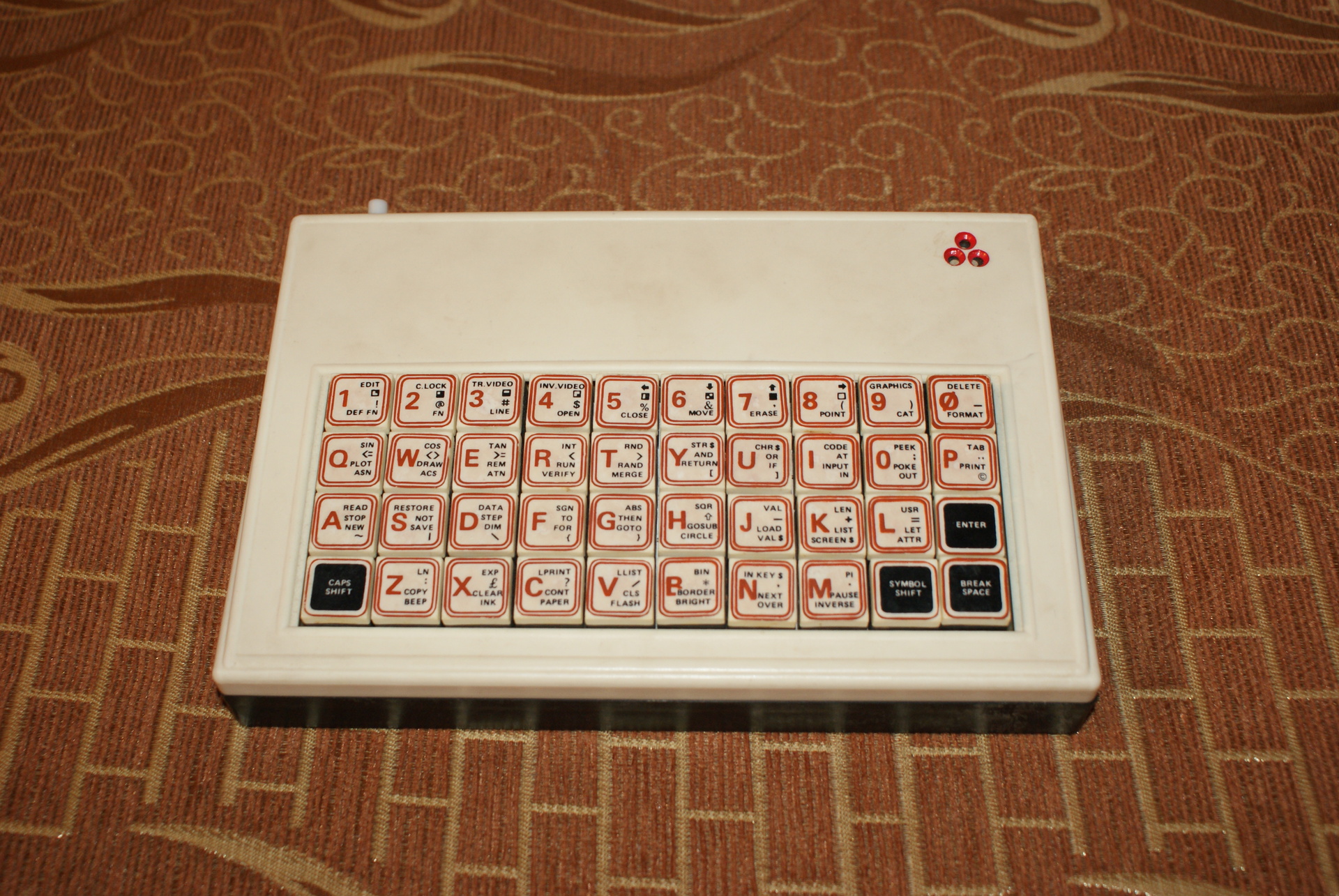
Today an unusual story happened - I came across an ad on Avito where a person was selling a keyboard (now the ad has already been removed). It seems nothing like this, another ordinary announcement, of which there are thousands, but the keyboard looked a bit unusual. When I examined it in detail, I immediately went and took this thing from the former owner for 100 rubles.
Arriving home, I decided to thoroughly and thoroughly study the entertaining little thing, because I had never seen such before.
Under the cut another dozen photos and some text.
First of all, I examined this computer (and I didn’t have any doubts that it was a computer) on all sides for the presence of at least some identifying signs and, unfortunately, I did not find any.
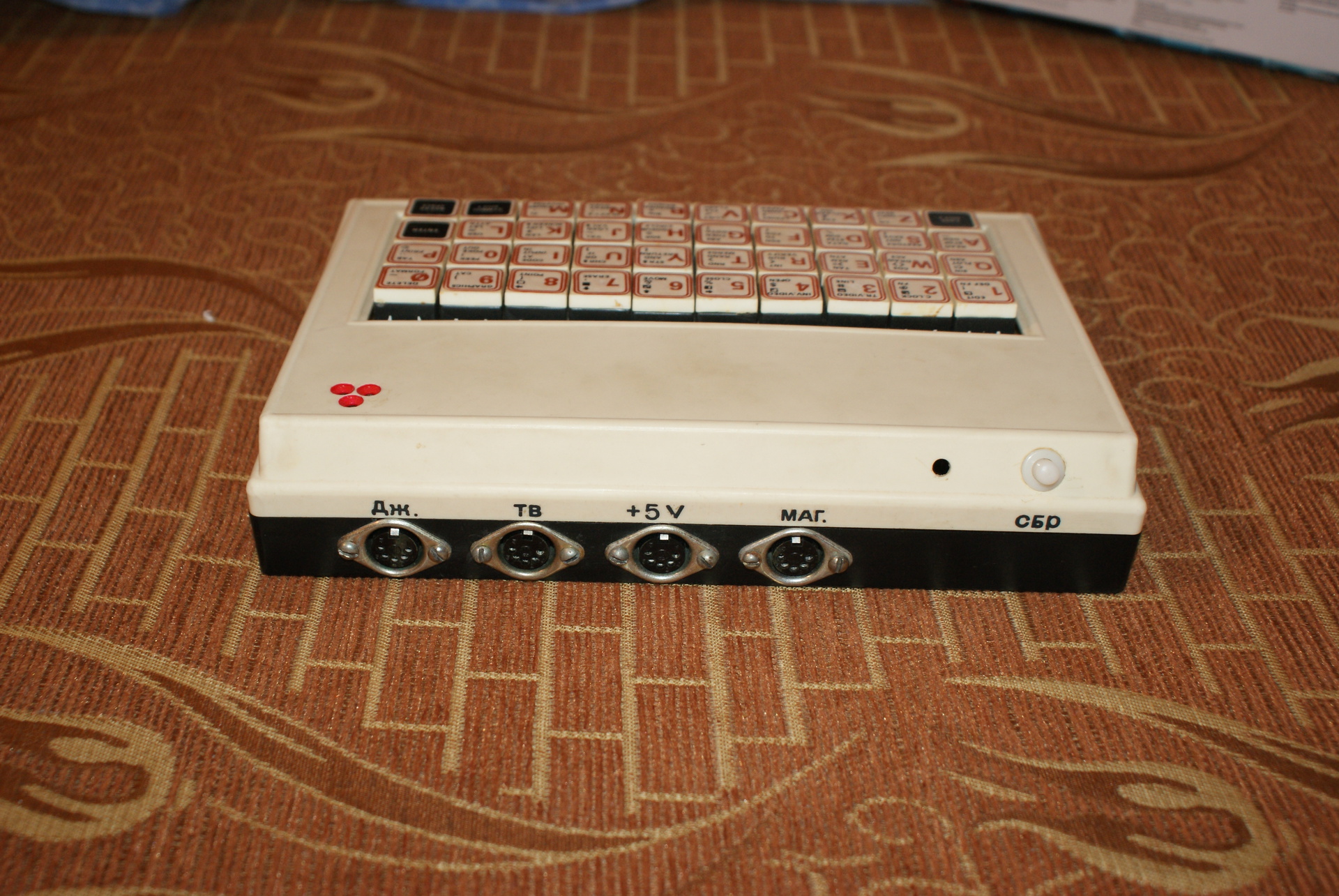
However, judging by the fact that the text in Russian is clearly printed on the case, and in English on the keys, it can be concluded that the standard water (or water?) Stickers were glued on the keys. With the Cyrillic alphabet, such stickers, if my memory serves me, was very difficult to find, which is why I call such stickers “standard”. In my childhood, on my elder brother's computer, 90% of the time there were just such stickers, and I remember his happy expression on his face when he found similar ones with the Cyrillic alphabet.
I will take the liberty of deciphering the abbreviations printed on the back of the case:
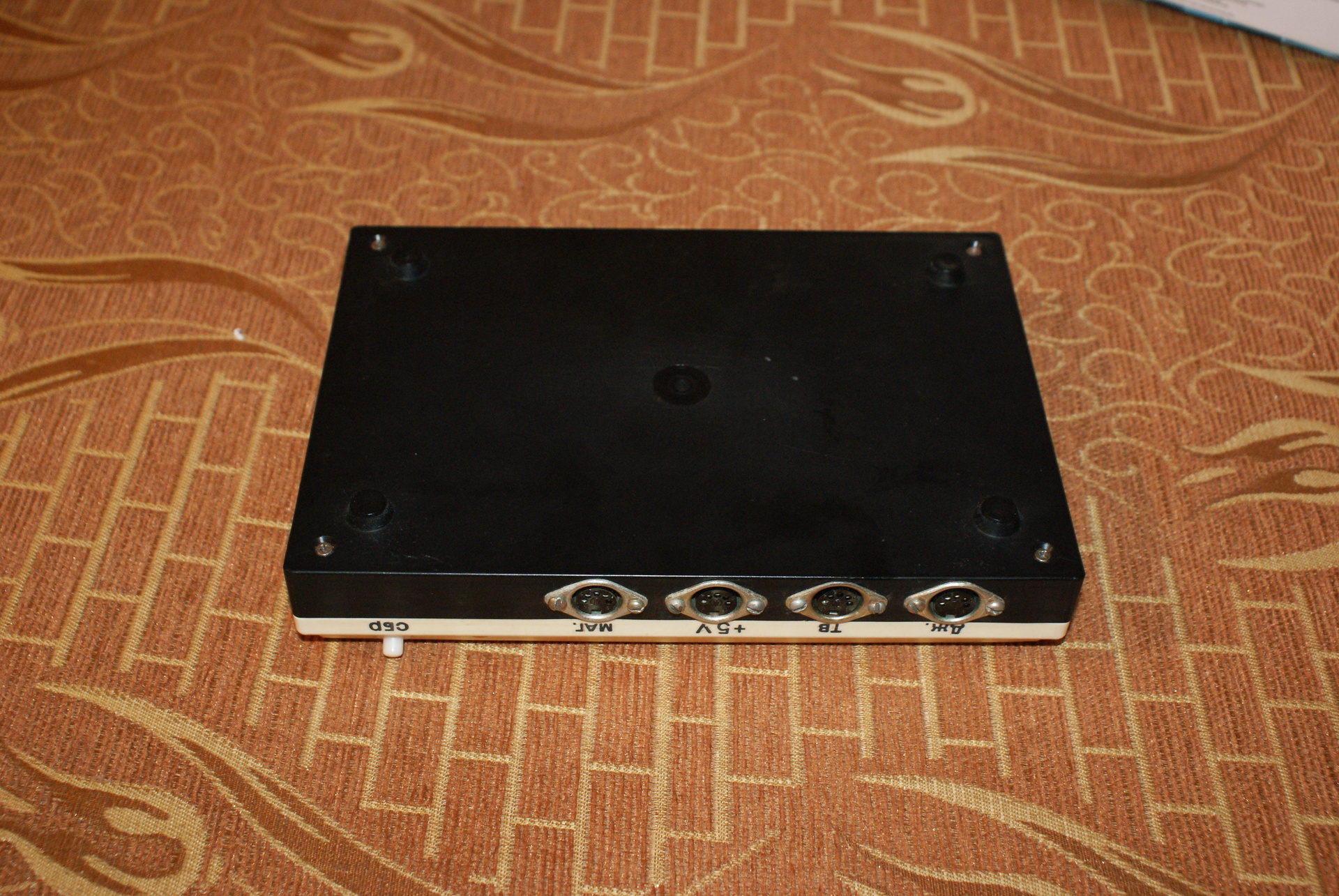
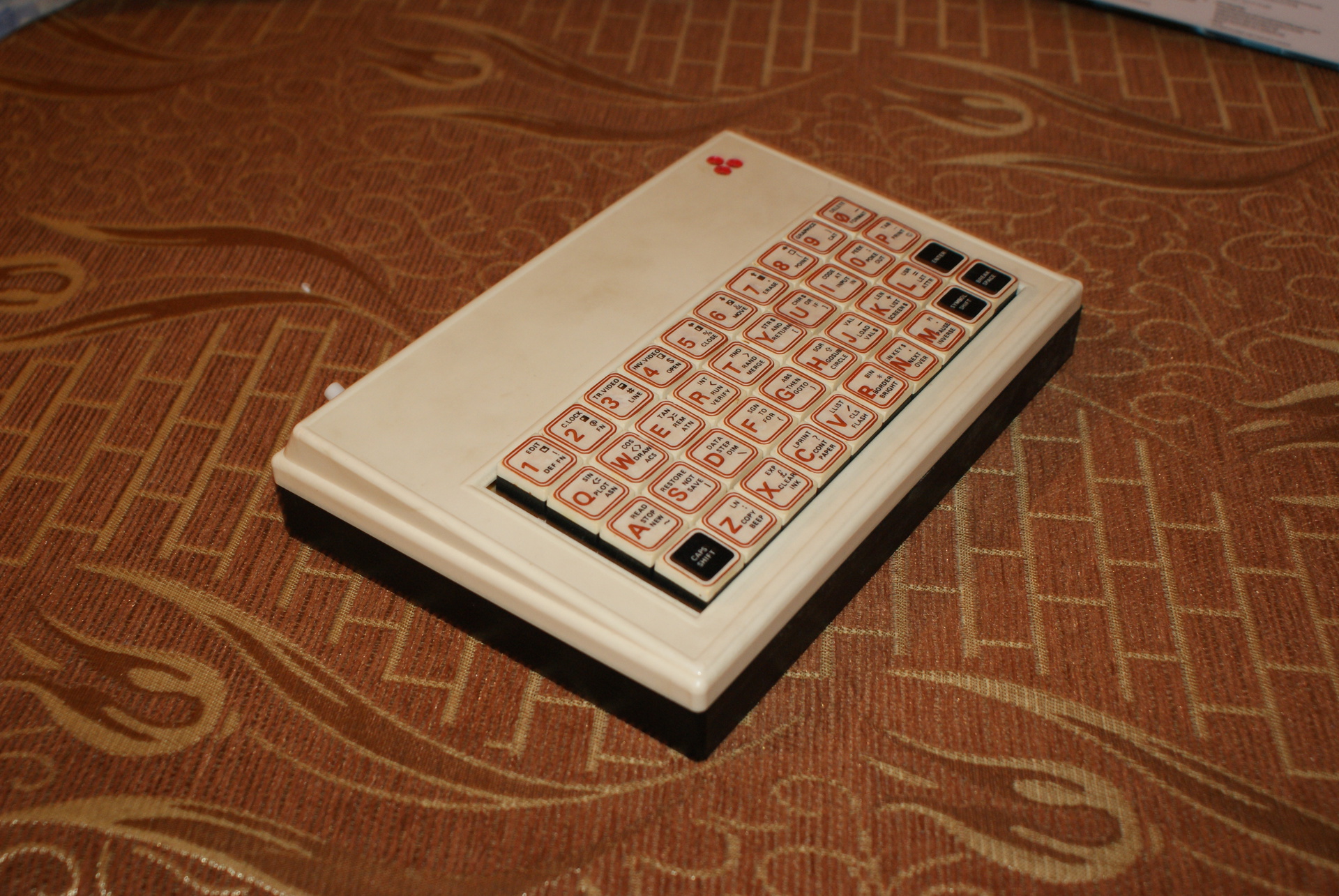
From below and from the ends, as you can see, no identification marks were found either.
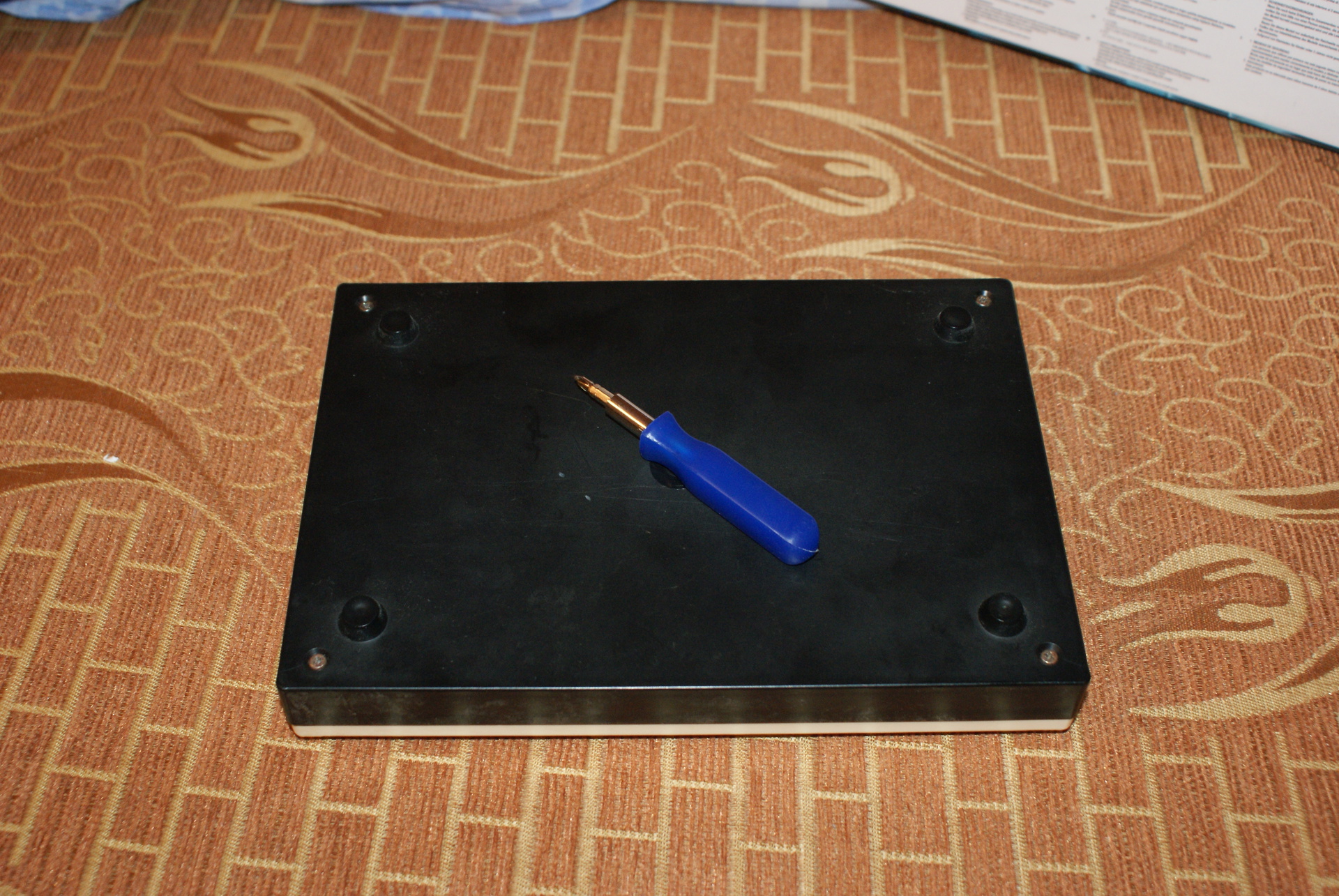
Well, it's time to take apart this piece of iron and look inside?
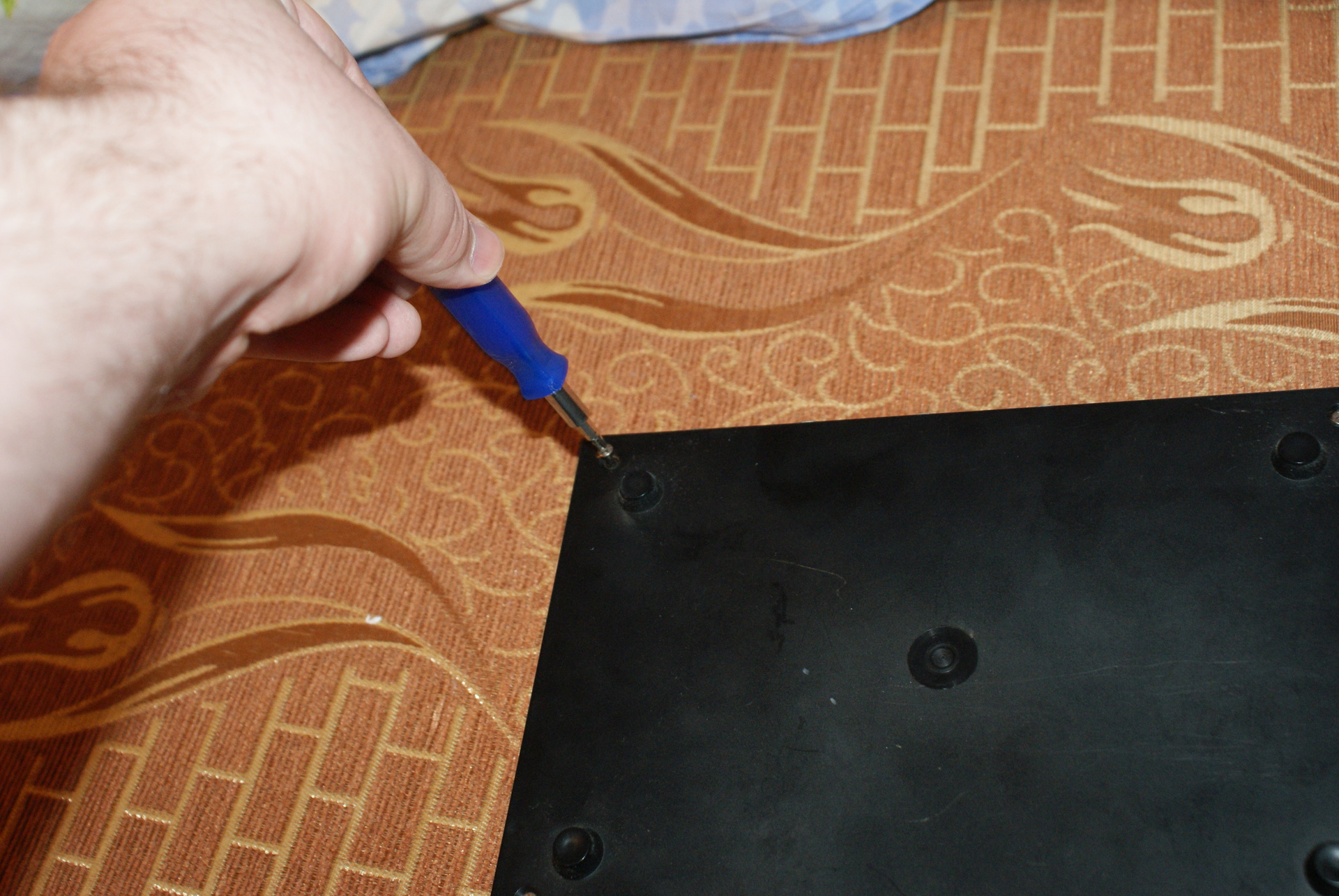
All the bolts turned out to be surprisingly long (with modern technology, I’m already used to ultra-thin walls and cases). One of them (bottom left) resisted for a very long time, because his hat was almost torn off. Through some efforts, tricks and quiet curses, he was also taken to the wild. So, here it is, the X moment - it's time to see the insides.
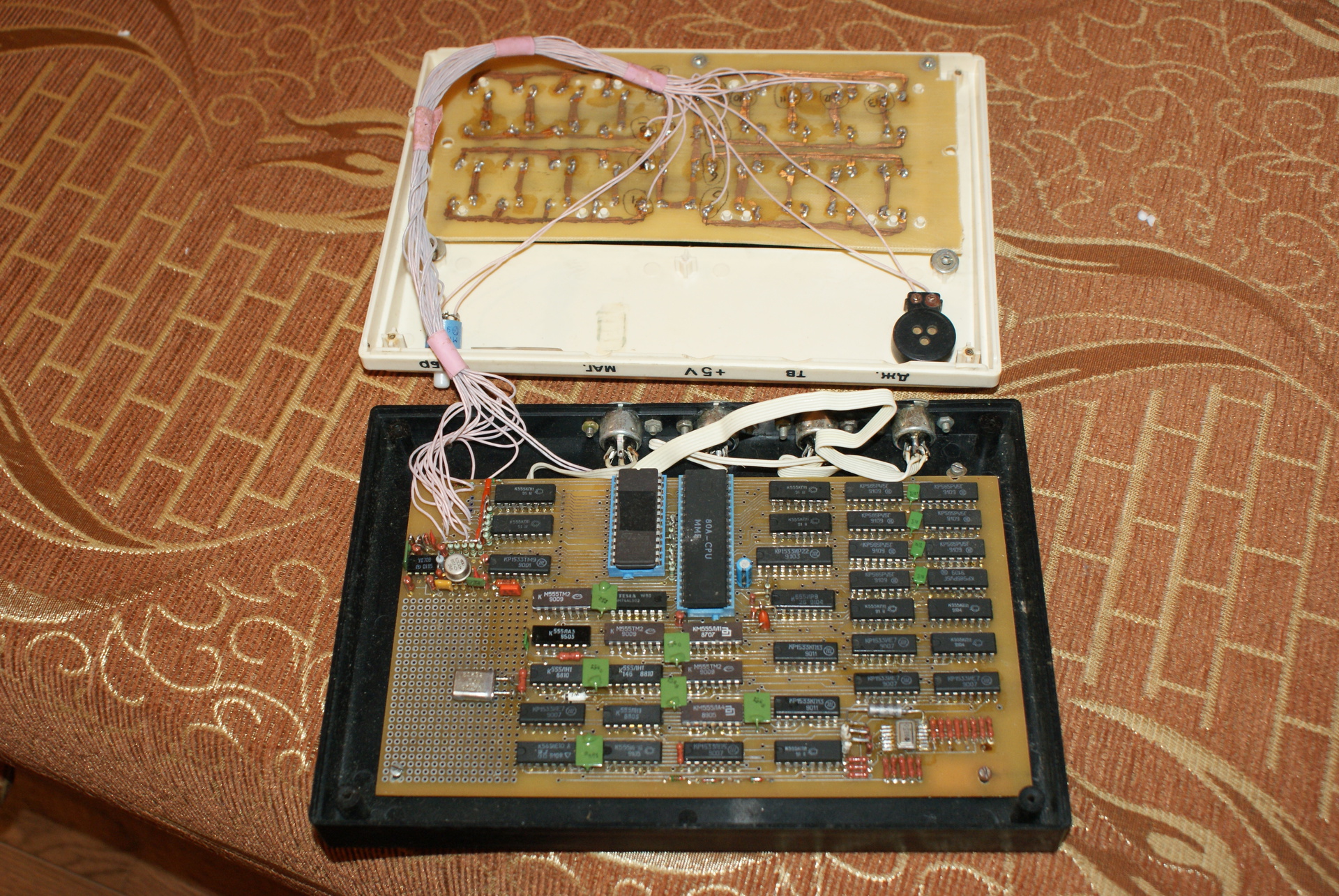
When separating the two covers, no effort was needed, however, during their unfolding next to each other, a characteristic very high and thin crunch was heard - this is how long-hardened rubber crunches in the insulation of the wires. On the isolation itself, if it is not touched or wrinkled, this does not affect, but is a clear sign of the age of a thing.
Let's take a closer look at the main chips and interesting things inside this magic box.

The first thing that immediately catches your eye is the largest microcircuit with three familiar CPU letters . Upon closer inspection, it turns out that this is an 80-A CPU MME chip (here is one of the linksto the description of this piece of iron). It turns out to be very interesting, initially it was an East German-made (GDR) microcircuit, and moreover, it, in fact, is a clone of the well-known Z80 chip , which only the lazy did not copy.

The second-largest chip, located to the left of the central processor, is marked M27128A-2F1 (this is not particularly visible in the photo, the second line, the text can be seen only at an angle). I don’t understand his purpose and purpose, but finding a datasheet on him turned out to be a rather trivial task - here he is. This document is also interesting in that it is dated 1995, and the manufacturer is the international company SGS-THOMSON. Although the release date of the datasheet is in no way tied to the release date of the chip itself, however, we can conclude that the chip enjoyed considerable popularity until the '95th year.

The remaining microcircuits were produced in the USSR - this can be concluded by Cyrillic marking.

Another element of the board, which seemed to me informative and unusual, is a bridge made of devices (to my shame, I do not understand electrical engineering and cannot distinguish a transistor from a resistor, and a diode from a triode) located in the upper left corner. Obviously, the exchange of information with the connectors took place precisely through this bridge - but it is surprising that they are all soldered to each other. Electrical engineers, explain?
Continuing to carefully consider the scheme, I could not resist and unscrewed it from the bottom wall to look at it from behind.
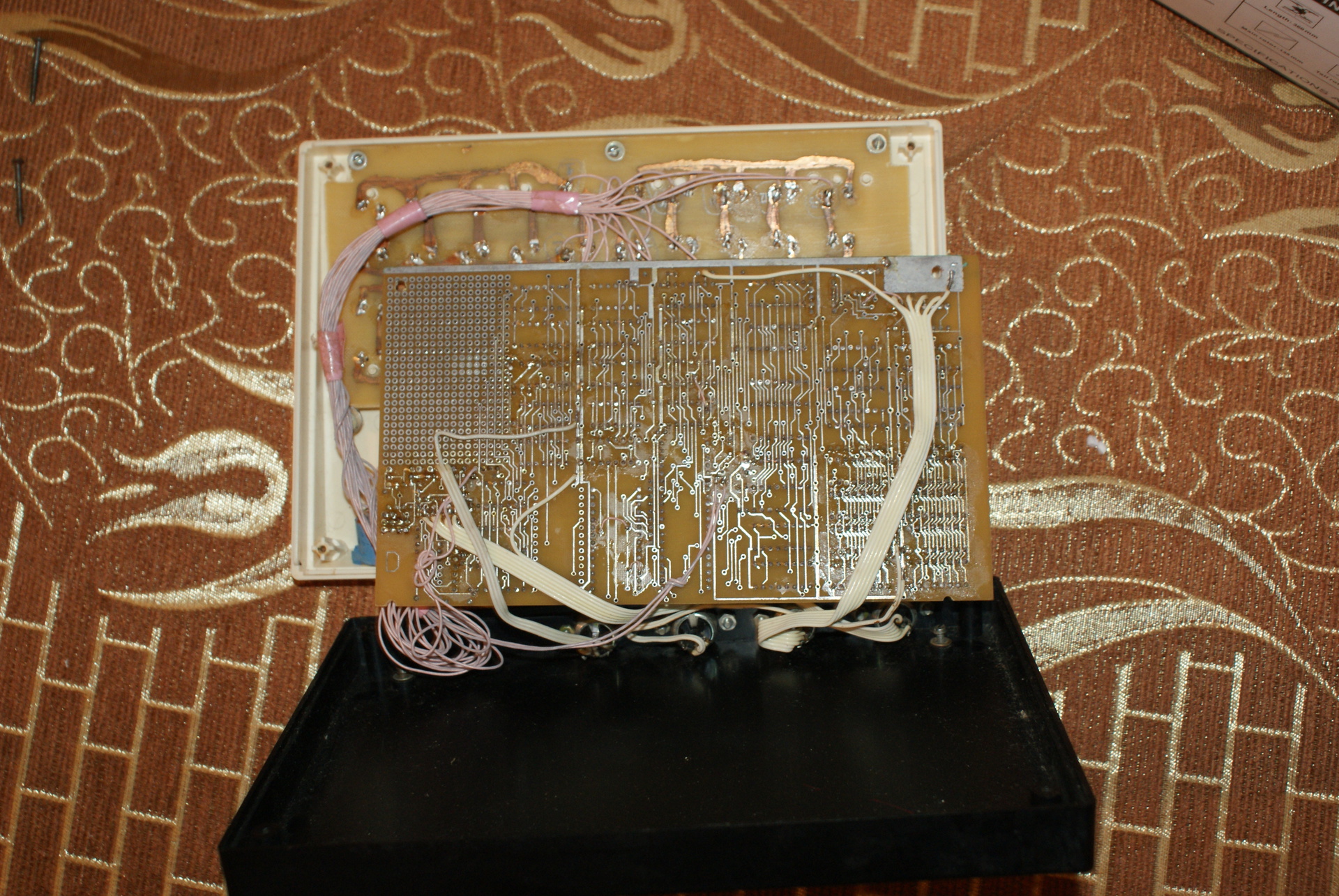
It turned out not as interesting as I expected, but still funny. For example, here is this loop of wires on the right - apparently, it did not fit on the board itself in the form of tracks, and it was decided to move it outside. Or maybe the voltage on these wires is higher than on the others, and on the board they would create additional interference - only the engineer who designed this miracle can reliably say this now; and may suggest a specialist.
Another funny thing that I noticed was that the board was connected to the bottom wall using a flat-head bolt, not even a cross.

Upon closer examination, I realized that they remind me of an iron constructor from childhood.
After studying, I carefully collected everything back. He did not just torment the poor left lower cog and simply put it next to it. Attentive googling and searching in various museums, such as this (carefully, do not put it, the habraeffect can not stand it) did not give a result.
At the moment, only two questions remain unresolved.
1. What is this model, where was it produced, and in general?
2. The most important question - who will take this thing for further preparation and study? I am an amateur, and delving into the old technology is a joy to me, but I won’t know what to do next. Therefore, I propose a simple solution to the problem - the one who needs this thing writes to me. The priority is citizens from Chelyabinsk :)
Thank you for your attention!
UPD:The new owner has already been found, but the first question still remains open.
UPD2: Apparently, this is a non-serial model, which in fact is a very popular Leningrad-1 board authored by Sergey Zonov, in some kind of non-standard case. This fact makes this instance even more interesting! :) With a simple connection to the TV and turning on, a basic is loaded. Thank you SysCat for the information .
Today an unusual story happened - I came across an ad on Avito where a person was selling a keyboard (now the ad has already been removed). It seems nothing like this, another ordinary announcement, of which there are thousands, but the keyboard looked a bit unusual. When I examined it in detail, I immediately went and took this thing from the former owner for 100 rubles.
Arriving home, I decided to thoroughly and thoroughly study the entertaining little thing, because I had never seen such before.
Under the cut another dozen photos and some text.
First of all, I examined this computer (and I didn’t have any doubts that it was a computer) on all sides for the presence of at least some identifying signs and, unfortunately, I did not find any.
However, judging by the fact that the text in Russian is clearly printed on the case, and in English on the keys, it can be concluded that the standard water (or water?) Stickers were glued on the keys. With the Cyrillic alphabet, such stickers, if my memory serves me, was very difficult to find, which is why I call such stickers “standard”. In my childhood, on my elder brother's computer, 90% of the time there were just such stickers, and I remember his happy expression on his face when he found similar ones with the Cyrillic alphabet.
I will take the liberty of deciphering the abbreviations printed on the back of the case:
- J. - obviously, to connect a joystick
- TV is an exit to the TV (monitor)
- + 5 V - the power supply was connected here (apparently, it is hopelessly lost)
- MAGICIAN. - and this is a connector for connecting a tape recorder (or other storage medium; for some reason it seems to me that it is the tape recorder that should be connected here and in an analogous way transmit everything that is recorded on the tape).
- SBR is the good old Uncle Reset.
From below and from the ends, as you can see, no identification marks were found either.
Well, it's time to take apart this piece of iron and look inside?
All the bolts turned out to be surprisingly long (with modern technology, I’m already used to ultra-thin walls and cases). One of them (bottom left) resisted for a very long time, because his hat was almost torn off. Through some efforts, tricks and quiet curses, he was also taken to the wild. So, here it is, the X moment - it's time to see the insides.
When separating the two covers, no effort was needed, however, during their unfolding next to each other, a characteristic very high and thin crunch was heard - this is how long-hardened rubber crunches in the insulation of the wires. On the isolation itself, if it is not touched or wrinkled, this does not affect, but is a clear sign of the age of a thing.
Let's take a closer look at the main chips and interesting things inside this magic box.
The first thing that immediately catches your eye is the largest microcircuit with three familiar CPU letters . Upon closer inspection, it turns out that this is an 80-A CPU MME chip (here is one of the linksto the description of this piece of iron). It turns out to be very interesting, initially it was an East German-made (GDR) microcircuit, and moreover, it, in fact, is a clone of the well-known Z80 chip , which only the lazy did not copy.
The second-largest chip, located to the left of the central processor, is marked M27128A-2F1 (this is not particularly visible in the photo, the second line, the text can be seen only at an angle). I don’t understand his purpose and purpose, but finding a datasheet on him turned out to be a rather trivial task - here he is. This document is also interesting in that it is dated 1995, and the manufacturer is the international company SGS-THOMSON. Although the release date of the datasheet is in no way tied to the release date of the chip itself, however, we can conclude that the chip enjoyed considerable popularity until the '95th year.
The remaining microcircuits were produced in the USSR - this can be concluded by Cyrillic marking.
Another element of the board, which seemed to me informative and unusual, is a bridge made of devices (to my shame, I do not understand electrical engineering and cannot distinguish a transistor from a resistor, and a diode from a triode) located in the upper left corner. Obviously, the exchange of information with the connectors took place precisely through this bridge - but it is surprising that they are all soldered to each other. Electrical engineers, explain?
Continuing to carefully consider the scheme, I could not resist and unscrewed it from the bottom wall to look at it from behind.
It turned out not as interesting as I expected, but still funny. For example, here is this loop of wires on the right - apparently, it did not fit on the board itself in the form of tracks, and it was decided to move it outside. Or maybe the voltage on these wires is higher than on the others, and on the board they would create additional interference - only the engineer who designed this miracle can reliably say this now; and may suggest a specialist.
Another funny thing that I noticed was that the board was connected to the bottom wall using a flat-head bolt, not even a cross.
Upon closer examination, I realized that they remind me of an iron constructor from childhood.
After studying, I carefully collected everything back. He did not just torment the poor left lower cog and simply put it next to it. Attentive googling and searching in various museums, such as this (carefully, do not put it, the habraeffect can not stand it) did not give a result.
At the moment, only two questions remain unresolved.
1. What is this model, where was it produced, and in general?
2. The most important question - who will take this thing for further preparation and study? I am an amateur, and delving into the old technology is a joy to me, but I won’t know what to do next. Therefore, I propose a simple solution to the problem - the one who needs this thing writes to me. The priority is citizens from Chelyabinsk :)
Thank you for your attention!
UPD:The new owner has already been found, but the first question still remains open.
UPD2: Apparently, this is a non-serial model, which in fact is a very popular Leningrad-1 board authored by Sergey Zonov, in some kind of non-standard case. This fact makes this instance even more interesting! :) With a simple connection to the TV and turning on, a basic is loaded. Thank you SysCat for the information .