March 28, 2018 at 11:59
Spy Cases (Part 2)
Continuing the topic of spies, espionage and sometimes fantastic devices, one cannot fail to cover such high-profile events related to wiretapping of the US embassy by the Soviets (1945 - 1952), wiretapping of the Soviet embassy in the Netherlands, the incident with Pueblo.

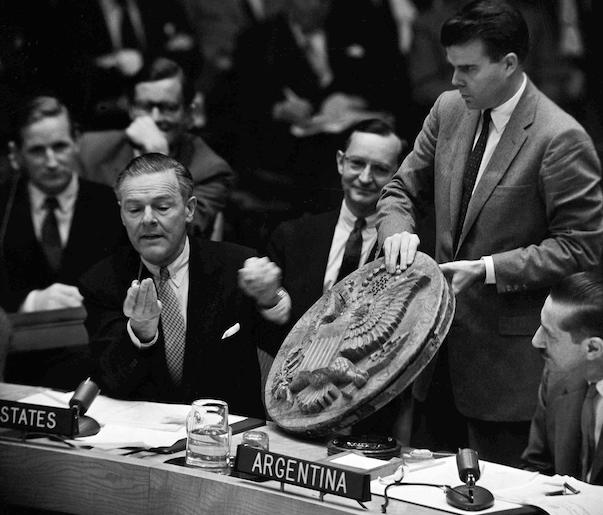
1960 year. After the incident with U-2 at an emergency session of the UN General Assembly, the US side demonstrated a listening device that had been successfully located for 8 years in the Moscow office of the US ambassador and was hidden inside a wooden copy of the US Great Seal.
The secret bug did not contain any electronic components and did not require batteries or any other power source. Americans dubbed the bug - the Thing. On the Soviet side, the wiretapping operation was codenamed “Confession,” and the introduction, “Zlatoust,” was supervised by Stalin and Beria.
The Thing / Item, also known as The Great Seal Bug (bug in the U.S. Great Seal), was a passive secret wiretap device developed in the Soviet Union and successfully hidden in the office of the American ambassador in Moscow. It was hidden inside a wooden replica of the Great Seal of the United States. Why is a passive device? It worked without its own power source, activated by strong microwave radiation from the outside. In the USA, the device was codenamed “LOSS”.
For 10 years, the Soviet side carried out painstaking work on a plan for introducing a unique bug. And on August 4, 1945, the Vladimir Lenin All-Union Pioneer Organization at the celebration of the 20th anniversary of Artek presented the US Ambassador Aveller Harriman a wooden copy of the Great Seal of the United States, as a symbol of friendship between the allies in World War II. The coat of arms was hanged in the residence of the American ambassador Spaso-House (Spasopeskovsky platform).
A bug unknown to the Americans, hidden in an engraved coat of arms, was an RF radio transmitter of an original design: there was no own power source, there were no connections and wires. Instead, the device was driven by a strong radio signal from the outside. Such a resonator with an unlimited duration served the Soviets as the best intelligence service.
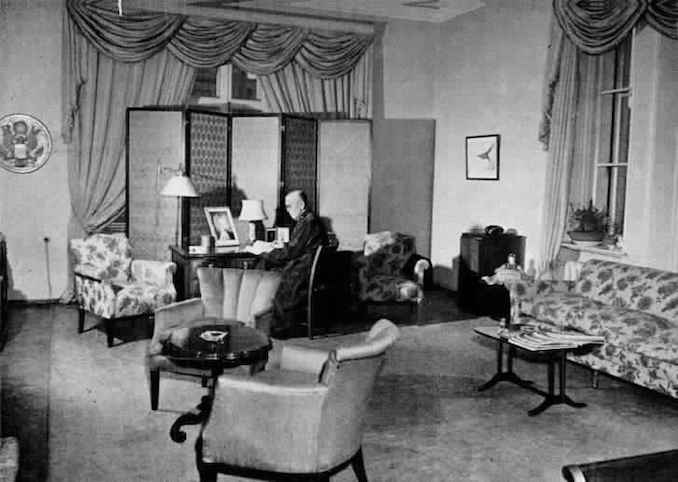
Since 1945, after the case of Amerasia, the United States was suspicious of security at embassies abroad, especially in Moscow. Although at the end of 1940 a lot of listening devices were found in the US embassies in Eastern Europe, none of them were found in Moscow since the Second World War. Nevertheless, diplomats believed that ears had grown on the walls in Moscow. Suspicions intensified in the fall of 1951.
Official version. In 1951, a British radio operator in the British embassy (located 700 meters from the American one) watched Soviet radio communications when he suddenly intercepted a conversation in which he recognized the voice of a British aviation attache, but they did not find hidden microphones during a search at the embassy. Another situation occurred with the American operator in 1952, when he accidentally went to the LOSS frequency and was able to eavesdrop on the conversation, which, as it turned out, came from the ambassador’s residence in Spaso House. An intensified search for listening devices began; as a result, the bug was detected using the so-called crystalline video receiver, just during wiretapping by the Soviet NKVD.
The bug was discovered by the US Department of State in 1952 during the time of George F. Kennan, during which time three ambassadors managed to change the post. What they just didn’t do and how they didn’t look for the source of the information leak: they interviewed embassy staff with a predilection on a lie detector, shoveled every inch of the embassy itself, but to no avail. How did you manage to find Zlatoust in the reliable "walls" of the wooden storage? There are several versions: the cessation of information leakage was noticed at the time when the coat of arms was removed for restoration; the cracked wooden coat of arms betrayed the bug's location, finding itself in a crack; there was a kind of “well-wisher-traitor”, GRU lieutenant colonel Peter Popov, recruited by the CIA, who shared classified information.
The crystal video receiver, as the name implies, consisted of a crystal detector and a video amplifier, the noise level was set by the crystal detector.
The device found inside the coat of arms appeared to Americans as a microphone of a cylindrical shape with a wire about 23 cm long, which is interesting, without any batteries. Initially, there was even an assumption that the real bug was hidden elsewhere, and this is only an unknown little thing - The Thing. For another year and a half, American intelligence engineers fought over the riddle - what is it? The bug was located under the beak of an eagle, tiny holes made in a tree sent sound to the membrane. After a successful operation to introduce the device, the Soviet services bought 2 apartments in the building opposite, immediately evicted tenants and accommodated NKVD officers. Thus, Stalin learned about the decisions made by the Americans earlier than the US president himself.
The American side decided not to publicize such an unexpected find, until the incident with U-2 in 1960. On May 1, 1960, an U-2 American spy plane was shot down over the airspace of the USSR. A meeting of the UN Security Council was convened at which the councils accused the Americans of espionage. On the fourth day of the meeting (May 26, 1960), the fact of mutual espionage between the two countries was highlighted: the American ambassador Henry Cabot Lodge demonstrated the Trojan emblem.
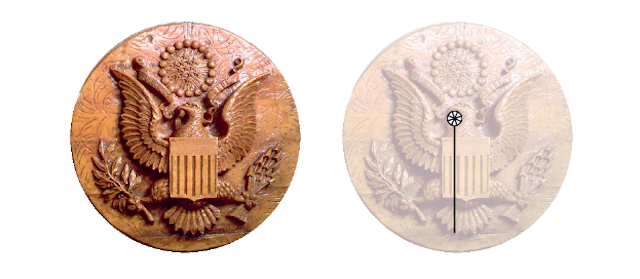
The Thing is a so-called resonant hollow microphone (consisting of a resonant cavity + condenser microphone). The diagram below shows the design of The Thing, based on various reports and publications.

The silver-coated copper cylinder was a high-Q resonator of a reentrant type. In the center is an adjustable disk-shaped element with a flat surface, which, in combination with a very thin membrane of 75 microns, forms a cavity. The antenna entered the cavity through an insulated hole on the side of the cylinder.
The diameter of the cavity with a length of 17.5 mm was 19.7 mm, the length of the antenna was 22.8 cm (9 inches). The thickness of the membrane on the front of the cylinder was only 75 microns. Known as endovibrator.

Any sound in the room, such as speech, caused the membrane to vibrate, which reduced or increased the space inside the cavity, as well as the space between the membrane and the disk-shaped element. As a result, the bug created a combination of amplitude modulation (AM) and frequency modulation (FM).
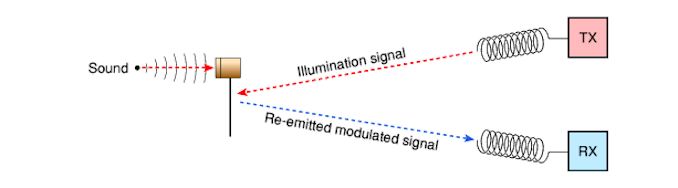
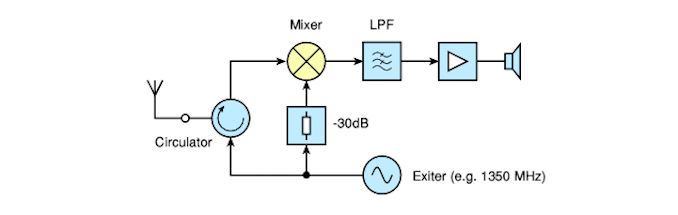
Receiver overload could be resolved using a directional antenna. To increase the power of the antenna, a 3-way transmit / receive switch (circulator) was added.
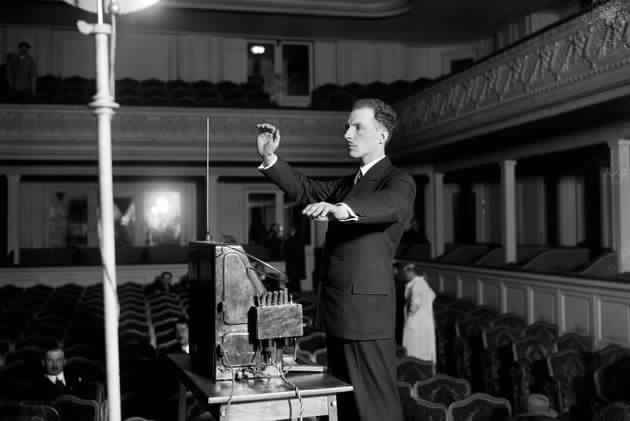
The resonant hollow microphone was patented by Winfield Koch in RCA (Radio Corporation of America) in 1941, but the Soviet bug Zlotoust was developed by Leon Theremin (August 27, 1896 - November 3, 1993). The inventor was born in St. Petersburg, primarily he is known as the creator of electronic musical instruments. Theremin or Theremin - his brainchild - is a musical instrument with a proximity sensor. During the movement of the hands, the capacity of the oscillatory circuit of the instrument changed, which affected the frequency. By the way, you can buy such a tool today at auctions, the price is from 7 thousand dollars.
Theremin lived in the USA since 1927, the councils, according to the official version, sent him on a business trip in order to demonstrate what “technology has come to”, although the real purpose of his stay in the USA was to espionage. Until 1938, he lived in New York, was known as an extraordinary personality, he even married the prima of the First American Negro Ballet, for which he paid the loss of many friends and acquaintances, received a condemnation in society. He was almost the most popular person in New York, even listed in the club of millionaires. Albert Einstein, conductor Leopold Stokowski, Charlie Chaplin, Marie Helen Butte and others worked in his studio.
In 1938, due to financial difficulties, he was forced to return to the USSR just before the Second World War. Although there are still versions: according to one, the reason for returning to his homeland was his sense of responsibility for his homeland during the imminent war; according to the second, the NKVD forcibly removed the inventor.
American friends and acquaintances believed that Theremin disappeared without a trace. The West was certain that theremin was dead. Paradoxically, in the USSR, Termen was sentenced on suspicion of espionage to 8 years in the camps, imprisoned, and later sent to sharashka, where he served time with other detained scientists and engineers, such as Andrei Tupolev and Sergei Korolev. There he was involved in the development of Buran, The Thing and other devices for the NKVD. In 1947 he was released, and in 1956 he was completely rehabilitated. Until 1966 he continued to work in the NKVD (by then the KGB), and after leaving the bodies he was engaged in teaching at the Moscow Conservatory, while a journalist from The New York Times published an article about Theremin. There was a fuss, the sensation of "Theremin is alive!" since the outstanding inventor was considered long dead. Invitations fell from all over the world, but it wasn’t there. Instead of fame and recognition of the motherland, Theremin “received” his dismissal from work, his developments were simply thrown away. So there was no light of the Theremin synthesizer, on the creation of which Leo painstakingly worked, successfully developed later by Yamaha. He died in 1993 in Moscow at the age of 97 in poverty in his communal apartment near the Cheryomushkinsky market.
So, after an American U-2 spy plane was shot down on Soviet airspace on May 1, 1960 (U-2 incident), the Americans decided to uncover a Soviet listening device called The Thing / Object, which was found in the residence Ambassador in Moscow 8 years ago. Thus confirming the fact that espionage was mutual. The Chrysostom listening device caught the attention of the international press, over the next days and weeks the headlines about Thing were full on the front pages of newspapers.
There were rumors that the United States did not know how the device works, and even turned to the UK for help. However, there is a sufficient amount of evidence from official reports about the lack of ignorance on the part of various American agencies: they studied the device and well understood the principle of its operation.
The following agencies conducted their own investigations: US Department of State, FBI, US Navy Research Laboratory, NSA, and others.
Although many agencies claim to be involved in the discovery of The Thing, the device was actually found by the Department of State (DoS) during an organized secret security audit in September 1952. Although endovibrators were already known, but before this case they had never been used as listening devices.
The next day, the find was sent to Washington (USA) and transferred to the FBI for further investigation. Information obtained as a result of studies of the bug was later used to train various agencies.
As mentioned earlier, the first agency to investigate the device after it was discovered by the State Department was the Federal Bureau of Investigation (FBI). Determining the operating frequency of the device was not easy, since the FBI equipment was not suitable for frequencies above 400 MHz. Fortunately, the FBI was able to borrow the following test equipment from the National Bureau of Standards (now: NIST) for one day. The important findings of the preliminary study were:
One of the first organizations involved in the investigation, besides the Ministry of Defense and the FBI, was the Naval Research Laboratory (NRL), which worked closely with the FBI during a technical investigation. To avoid "duplication" of effort, the NRL was ordered to develop a counter receiver that could detect resonant microphones. The laboratory was supposed to provide a working prototype of such a device. On December 1, 1952, the FBI / NRL final technical report was prepared. This was a report on the analysis and experiments conducted by the laboratory and the FBI, detailed large-scale drawings and photographs, an NRL report with schemes for developing equipment to detect such listening devices.
Since the USSR was the first to use such listening devices, there was a clear understanding that, if resonant microphones were detected, they would be copied by Western agencies and that sooner or later they could be used against themselves. Therefore, the Soviets developed their own countermeasures.
An example of a receiver that was designed specifically for detecting resonant microphones was OSOBNJAK 8.
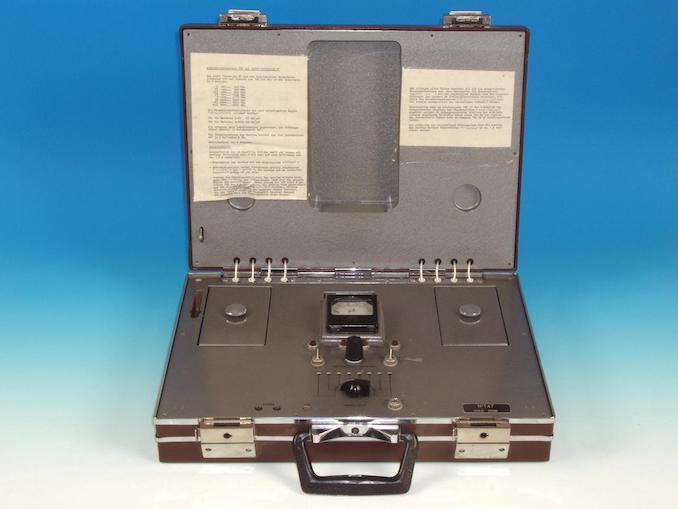
The device was housed in an unobtrusive diplomat and could detect strong close RF signals from 100 MHz to 12 GHz; signals that are commonly used to activate such microphones. The device is also known as 1RTA7. The device was powered by rechargeable batteries, which provided approximately 4 hours of battery life.

OSOBNJAK 8 is an example of a device for detecting Zlotoust and similar devices. It is an indicator of field strength (it could detect neighboring radio frequency signals between 100 MHz and 12 GHz), divided into 8 frequency ranges, each of which has its own antenna. Antennas are hidden inside the housing cover, the opening angle is about 90 °. The diplomat’s dimensions made it easy to carry OSOBNJAK 8, take it to important meetings, and install it in every office where important meetings with foreign guests took place, and the device was quite simple to use, and any strong radio frequency microwave signal was immediately detected. With OSOBNJAK 8, it was not possible to determine from where the radio signal was activated. In order to find where the signal comes from, we needed an aperiodic receiver for the proposed band,

A suitable solution is the MRP-4 radar, which was developed in 1972 by the Tesla company (Czechoslovakia). This device could be carried in a bag, the antennas were directed forward. Although it was originally designed to search for radar stations, it could also be used to detect any nearby strong transmitter. In addition, it could be used to detect weak impulse transmissions from radar and signal devices.
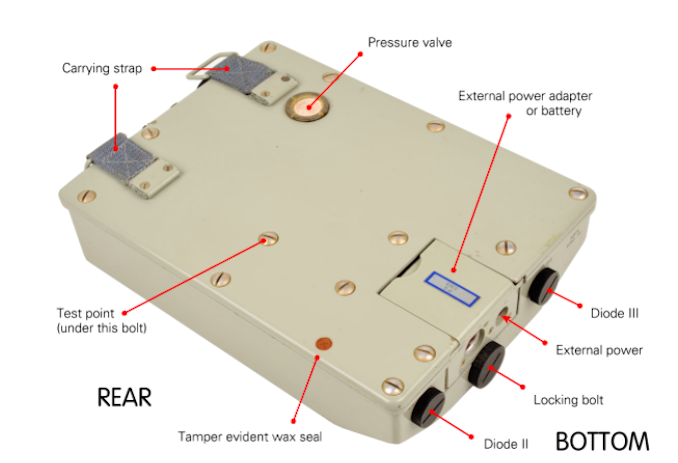
MRP-4 antennas had a narrow viewing angle, usually from 1 to 2 degrees, the device was suitable for the frequency range of 1 - 10 GHz, divided into four bands. Similar devices were developed in the USSR.
After the discovery of The Thing in 1952, the CIA began its own research program and the development of secret transmitters of this type. In 1965, a
similar device was developed - a resonant microphone similar to the Soviet The Thing, activation was due to a pulse signal.
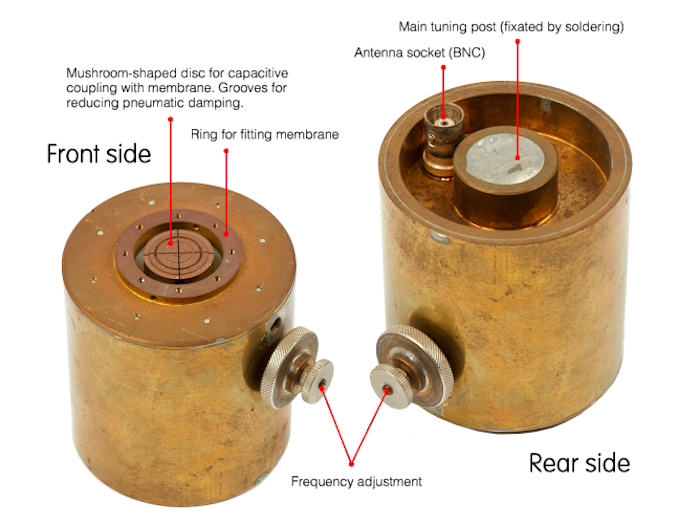
In 1958, during a joint secret operation of the Central Intelligence Agency (CIA), the Netherlands Internal Security Service (BVD) and the Dutch Radar Laboratory (NRP), an attempt was made to place a secret listening device (bug) in the office of the Russian ambassador in The Hague (Netherlands) . The operation was called "Easy chair" / Easy Chair (EC).
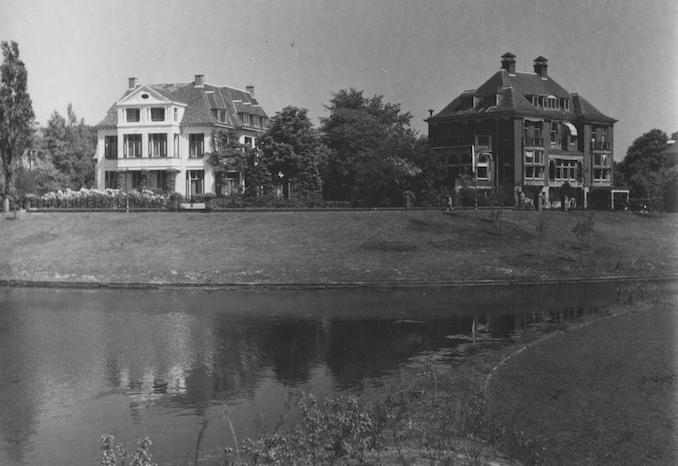
In the early days of the Cold War, both the Dutch Security Service (BVD) and the American Central Intelligence Agency (CIA) regularly conducted covert operations against members of the USSR, and Soviet satellites operating in the Netherlands were monitored. Since the CIA conducted secret operations in the guest country, it was decided that each action would be taken only with the permission of the BVD.
At the end of September 1958, the BVD reported that the councils ordered new furniture for their embassy in The Hague through the National Procurement Bureau. Such a chance does not occur often: it became possible to install listening devices simply in objects of decor.
The Dutch BVD developed a plan to install the Easy Chair (EC) device / soft chair - were manufactured by the Dutch Radar Laboratory (NRP) in Noordwijk (Netherlands) for a top-secret CIA project directly in furniture. So, special attention was paid to the table, as it was intended in the office for the ambassador himself and could show all his “potential” in the future.
On Saturday, November 22, the table was almost ready, it only remained to polish it. It was an ideal time to install the bug, so it was decided that the BVD would install the EC the next day, Sunday 23. The next morning, at 11:00, the Dutch internal security service got access to the workshop. The table was turned upside down, and the bug, without noise and dust, was installed in the left rear corner.
The table was varnished a few days later on November 26, on the same night the BVD operative again had to make a small hole with a diameter of 1 mm for the microphone, which was blocked during varnishing. He tested the device, the sound quality was not perfect. A day later, the bug was checked again, table delivery to the embassy was scheduled for December 10, 1958. Meanwhile, the interception point was placed at the Sorgvlid observation post.
Zorgvlid is a rather tall building, which was located about 125 meters from the front of the USSR Embassy, on the other side of the canal. Although the building was located two streets from the embassy, the entrance and the front side of the observed object were clearly visible from it.
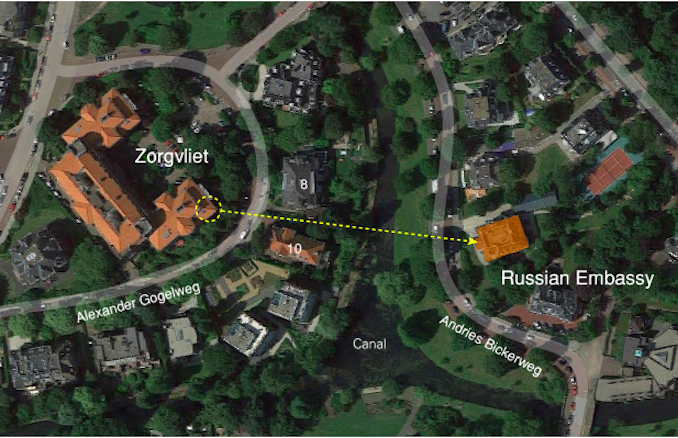
A few years before these events, the BVD acquired a small room in the attic of the Zorgvlid building, there was surveillance, photo surveillance of those who entered or left the USSR Embassy. Since the attic had a clear view of the target building, it became a suitable place for installing Easy Chair antennas. The satellite image shows the position of the observation point Zorgvlid (1958). The interception post was located in a very small room in the eastern corner of the attic, the observation deck was in the non-residential part of the building. Behind several forgotten doors was a small utility room with a narrow staircase, the staircase led to the hatch, which served as the entrance to the real room for wiretapping. 5 windows of the room (the square of the room is approximately 5 x 3 meters) went straight to the Soviet embassy.
Today, the observation post is no longer used. The room was empty, and the view of the embassy was closed by trees. Nothing in the room anymore reminds of what happened inside its walls during the Cold War.
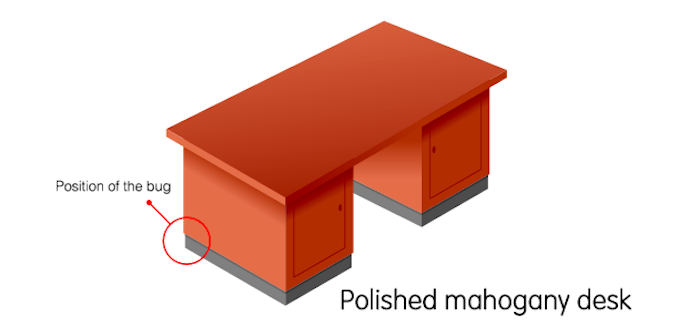
The images below show how and where the Easy Chair (EC) listening device was built into the furniture. A large mahogany table was ordered at the Soviet embassy, which was most likely (as calculated) for the ambassador himself. Two deep lockers came on the table, in each locker there were three drawers closed by doors. The total height of the table was 76 cm. The table was mounted on a pedestal 10 cm high.
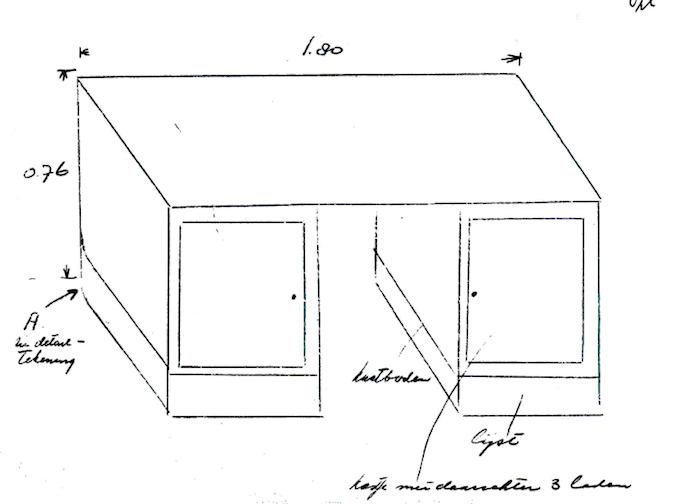
Since the construction of the 10-cm pedestal was separated from the main part of the table, it was decided to install a bug in the rear left corner of the table, while a tiny hole was made for the microphone with a diameter of 1 mm, about 6 cm above the pedestal.


A few days after the new furniture was delivered and installed at the USSR embassy, BVD operatives tried to activate the EU bug, but to no avail. Presumably, the distance between the target and the interception point was large, or the device was detected.
To test the device at a shorter distance, a tarpaulin truck was sent under the embassy, in which something allegedly happened to the engine in front of the embassy itself. It was parked in front of the embassy, and a 40-watt transmitter and battery-powered receiver were hidden under a tarp.
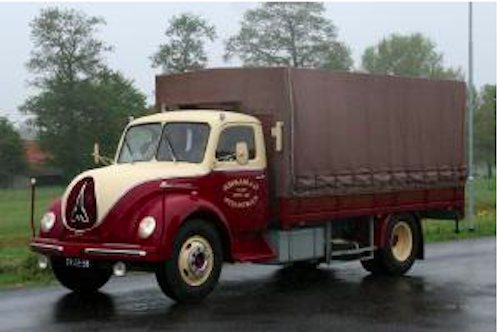
The devices were controlled by NRP field engineer Hekstr and the CIA operator, they were in the truck. The antennas were turned towards the embassy, and the transmitter was turned on. After setting up the receiver, after a while they managed to catch the signal of the Easy Chair bug. The first thing they heard was a loud and clear laugh. ES worked and was not detected by the tips. This meant that for LP antennas the distance from the building where wiretapping was conducted and to the embassy was large.
Two new antennas were developed, each measuring 2 x 2 meters and providing a gain of 20 dB, in addition, the isolation between the transmitter and receiver was improved.
Every day, field engineer Hekstra conducted experiments in the attic of the Zorgvlid apartment. His research findings were passed on to Gerhard Prince at NRP, which was engaged in improving Hekstra’s designs, and soon after a series of improvements and solutions to EU problems, it could be reliably activated from the attic.
The operation lasted about six months, after which the bug was discovered by the council, or perhaps a soundproof room was made in the attic of the embassy.

Easy Chair (EC) is the name given to a top-secret research project carried out by the Dutch Radar Laboratory (NRP) commissioned by the US Central Intelligence Agency (CIA). Easy Chair began to be called a series of secret listening devices (bugs), who saw the world as a result of this study. EU devices are passive devices, they do not need a local power source, such as a battery.
Instead, the EC devices were powered by a strong radio frequency (RF) signal transmitted to it from a neighboring wiretap point. By the time the wiretapping operation of the Soviet embassy took place, the EU was already in its third “incarnation”, the passive element of the EU III (PE) was used. It is shown in the image below.
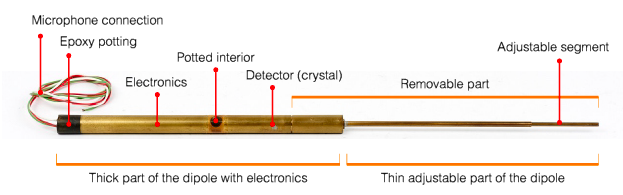
Like the previous EC I and EC II, the system worked at a frequency of 378 MHz, but offered to mask the sound through the use of a frequency-modulated subcarrier. A new passive element (PE) was also deployed inside the antenna. Thus, the device was improved in terms of secrecy, in earlier EC I and EC II the signal (in the case of scanning) could be accidentally intercepted.
EC III was one of the first attempts to implement the principle of improving privacy, known as masking sound. Passive element - was actually an open vibrator with a length of approximately ½λ. Unlike PE EC I, this version did not need an external amplifier, since its electronics were built into the vibrator. All parts of the PE, with the exception of the microphone, were built inside the antenna itself.
In addition, the PE was suitable for connecting almost any type of microphone with a high impedance, in the case of a 3-wire version, a microphone was suitable even with a low impedance. Another microphone that was used with the EC III and later was the so-called miniature Type-B. It is based on the RCA BK-6B studio microphone, which was placed in a special building (developed by the CIA).

During the Cold War, the Russian embassy in The Hague, as you know, was engaged in espionage, but everyone worked under the guise of diplomacy. Most of these "diplomats" constantly watched BVD. In February 1958, three Soviet diplomats were even expelled from the Netherlands. Five NRP employees (a small Dutch hardware company) worked directly on the Soft Chair operation and subsequent CIA projects. It is not a fact that they all knew that their customer was American intelligence. Moreover, even the Dutch special services did not know about the volume of cooperation between the CIA and NRP.
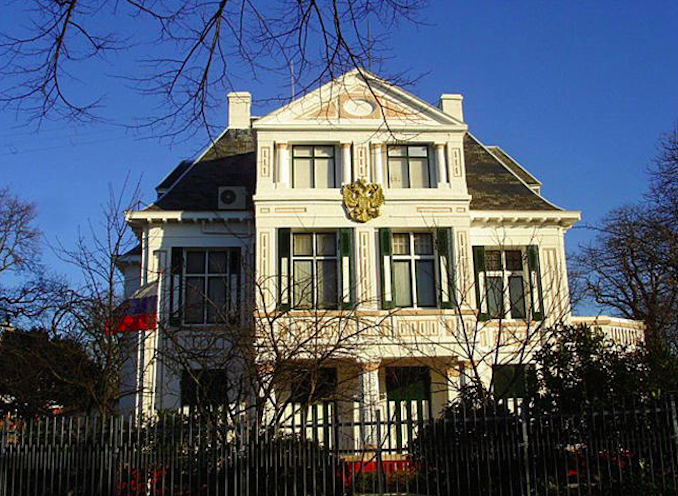
Embassy of Russia in The Hague (formerly Soviet Embassy)
Information about the Easy Chair operation, which opened completely by accident, shed light on the role of the Netherlands in the Cold War. Maurits Martine (journalist) conducted a three-year investigation after the grandson of one of the participants in the secret operation found his grandfather's notes about the CIA and the investigations being conducted. The collaboration of the NRP and the CIA continued until the 1990s.
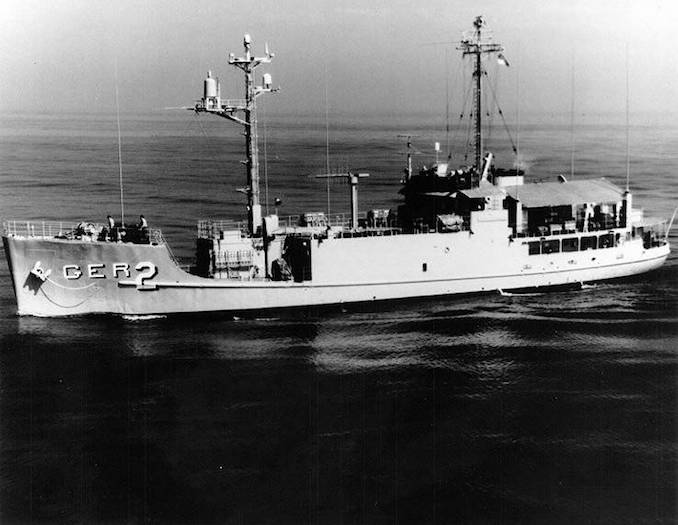
USS Pueblo, also known as AGER-2, was officially a Banner type hydrographic ship, but in fact it was a Cold War reconnaissance ship and belonged to the U.S. Navy as a collection vehicle (spy ship). He was attacked and captured by North Korean forces on January 23, 1968, after which secret intelligence equipment fell into the hands of North Korea and the USSR. This event is known as an incident that occurred between North Korean patrol ships and the American ship Pueblo in the territorial waters of the DPRK on January 23, 1968.
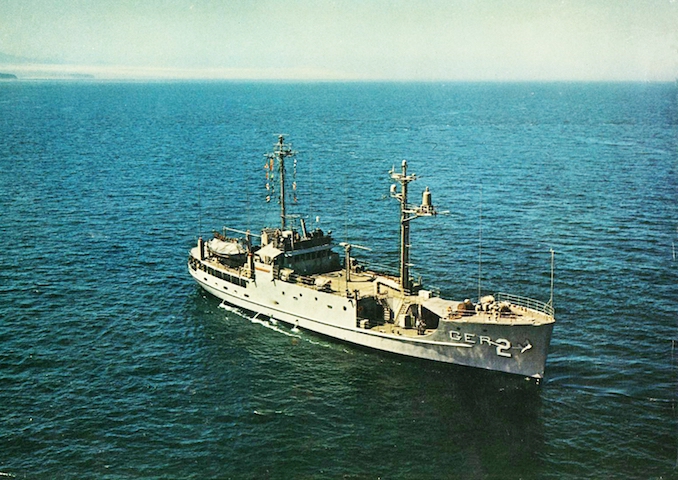
Reconnaissance ship AGER-2. May 13, 1967
On January 5, 1968, Pueblo left the US naval base in Yokosuka (Japan) with the intention of collecting information about the Soviet "red" fleet and North Korea as part of a secret mission with SIGAD USN-467Y, jointly conducted by the US Navy and the US National Security Agency (NSA). For radio contact USS Pueblo used the callsign Navy to call NGVE (November Golf Victor Echo)
On January 22, the ship passed near the North Korean port of Wonsan under severe radio silence. It was an exceptionally sunny day, the scout quietly moved south along the coast of the Korean Peninsula, simultaneously collecting information about the sources of radio emission. After lunch, however, luck turned his back on him, Pueblo was spotted by two North Korean fishing trawlers. The crew decided to violate EMCON 3 in order to send a SITREP-1, 4 message, but due to poor ionospheric radio communications, the attempts were unsuccessful.

The next morning, at about 10 o’clock, SITREP-1 was sent successfully. SITREP-2 was sent shortly afterwards, indicating that the vessel was no longer under surveillance, but that was not so. By lunchtime, a North Korean submarine was rapidly approaching AGER-2, with S0-1 on its way. Soon three P4 torpedo boats and two MIG-21 fighters joined.
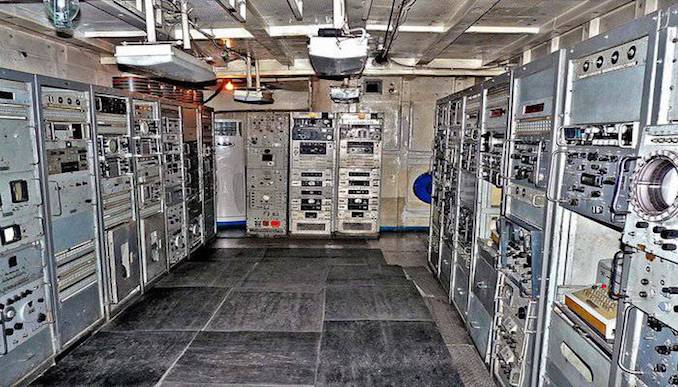
On board the USS Pueblo there were many special equipment and devices for interception and reconnaissance: cryptographic machines such as KL-47 and KW-7, radios, oscilloscopes, tape recorders, although the ship was closed, the captain tried to take time so that the crew could destroy the equipment and documents according to the order of COMSEC.
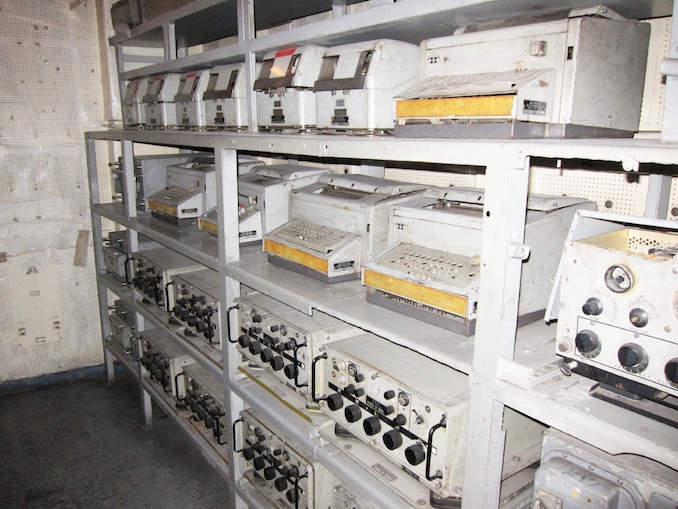
The Koreans tried to take the unarmed Pueblo into the ring, after which they would be forced to go to one of the North Korean ports. The pursuit of AGER-2 lasted 2 hours, and then the Korean took decisive action - the first shell deprived one of the sailors' legs, followed by a series of machine-gun shots.

After directly entering the mast with a 57 mm S0-1 gun, the USS Pueblo slowed down and was eventually captured by the Koreans. During the attack, crew member Dwayne Hodges was killed and several sailors were injured. Interestingly, the Americans did not destroy documents and secret equipment, everything was packed in bags (although they should be thrown overboard), but even more surprisingly, they did not even turn off the secret equipment.
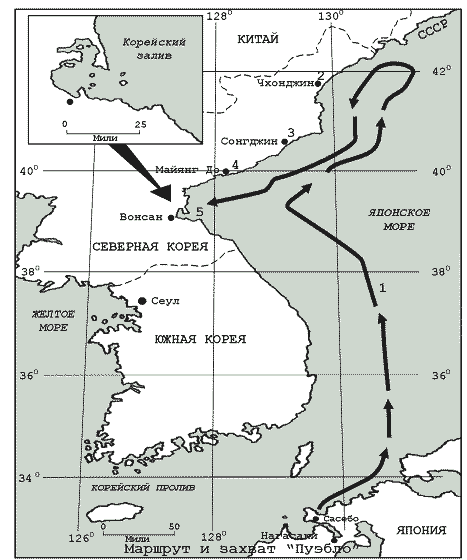
The ship was delivered to Wonsan Port, and crew members were shown on North Korean television as part of a propaganda campaign. Meanwhile, the equipment was sent for research by North Korean experts. For several months, the technical staff of Pueblo was interrogated, the Korean side wanted to understand the principles of operation of the captured equipment.
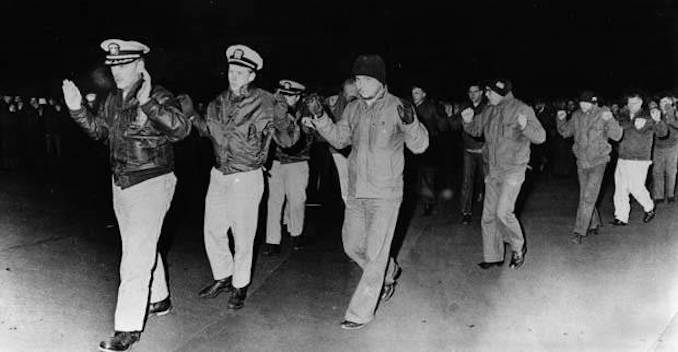
The North Koreans shared their findings with the Soviet Union and even handed them some of the vehicles to help intercept US communications in the future. After long and tough negotiations between North Korea and the United States, the Americans were forced to admit that USS Pueblo was involved in an espionage mission. Finally, after 11 months of captivity, the crew was released on December 23, 1968. However, the ship remained a landmark in North Korea.
The following list shows what cryptographic equipment was on board the USS Pueblo on January 23, 1968, when captured by North Korea. Although the crew seemed to do "everything possible" to destroy the equipment, part of it was captured intact.
After the USS Pueblo crew was released by the North Koreans in December 1968, they were interviewed by the U.S. Navy to get a complete picture of what equipment was on board and how much of it fell into the hands of the enemy. The final report of this investigation was published a few months later, on February 28, 1969. It turned out that the team did everything possible to destroy the equipment and code material, but some machines and parts were captured and (partially) intact.
Of the two KW-7 ciphers that were on board, only one was destroyed properly. An attempt was made to destroy the second, but by that time the ship was already landed by the North Koreans and the car went to the opponents intact. Although this should not have become a problem, because the KW-7 was created on the principle that the key is kept secret, and not the equipment itself (according to the Kirkhoffs principle).
Nevertheless, due to circumstances unknown to the United States, the USSR somehow miraculously had access to a wide range of keys and other cryptomaterials. And all thanks to John Anthony Walker, who began to spy on advice in December 1967.
In his book Spymaster, former KGB general Oleg Kalugin even suggested that the Pueblo incident could have happened because the USSR wanted to study the equipment described in documents provided by Walker in 1967.
The knowledge gained from hijacking USS Pueblo, combined with a continuous stream of key material supplied by Walker and his spy team, allowed the councils to decipher over one million US secret messages. Thanks to this, they were informed and aware of the secret maneuvers and bombing of the US B-52 in Vietnam. Walker, driven by a thirst for money, was probably an American spy who struck one of the most devastating blows to Americans in the history of the Cold War.
The article used materials from the amazing resource Crypto Museum, Michael Ascension. “On the brink of a world war. The Pueblo Incident, " Hackaday .
Thank you for staying with us. Do you like our articles? Want to see more interesting materials? Support us by placing an order or recommending it to your friends, a 30% discount for Habr users on a unique analogue of entry-level servers that we invented for you: The whole truth about VPS (KVM) E5-2650 v4 (6 Cores) 10GB DDR4 240GB SSD 1Gbps from $ 20 or how to divide the server? (options are available with RAID1 and RAID10, up to 24 cores and up to 40GB DDR4 RAM).
Dell R730xd 2 times cheaper? Only we have 2 x Intel Dodeca-Core Xeon E5-2650v4 128GB DDR4 6x480GB SSD 1Gbps 100 TV from $ 249 in the Netherlands and the USA! Read aboutHow to build the infrastructure of the building. class using Dell R730xd E5-2650 v4 servers costing 9,000 euros for a penny?
He’s Zlatoust, aka LOSS, a fantastic spy system
1960 year. After the incident with U-2 at an emergency session of the UN General Assembly, the US side demonstrated a listening device that had been successfully located for 8 years in the Moscow office of the US ambassador and was hidden inside a wooden copy of the US Great Seal.
The secret bug did not contain any electronic components and did not require batteries or any other power source. Americans dubbed the bug - the Thing. On the Soviet side, the wiretapping operation was codenamed “Confession,” and the introduction, “Zlatoust,” was supervised by Stalin and Beria.
The Thing / Item, also known as The Great Seal Bug (bug in the U.S. Great Seal), was a passive secret wiretap device developed in the Soviet Union and successfully hidden in the office of the American ambassador in Moscow. It was hidden inside a wooden replica of the Great Seal of the United States. Why is a passive device? It worked without its own power source, activated by strong microwave radiation from the outside. In the USA, the device was codenamed “LOSS”.
For 10 years, the Soviet side carried out painstaking work on a plan for introducing a unique bug. And on August 4, 1945, the Vladimir Lenin All-Union Pioneer Organization at the celebration of the 20th anniversary of Artek presented the US Ambassador Aveller Harriman a wooden copy of the Great Seal of the United States, as a symbol of friendship between the allies in World War II. The coat of arms was hanged in the residence of the American ambassador Spaso-House (Spasopeskovsky platform).
“Lavrentiy, have you heard anything about the Trojan horse?”
- That's right, Comrade Stalin.
- Smart people, these Greeks, what do you think? ..
A bug unknown to the Americans, hidden in an engraved coat of arms, was an RF radio transmitter of an original design: there was no own power source, there were no connections and wires. Instead, the device was driven by a strong radio signal from the outside. Such a resonator with an unlimited duration served the Soviets as the best intelligence service.
Since 1945, after the case of Amerasia, the United States was suspicious of security at embassies abroad, especially in Moscow. Although at the end of 1940 a lot of listening devices were found in the US embassies in Eastern Europe, none of them were found in Moscow since the Second World War. Nevertheless, diplomats believed that ears had grown on the walls in Moscow. Suspicions intensified in the fall of 1951.
Official version. In 1951, a British radio operator in the British embassy (located 700 meters from the American one) watched Soviet radio communications when he suddenly intercepted a conversation in which he recognized the voice of a British aviation attache, but they did not find hidden microphones during a search at the embassy. Another situation occurred with the American operator in 1952, when he accidentally went to the LOSS frequency and was able to eavesdrop on the conversation, which, as it turned out, came from the ambassador’s residence in Spaso House. An intensified search for listening devices began; as a result, the bug was detected using the so-called crystalline video receiver, just during wiretapping by the Soviet NKVD.
The bug was discovered by the US Department of State in 1952 during the time of George F. Kennan, during which time three ambassadors managed to change the post. What they just didn’t do and how they didn’t look for the source of the information leak: they interviewed embassy staff with a predilection on a lie detector, shoveled every inch of the embassy itself, but to no avail. How did you manage to find Zlatoust in the reliable "walls" of the wooden storage? There are several versions: the cessation of information leakage was noticed at the time when the coat of arms was removed for restoration; the cracked wooden coat of arms betrayed the bug's location, finding itself in a crack; there was a kind of “well-wisher-traitor”, GRU lieutenant colonel Peter Popov, recruited by the CIA, who shared classified information.
The crystal video receiver, as the name implies, consisted of a crystal detector and a video amplifier, the noise level was set by the crystal detector.
The device found inside the coat of arms appeared to Americans as a microphone of a cylindrical shape with a wire about 23 cm long, which is interesting, without any batteries. Initially, there was even an assumption that the real bug was hidden elsewhere, and this is only an unknown little thing - The Thing. For another year and a half, American intelligence engineers fought over the riddle - what is it? The bug was located under the beak of an eagle, tiny holes made in a tree sent sound to the membrane. After a successful operation to introduce the device, the Soviet services bought 2 apartments in the building opposite, immediately evicted tenants and accommodated NKVD officers. Thus, Stalin learned about the decisions made by the Americans earlier than the US president himself.
The American side decided not to publicize such an unexpected find, until the incident with U-2 in 1960. On May 1, 1960, an U-2 American spy plane was shot down over the airspace of the USSR. A meeting of the UN Security Council was convened at which the councils accused the Americans of espionage. On the fourth day of the meeting (May 26, 1960), the fact of mutual espionage between the two countries was highlighted: the American ambassador Henry Cabot Lodge demonstrated the Trojan emblem.
Device operation
The Thing is a so-called resonant hollow microphone (consisting of a resonant cavity + condenser microphone). The diagram below shows the design of The Thing, based on various reports and publications.
The silver-coated copper cylinder was a high-Q resonator of a reentrant type. In the center is an adjustable disk-shaped element with a flat surface, which, in combination with a very thin membrane of 75 microns, forms a cavity. The antenna entered the cavity through an insulated hole on the side of the cylinder.
The diameter of the cavity with a length of 17.5 mm was 19.7 mm, the length of the antenna was 22.8 cm (9 inches). The thickness of the membrane on the front of the cylinder was only 75 microns. Known as endovibrator.
Any sound in the room, such as speech, caused the membrane to vibrate, which reduced or increased the space inside the cavity, as well as the space between the membrane and the disk-shaped element. As a result, the bug created a combination of amplitude modulation (AM) and frequency modulation (FM).
Receiver overload could be resolved using a directional antenna. To increase the power of the antenna, a 3-way transmit / receive switch (circulator) was added.
The invention and its author
He makes music from the air
The resonant hollow microphone was patented by Winfield Koch in RCA (Radio Corporation of America) in 1941, but the Soviet bug Zlotoust was developed by Leon Theremin (August 27, 1896 - November 3, 1993). The inventor was born in St. Petersburg, primarily he is known as the creator of electronic musical instruments. Theremin or Theremin - his brainchild - is a musical instrument with a proximity sensor. During the movement of the hands, the capacity of the oscillatory circuit of the instrument changed, which affected the frequency. By the way, you can buy such a tool today at auctions, the price is from 7 thousand dollars.
Theremin lived in the USA since 1927, the councils, according to the official version, sent him on a business trip in order to demonstrate what “technology has come to”, although the real purpose of his stay in the USA was to espionage. Until 1938, he lived in New York, was known as an extraordinary personality, he even married the prima of the First American Negro Ballet, for which he paid the loss of many friends and acquaintances, received a condemnation in society. He was almost the most popular person in New York, even listed in the club of millionaires. Albert Einstein, conductor Leopold Stokowski, Charlie Chaplin, Marie Helen Butte and others worked in his studio.
On his arrival in America, he rented a six-story mansion on 54th Avenue for 99 years. In addition to personal apartments, it also houses a workshop and studio. Here often Lev Sergeyevich played music with Albert Einstein: the physicist on the violin, the inventor on the theremin ... It never occurred to him that marriage with a black woman would fundamentally change his life. But, as soon as the lovers registered their marriage, the doors of many houses in New York were closed to Theremin: America then did not know political correctness. He lost informants, which caused serious dissatisfaction with Soviet intelligence.
In 1938, due to financial difficulties, he was forced to return to the USSR just before the Second World War. Although there are still versions: according to one, the reason for returning to his homeland was his sense of responsibility for his homeland during the imminent war; according to the second, the NKVD forcibly removed the inventor.
American friends and acquaintances believed that Theremin disappeared without a trace. The West was certain that theremin was dead. Paradoxically, in the USSR, Termen was sentenced on suspicion of espionage to 8 years in the camps, imprisoned, and later sent to sharashka, where he served time with other detained scientists and engineers, such as Andrei Tupolev and Sergei Korolev. There he was involved in the development of Buran, The Thing and other devices for the NKVD. In 1947 he was released, and in 1956 he was completely rehabilitated. Until 1966 he continued to work in the NKVD (by then the KGB), and after leaving the bodies he was engaged in teaching at the Moscow Conservatory, while a journalist from The New York Times published an article about Theremin. There was a fuss, the sensation of "Theremin is alive!" since the outstanding inventor was considered long dead. Invitations fell from all over the world, but it wasn’t there. Instead of fame and recognition of the motherland, Theremin “received” his dismissal from work, his developments were simply thrown away. So there was no light of the Theremin synthesizer, on the creation of which Leo painstakingly worked, successfully developed later by Yamaha. He died in 1993 in Moscow at the age of 97 in poverty in his communal apartment near the Cheryomushkinsky market.
So, after an American U-2 spy plane was shot down on Soviet airspace on May 1, 1960 (U-2 incident), the Americans decided to uncover a Soviet listening device called The Thing / Object, which was found in the residence Ambassador in Moscow 8 years ago. Thus confirming the fact that espionage was mutual. The Chrysostom listening device caught the attention of the international press, over the next days and weeks the headlines about Thing were full on the front pages of newspapers.
There were rumors that the United States did not know how the device works, and even turned to the UK for help. However, there is a sufficient amount of evidence from official reports about the lack of ignorance on the part of various American agencies: they studied the device and well understood the principle of its operation.
The following agencies conducted their own investigations: US Department of State, FBI, US Navy Research Laboratory, NSA, and others.
Although many agencies claim to be involved in the discovery of The Thing, the device was actually found by the Department of State (DoS) during an organized secret security audit in September 1952. Although endovibrators were already known, but before this case they had never been used as listening devices.
The next day, the find was sent to Washington (USA) and transferred to the FBI for further investigation. Information obtained as a result of studies of the bug was later used to train various agencies.
As mentioned earlier, the first agency to investigate the device after it was discovered by the State Department was the Federal Bureau of Investigation (FBI). Determining the operating frequency of the device was not easy, since the FBI equipment was not suitable for frequencies above 400 MHz. Fortunately, the FBI was able to borrow the following test equipment from the National Bureau of Standards (now: NIST) for one day. The important findings of the preliminary study were:
- surround resonator with integrated condenser microphone
- antenna length 1½λ
- frequency between 1650 and 1800 MHz
- good speech quality
- very sensitive device with a good response range
One of the first organizations involved in the investigation, besides the Ministry of Defense and the FBI, was the Naval Research Laboratory (NRL), which worked closely with the FBI during a technical investigation. To avoid "duplication" of effort, the NRL was ordered to develop a counter receiver that could detect resonant microphones. The laboratory was supposed to provide a working prototype of such a device. On December 1, 1952, the FBI / NRL final technical report was prepared. This was a report on the analysis and experiments conducted by the laboratory and the FBI, detailed large-scale drawings and photographs, an NRL report with schemes for developing equipment to detect such listening devices.
Since the USSR was the first to use such listening devices, there was a clear understanding that, if resonant microphones were detected, they would be copied by Western agencies and that sooner or later they could be used against themselves. Therefore, the Soviets developed their own countermeasures.
An example of a receiver that was designed specifically for detecting resonant microphones was OSOBNJAK 8.
The device was housed in an unobtrusive diplomat and could detect strong close RF signals from 100 MHz to 12 GHz; signals that are commonly used to activate such microphones. The device is also known as 1RTA7. The device was powered by rechargeable batteries, which provided approximately 4 hours of battery life.
OSOBNJAK 8 is an example of a device for detecting Zlotoust and similar devices. It is an indicator of field strength (it could detect neighboring radio frequency signals between 100 MHz and 12 GHz), divided into 8 frequency ranges, each of which has its own antenna. Antennas are hidden inside the housing cover, the opening angle is about 90 °. The diplomat’s dimensions made it easy to carry OSOBNJAK 8, take it to important meetings, and install it in every office where important meetings with foreign guests took place, and the device was quite simple to use, and any strong radio frequency microwave signal was immediately detected. With OSOBNJAK 8, it was not possible to determine from where the radio signal was activated. In order to find where the signal comes from, we needed an aperiodic receiver for the proposed band,
A suitable solution is the MRP-4 radar, which was developed in 1972 by the Tesla company (Czechoslovakia). This device could be carried in a bag, the antennas were directed forward. Although it was originally designed to search for radar stations, it could also be used to detect any nearby strong transmitter. In addition, it could be used to detect weak impulse transmissions from radar and signal devices.
MRP-4 antennas had a narrow viewing angle, usually from 1 to 2 degrees, the device was suitable for the frequency range of 1 - 10 GHz, divided into four bands. Similar devices were developed in the USSR.
After the discovery of The Thing in 1952, the CIA began its own research program and the development of secret transmitters of this type. In 1965, a
similar device was developed - a resonant microphone similar to the Soviet The Thing, activation was due to a pulse signal.
In 1958, during a joint secret operation of the Central Intelligence Agency (CIA), the Netherlands Internal Security Service (BVD) and the Dutch Radar Laboratory (NRP), an attempt was made to place a secret listening device (bug) in the office of the Russian ambassador in The Hague (Netherlands) . The operation was called "Easy chair" / Easy Chair (EC).
In the early days of the Cold War, both the Dutch Security Service (BVD) and the American Central Intelligence Agency (CIA) regularly conducted covert operations against members of the USSR, and Soviet satellites operating in the Netherlands were monitored. Since the CIA conducted secret operations in the guest country, it was decided that each action would be taken only with the permission of the BVD.
At the end of September 1958, the BVD reported that the councils ordered new furniture for their embassy in The Hague through the National Procurement Bureau. Such a chance does not occur often: it became possible to install listening devices simply in objects of decor.
The Dutch BVD developed a plan to install the Easy Chair (EC) device / soft chair - were manufactured by the Dutch Radar Laboratory (NRP) in Noordwijk (Netherlands) for a top-secret CIA project directly in furniture. So, special attention was paid to the table, as it was intended in the office for the ambassador himself and could show all his “potential” in the future.
On Saturday, November 22, the table was almost ready, it only remained to polish it. It was an ideal time to install the bug, so it was decided that the BVD would install the EC the next day, Sunday 23. The next morning, at 11:00, the Dutch internal security service got access to the workshop. The table was turned upside down, and the bug, without noise and dust, was installed in the left rear corner.
The table was varnished a few days later on November 26, on the same night the BVD operative again had to make a small hole with a diameter of 1 mm for the microphone, which was blocked during varnishing. He tested the device, the sound quality was not perfect. A day later, the bug was checked again, table delivery to the embassy was scheduled for December 10, 1958. Meanwhile, the interception point was placed at the Sorgvlid observation post.
Zorgvlid is a rather tall building, which was located about 125 meters from the front of the USSR Embassy, on the other side of the canal. Although the building was located two streets from the embassy, the entrance and the front side of the observed object were clearly visible from it.
A few years before these events, the BVD acquired a small room in the attic of the Zorgvlid building, there was surveillance, photo surveillance of those who entered or left the USSR Embassy. Since the attic had a clear view of the target building, it became a suitable place for installing Easy Chair antennas. The satellite image shows the position of the observation point Zorgvlid (1958). The interception post was located in a very small room in the eastern corner of the attic, the observation deck was in the non-residential part of the building. Behind several forgotten doors was a small utility room with a narrow staircase, the staircase led to the hatch, which served as the entrance to the real room for wiretapping. 5 windows of the room (the square of the room is approximately 5 x 3 meters) went straight to the Soviet embassy.
Today, the observation post is no longer used. The room was empty, and the view of the embassy was closed by trees. Nothing in the room anymore reminds of what happened inside its walls during the Cold War.
The images below show how and where the Easy Chair (EC) listening device was built into the furniture. A large mahogany table was ordered at the Soviet embassy, which was most likely (as calculated) for the ambassador himself. Two deep lockers came on the table, in each locker there were three drawers closed by doors. The total height of the table was 76 cm. The table was mounted on a pedestal 10 cm high.
Since the construction of the 10-cm pedestal was separated from the main part of the table, it was decided to install a bug in the rear left corner of the table, while a tiny hole was made for the microphone with a diameter of 1 mm, about 6 cm above the pedestal.
A few days after the new furniture was delivered and installed at the USSR embassy, BVD operatives tried to activate the EU bug, but to no avail. Presumably, the distance between the target and the interception point was large, or the device was detected.
To test the device at a shorter distance, a tarpaulin truck was sent under the embassy, in which something allegedly happened to the engine in front of the embassy itself. It was parked in front of the embassy, and a 40-watt transmitter and battery-powered receiver were hidden under a tarp.
The devices were controlled by NRP field engineer Hekstr and the CIA operator, they were in the truck. The antennas were turned towards the embassy, and the transmitter was turned on. After setting up the receiver, after a while they managed to catch the signal of the Easy Chair bug. The first thing they heard was a loud and clear laugh. ES worked and was not detected by the tips. This meant that for LP antennas the distance from the building where wiretapping was conducted and to the embassy was large.
Two new antennas were developed, each measuring 2 x 2 meters and providing a gain of 20 dB, in addition, the isolation between the transmitter and receiver was improved.
Every day, field engineer Hekstra conducted experiments in the attic of the Zorgvlid apartment. His research findings were passed on to Gerhard Prince at NRP, which was engaged in improving Hekstra’s designs, and soon after a series of improvements and solutions to EU problems, it could be reliably activated from the attic.
The operation lasted about six months, after which the bug was discovered by the council, or perhaps a soundproof room was made in the attic of the embassy.
Bug Easy Chair
Easy Chair (EC) is the name given to a top-secret research project carried out by the Dutch Radar Laboratory (NRP) commissioned by the US Central Intelligence Agency (CIA). Easy Chair began to be called a series of secret listening devices (bugs), who saw the world as a result of this study. EU devices are passive devices, they do not need a local power source, such as a battery.
Instead, the EC devices were powered by a strong radio frequency (RF) signal transmitted to it from a neighboring wiretap point. By the time the wiretapping operation of the Soviet embassy took place, the EU was already in its third “incarnation”, the passive element of the EU III (PE) was used. It is shown in the image below.
Like the previous EC I and EC II, the system worked at a frequency of 378 MHz, but offered to mask the sound through the use of a frequency-modulated subcarrier. A new passive element (PE) was also deployed inside the antenna. Thus, the device was improved in terms of secrecy, in earlier EC I and EC II the signal (in the case of scanning) could be accidentally intercepted.
EC III was one of the first attempts to implement the principle of improving privacy, known as masking sound. Passive element - was actually an open vibrator with a length of approximately ½λ. Unlike PE EC I, this version did not need an external amplifier, since its electronics were built into the vibrator. All parts of the PE, with the exception of the microphone, were built inside the antenna itself.
In addition, the PE was suitable for connecting almost any type of microphone with a high impedance, in the case of a 3-wire version, a microphone was suitable even with a low impedance. Another microphone that was used with the EC III and later was the so-called miniature Type-B. It is based on the RCA BK-6B studio microphone, which was placed in a special building (developed by the CIA).
During the Cold War, the Russian embassy in The Hague, as you know, was engaged in espionage, but everyone worked under the guise of diplomacy. Most of these "diplomats" constantly watched BVD. In February 1958, three Soviet diplomats were even expelled from the Netherlands. Five NRP employees (a small Dutch hardware company) worked directly on the Soft Chair operation and subsequent CIA projects. It is not a fact that they all knew that their customer was American intelligence. Moreover, even the Dutch special services did not know about the volume of cooperation between the CIA and NRP.
Embassy of Russia in The Hague (formerly Soviet Embassy)
Information about the Easy Chair operation, which opened completely by accident, shed light on the role of the Netherlands in the Cold War. Maurits Martine (journalist) conducted a three-year investigation after the grandson of one of the participants in the secret operation found his grandfather's notes about the CIA and the investigations being conducted. The collaboration of the NRP and the CIA continued until the 1990s.
USS Pueblo AGER-2
USS Pueblo, also known as AGER-2, was officially a Banner type hydrographic ship, but in fact it was a Cold War reconnaissance ship and belonged to the U.S. Navy as a collection vehicle (spy ship). He was attacked and captured by North Korean forces on January 23, 1968, after which secret intelligence equipment fell into the hands of North Korea and the USSR. This event is known as an incident that occurred between North Korean patrol ships and the American ship Pueblo in the territorial waters of the DPRK on January 23, 1968.
Reconnaissance ship AGER-2. May 13, 1967
On January 5, 1968, Pueblo left the US naval base in Yokosuka (Japan) with the intention of collecting information about the Soviet "red" fleet and North Korea as part of a secret mission with SIGAD USN-467Y, jointly conducted by the US Navy and the US National Security Agency (NSA). For radio contact USS Pueblo used the callsign Navy to call NGVE (November Golf Victor Echo)
On January 22, the ship passed near the North Korean port of Wonsan under severe radio silence. It was an exceptionally sunny day, the scout quietly moved south along the coast of the Korean Peninsula, simultaneously collecting information about the sources of radio emission. After lunch, however, luck turned his back on him, Pueblo was spotted by two North Korean fishing trawlers. The crew decided to violate EMCON 3 in order to send a SITREP-1, 4 message, but due to poor ionospheric radio communications, the attempts were unsuccessful.
The next morning, at about 10 o’clock, SITREP-1 was sent successfully. SITREP-2 was sent shortly afterwards, indicating that the vessel was no longer under surveillance, but that was not so. By lunchtime, a North Korean submarine was rapidly approaching AGER-2, with S0-1 on its way. Soon three P4 torpedo boats and two MIG-21 fighters joined.
On board the USS Pueblo there were many special equipment and devices for interception and reconnaissance: cryptographic machines such as KL-47 and KW-7, radios, oscilloscopes, tape recorders, although the ship was closed, the captain tried to take time so that the crew could destroy the equipment and documents according to the order of COMSEC.
The Koreans tried to take the unarmed Pueblo into the ring, after which they would be forced to go to one of the North Korean ports. The pursuit of AGER-2 lasted 2 hours, and then the Korean took decisive action - the first shell deprived one of the sailors' legs, followed by a series of machine-gun shots.
After directly entering the mast with a 57 mm S0-1 gun, the USS Pueblo slowed down and was eventually captured by the Koreans. During the attack, crew member Dwayne Hodges was killed and several sailors were injured. Interestingly, the Americans did not destroy documents and secret equipment, everything was packed in bags (although they should be thrown overboard), but even more surprisingly, they did not even turn off the secret equipment.
The ship was delivered to Wonsan Port, and crew members were shown on North Korean television as part of a propaganda campaign. Meanwhile, the equipment was sent for research by North Korean experts. For several months, the technical staff of Pueblo was interrogated, the Korean side wanted to understand the principles of operation of the captured equipment.
The North Koreans shared their findings with the Soviet Union and even handed them some of the vehicles to help intercept US communications in the future. After long and tough negotiations between North Korea and the United States, the Americans were forced to admit that USS Pueblo was involved in an espionage mission. Finally, after 11 months of captivity, the crew was released on December 23, 1968. However, the ship remained a landmark in North Korea.
Seized equipment
The following list shows what cryptographic equipment was on board the USS Pueblo on January 23, 1968, when captured by North Korea. Although the crew seemed to do "everything possible" to destroy the equipment, part of it was captured intact.
- KL-47
- KW-7
- KWR-37
- KG-14
After the USS Pueblo crew was released by the North Koreans in December 1968, they were interviewed by the U.S. Navy to get a complete picture of what equipment was on board and how much of it fell into the hands of the enemy. The final report of this investigation was published a few months later, on February 28, 1969. It turned out that the team did everything possible to destroy the equipment and code material, but some machines and parts were captured and (partially) intact.
Of the two KW-7 ciphers that were on board, only one was destroyed properly. An attempt was made to destroy the second, but by that time the ship was already landed by the North Koreans and the car went to the opponents intact. Although this should not have become a problem, because the KW-7 was created on the principle that the key is kept secret, and not the equipment itself (according to the Kirkhoffs principle).
Nevertheless, due to circumstances unknown to the United States, the USSR somehow miraculously had access to a wide range of keys and other cryptomaterials. And all thanks to John Anthony Walker, who began to spy on advice in December 1967.
In his book Spymaster, former KGB general Oleg Kalugin even suggested that the Pueblo incident could have happened because the USSR wanted to study the equipment described in documents provided by Walker in 1967.
The knowledge gained from hijacking USS Pueblo, combined with a continuous stream of key material supplied by Walker and his spy team, allowed the councils to decipher over one million US secret messages. Thanks to this, they were informed and aware of the secret maneuvers and bombing of the US B-52 in Vietnam. Walker, driven by a thirst for money, was probably an American spy who struck one of the most devastating blows to Americans in the history of the Cold War.
The article used materials from the amazing resource Crypto Museum, Michael Ascension. “On the brink of a world war. The Pueblo Incident, " Hackaday .
Thank you for staying with us. Do you like our articles? Want to see more interesting materials? Support us by placing an order or recommending it to your friends, a 30% discount for Habr users on a unique analogue of entry-level servers that we invented for you: The whole truth about VPS (KVM) E5-2650 v4 (6 Cores) 10GB DDR4 240GB SSD 1Gbps from $ 20 or how to divide the server? (options are available with RAID1 and RAID10, up to 24 cores and up to 40GB DDR4 RAM).
Dell R730xd 2 times cheaper? Only we have 2 x Intel Dodeca-Core Xeon E5-2650v4 128GB DDR4 6x480GB SSD 1Gbps 100 TV from $ 249 in the Netherlands and the USA! Read aboutHow to build the infrastructure of the building. class using Dell R730xd E5-2650 v4 servers costing 9,000 euros for a penny?