January 11, 2016 at 22:12
PowerDot Miostimulator Overview: Compact and Managed
For the first time, we mentioned PowerDot in a large post about myostimulation, indications and contraindications to it, as well as a peculiar fashion for this method, which is known today in medicine, sports, and cosmetology.
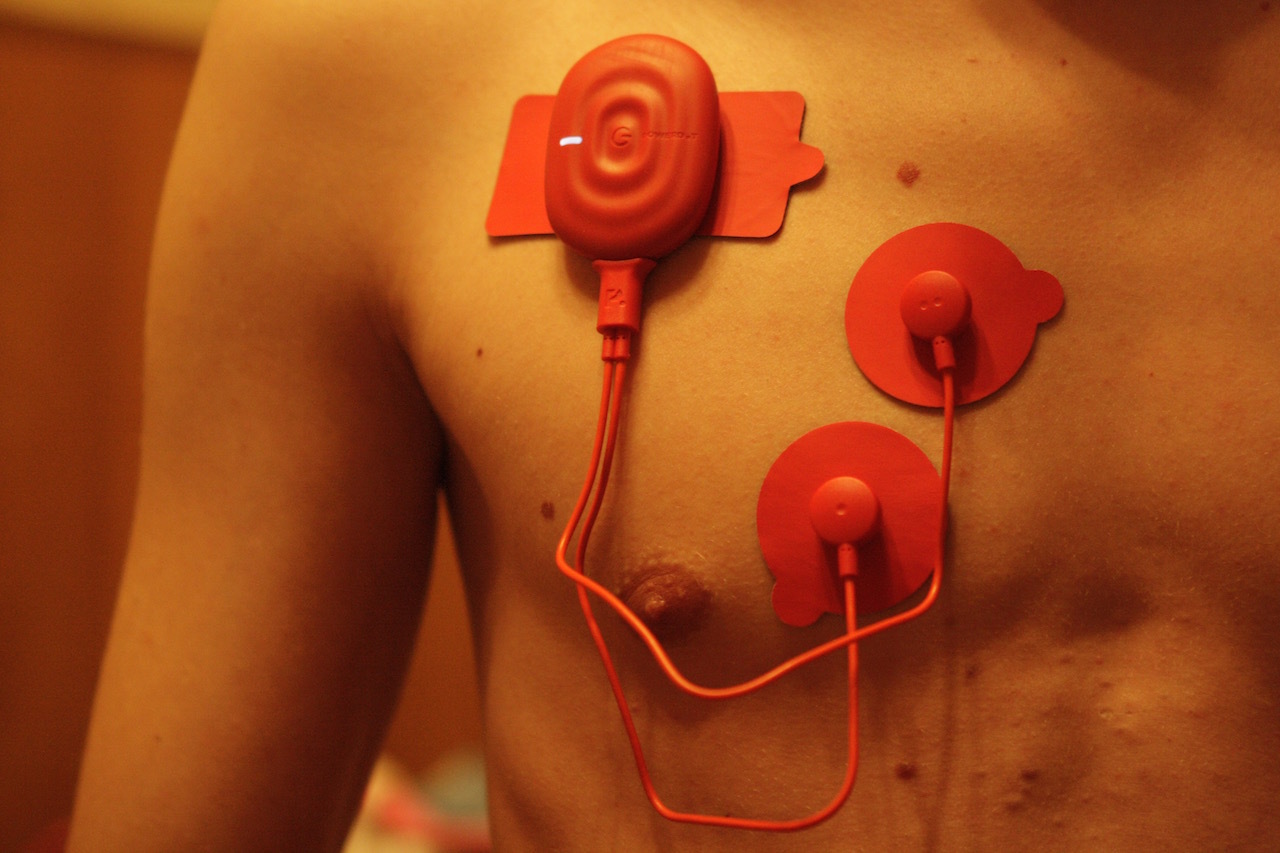
Today we want to introduce you to a more detailed story about a particular gadget, and if you are interested in how PowerDot works, I ask for a cat.
However, to demonstrate this would be enough for one video, and everything else can safely be written in the "details":
To begin with, it should be said that we are dealing with an extremely compact device that can only be controlled using a smartphone, for which IOS and Android applications are provided. The manufacturer provided for 3 colors: white, black, red (apparently, fans of Stendhal), two of which we brought to Russia .
Work with the downloaded application begins with registration and setting goals, a short survey and a set of warnings.
During the survey, you have to assure the developers that you do not use a pacemaker, do not have cancer, do not suffer from heart disease, muscle atrophy, headaches, etc., in other words, you have no contraindications to myostimulation. And from the warnings you need to remember where and how best to not use the device. In particular, given that among buyers there may be fans of exclusive joys in the genital area. Incidentally, we also mentioned this when giving a brief historical note.

After that, the device can be “steamed” with a smartphone. It is recognized:
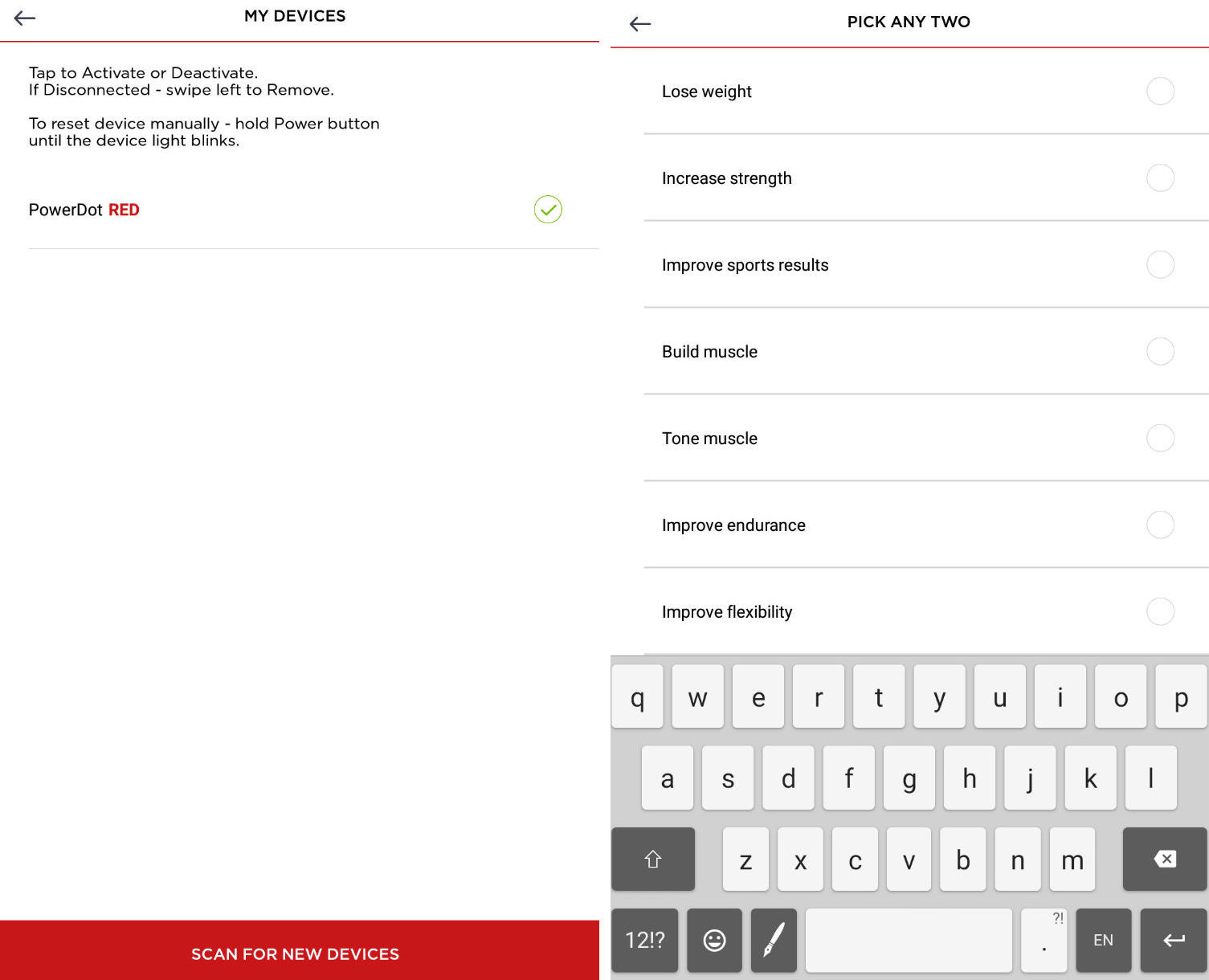
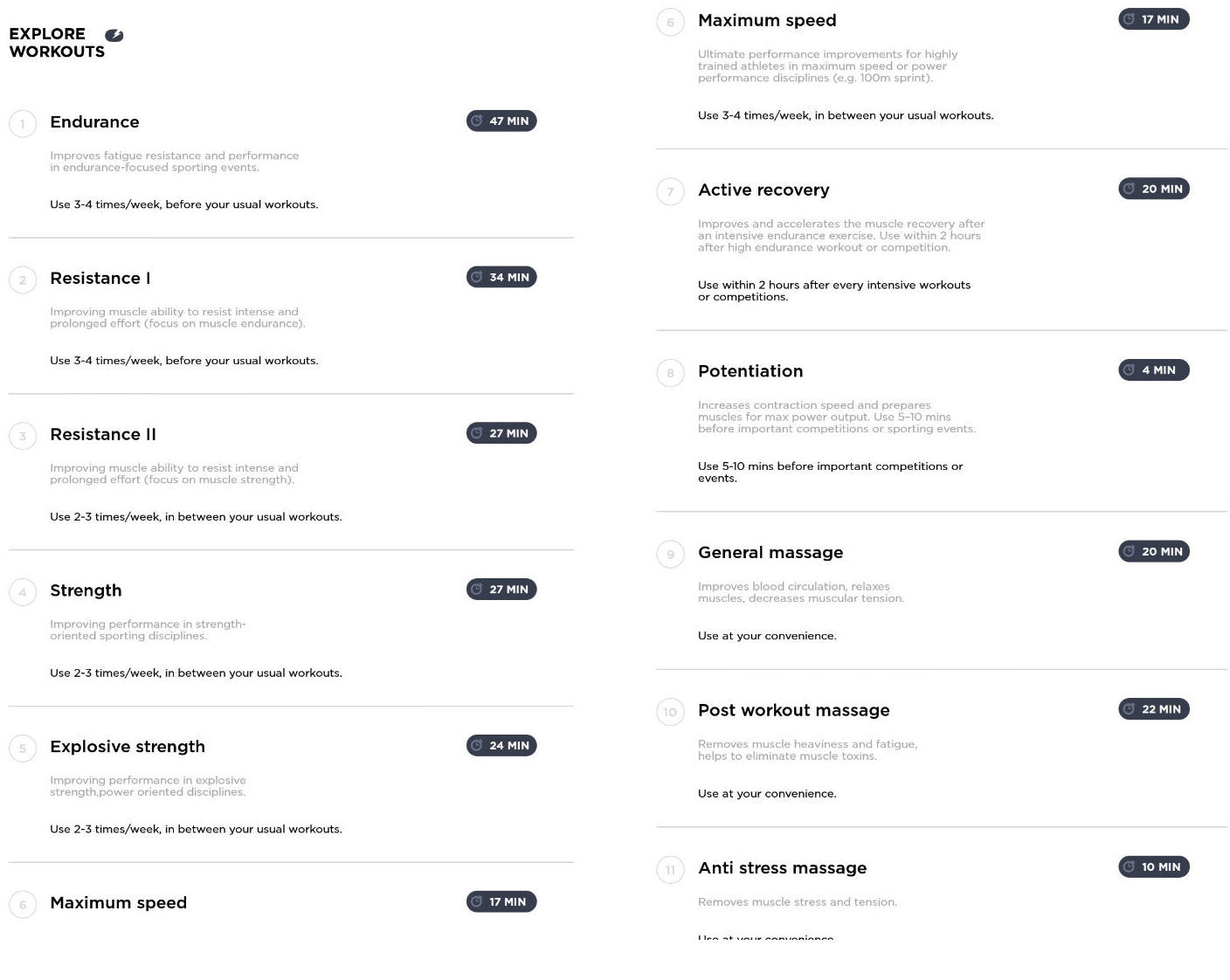
Next, you can choose from 11 modes, what exactly you want to do with your muscle stimulator: it can be a regular relaxing massage, restorative training, etc. For each of the modes, the optimal duration is indicated:
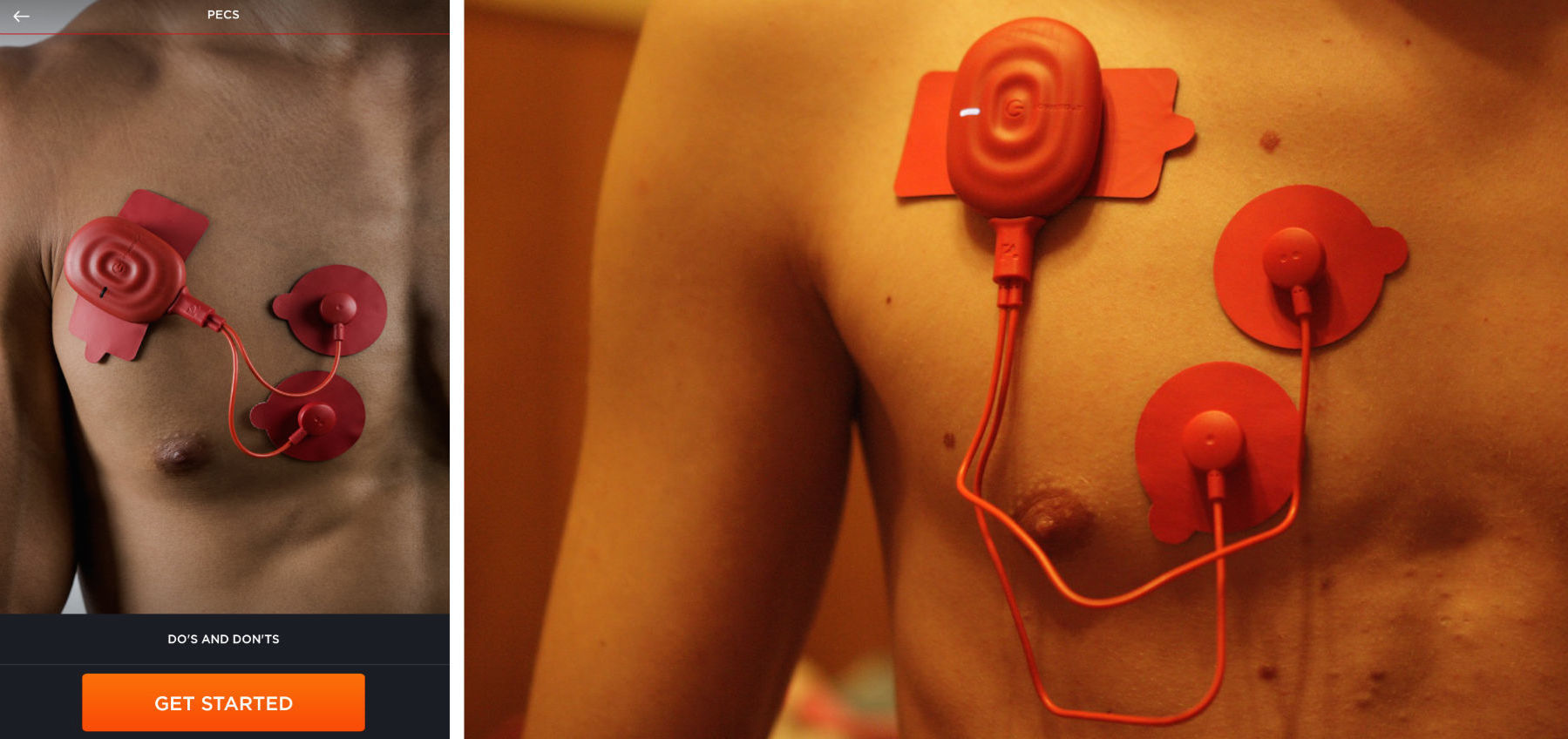
And after that, you must already choose the muscle group that you will train in the next 10-17-40 minutes ... Recommendations on how to fix PowerDot for one or another type of stimulation are given in the form of photographs, which is pretty obvious. It is impossible to pass the photos, since the start of the training is given in the same window:

The process can be controlled, and after it is started you get to the settings window where you can pause the training, turn it off altogether, and adjust the intensity of the “signal”. You can control all the contacts, as well as each one individually: a large one, which the sensor itself “holds” and two allotted round circles. In order to "dissolve" the load, you need to click on the central button, similar to the "link" icon:

Despite a fair amount of text above, the entire setup process after registration takes a matter of minutes. 1-2-3:
How PowerDot is arranged The
gadget comes in a rectangular box, inside which there are two compartments:

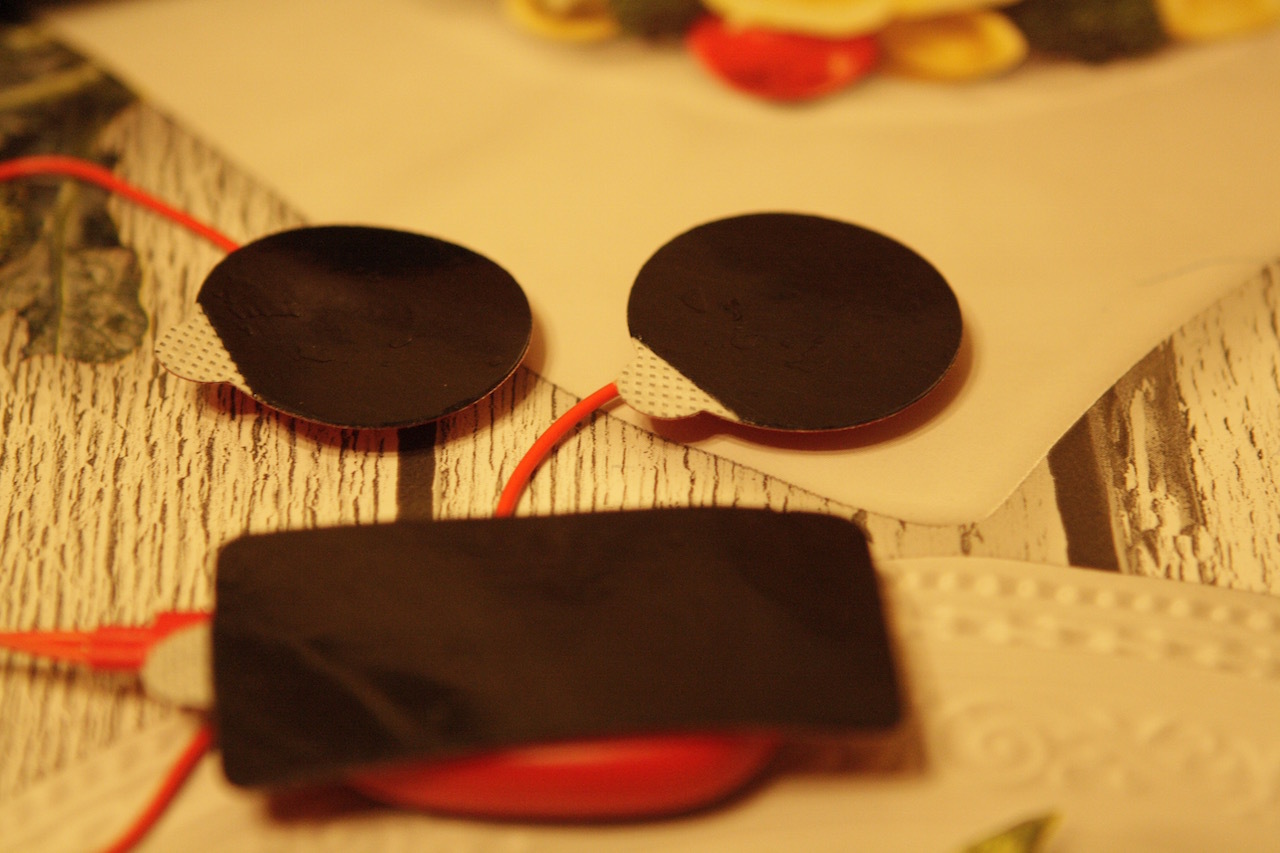
In a cardboard box there are electrodes that are attached to the PowerDot, large and small. They are sold “attached” to a special surface, and they themselves, in turn, have self-adhesive characteristics, which means they do not need to be lubricated or wiped to fix on the body.
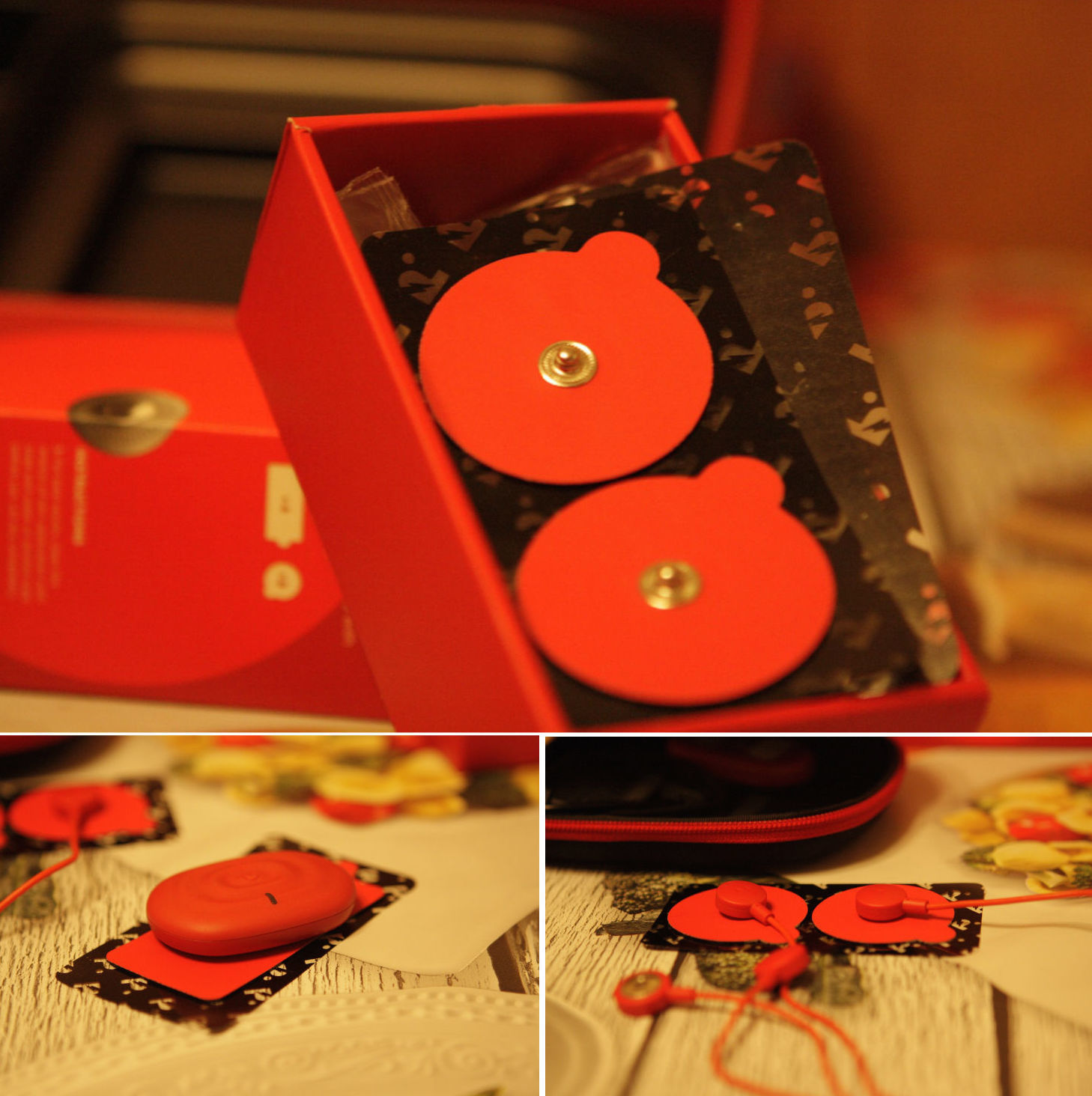
A rectangular plate is attached directly to the sensor, and a pair of round ones is attached to the wires that connect to it. You will find both the sensor and the wires (elongated and shortened) in the second compartment - in a special case. There is a cable for zaradyaki.
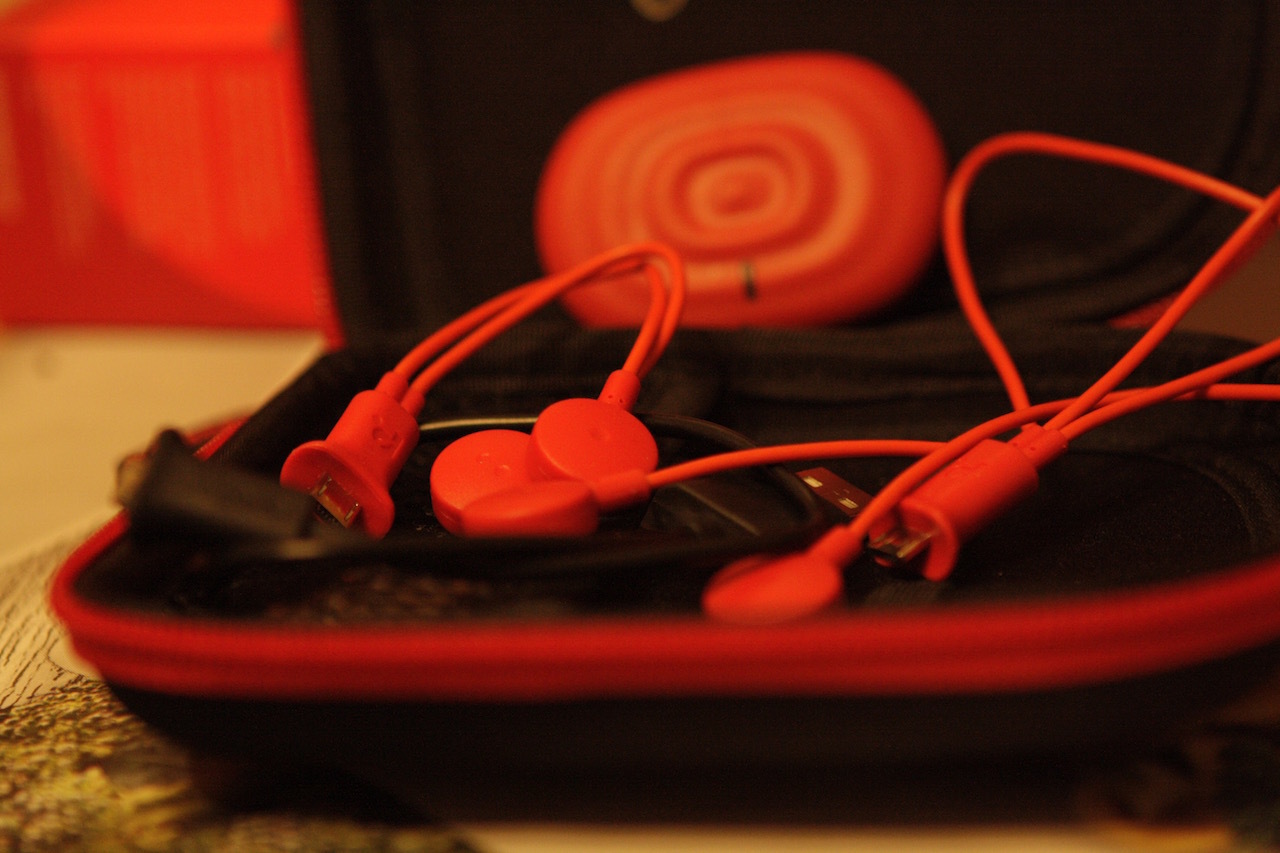
The assembled and ready-to-use model looks like this:
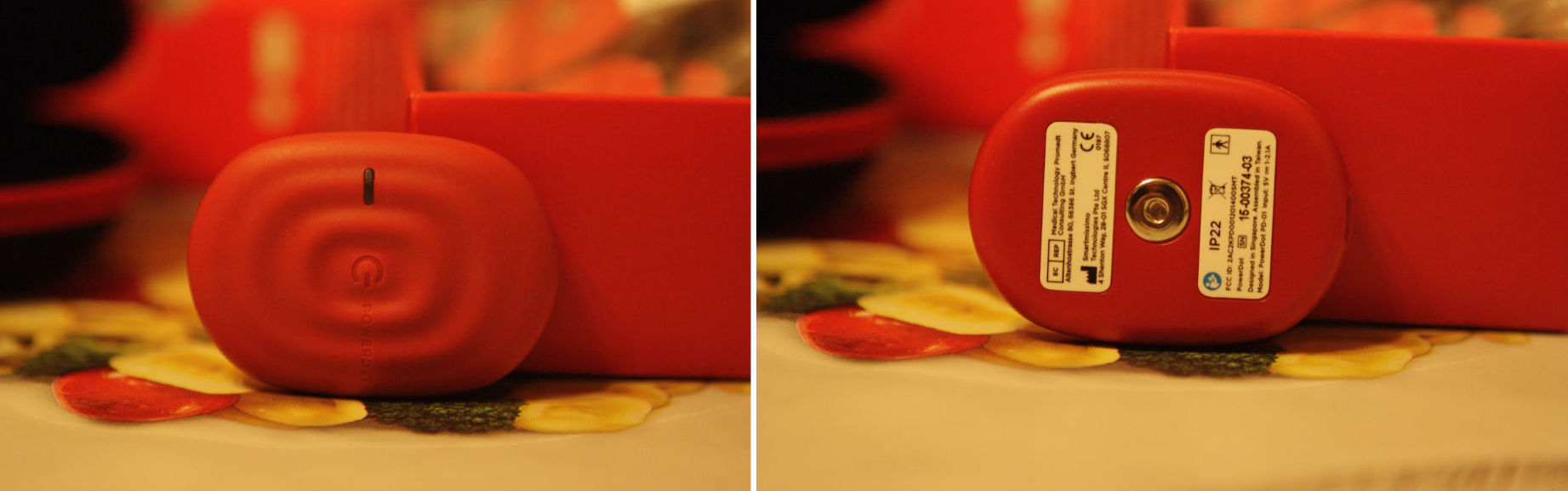
The sensor is a “soap-shaped” device equipped with a single button that is responsible for turning on and off, an indicator, as well as a connector where both Micro USB and wires for electrode removal are connected. On the back there is a cell for attaching a rectangular plate: The
manufacturer calls his gadget “the most affordable” on the market, however, the official website’s retail price is $ 199. PowerDot also costs a little less in Medgadgets .
Thanks for attention.
Today we want to introduce you to a more detailed story about a particular gadget, and if you are interested in how PowerDot works, I ask for a cat.
However, to demonstrate this would be enough for one video, and everything else can safely be written in the "details":
To begin with, it should be said that we are dealing with an extremely compact device that can only be controlled using a smartphone, for which IOS and Android applications are provided. The manufacturer provided for 3 colors: white, black, red (apparently, fans of Stendhal), two of which we brought to Russia .
Work with the downloaded application begins with registration and setting goals, a short survey and a set of warnings.
During the survey, you have to assure the developers that you do not use a pacemaker, do not have cancer, do not suffer from heart disease, muscle atrophy, headaches, etc., in other words, you have no contraindications to myostimulation. And from the warnings you need to remember where and how best to not use the device. In particular, given that among buyers there may be fans of exclusive joys in the genital area. Incidentally, we also mentioned this when giving a brief historical note.
After that, the device can be “steamed” with a smartphone. It is recognized:
Next, you can choose from 11 modes, what exactly you want to do with your muscle stimulator: it can be a regular relaxing massage, restorative training, etc. For each of the modes, the optimal duration is indicated:
And after that, you must already choose the muscle group that you will train in the next 10-17-40 minutes ... Recommendations on how to fix PowerDot for one or another type of stimulation are given in the form of photographs, which is pretty obvious. It is impossible to pass the photos, since the start of the training is given in the same window:
The process can be controlled, and after it is started you get to the settings window where you can pause the training, turn it off altogether, and adjust the intensity of the “signal”. You can control all the contacts, as well as each one individually: a large one, which the sensor itself “holds” and two allotted round circles. In order to "dissolve" the load, you need to click on the central button, similar to the "link" icon:
Despite a fair amount of text above, the entire setup process after registration takes a matter of minutes. 1-2-3:
How PowerDot is arranged The
gadget comes in a rectangular box, inside which there are two compartments:
In a cardboard box there are electrodes that are attached to the PowerDot, large and small. They are sold “attached” to a special surface, and they themselves, in turn, have self-adhesive characteristics, which means they do not need to be lubricated or wiped to fix on the body.
A rectangular plate is attached directly to the sensor, and a pair of round ones is attached to the wires that connect to it. You will find both the sensor and the wires (elongated and shortened) in the second compartment - in a special case. There is a cable for zaradyaki.
The assembled and ready-to-use model looks like this:
The sensor is a “soap-shaped” device equipped with a single button that is responsible for turning on and off, an indicator, as well as a connector where both Micro USB and wires for electrode removal are connected. On the back there is a cell for attaching a rectangular plate: The
manufacturer calls his gadget “the most affordable” on the market, however, the official website’s retail price is $ 199. PowerDot also costs a little less in Medgadgets .
Thanks for attention.