March 15, 2018 at 15:03
Future technologies: rejection of physical SIM cards

Shot from the movie “Kingsman: Secret Service” (2015)
Over the years, the device of physical SIM-cards has not changed much. Of course, they decreased in size: Mini-SIM 25 x 15 mm, Micro-SIM 15 x 12 mm, Nano-SIM 12.3 x 8.8 mm. However, SIM cards retained functionality and compatibility, regardless of format. And you still need to insert a small plastic card into your phone or tablet to connect to the mobile network.
When dual-SIM smartphones first appeared on the market, they aroused great interest among users who tried to solve the problems of network accessibility, economy, roaming, and so on. At some point, this path of evolution of phones came to a standstill - it is physically impossible to establish the number of SIM cards sufficient to satisfy all user requests. Now there are solutions that allow you to choose any network at any time. In this case, no action will be required with the SIM card itself - in new devices it simply will not be.
eSIM

Every cubic millimeter of a smartphone matters when you try to create increasingly complex electronics. At first they abandoned the 3.5 mm audio jack, now the relative large SIM card to manufacturers seems an anachronism.
Phones without SIM-cards have existed for a long time - they are used in networks DAMPS and of CDMA-800 . However, such devices were tied to the communication standard: it was impossible to change the number or connect to another operator, simply by inserting another SIM-card into your phone.
GSM phones without a SIM slot were introduced several years ago. Connecting such devices to mobile communications is carried out without buying an embedded card - the operator and tariff are selected in the device settings. The SIM card in the form of a chip is sealed into the device at the stage of its manufacture.
The advantages of this solution are obvious: when traveling, it’s much easier to switch to the local operator’s network, the problem with different sizes of SIM cards disappears, and even free up space for new smartphone functions.
Samsung Gear S2 3G was the first device that supports eSIM (Embedded SIM), however, the technology gained wide popularity after the release of Apple Watch Series 3 (sales of the new model of Apple watches doubledSeries 2 metrics). Apple's solution could not do without interesting features: eSIM in Watch 3 works only with the iPhone - while the iPhone and Apple Watch must connect to the same mobile operator.
iSIM
The problem of SIM cards exists not only for smartphones, but also for smart things. Therefore, ARM has developed iSIM for all IoT devices. New technology allows you to embed a SIM card in processors to save even more space.
The developed ARM card occupies "a fraction of one square millimeter." For comparison, eSIM, although smaller than nano-SIM, still occupies 6 x 5 mm of space in the phone.
The technology is intended primarily for small IoT devices - for example, for wireless sensors that need to transmit data using mobile communications. ARM's goal is to minimize the cost of these products. In the future, technology can be used in other devices, including smartphones.
Virtual numbers
In some countries (including Russia), a SIM card is a unique identifier for a subscriber, and connecting to an operator requires a written agreement indicating passport data. Using eSIM will require legislative changes . An alternative could be the technology of virtual numbers - while the physical card does not disappear from the phone, but its capabilities are greatly expanded.
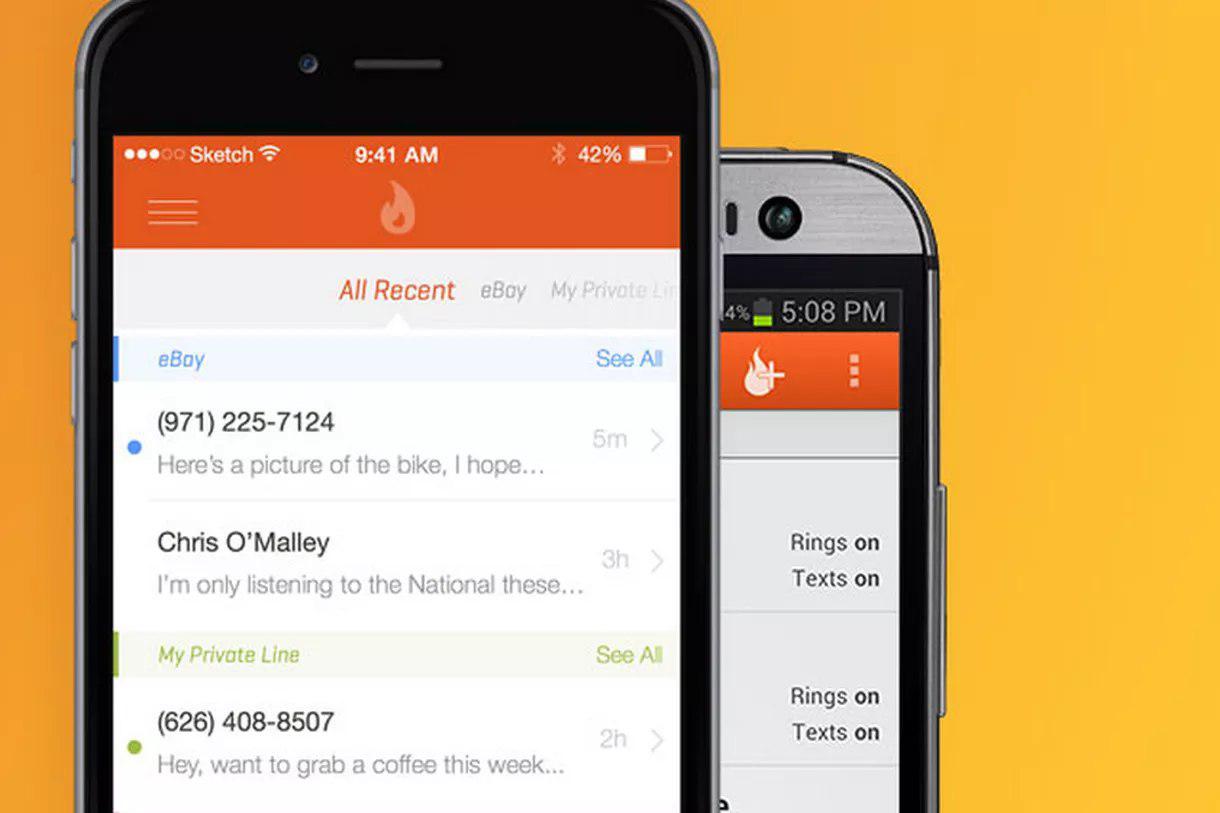
Burner interface
In 2012, entrepreneurs Greg Cohn and Will Carter laid the foundations for a product that will eventually turn into a Burner . This application allows users to create temporary one-time phone numbers. However, this and similar applications cannot solve all the requests of subscribers. In addition, questions arise from the security point of view of such a solution.
In 2015, BlackBerry acquired Movirtu , a company developing virtual SIM technology. The technology allows you to activate up to nine virtual phone numbers on one SIM card. Possible option when a user uses a virtual number for voice and SMS, and the other - for the mobile Internet, or roaming.

Swytch Interface
ApplicationSwytch offers multiple virtual SIM cards for single SIM phones. Swytch acts as a switch for up to five phone numbers, working with calls over 4G, 3G or Wi-Fi, depending on what you have access to.
Other solutions
There are many ways to discard a regular SIM card. A single standard in this area does not yet exist, and many companies prefer to develop something of their own, rather than borrow technology from competitors.
KnowRoaming's SoftSIM is the solution used in ZTE and Alcatel phones. The application allows you to select the country in which you are located and the necessary data packets, and then pay for them without reinstalling the phone’s SIM card. SoftSIM works just like a regular SIM card.
The GlocalMe project was originally a portable communications point. The gadget scans the surrounding area for the presence of 3G and 4G networks, the signals of which are then converted into a Wi-Fi signal. The device used virtual SIM card technology, supported operation in 100 countries of the world, and was able to transmit a signal to 5 devices.
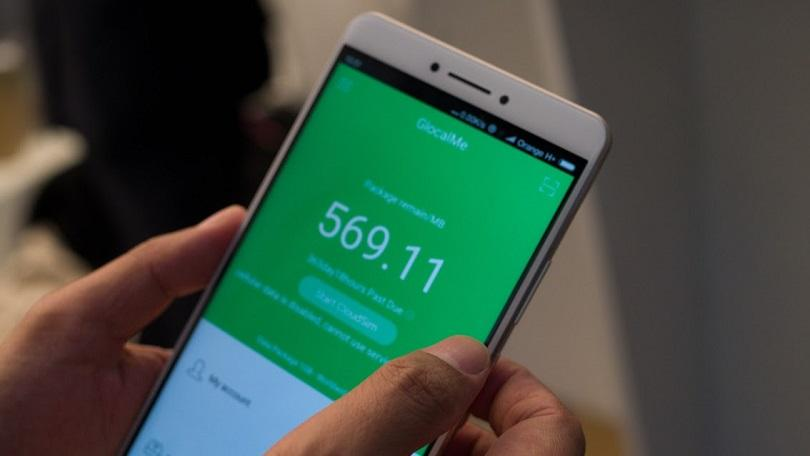
GlocalMe smartphone
Last year uCloudlink introducedGlocalMe smartphone based on CloudSIM technology. In fact, the external device was changed to an interesting technology: using the built-in eSIM chip, the phone connects to the local network and sends a signal to the cloud server to determine which of the available networks is the most suitable for the phone at a given time. Later, the solution began to be used in Xiaomi smartphones.
Gemalto eSIM either integrates or connects to your mobile device, moreover, it has the ability to work with multiple mobile networks. The service is activated using the GigSky application, which allows you to choose any suitable tariff plans online depending on your current location.
Google began to introduce its own developmentProject Fi , which is not just a virtual SIM card, is a full-fledged virtual operator that automatically switches between networks depending on signal strength and speed. A phone connected to Project Fi automatically connects to open Wi-Fi points, transmitting data through a VPN. If the Wi-Fi signal is lost during a phone call, the system smoothly transfers the call to the cellular network without interrupting the connection.
Conclusion: are SIM cards doomed to extinction?
It always takes time to innovate. As handset manufacturers began supporting eSIM and other technologies that solve SIM problems, they won’t have to wait too long to sell new devices.