“It is expensive for us” - acquiring retail
This article is an EXCLUSIVELY PERSONAL OPINION of its author, and is based on his personal experience!
For several months now, I've been watching drama, as our retail complains either to the Federal Antimonopoly Service or somewhere else that Internet acquiring has become dear to them. So I was wondering, do retailers behave the same with their suppliers? And it turned out how - as one would expect. Let us help retail to calculate interest.

Alas, Igor Korolev from cnews doesn’t know much about acquiring. For example, only Sberbank can give a rate of 1.4% - and it will be below cost. In general, Sberbank often works in the negative for acquiring, i.e. if a bank were acquiring, for example, Alfa-Bank, then Sber would earn more on interchange . Although maybe now something has changed. But there is simply no interchange of 0.5% in Russia.
Let's try to figure out where the legs grow and is it so expensive.
Figuratively speaking, the situation looks like this: you collect cars, the cost of your spare parts is 850 thousand rubles, the assembly cost is 100 thousand rubles. Selling from for 1 million rubles, i.e. net profit from the 1st car - 50 thousand rubles. And then consumers begin to complain to you at the FAS that they want to buy these cars at a price of 900 thousand rubles. Your cars are your price, which is primarily based on the cost of work and spare parts.
Of course, the size of interchange (the commission that the acquirer pays the issuer) is determined by the Russian banks themselves. But the benefits of banks from lowering interchange are not obvious. The financial model of retail is to purchase goods (for example, in China, where the majority of goods are produced) to put their mark-up, which will cover overhead costs (including card fees). How can retail be so expensive in such a model? If the product costs 997 or 998 rubles - the buyer will not notice the difference.
One of the particularly smart financiers decided that the acquiring commission is the place where you can reduce costs, increase your own margin, curry favor with the management and get a bonus. In principle, these people receive a salary for the fight against “it is dear to us.”
I still work in the field of Internet acquiring, so let's look at an example in the field of Internet acquiring. How much does one transaction really cost?
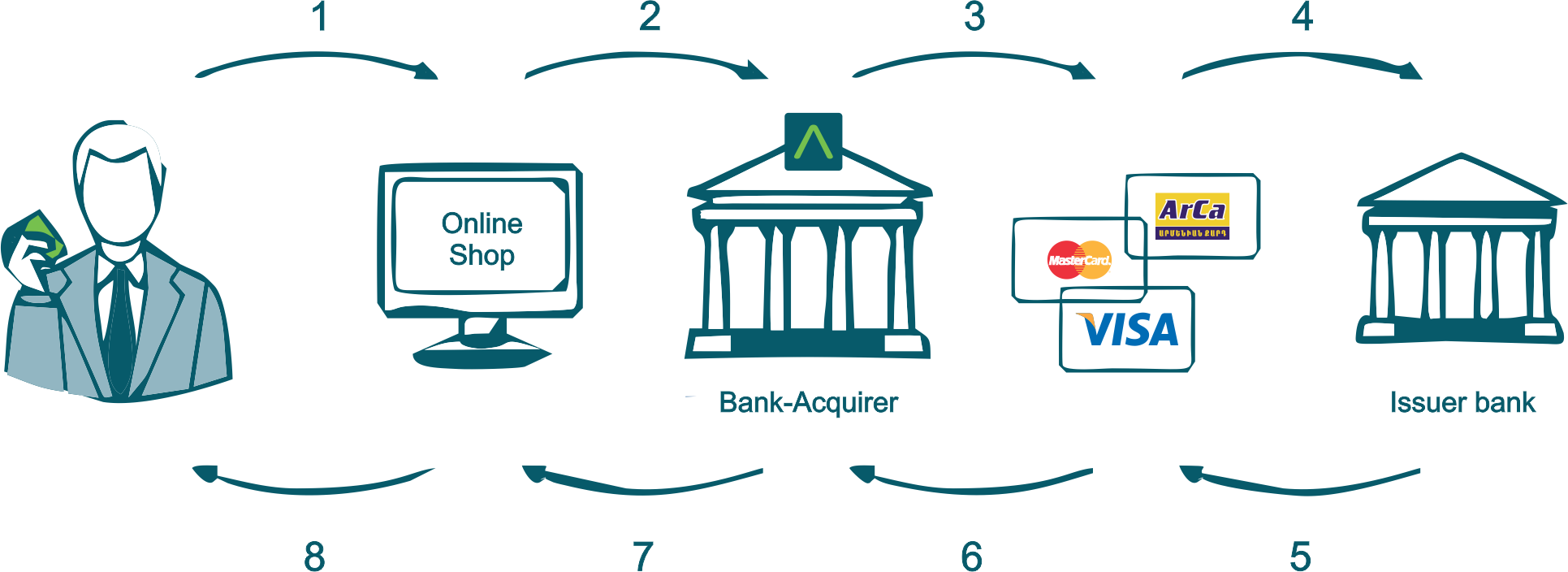
And so, the average Visch / MasterCard interchange is 1.53%. (Of course, provided that almost no one pays with Platinum MasterCards and higher).
Visa commission for transaction clearing - $ 0.0061, MasterCard - $ 0.009.
The total cost, with the distribution of 60/40 and 3 thousand of the average check, ~ 0.015% - takes the MPS.
→ Visa tariffs
→ MasterCard tariffs
By the way, for a crossborder transaction, the clearing cost increases tenfold - this is where the fixes for European acquirers working in the Russian market appear (for a note online gambling).
But that is not all. MPS requires insurance deposits. Of course, the source documents for us are closed by the NDA with the participants. But the NSPK kindly copied the rules for the formation of insurance funds and put them in the public domain .
So, the acquirer must keep 5 days of turnover in the insurance fund, which he pays towards issuers (for example, interchange - but this is a rather insignificant amount). This applies strongly to those acquirers who make payments to cards or refunds. So 30% of returns from a five-day turnover are money that does not work. At the Central Bank refinancing rate, this will add 0.04%, although of course the bank could give this money on credit and make a profit twice as high. I believe that specialists from banks can name another hundred of any payments (such as an annual audit) that the bank is forced to pay. But we are not a bank, so we can’t say for sure.
Let's make it simpler, consider that four large customers need 1 seller, 1 support person (of course, support is around the clock and works on shifts) and 1 programmer. Salaries of 90, 70 and 120, respectively. And this will be another ~ 0.07%.
Total total rate (excluding audit, promotional costs, etc.) ~ 1.655%
So, if someone offers a 1.7% Internet acquiring rate, then there are only two options: either he simply does not know how to calculate, or he Sberbank
By the way, from the super “cool” ideas of the same retail (especially AKIT) - introduce taxes / duties on purchases in foreign online stores. Yes, protectionism existed in Europe / USA 150-200 years ago, only he defended his production. But when one retailer selling Chinese goods requires another tax to be imposed on the Chinese retailer - this, IMHO, looks likefraud off -market methods of economic struggle.
Although, of course, that “other retail” (the enemy of all Russian retailers - aliexpress) is good itself. He violates the same MPS rules with Yandex.Money - here is mis-coding (false indication of the type of payment: MCC electronic wallet, instead of a retail outlet) and connection of non-residents. Moreover, the Central Bank, called the regulator in 161 Federal Laws, does not seem to notice this, just as it does not notice a large flow of funds going from non-profit organizations directly to a non-resident - and this is clearly not a 5% turnover.
For several months now, I've been watching drama, as our retail complains either to the Federal Antimonopoly Service or somewhere else that Internet acquiring has become dear to them. So I was wondering, do retailers behave the same with their suppliers? And it turned out how - as one would expect. Let us help retail to calculate interest.
Alas, Igor Korolev from cnews doesn’t know much about acquiring. For example, only Sberbank can give a rate of 1.4% - and it will be below cost. In general, Sberbank often works in the negative for acquiring, i.e. if a bank were acquiring, for example, Alfa-Bank, then Sber would earn more on interchange . Although maybe now something has changed. But there is simply no interchange of 0.5% in Russia.
Let's try to figure out where the legs grow and is it so expensive.
Figuratively speaking, the situation looks like this: you collect cars, the cost of your spare parts is 850 thousand rubles, the assembly cost is 100 thousand rubles. Selling from for 1 million rubles, i.e. net profit from the 1st car - 50 thousand rubles. And then consumers begin to complain to you at the FAS that they want to buy these cars at a price of 900 thousand rubles. Your cars are your price, which is primarily based on the cost of work and spare parts.
Of course, the size of interchange (the commission that the acquirer pays the issuer) is determined by the Russian banks themselves. But the benefits of banks from lowering interchange are not obvious. The financial model of retail is to purchase goods (for example, in China, where the majority of goods are produced) to put their mark-up, which will cover overhead costs (including card fees). How can retail be so expensive in such a model? If the product costs 997 or 998 rubles - the buyer will not notice the difference.
One of the particularly smart financiers decided that the acquiring commission is the place where you can reduce costs, increase your own margin, curry favor with the management and get a bonus. In principle, these people receive a salary for the fight against “it is dear to us.”
I still work in the field of Internet acquiring, so let's look at an example in the field of Internet acquiring. How much does one transaction really cost?
And so, the average Visch / MasterCard interchange is 1.53%. (Of course, provided that almost no one pays with Platinum MasterCards and higher).
Visa commission for transaction clearing - $ 0.0061, MasterCard - $ 0.009.
The total cost, with the distribution of 60/40 and 3 thousand of the average check, ~ 0.015% - takes the MPS.
→ Visa tariffs
→ MasterCard tariffs
By the way, for a crossborder transaction, the clearing cost increases tenfold - this is where the fixes for European acquirers working in the Russian market appear (for a note online gambling).
But that is not all. MPS requires insurance deposits. Of course, the source documents for us are closed by the NDA with the participants. But the NSPK kindly copied the rules for the formation of insurance funds and put them in the public domain .
So, the acquirer must keep 5 days of turnover in the insurance fund, which he pays towards issuers (for example, interchange - but this is a rather insignificant amount). This applies strongly to those acquirers who make payments to cards or refunds. So 30% of returns from a five-day turnover are money that does not work. At the Central Bank refinancing rate, this will add 0.04%, although of course the bank could give this money on credit and make a profit twice as high. I believe that specialists from banks can name another hundred of any payments (such as an annual audit) that the bank is forced to pay. But we are not a bank, so we can’t say for sure.
Let's make it simpler, consider that four large customers need 1 seller, 1 support person (of course, support is around the clock and works on shifts) and 1 programmer. Salaries of 90, 70 and 120, respectively. And this will be another ~ 0.07%.
Total total rate (excluding audit, promotional costs, etc.) ~ 1.655%
So, if someone offers a 1.7% Internet acquiring rate, then there are only two options: either he simply does not know how to calculate, or he Sberbank
By the way, from the super “cool” ideas of the same retail (especially AKIT) - introduce taxes / duties on purchases in foreign online stores. Yes, protectionism existed in Europe / USA 150-200 years ago, only he defended his production. But when one retailer selling Chinese goods requires another tax to be imposed on the Chinese retailer - this, IMHO, looks like
Although, of course, that “other retail” (the enemy of all Russian retailers - aliexpress) is good itself. He violates the same MPS rules with Yandex.Money - here is mis-coding (false indication of the type of payment: MCC electronic wallet, instead of a retail outlet) and connection of non-residents. Moreover, the Central Bank, called the regulator in 161 Federal Laws, does not seem to notice this, just as it does not notice a large flow of funds going from non-profit organizations directly to a non-resident - and this is clearly not a 5% turnover.