January 31, 2017 at 15:00
VPS hosting and cloud hosting: what to choose and what is the difference?
The emergence of the so-called "cloud platforms" has affected a number of industries, and web hosting is no exception. But what is cloud hosting, how is it different from VPS (Virtual Private Server)? VPS hosting and cloud hosting are two similar types of hosting, but nevertheless there are differences between them, on which the choice of this or that type of hosting in specific circumstances depends. We have already talked about different types of hosting - from virtual to physical. Now let’s take a closer look at these two. Vps

is a dedicated virtual server. In fact, this is a virtual environment with its own OS - with allocated RAM, processor time and disk capacity. The user (VPS owner) can install the necessary software on his virtual server and configure it. A virtual server can serve as a platform for hosting Web sites. Moreover, the site will not depend on the sites of neighbors on the physical server.

The VPS client receives a virtual environment with allocated disk space or SSD and bandwidth, but the computing resources and RAM of the host are evenly distributed between all VPS.
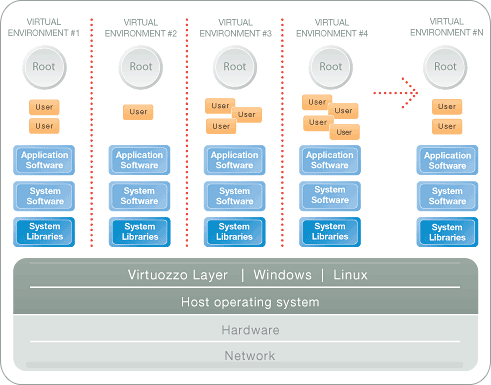
VPS hosting has long been recognized as one of the ways that help enterprises reduce costs and increase work efficiency. By isolating applications within a single virtual server, VPS provides a high level of privacy, security and control. However, although VPS can reduce hardware costs and enable the simultaneous launch of several operating systems or sets of programs on separate virtual servers, this solution does not scale very well.
Cloud hosting is a virtual machine (VM) in the cloud or IaaS (infrastructure as a service). With this hosting, physical servers are combined into a cluster, and storage systems are combined into a storage area network (SAN).
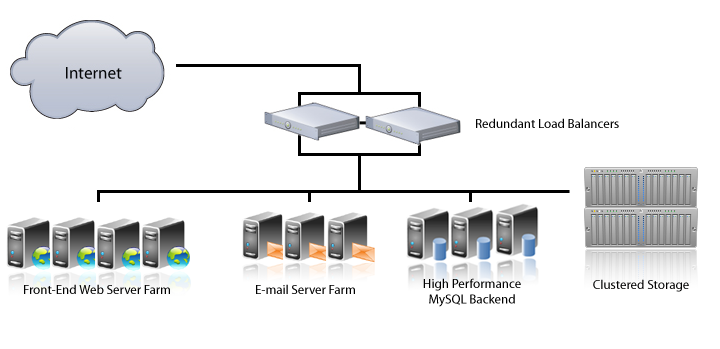
Cloud hosting can be divided into two categories: private (Private) and public (Public). The first is more expensive, but better protected and provides more opportunities for self-tuning, control over users and hosted data. In the case of a public cloud, a cluster of servers is used by several clients; in the case of a private cloud, one.
Compare the key parameters of the two types of hosting (scores are given according to besthostingsearch.org):
Let us consider in more detail each of the types of hosting and their properties.

In the case of cloud hosting, the hypervisor typically creates many virtual servers on a cluster of physical servers. As with traditional VPS, the user can configure and configure their guest OS, but most resources are allocated upon request. If VPS can offer only one operating system, then cloud hosting provides freedom of choice.
PS-hosting allows you to manage the configuration of the virtual server, the changes will not affect other VPS. VPS hosting providers typically offer customers control panel features like cPanel. On the other hand, a cloud server gives less administrative rights.

The cloud platform, as a rule, itself implements the configuration functions of operating systems and applications, and some technologies not provided for by the service may not be available. These restrictions apply to site security.
Since cloud hosting uses a distributed server infrastructure, this makes the distribution of resources more flexible and increases the fault tolerance of the service, but the freedom of users to choose hosting parameters is more limited than in the case of VPS. In addition, configuring partitions may require some knowledge - this is affordable for experienced application developers. At the same time, having sufficient qualifications, you can do in cloud hosting what is not available in VPS.

If the site already lacks the dedicated resources when VPS hosting, then its owner, as a rule, has to change the tariff plan. Cloud hosting is more flexible: users can scale resources in any direction without restarting the server. And the distribution of resources in cloud hosting is very fast. VPS customers have to wait. In addition, with the cloud version, resources are used more optimally: customers quickly release unnecessary resources so as not to pay extra money. After all, the payment model is also flexible.
In general, VPS hosting is less efficient, since IT resources are tightly distributed between customers according to their tariff plans, regardless of whether they use these resources or not.
In the cloud, you can connect additional resources if necessary: add RAM, disk space or network bandwidth. These resources can be added with a few clicks and disabled when they are no longer needed - without financial loss. Thus, cloud hosting is a solution that provides resources on demand. These are dynamically scalable and customizable virtual machines.
For example, that with a sharp increase in traffic, you can immediately allocate additional resources to the site. In a cloud environment, a Web site uses a resource pool and can serve all incoming traffic, even if it grows sharply. This option is useful for Web sites and applications with unpredictable or difficult to predict traffic, load, and resource usage.

Information security is one of the most important means of VPS. Such hosting has some advantages over cloud hosting. In particular, all your data is stored on one server, and not distributed across several. Root access provides extensive security customization options. But if the site is subjected, for example, to a DDoS attack, then this will affect the other VPS on the same host.
With cloud hosting, security can be more difficult, as data and resources are distributed across different servers and nodes. Most cloud hosting providers provide clients with root access, but you need to understand that the data can be physically stored in several places. But in a cloud environment, one client is completely isolated from the files of another - from this point of view, the environment is more secure.

Good VPS hosting is characterized by high uptime and page loading speeds. But in the situation with VPS, if the host falls or part of the host “falls off”, the virtual server also falls: you have to wait until the provider fixes the problem. And if one VPS fails, the rest will work, but you have to fix the problem and restore the “fallen” one - there is no fault tolerance. If the traffic of one VPS grows sharply, then this will affect the other VPS on the same host.

Like VPS hosting, cloud hosting is characterized by high reliability and speed, but when comparing it turns out that due to the server cluster the reliability of cloud hosting is much higher. With cloud hosting, any failure leads to a re-routing of traffic to another available physical resource. Downtime is minimal. Since each virtual server is independent of the others, Web sites in such an environment do not adversely affect others.
Thus, Web sites in the cloud are highly accessible. They are replicated between the cluster servers. With a sharp increase in the traffic of one site, requests are routed to a less loaded server in the cloud. If one physical server in the cluster fails, all virtual machines will continue to work. As a result, cloud-based hosting is more stable, since the failure of one component does not affect the functioning of the service as a whole.

In most cases, VPS hosting is cheaper than cloud hosting with equivalent virtual resources, sometimes more than half. But cloud hosting usually involves not fixed, but flexible payment, for example, a monthly fee for the number of application users, traffic and resources. No need to pay for resources that are not really used.
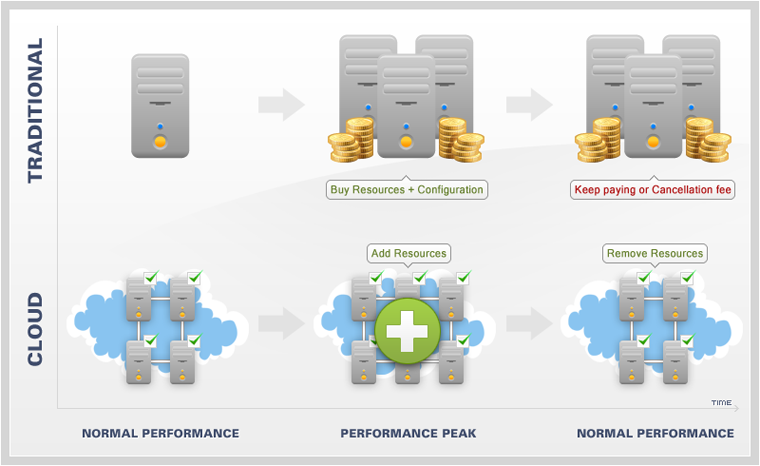
But with VPS hosting, it is known in advance how much you will have to pay at the end of the month. This option is preferable for websites with predictable traffic and for customers who prefer to receive invoices with fixed amounts.

When choosing a hosting you need to consider a number of parameters . Cloud hosting is a secure environment and the freedom to scale resources.
With a small budget, VPS hosting is recommended : it offers more features and a simple control panel, more IP addresses and more server resources - processor, memory, I / O, storage resources and access channel. In fact, a virtual server is similar to a dedicated one - you have full control over it, you can restart it, but it costs a lot less.
Summarizing, we can say that VPS hosting is low cost, control and security, and cloud hosting is the possibility of customization and performance. VPS hosting is preferable for personal use and clients from the SMB segment, and cloud hosting is preferable for larger customers.
VPS hosting is a good option for business-critical applications and data, when centralized storage is preferable. However, this does not provide high-availability, in the event of a host failure all VPSs will drop. There may be problems with information security. If one of the clients neglects protection, this may affect other VPS. System resources are shared between clients: CPU, RAM, network bandwidth. If more resources are required for one VPS, this may affect other virtual servers. Only one OS can be used on each host.
VPS hosting is not scalable. Resources are limited by physical server restrictions. When you exhaust your maximum resources allocated for VPS, you will have to change the tariff or consider other options. This can take a lot of time - several hours or days of downtime.
If you want high reliability and powerful features, then cloud hosting is a good choice. This market has huge potential, and a gradual decline in prices makes cloud hosting more affordable.
VPS is suitable for those who are just interested in hosting a website. However, offering powerful features, VPS hosting does not guarantee the smooth operation of your site in case of heavy traffic or technical failure.
Cloud hosting - this is practically unlimited resources, maximum bandwidth, load balancing, lack of binding to specific hardware components, scalability - you can add (with increasing load) or release resources at any time.
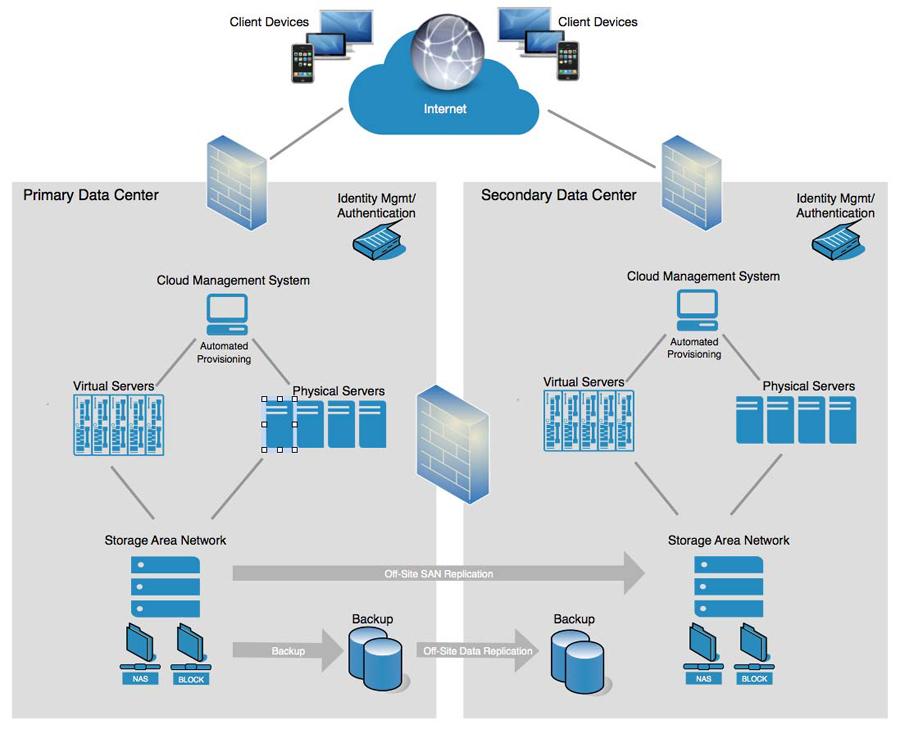
In addition, such hosting provides the opportunity to customize the infrastructure: customers can use a special network infrastructure, load balancers, firewalls. Finally, this is high availability: when a physical server fails, VMs migrate to another server without interruption. And a high level of security: during a hacker or virus attack, your data will be protected due to the isolation of the virtual server.
In the case of a cloud virtual server, you can buy resources, easily add RAM, processor power, almost unlimited storage resources in the SAN or even create clones - copies of your server for data backup.
Cloud hosting is a good choice for a rapidly growing business or companies with seasonal fluctuations in demand. This is an economical way to scale resources and consolidate servers.
To summarize the pros and cons:
VPS
Cloud hosting
Сервисы VDS/VPS получили широкое распространение и пользуются спросом со стороны владельцев сайтов, которым выделенного физического сервера не требуется. VPS часто используется небольшими компаниями для хостинга сайтов, разработки и тестирования программного обеспечения и размещения систем управления контентом.
Услуги VPS оказывают многие компании, которые дополняют их облачными сервисами, услугами управления и поддержки, обеспечения безопасности, лицензирования ПО. Стоимость формируется в зависимости от набора услуг поддержки и администрирования.
Hosting providers are introducing new technologies. This service evolves and acquires the properties of a typical cloud service, along with low cost and convenient management, it attracts with simple scalability, when computing resources, memory or storage capacity are added without problems. And gradually, cloud hosting leaves behind traditional types of hosting, the line between VPS and IaaS is erased.
is a dedicated virtual server. In fact, this is a virtual environment with its own OS - with allocated RAM, processor time and disk capacity. The user (VPS owner) can install the necessary software on his virtual server and configure it. A virtual server can serve as a platform for hosting Web sites. Moreover, the site will not depend on the sites of neighbors on the physical server.
The VPS client receives a virtual environment with allocated disk space or SSD and bandwidth, but the computing resources and RAM of the host are evenly distributed between all VPS.
VPS hosting has long been recognized as one of the ways that help enterprises reduce costs and increase work efficiency. By isolating applications within a single virtual server, VPS provides a high level of privacy, security and control. However, although VPS can reduce hardware costs and enable the simultaneous launch of several operating systems or sets of programs on separate virtual servers, this solution does not scale very well.
Cloud hosting is a virtual machine (VM) in the cloud or IaaS (infrastructure as a service). With this hosting, physical servers are combined into a cluster, and storage systems are combined into a storage area network (SAN).
Cloud hosting can be divided into two categories: private (Private) and public (Public). The first is more expensive, but better protected and provides more opportunities for self-tuning, control over users and hosted data. In the case of a public cloud, a cluster of servers is used by several clients; in the case of a private cloud, one.
Compare the key parameters of the two types of hosting (scores are given according to besthostingsearch.org):
| Parameter | VPS hosting | Cloud hosting |
| Technology | Virtualization on a single server | Virtualization on a server cluster and SAN |
| Functionality | 5 | 3 |
| Performance | 4 | 4,5 |
| Reliability | 4 | 5 |
| Extensibility | 3 | 5 |
| Scalability | Not | Yes |
| Payment model | Monthly or annual subscription | For the actual use of resources |
| Allocation of additional resources | Takes time | Simple and quick |
| Infrastructure Choice | Not | Yes |
| CPU and RAM resources | Shared | Completely isolated |
| OS selection | Host dependent | Any |
| Web site scale | Small or medium | Large |
| Provider Examples | RUVDS | Amazon cloud |
Let us consider in more detail each of the types of hosting and their properties.
Flexibility
In the case of cloud hosting, the hypervisor typically creates many virtual servers on a cluster of physical servers. As with traditional VPS, the user can configure and configure their guest OS, but most resources are allocated upon request. If VPS can offer only one operating system, then cloud hosting provides freedom of choice.
PS-hosting allows you to manage the configuration of the virtual server, the changes will not affect other VPS. VPS hosting providers typically offer customers control panel features like cPanel. On the other hand, a cloud server gives less administrative rights.
The cloud platform, as a rule, itself implements the configuration functions of operating systems and applications, and some technologies not provided for by the service may not be available. These restrictions apply to site security.
Since cloud hosting uses a distributed server infrastructure, this makes the distribution of resources more flexible and increases the fault tolerance of the service, but the freedom of users to choose hosting parameters is more limited than in the case of VPS. In addition, configuring partitions may require some knowledge - this is affordable for experienced application developers. At the same time, having sufficient qualifications, you can do in cloud hosting what is not available in VPS.
Scalability
If the site already lacks the dedicated resources when VPS hosting, then its owner, as a rule, has to change the tariff plan. Cloud hosting is more flexible: users can scale resources in any direction without restarting the server. And the distribution of resources in cloud hosting is very fast. VPS customers have to wait. In addition, with the cloud version, resources are used more optimally: customers quickly release unnecessary resources so as not to pay extra money. After all, the payment model is also flexible.
In general, VPS hosting is less efficient, since IT resources are tightly distributed between customers according to their tariff plans, regardless of whether they use these resources or not.
In the cloud, you can connect additional resources if necessary: add RAM, disk space or network bandwidth. These resources can be added with a few clicks and disabled when they are no longer needed - without financial loss. Thus, cloud hosting is a solution that provides resources on demand. These are dynamically scalable and customizable virtual machines.
For example, that with a sharp increase in traffic, you can immediately allocate additional resources to the site. In a cloud environment, a Web site uses a resource pool and can serve all incoming traffic, even if it grows sharply. This option is useful for Web sites and applications with unpredictable or difficult to predict traffic, load, and resource usage.
Security
Information security is one of the most important means of VPS. Such hosting has some advantages over cloud hosting. In particular, all your data is stored on one server, and not distributed across several. Root access provides extensive security customization options. But if the site is subjected, for example, to a DDoS attack, then this will affect the other VPS on the same host.
With cloud hosting, security can be more difficult, as data and resources are distributed across different servers and nodes. Most cloud hosting providers provide clients with root access, but you need to understand that the data can be physically stored in several places. But in a cloud environment, one client is completely isolated from the files of another - from this point of view, the environment is more secure.
Reliability
Good VPS hosting is characterized by high uptime and page loading speeds. But in the situation with VPS, if the host falls or part of the host “falls off”, the virtual server also falls: you have to wait until the provider fixes the problem. And if one VPS fails, the rest will work, but you have to fix the problem and restore the “fallen” one - there is no fault tolerance. If the traffic of one VPS grows sharply, then this will affect the other VPS on the same host.
Like VPS hosting, cloud hosting is characterized by high reliability and speed, but when comparing it turns out that due to the server cluster the reliability of cloud hosting is much higher. With cloud hosting, any failure leads to a re-routing of traffic to another available physical resource. Downtime is minimal. Since each virtual server is independent of the others, Web sites in such an environment do not adversely affect others.
Thus, Web sites in the cloud are highly accessible. They are replicated between the cluster servers. With a sharp increase in the traffic of one site, requests are routed to a less loaded server in the cloud. If one physical server in the cluster fails, all virtual machines will continue to work. As a result, cloud-based hosting is more stable, since the failure of one component does not affect the functioning of the service as a whole.
Cost
In most cases, VPS hosting is cheaper than cloud hosting with equivalent virtual resources, sometimes more than half. But cloud hosting usually involves not fixed, but flexible payment, for example, a monthly fee for the number of application users, traffic and resources. No need to pay for resources that are not really used.
But with VPS hosting, it is known in advance how much you will have to pay at the end of the month. This option is preferable for websites with predictable traffic and for customers who prefer to receive invoices with fixed amounts.
What to choose?
When choosing a hosting you need to consider a number of parameters . Cloud hosting is a secure environment and the freedom to scale resources.
With a small budget, VPS hosting is recommended : it offers more features and a simple control panel, more IP addresses and more server resources - processor, memory, I / O, storage resources and access channel. In fact, a virtual server is similar to a dedicated one - you have full control over it, you can restart it, but it costs a lot less.
Summarizing, we can say that VPS hosting is low cost, control and security, and cloud hosting is the possibility of customization and performance. VPS hosting is preferable for personal use and clients from the SMB segment, and cloud hosting is preferable for larger customers.
VPS hosting is a good option for business-critical applications and data, when centralized storage is preferable. However, this does not provide high-availability, in the event of a host failure all VPSs will drop. There may be problems with information security. If one of the clients neglects protection, this may affect other VPS. System resources are shared between clients: CPU, RAM, network bandwidth. If more resources are required for one VPS, this may affect other virtual servers. Only one OS can be used on each host.
VPS hosting is not scalable. Resources are limited by physical server restrictions. When you exhaust your maximum resources allocated for VPS, you will have to change the tariff or consider other options. This can take a lot of time - several hours or days of downtime.
If you want high reliability and powerful features, then cloud hosting is a good choice. This market has huge potential, and a gradual decline in prices makes cloud hosting more affordable.
VPS is suitable for those who are just interested in hosting a website. However, offering powerful features, VPS hosting does not guarantee the smooth operation of your site in case of heavy traffic or technical failure.
Cloud hosting - this is practically unlimited resources, maximum bandwidth, load balancing, lack of binding to specific hardware components, scalability - you can add (with increasing load) or release resources at any time.
In addition, such hosting provides the opportunity to customize the infrastructure: customers can use a special network infrastructure, load balancers, firewalls. Finally, this is high availability: when a physical server fails, VMs migrate to another server without interruption. And a high level of security: during a hacker or virus attack, your data will be protected due to the isolation of the virtual server.
In the case of a cloud virtual server, you can buy resources, easily add RAM, processor power, almost unlimited storage resources in the SAN or even create clones - copies of your server for data backup.
Cloud hosting is a good choice for a rapidly growing business or companies with seasonal fluctuations in demand. This is an economical way to scale resources and consolidate servers.
To summarize the pros and cons:
VPS
| Behind | Against |
|
|
Cloud hosting
| Behind | Against |
|
|
Сервисы VDS/VPS получили широкое распространение и пользуются спросом со стороны владельцев сайтов, которым выделенного физического сервера не требуется. VPS часто используется небольшими компаниями для хостинга сайтов, разработки и тестирования программного обеспечения и размещения систем управления контентом.
Услуги VPS оказывают многие компании, которые дополняют их облачными сервисами, услугами управления и поддержки, обеспечения безопасности, лицензирования ПО. Стоимость формируется в зависимости от набора услуг поддержки и администрирования.
Hosting providers are introducing new technologies. This service evolves and acquires the properties of a typical cloud service, along with low cost and convenient management, it attracts with simple scalability, when computing resources, memory or storage capacity are added without problems. And gradually, cloud hosting leaves behind traditional types of hosting, the line between VPS and IaaS is erased.