December 10, 2016 at 08:05
A person. Alan Kay - Prophet, author of the GUI concept and Smalltalk
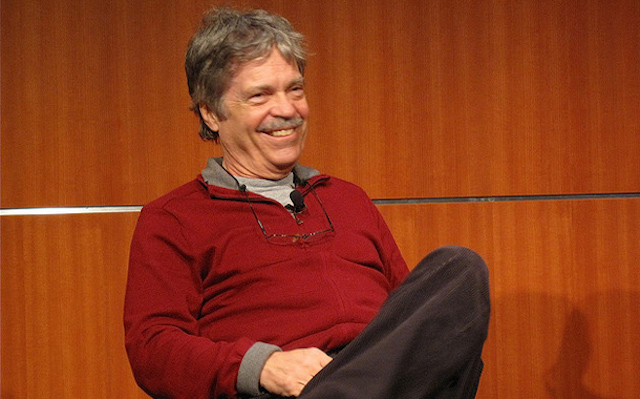
Alan Kay loves to refer to himself, and often begins his speech with the phrase: "Kay’s Law number one says ...". He probably has a right to it. For many years he was underestimated, pushed into frames and even spread rot.
Alan Kay is a person who cannot keep his opinion to himself if the topic of discussion really excites him. For this, he had to pay a couple of times. However, he was lucky, and as a result, he won. In his case, the adage is true: "Everything that is done is all for the better."
Due to a strange combination of circumstances, Kay began to develop software, and later turned out to be a pioneer in the fields of object-oriented programming and graphical interface. On this path, he came up with and realized what seemed impossible earlier, which most of his colleagues simply did not think about. “The simple must remain simple. Complexity must be possible, ”is his life credo.
Against the system
Alan Kay was born in Springfield (Massachusetts). Shortly after his birth, the family moved to Australia, where he lived the first years of his life. During World War II, fearing the threat of a Japanese invasion, his parents decided to return to the United States.
A gifted child already at the age of three learned to read and, getting older, continuously expanded his horizons with new knowledge. At ten years old, Alan Kay became the winner of the National Quiz game.
“When I went to school, I already read a couple of hundred books. I knew in the first grade that they lied to me because I already had my own point of view. They (the teachers) did not like the idea of different points of view, so it was a battle, ”said Kay.Indeed, knowing more than all his classmates and most teachers, he could not help but demonstrate this. But extraordinary abilities and out-of-years developed minds became an occasion for ridicule from peers and bullying from teachers. Thus, the system turned the advantages of the child into disadvantages.
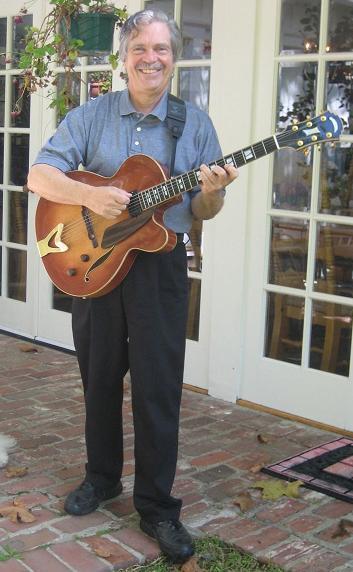
Among other things, Kay studied music from childhood. His mother was a musician, and an artist. Even in elementary school, he was a soloist in the choir and already at a young age played a good guitar. In fact, he hoped to become a professional musician. Later, he tried his hand as a composer and theater director, and then generally became interested in classical organ music.
In 1961, he was expelled from college for participating in a protest against the introduction of a percentage quota for Jewish students. Then Kay went to Denver, where he became a jazz musician and gave guitar lessons to earn a living.
Career turnaround
But another talent, which brought him much greater fame, suddenly appeared in Kay ... in the army, where he went as a volunteer. No, it's not about the virtuoso ability to sweep asphalt with a rake: testing has shown that he has brilliant programming abilities. In this regard, Kay was sent to the US Air Force to work on an IBM 1401 computer. This was a fateful moment in his career.
Alan served at the Randolph military base, where he worked with the Burroughs 220 computer.
Burroughs 220 - a tube computer company Burroughs Corporation, which was then located in Detroit. It was developed in 1957 by Electrodata Corporation and was called Electrodata Datatron 220 before Electrodata was absorbed into Burroughs. At different times, the device cost from $ 601,000 to $ 325,000 and performed multiplication for 2, and division for almost 4 microseconds.
Universities
Upon completion of his service in the Air Force, Alan Kay was sent by the National Center for Atmospheric Research at the University of Colorado to the Department of Mathematics and Molecular Biology.
Having received a bachelor's degree, in 1966 he entered the University of Utah at the Faculty of Engineering. By then, Kay realized that he would devote his life to IT.
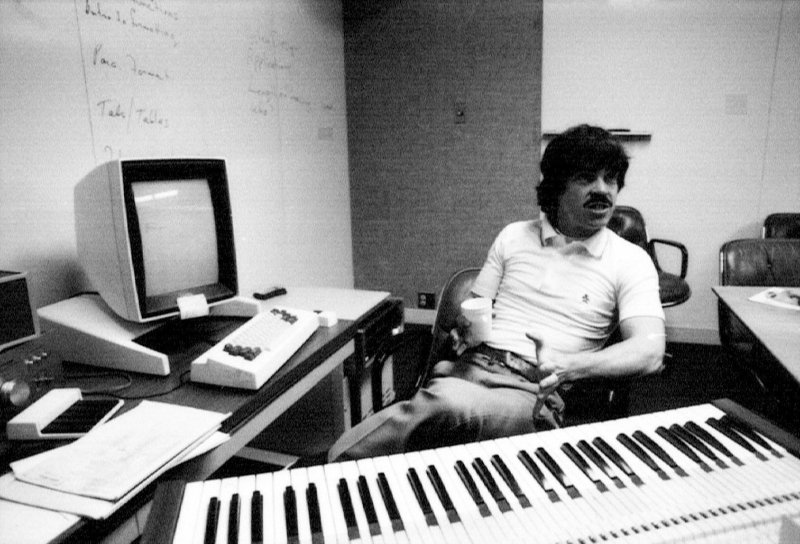
It was there that I became acquainted with the work of Ivan Sutherland, one of the creators of virtual reality. There, Kay began to program in the Simula language. Combining ideas in the field of programming and biology, he formulated the principle of biological analogy. He argued that an ideal computer should be similar to a living organism, where each cell is individual, but together they can form a single system capable of rearrangement and structural change.
From 1967 to 1969, Alan Kay, as part of his dissertation, developed software for the Flex computer. Although Flex was not launched into mass production, it was essentially a prototype of a personal computer.
When working on FLEX, an attempt was made to optimize the performance of the computer so that the user could quickly receive feedback from him.
Although FLEX was a technical innovation, it was very complex. According to Kay, "users were pushed by the difficulty in learning." The problem was not the equipment, but the special language that the user had to master in order to obtain the desired results. So Alan Kay was the first time convinced that software development should go in a direction that facilitates the work of a person with a personal computer.
In the fall of 1968, Kay had another significant meeting, which largely influenced his future. He met Seymour Piperth and spent some time working with him in artificial intelligence laboratories at the Massachusetts University of Technology and Stanford. Pipert is called the father of the programming language Logo.
Pipert and his associate Douglas Englebart tried to turn a heavy vehicle (at that time, there was nothing other than mainframes) from a “train” moving along limited company tracks to a “car” with freedom of movement.
“In 1968, I first saw how Seymour Peypert works with children and LOGO, and I learned a truly effective handwriting recognition system. This is an incredible system ... When I combined this with the idea that children should use it, the concept of a computer made sense of a super medium, ”Alan Kay recalls.At this time, he conceived the idea of creating the first ever model of a personal computer - the “Dynamic Book” (Dynamic Book).
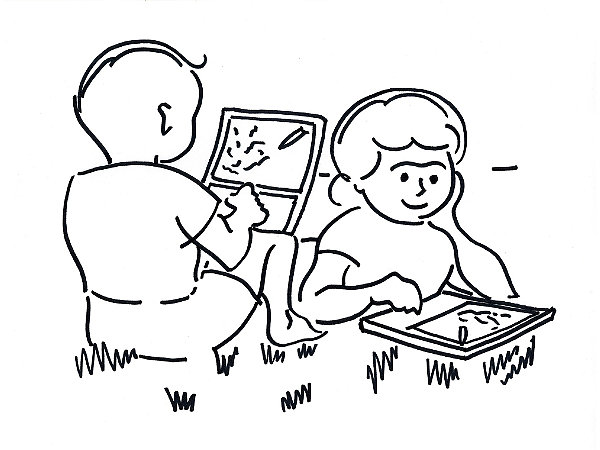
In 1969, Kay defended his doctoral dissertation, in which he developed the principles of creating a personal computer - powerful, but easy to manage. After that, Alan Kay became a professor at Stanford University and worked for two years at the Stanford Laboratory of Artificial Intelligence.
There he began to think of a book-sized computer that could be used instead of paper.
Continuing to work on the problem of teaching children using a computer, Alan Kay identified three methods of possible learning:
The first is memorizing instructive stories; sometimes they are formulated in the form of aphorisms, proverbs and sayings. This is also a folk tradition, folklore ... The second method is a method of logical reasoning, a method of studying chains of cause and effect relationships, the path of mathematics and formal logic. The third method remains - this is the "system dynamics" method. The method of forming in the brain intuitive patterns of behavior of certain objects and systems belonging to the outside world.
The book - the main Keeper of the achievements of Civilization - is suitable for the transfer of knowledge when using the first and second of the considered methods. In the book you can collect wonderful stories, wise aphorisms and instructive sayings. In the book you can set out mathematical discipline. But the book is practically not suitable for transferring knowledge by the method of "system dynamics".
Xerox
With this baggage, Kay in 1972 became the head of the Learning Research Group at the Xerox Palo Alto Research Center (PARC). At that time, the company almost achieved a monopoly in the market of copying equipment and sought to expand the scope of its activities.
Xerox management decided to bet on pundits: to allow them to conduct research within the walls of the company, to give carte blanche, but at the right time to use the results of their activities for the benefit of the company.
At the beginning of the 70s, it seemed to many that “just about” paper data carriers and means of servicing would sink into oblivion. Something else was coming to replace it. It was clear that the basis should be a computer. Alan Kay and the team had to figure out how exactly this could be implemented.
Oddly enough, the bohemian atmosphere contributed to the amazing performance in a creative setting. Perhaps, it was in such conditions that the prerequisites for the phenomenon called the “personal computer” could be born. Today, when several generations of PCs have changed, the reasoning that occupied the best minds at that time may seem naive. But it was from them that the ideas of the graphical user interface and object-oriented programming grew.
But in addition, it was necessary to solve a number of problems by no means of a technical nature, including the problem of the relationship between the message and the storage medium. The first thing that was possible was to interpret the computer as “super paper”. Now the idea that a computer, originally intended for computing, could become digital media, a storage medium, is taken for granted. Then this thought became a breakthrough.
While working on the relationship between the semantics of the message and the medium, Kay wrote:
“Any message in one way or another models a certain idea. It can be concrete or abstract. Media properties largely determine how a message can be recognized, edited, and saved. Although computers were invented for arithmetic calculations, their ability to reproduce the details of any descriptive model allows the computer itself to be considered as a storage medium, it can combine the properties of other carriers. "
Dynabook - prototype laptop
Analyzing the reaction of children when communicating with a computer, Kay noticed that children perceive images and sounds better than plain text. Together with other researchers at PARC, Kay developed a simple computer system that heavily used graphics and animation.
Many children have adapted very well to the use of this system; they have learned how to solve fairly complex problems in it. This system is called “DynaBook”.
In March 1977, Alan Kay and Adele Goldberg sent an article entitled “Personal Dynamic Media” to Computer magazine.
“Imagine that you can have your own knowledge navigator in a portable package the size and shape of a regular notebook ... Assume that it has enough capabilities to save thousands of pages of source materials, poems, letters, recipes, notes, drawing data, animations , ... dynamic models, and anything else that you would like to save and edit. DynaBook can be used for reading or writing as a regular book with illustrations, but it (DynaBook) provides much more possibilities: dynamic search can be carried out for an individual context, ”wrote Kay and Goldberg.Kay described the DynaBook as a portable interactive device with a flat-panel touch screen, wireless communication system and multimedia capabilities. The principle of WYSIWYG (what you see is what you get), text editors and a drawing system was assumed here.
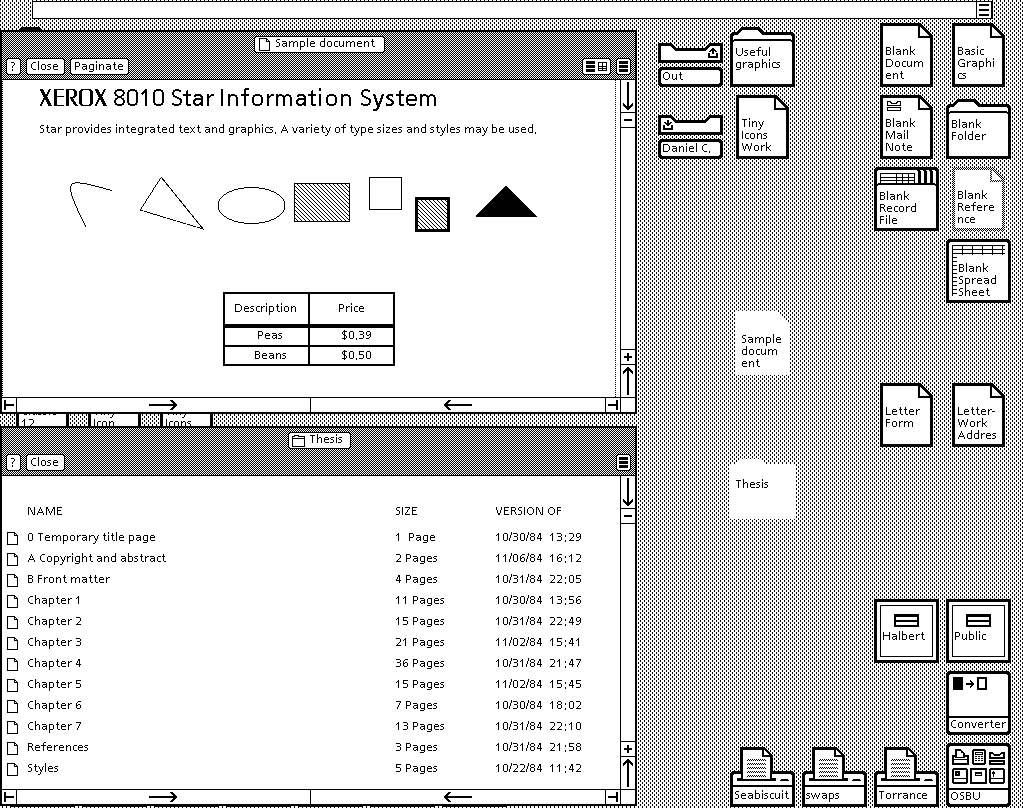
For this machine of the future, the Star GUI graphic interface was designed and modeled, which included all the elements we are familiar with today - windows, icons, menus and much more. The Star GUI is the prototype for the Macintosh.
The Dynabook project has never been completed, but its role in the IT industry is obvious.
Smalltalk
The most significant practical result of Alan Kay’s work at Xerox PARC was the creation of the Smalltalk language. The programming languages that existed at that time were mainly oriented toward solving computational problems. They had the necessary tools for working with symbols, but were too complex and did not fit the Dynabook project. Therefore, the development of a new language was given high priority. Some of his ideas were borrowed from Simula and Pipert, who created the Logo language based on the work of the French psychologist Jean Piaget.
For two years, since 1970, Alan Kay worked on the Smalltalk language, which was developed in order to model the previously described biological model, consisting of cells (or "cells") and the transmission of messages between them. After Smalltalk entered the market (1983), the language gained widespread popularity. It was one of the first languages of object-oriented programming, embodying a methodology on the basis of which it is possible to create parallel systems, databases and knowledge bases.

Class structure in SmallTalk using the 'Rectangle' example
Initially, the Dynabook programming tool was supposed to be completely simple, accessible to children. Its first version, written in BASIC, was released in October 1972. Four months later, an assembly language version appeared (Smalltalk-72), and later, in 1974, when it was installed on Alto, experimental work with children could begin.
Metaclasses have been added to Smalltalk-80, which is consistent with the concept of "everything is objects." Smalltalk-80 was the first version available outside of PARC - first as Smalltalk-80 Version 1, distributed to a small number of companies and universities for “peer review”. Later, in 1983, a publicly available implementation known as Smalltalk-80 Version 2 was released. These modifications of the language were already "non-childish."
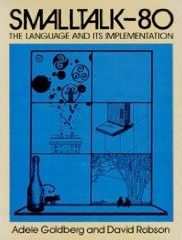
So that the language can be used on various platforms, it was implemented as a virtual machine (Virtual Machine, VM) and a virtual image (Virtual Image, VI). VI was a class library that implements the functionality of Smalltalk, including the definition of data structures, methods for working with texts and graphics, compilers, decompilers, and debuggers. The compiler generated code in an intermediate language called byte codes. VM provided interpretation of bytecodes on any platform. All this causes associations with Java at the subcortical level. This indicates the serious role SmallTalk played in programming.
Life after Xerox
In addition to DynaBook and SmallTalk, Alan Kay had other projects. As the leader of the research group at PARC, Kay contributed to the development of Ethernet, laser printing and the ARPANet network client-server model.
Kay offered Xerox to invest in some of his projects, but the Xerox management did not want to develop his ideas and invest large resources in his work. When Steve Jobs, Jeff Ruskin, and several other Apple leaders visited PARC in 1979, they immediately saw great prospects in Alan's work. They were struck by the idea of a window interface and the flexibility of the Smalltalk language. Alan's work at PARC was the seed that Arple Macintosh grew from.
Kay left Xerox in 1983 and, after a short break, became a lead research programmer at Apple Atari, and in 1984 at Macintosh, the first mass-scale computer with a graphical user interface.
In 1996, Kay was promoted to vice president of research and development at Walt Disney. He worked at the Walt Disney Imagineering Lab., Where he developed the newest attractions for Disney World parks.
The new millennium was marked by rapid growth in the market for mobile systems, as predicted by Alan Kay.
After leaving Disney in 2001, he founded the Viewpoints Research Institute, a non-profit organization dedicated to children, learning, and cutting-edge software development, where he chairs.
In 2003, Kay won the Turing Prize for his contribution to the development of object-oriented programming. In 2004, he received the Kyoto Prize.
Kay later worked on the Applied Minds team, then became Senior Fellow at Hewlett-Packard until HP disbanded the software research team on July 20, 2005.
Since 2006, Alan has been developing the STEPS (STEPS Toward Expressive Programming Systems) system with grants from the National Science Foundation.
In 2015, Elon Musk, together with a group of investors from the IT industry, founded the OpenAI fund, which will do research that can prevent the rebellion of artificial intelligence against people. The fund will have a supervisory board led by Alan Kay.
Mark on history
Alan Kay has changed his attitude towards computers. Prior to Alan Kay’s ideas, the computer was a box that displayed text and numbers that were not understandable to a simple person. To communicate with the machine, it was necessary to learn a rather complex language. Kay realized that users can and should interact with the computer in a different way and should not be limited to just text.
He was among the first to decide to present objects in a computer as images - a metaphor that expanded further with the advent of object-oriented programming.