August 12, 2016 at 10:27
We investigate the issue of punishment 2.0
This material will be useful primarily to those who have been engaged in programming a lot and suddenly suddenly became forced to engage in project management and people. About a year ago, I talked about the punishments at the conference, and the suns from Bitrix made a text version for #habr. Unfortunately, having lost the accuracy, clarity and correctness of the accents. For a year of material added. At the end - a checklist for the lazy :)
So. If you are not a sadist or a moral monster, and your employees are not masochists, then I doubt that some of you enjoy the punishment. I don’t.
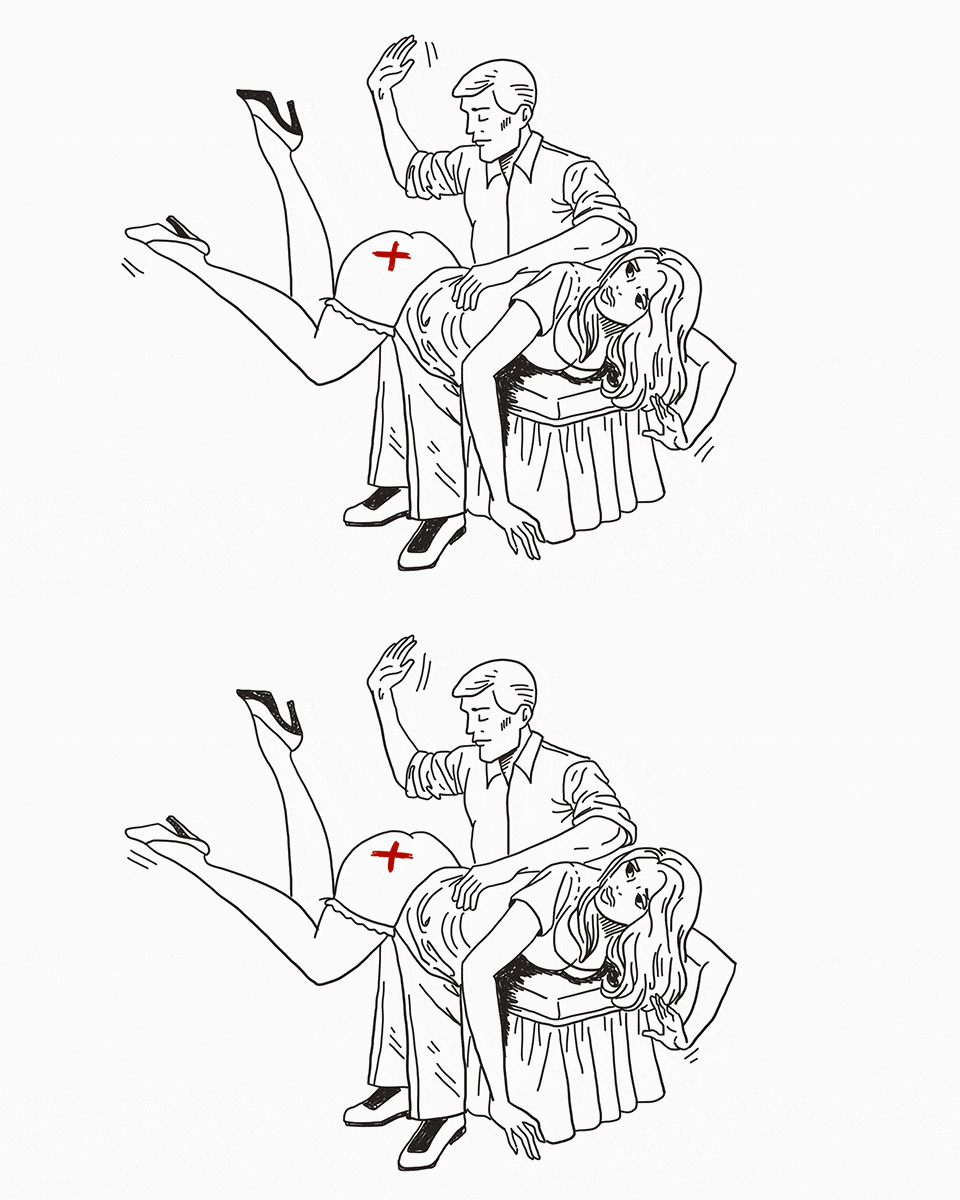
We will analyze the very fact of this phenomenon - punishment. I know the topic is reverent. It provokes negative emotions, impulses to burn the author, discourages the ability to read and analyze. But it includes a generator of caustic comments-stamps and minuses in karma. But here I will precisely investigate (!!!) the punishment. How scientists investigate a deadly virus: with practical interest, experimentation and without making preliminary results.
They do not teach to punish anywhere:neither in business literature, nor in trainings, nor in universities. However, the phenomenon itself exists. Novice leaders with little management experience either do not know how to punish, or do it awkwardly. They often endure and accumulate complaints against employees until they bomb them - and then they get everything. The boss himself in this situation understands what is wrong. But he already suffered - there is no turning back.
This is sad, but how to require a person to have a skill that he hasn’t been taught anywhere? Was yourself a programmer, became a manager, and here - go and punish? Wrong to demand from the programmer virtuoso hand-to-hand fighting skills?
But the employee will not go into such subtleties inaccurately punished (and in fact - offended). It will be necessary for managers, managers, directors to understand.
In punishment, high accuracy is important.It should be higher than in the distribution of rewards. The situation when the boss has a festive mood, and on this occasion he gave a prize to the whole department, will be perceived normally. But if he punished everyone because the tooth hurts - they will already react to this differently.
I first thought about the “responsibility” measure when Sibiriks was small: a couple of developers and designers. For our sphere (and for many others at the start) it is typical that the founder knows how to do something with his hands: to program or draw design. And, as a rule, loves this business.
It was already night. I sat in the office and debugged a piece of code for the programmer, who clearly threw everything away and went home. At the same time, the customer was pecking at skype, rushing, scolding, trying to write in red.
And I sat, debugged and thought: what does it mean for the developer to be responsible for the project?
As a director, I understand that in the case of a fakap I ogreb in full. I’ll put the wrong people on the project - I’ll fail financially, the employee is not suitable for hire - there will be problems in the team. All responsibility of the company lies with me. And what is the responsibility of the programmer? Or a designer? What is it in practical terms?
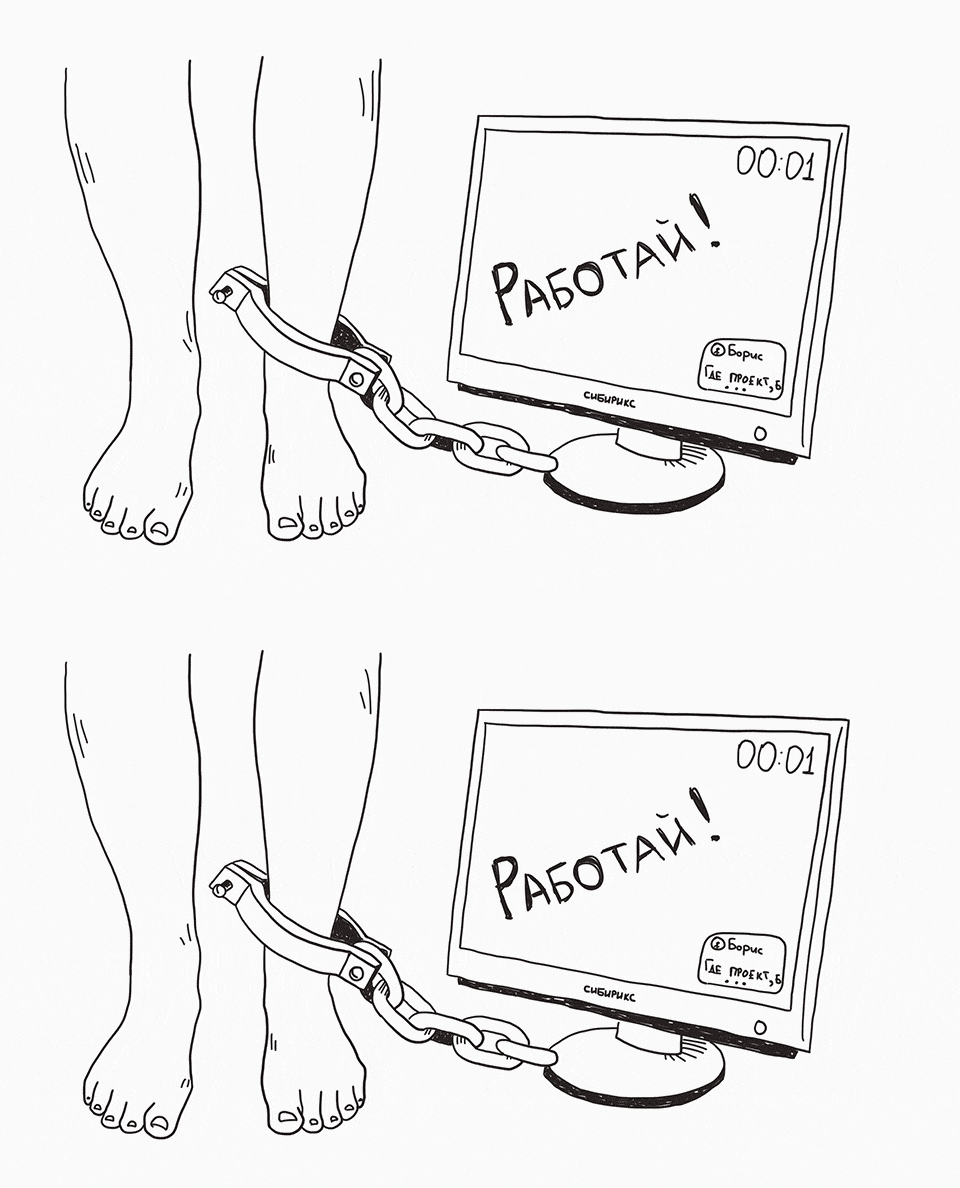
Serfdom was abolished, it is impossible to fine under the Labor Code. It is impossible to force to work out after hours (yes, yes, good overtime!), Beat - it is impossible, handcuff the battery - it is also forbidden. It turns out, you can only fire. But I am already sitting, working at night - without him I will sit until the morning. Invulnerable such dudes, it turns out.
And only after years I felt for the answer to this question. And the understanding came that the developer who went home in time, although he did not finish the task, was not to blame for anything. And I - yes, I’m guilty and did something wrong: I crookedly built the workflow, planned the time or incorrectly formed the customer’s expectations. However, young and ready mountains to turn down the grief-leaders do not allow such a thought. They have a stereotype “Your work is not finished on time, and this brought me problems. You are guilty!"
Talking in elevated tones with hooks and inserts from the great Petrovsky bend is the most accessible way for inexperienced leaders to let off steam and give out all the negative connection that has accumulated.
But when the reason for disassembly is a small misconduct, I don’t really want to swear. It is simply irrational. And a scheme arises: the leader closes his eyes to the jambs until their number reaches a critical mass in his perception. Then the lid from the kettle is torn off, boiling water with a whistle and spray flies towards the subordinate, simultaneously covering another half-office ... Bad scheme. Unworthy of adults and smart people.
Ok, screaming and breaking down is bad. Are there any alternatives? Yes, any number!
Technology today allows the voice to not speak at all. Why, when you can WRITE about everything! More than others, this option is loved by introverted executives (and such in IT, as a rule, the majority).
And they write: in Skype, by mail or in telegrams. And they are trying to convey to the employee what his jamb is and why in the future this cannot be repeated. They paint in paints and epithets moral problems and material consequences. And the details of what will be done to the person if such garbage is repeated.
Introverts such a way of issuing feedback seems practical: it does not require emotionality and personal involvement. And it's almost as familiar as writing code (only more commands and richer syntax).
The method works flawlessly. In 100% of cases, a person, after reading a message, does this:

Take a closer look at him. See, he mutters? You know what? And here’s what: “The boss is a goat. The office is shit. ” You don’t hear this, but it spreads far away on the labor market and does not fall silent for a long time.
Having scribbled a malicious letter to his subordinates, you did not punish him, but offended him.
Between “punish” and “offend” the border is thin, and it is important to feel it. When you punish a person, he begins to realize that he is really guilty. And when you offend, he thinks you're wrong. It works especially hard in our IT environment, where there are a lot of smart people, with a high sense of their significance and a binary understanding of the beautiful.
Hence, two important consequences. For intellectual workers:
There is nothing sensible about punishment in English-language business literature. Only about motivation, corporate culture, good relationships and win-win. In an ideal world that is described there, the head created a motivating atmosphere inside his company, and employees either never squint or (logically) misconduct with them.
But the jambs will certainly be. And they will most likely be due to violation of agreements or too creative attitude of the employee to the rules. Our wide Russian soul loves this.
The problem is that if you do not respond to misconduct, they will be repeated more and more often. The authority of the leader will be undermined. Employees will begin to ignore the rules, regulations and arrangements. Performance will go to zero. The company will go bankrupt, everyone will go home, the end. Joke :)
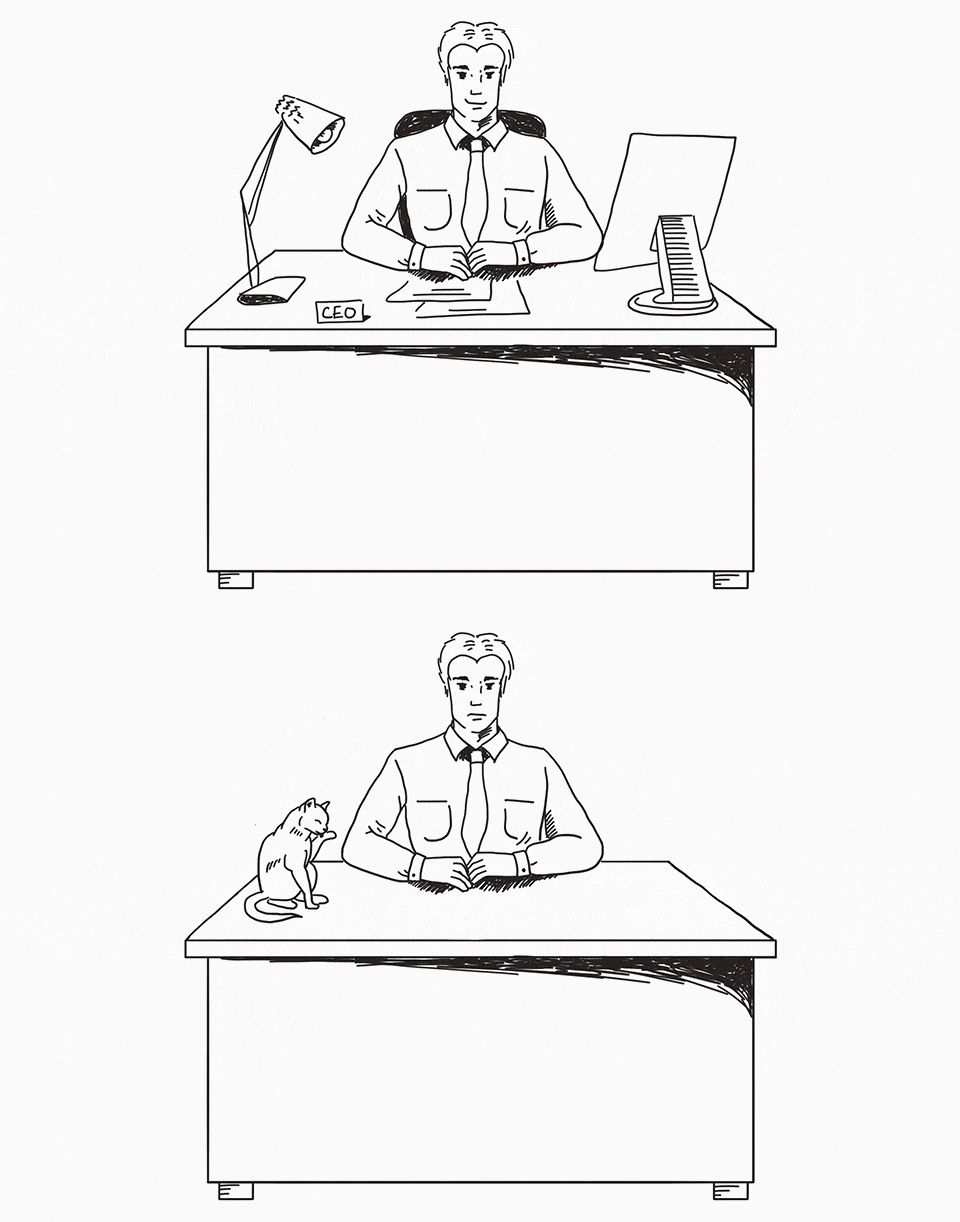
It turns out that you still need to punish. But how? - Western books do not help in this matter. Domestic - not too much. A. Friedman has something similar to the truth. It parses different types of operating management systems:
Our work is organized on scrum and agile and is more like regular management. In regular management, there are two filthy and complex (no one said it was easy to be a leader) principles:
1. The leader is obliged to punish his subordinate if he has violated the rules established and communicated to him.
Suppose a manager sets a task to a junior programmer, Pete, to design a database. And, since he is just studying, the manager asks Petya to call on the help of an experienced programmer Katya. Let him sit nearby, help, tell me.
Petya timidly approaches Katya, says: “Help me - the boss asks.” And Katya has a spring wind in her head and the complete “I don’t want to think - I want a dress”. And she gently sends Petya to leave, for she has no time.
There is nothing to do - Petya, in order not to ruin the task, read books and forums, dug up the Internet. Spent a few evenings and eventually designed a really good base.
It seems that Petya did a good job: he pumped himself and completed the task. But in the system of regular management it needs to be punished. Like Katya, but with her, I think, everything is clear: she refused to perform the task. (My manager, by the way, is also under the gun - why is he not setting tasks through Jira ?, but here maybe such a culture ...).
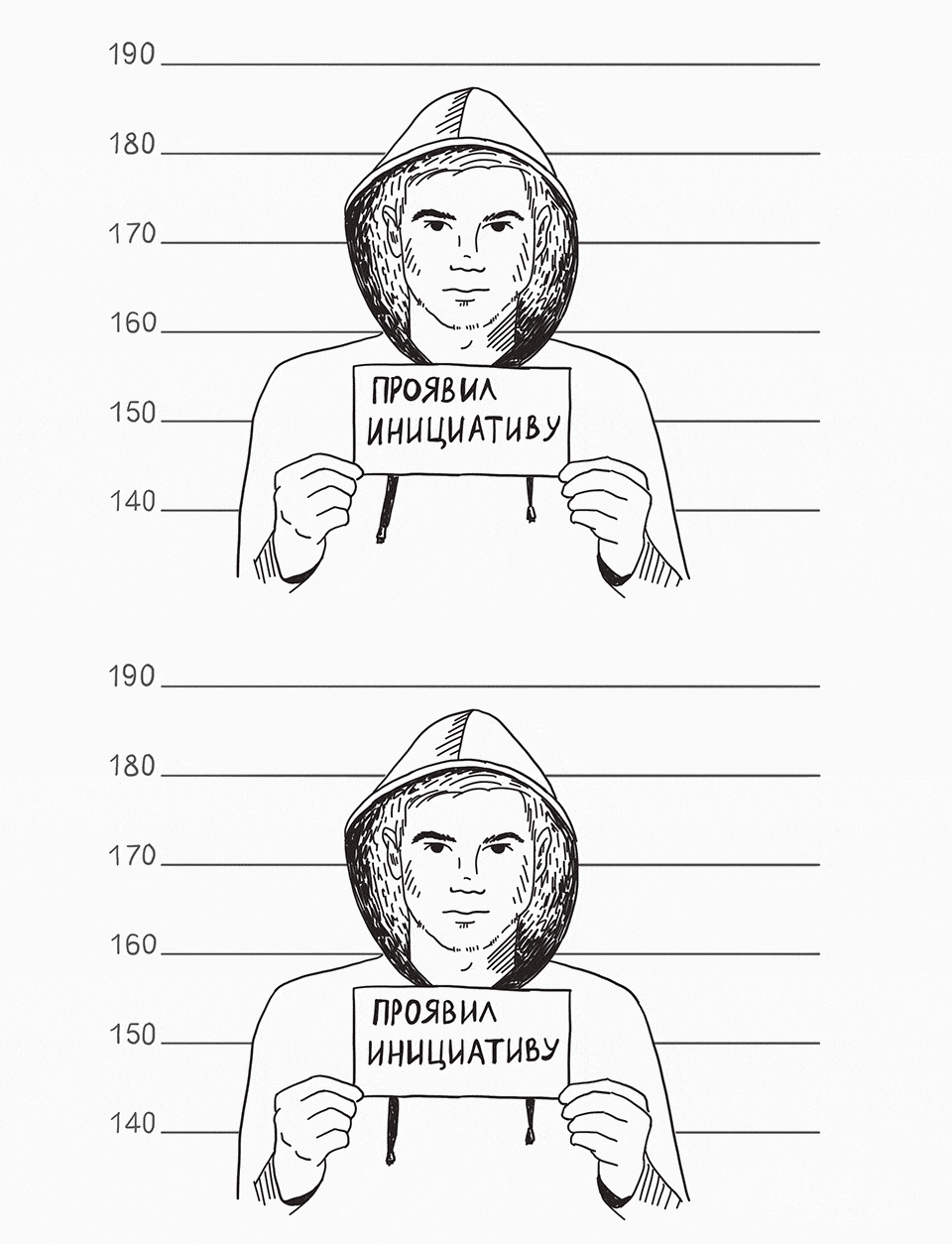
But Petya climbed where they didn’t ask and violated the agreement with the head - that’s why you need to punish him. Although, in the system of improvisational management, he may have accomplished a feat and is worthy of a medal (he satisfied the principle “it doesn’t matter how, but on Monday morning it should be on my desk!”).
The second filthy principle of regular management is as follows:
2. The head has no right to punish a subordinate if he acted without exceeding his authority.
This rule is even more complicated than the first one: it requires a cold head, a firm hand, experience, reflection time and moral maturity from the leader.
Life example: our system administrator changed disks on the internal server. The procedure is simple, with clear rules, we carry it out every six months. But during the replacement, an incomprehensible failure occurred and all the data from the hard disk flew. It could be restored - which we did, but 42 people lost 4 hours of work.
The system administrator did everything according to the instructions - therefore the manager has no right to punish him. Although I really want to. You can’t punish, but he must do everything to find out the reasons for the failure and lay straws the next time.
In regular management, the manager is not required to punish the subordinate immediately, as the jamb noted. You can respond after a while. Two or three days will not change the situation, but will help to understand the issue and develop an action plan. You should not postpone it for a longer period - the employee can forget the details, and punish what the person does not remember, somehow not comme il faut.
The same thing - if you decide to fire an employee, but now he is holding on to an important project. You do not have to leave immediately - choose a convenient time for you.
There is no forgiveness procedure in management. The manager is obliged to respond if the employee has violated the established rules. But there is an amnesty procedure: if a person pleaded guilty and repented, the leader must stop eating his brain.
Do not confuse amnesty with forgiveness.
Amnesty is not automatic and based on the principle of "you to me, I to you." If the company has an agreement that no one is late, but it was violated by both the manager and the subordinate, the boss cannot be forgiven for the employee, just because he has a gun at the very stigma. It is still necessary to punish in this situation. How the leader will punish himself is a separate topic that does not concern the subordinate. Either follow the rule or remove it.
Amnesty is possible if people are willing to admit their misconduct even to themselves. In Japanese culture, there is the term hansei (反省) - literally "introspection." It is understood as a situation when a person analyzes his actions, at the same time feels shame and learns that it is impossible to do this and why. Hansei is a key principle of Toyota DAO.
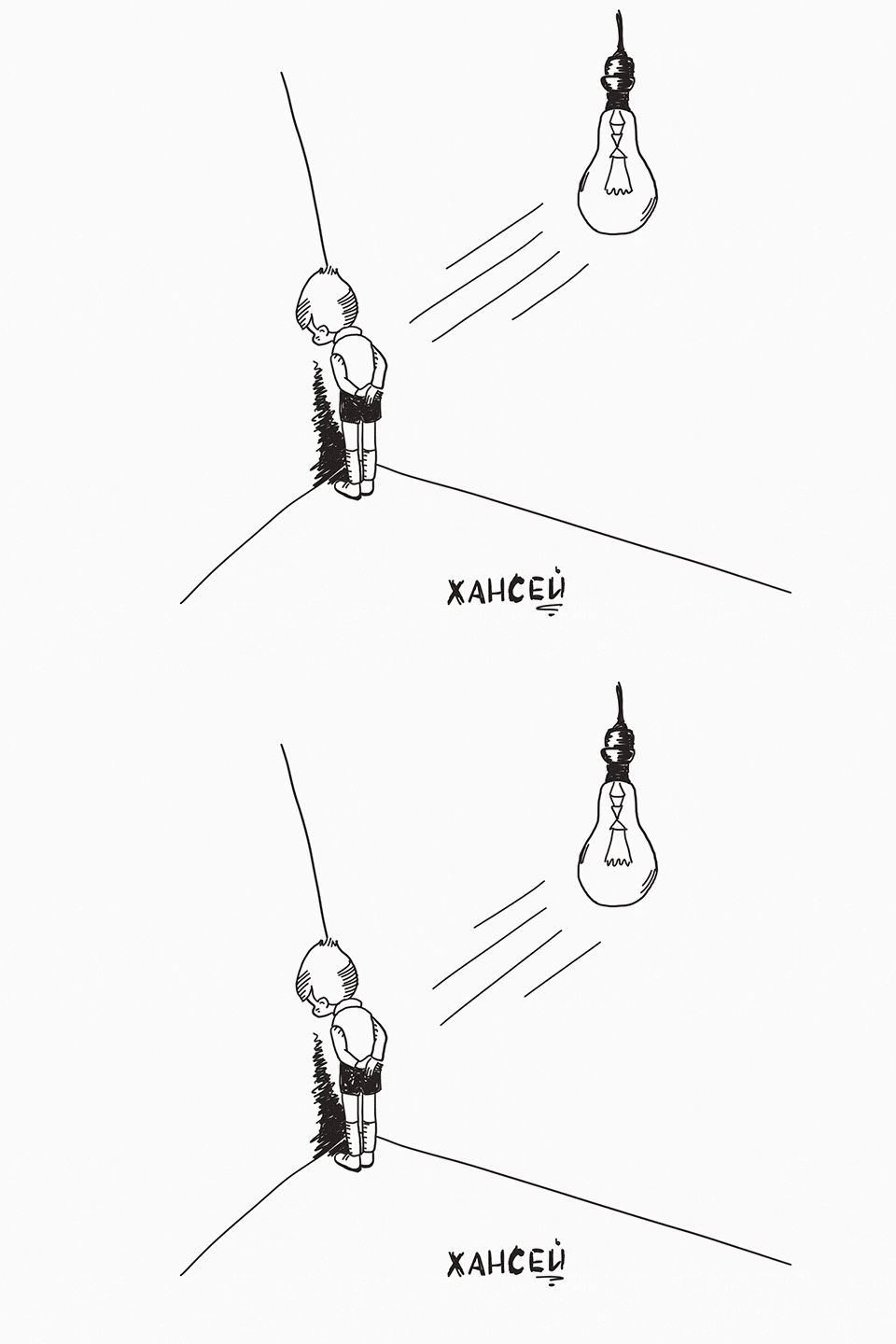
In our culture, such self-reflection is rare. But you can get something similar if the offender independently and sincerely conducts a root cause analysis. We use it in difficult situations or with projects on projects. Below are two maps - for a detailed and brief root cause analysis.
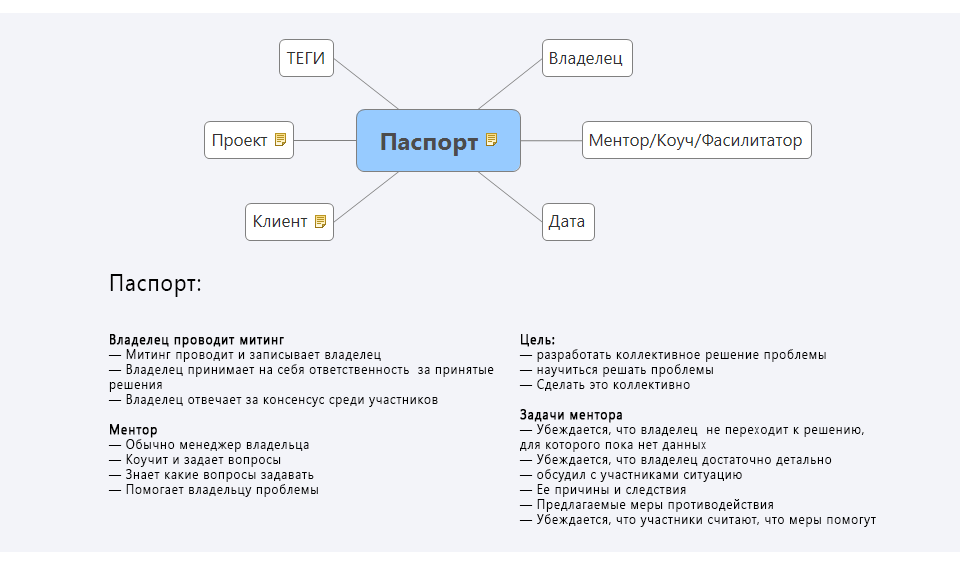
Hardcore version
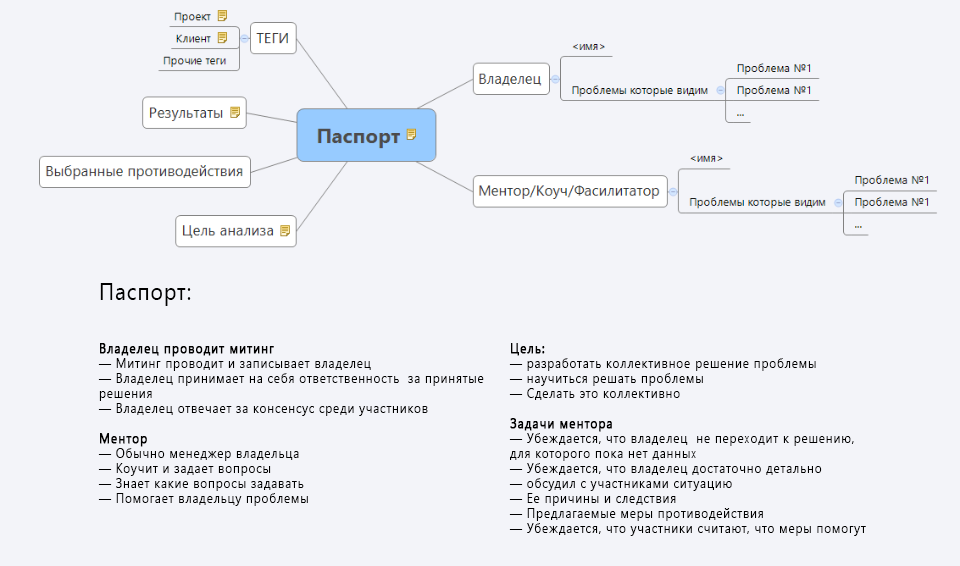
Soft version
Their essence is to immerse a person in the analysis of his actions and behavior, so that he finds flaws and schools. As a result, he proposed measures to prevent a recurrence of the crisis in the future. Each filled-in card is necessarily discussed between the employee and the manager - to make sure that the analysis is thorough, and the measures will help. The method requires a lot of effort and time, but is justified in difficult situations.
The root cause-analysis has a limitation - it works only with those employees who are willing to look for the causes of the problem in themselves, and not in the environment or circumstances. Such people are growing rapidly and such an analysis is only to their aid.
If you are interested in the topic of management and there is no allergy to philosophy, read the books of V. K. Tarasov - this is a concentrate of thoughts. For example: A
leader is like fire. Impossible to approach. The heat is nearby, but unbearably hot if you try to get even closer.
In a properly organized company, a person feels comfortable next to a leader. And the punishment is to change this comfortable distance to another. Or the leader will bring the subordinate closer to himself, begin to ask uncomfortable questions, make him delve into himself, sweat and burn with shame. Or, on the contrary, it will push a person off until dismissal. Punishments are placed at these poles. And if a person behaves correctly - let him continue to sit at a comfortable distance.
Homework:after him, any novice leader will become stronger. Think about how you are ready to punish people: from the mildest way to hardcore. The most hardcore thing is firing. Arrange ways to increase cruelty. After you will have your arsenal. It’s not necessary to put the penalties into practice, but it’s nice to have them available. It will make you stronger.
So, punishment for misconduct is necessary, and for the most part the punishment lies in the moral plane. Correctly punishment implies that the punished is aware of his guilt. But how to achieve this? Read morale? Bad idea - remember what you were thinking when morality reads to you: “How to keep a smile and not say something daring” or “Yes, when this bastard-boss already shut up.” In both cases, the authority of the leader falls, and the subordinate does not realize his guilt.
What you need to do is ask uncomfortable questions. Ask and wait for an answer. Do not let evade or translate the topic. Your task is to ensure that the person sees the situation from the right angle. He will try to dodge, begin to come up with excuses or refer to the fact that "others do it too." Do not let yourself be confused. Turn the person with a muzzle towards a mirror and force to look. Additional techniques and techniques (voice, timbre, gaze, facial expressions, gestures, postures) will enhance the effect.
The mistake is to ask a question and not leave a pause to answer it, but immediately proceed to reading morality. Ask and be silent. If there is no answer, remind that you are waiting for it. Do not let yourself be confused and taken away into irrelevant details or superfluous entities. Cut off the excess.
It is only necessary to punish in private.In public, an employee can enter a role. This will undermine your authority if you do not have the skill and inner strength to besiege a person with one phrase. Well, this is just unpleasant. Our task is to change the employee behavior pattern in the future, to make it better. Therefore, an unpleasant procedure for both parties should be carried out only in private.
The rules that employees violate are written, oral and customary. And holes (places that can be interpreted ambiguously) are in any regulation. If you don’t believe me, send me your rules for a dispute on cognac :)
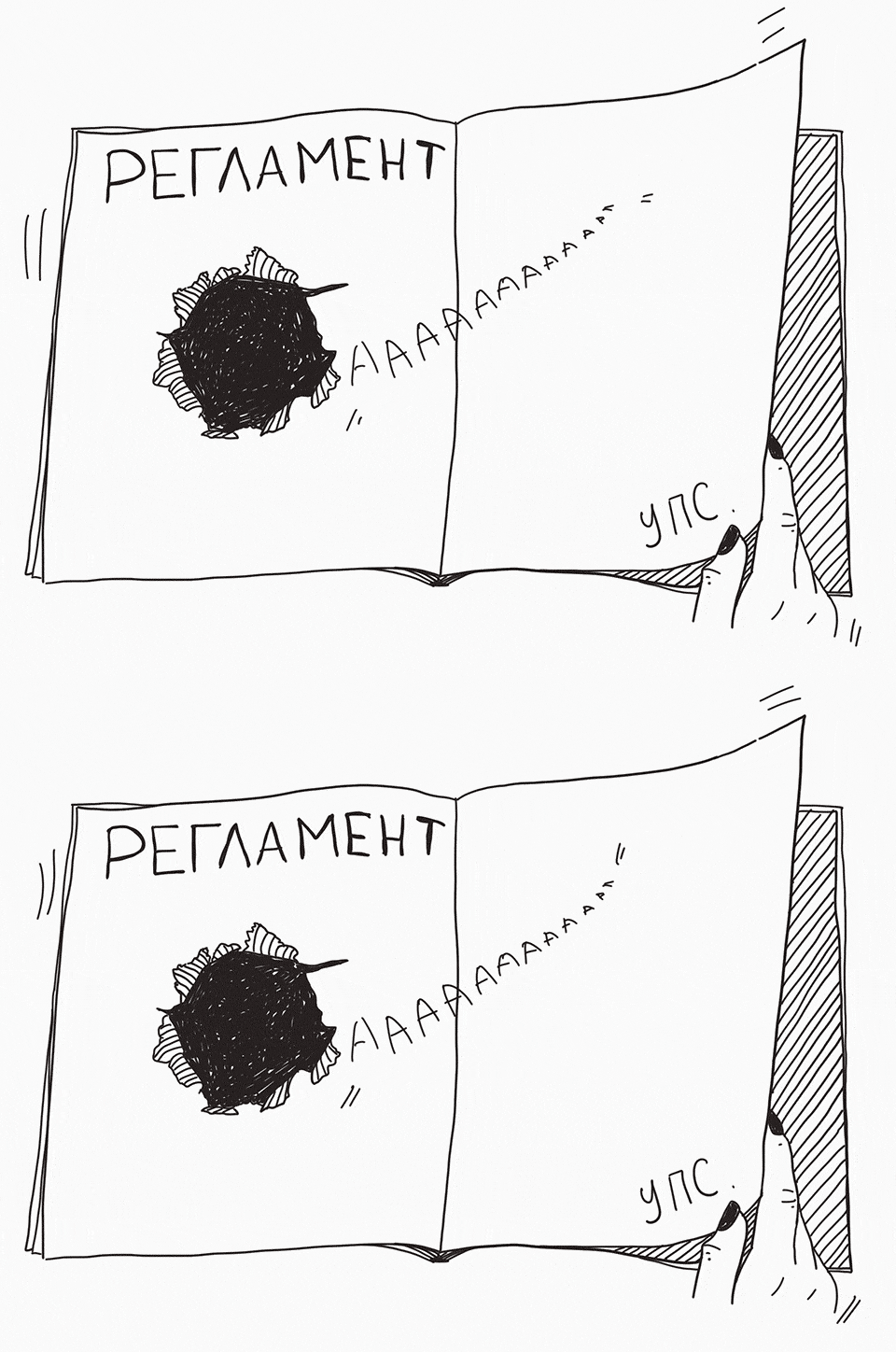
Most likely, the punished person will try to evade the punishment, referring to the incompleteness of the rules (“And it’s not written anywhere that you can’t dry the cat in the microwave!”). If you hear this, ask the person why he turned on the fool. If for the sake of excuses - ask to turn off and return to the discussion of misconduct. And if the fool is turned on systematically (or does not turn off), ask yourself how this person went through the interview and why he still works in your company.
If the employee accumulates and does not reset the karma, this is an unhealthy situation. Manipulatively-minded boss recalls all the misconduct of the subordinate and pokes at them on the case and without, uses inductive wrapping (the link is a great movie!) And generalizations.
If the situation with the misconduct of a subordinate is investigated, they will no longer return to it. The punishment is over. Karma is reset to zero.
Even when you upgrade the punishment skill to level 90, their effectiveness can still be low.
The reason is the wrong dosage. Punishment should be 5-6 times less than rewards. If employees know that there might not be a punishment - this strongly motivates to be careful in the future. And, on the contrary, if they are used to the fact that for every "fellow" they have to hit with a stick on the ridge, they continue to do as before - after all, with a probability of 50%, it will fly anyway.
Good about punishment and motivation is written here .
Sometimes in groups there are people who should not be punished. In the case of a jamb, they torture themselves so that you do not add anything to them from the outside. These are very responsible people. They quickly fix and grow - it is pleasant to work with them. And they do not need to be punished.

We found that accuracy is important in the names. To do this, you need to pump yourself in many areas: ask brief and correct questions, get to the bottom of the truth, control your voice, look, gestures, facial expressions. It will take a lot of time and training. But on whom?
If it dawned on you with a brilliant idea - to practice at home - please do not do so. Your family is not to blame for the fact that you are reading the habr :)
The technique can be worked out for those who do not mind - however cynical it may be. In the end, fewer people will suffer than you offend, for years punishing without preparation and practice.
At first, you will not succeed: most likely, slide into a reading of morality. But over time, learn to choose punishments commensurate with the jamb, bring the employee in the dialogue to the realization of misconduct, and all this - putting emotions in the background.
Instead of withdrawing, keep a checklist for self-control, where everything that you learned about punishments is collected in short paragraphs. Good luck!

So. If you are not a sadist or a moral monster, and your employees are not masochists, then I doubt that some of you enjoy the punishment. I don’t.
We will analyze the very fact of this phenomenon - punishment. I know the topic is reverent. It provokes negative emotions, impulses to burn the author, discourages the ability to read and analyze. But it includes a generator of caustic comments-stamps and minuses in karma. But here I will precisely investigate (!!!) the punishment. How scientists investigate a deadly virus: with practical interest, experimentation and without making preliminary results.
They do not teach to punish anywhere:neither in business literature, nor in trainings, nor in universities. However, the phenomenon itself exists. Novice leaders with little management experience either do not know how to punish, or do it awkwardly. They often endure and accumulate complaints against employees until they bomb them - and then they get everything. The boss himself in this situation understands what is wrong. But he already suffered - there is no turning back.
This is sad, but how to require a person to have a skill that he hasn’t been taught anywhere? Was yourself a programmer, became a manager, and here - go and punish? Wrong to demand from the programmer virtuoso hand-to-hand fighting skills?
But the employee will not go into such subtleties inaccurately punished (and in fact - offended). It will be necessary for managers, managers, directors to understand.
In punishment, high accuracy is important.It should be higher than in the distribution of rewards. The situation when the boss has a festive mood, and on this occasion he gave a prize to the whole department, will be perceived normally. But if he punished everyone because the tooth hurts - they will already react to this differently.
“Responsible” in practical terms
I first thought about the “responsibility” measure when Sibiriks was small: a couple of developers and designers. For our sphere (and for many others at the start) it is typical that the founder knows how to do something with his hands: to program or draw design. And, as a rule, loves this business.
It was already night. I sat in the office and debugged a piece of code for the programmer, who clearly threw everything away and went home. At the same time, the customer was pecking at skype, rushing, scolding, trying to write in red.
And I sat, debugged and thought: what does it mean for the developer to be responsible for the project?
As a director, I understand that in the case of a fakap I ogreb in full. I’ll put the wrong people on the project - I’ll fail financially, the employee is not suitable for hire - there will be problems in the team. All responsibility of the company lies with me. And what is the responsibility of the programmer? Or a designer? What is it in practical terms?
Serfdom was abolished, it is impossible to fine under the Labor Code. It is impossible to force to work out after hours (yes, yes, good overtime!), Beat - it is impossible, handcuff the battery - it is also forbidden. It turns out, you can only fire. But I am already sitting, working at night - without him I will sit until the morning. Invulnerable such dudes, it turns out.
And only after years I felt for the answer to this question. And the understanding came that the developer who went home in time, although he did not finish the task, was not to blame for anything. And I - yes, I’m guilty and did something wrong: I crookedly built the workflow, planned the time or incorrectly formed the customer’s expectations. However, young and ready mountains to turn down the grief-leaders do not allow such a thought. They have a stereotype “Your work is not finished on time, and this brought me problems. You are guilty!"
Leaders are people too. And sometimes it carries
Talking in elevated tones with hooks and inserts from the great Petrovsky bend is the most accessible way for inexperienced leaders to let off steam and give out all the negative connection that has accumulated.
But when the reason for disassembly is a small misconduct, I don’t really want to swear. It is simply irrational. And a scheme arises: the leader closes his eyes to the jambs until their number reaches a critical mass in his perception. Then the lid from the kettle is torn off, boiling water with a whistle and spray flies towards the subordinate, simultaneously covering another half-office ... Bad scheme. Unworthy of adults and smart people.
Ok, screaming and breaking down is bad. Are there any alternatives? Yes, any number!
Introverts write
Technology today allows the voice to not speak at all. Why, when you can WRITE about everything! More than others, this option is loved by introverted executives (and such in IT, as a rule, the majority).
And they write: in Skype, by mail or in telegrams. And they are trying to convey to the employee what his jamb is and why in the future this cannot be repeated. They paint in paints and epithets moral problems and material consequences. And the details of what will be done to the person if such garbage is repeated.
Introverts such a way of issuing feedback seems practical: it does not require emotionality and personal involvement. And it's almost as familiar as writing code (only more commands and richer syntax).
The method works flawlessly. In 100% of cases, a person, after reading a message, does this:
Take a closer look at him. See, he mutters? You know what? And here’s what: “The boss is a goat. The office is shit. ” You don’t hear this, but it spreads far away on the labor market and does not fall silent for a long time.
To punish or offend?
Having scribbled a malicious letter to his subordinates, you did not punish him, but offended him.
Between “punish” and “offend” the border is thin, and it is important to feel it. When you punish a person, he begins to realize that he is really guilty. And when you offend, he thinks you're wrong. It works especially hard in our IT environment, where there are a lot of smart people, with a high sense of their significance and a binary understanding of the beautiful.
Hence, two important consequences. For intellectual workers:
- Punishments for the most part lie in the moral (rather than material) sphere. Any material de / motivating system will be quickly hacked. If I were fined 100 rubles for each delay, I would buy a monthly subscription out of harm. This would discredit the power of management, but in no way offset the losses of the company from my delays. Agree, companies do not earn by collecting hundreds of employees' salaries.
- It is necessary to punish so that the person himself realizes that he is really guilty. And this is possible only when the rules established and brought to it were violated. You cannot punish mistakes. Where there are no clear rules, regulations or unambiguous agreements, the head has no right to punish. Yes, and it can’t - it’s only possible to offend.
Two nasty principles of regular management
There is nothing sensible about punishment in English-language business literature. Only about motivation, corporate culture, good relationships and win-win. In an ideal world that is described there, the head created a motivating atmosphere inside his company, and employees either never squint or (logically) misconduct with them.
But the jambs will certainly be. And they will most likely be due to violation of agreements or too creative attitude of the employee to the rules. Our wide Russian soul loves this.
The problem is that if you do not respond to misconduct, they will be repeated more and more often. The authority of the leader will be undermined. Employees will begin to ignore the rules, regulations and arrangements. Performance will go to zero. The company will go bankrupt, everyone will go home, the end. Joke :)
It turns out that you still need to punish. But how? - Western books do not help in this matter. Domestic - not too much. A. Friedman has something similar to the truth. It parses different types of operating management systems:
- directive management, or dictatorship (you can grab hold of any creativity);
- manipulation management (everyone is always to blame, but some are forgiven for this);
- improvised management (the leader decides whether to punish or not, according to the situation. Therefore, for the same thing you can get a medal and a kick in the ass; the jambs are written off for circumstances, and they can be punished for wanting to clarify the problem);
- regular management (work according to clear rules).
Our work is organized on scrum and agile and is more like regular management. In regular management, there are two filthy and complex (no one said it was easy to be a leader) principles:
1. The leader is obliged to punish his subordinate if he has violated the rules established and communicated to him.
Suppose a manager sets a task to a junior programmer, Pete, to design a database. And, since he is just studying, the manager asks Petya to call on the help of an experienced programmer Katya. Let him sit nearby, help, tell me.
Petya timidly approaches Katya, says: “Help me - the boss asks.” And Katya has a spring wind in her head and the complete “I don’t want to think - I want a dress”. And she gently sends Petya to leave, for she has no time.
There is nothing to do - Petya, in order not to ruin the task, read books and forums, dug up the Internet. Spent a few evenings and eventually designed a really good base.
It seems that Petya did a good job: he pumped himself and completed the task. But in the system of regular management it needs to be punished. Like Katya, but with her, I think, everything is clear: she refused to perform the task. (My manager, by the way, is also under the gun - why is he not setting tasks through Jira ?, but here maybe such a culture ...).
But Petya climbed where they didn’t ask and violated the agreement with the head - that’s why you need to punish him. Although, in the system of improvisational management, he may have accomplished a feat and is worthy of a medal (he satisfied the principle “it doesn’t matter how, but on Monday morning it should be on my desk!”).
The second filthy principle of regular management is as follows:
2. The head has no right to punish a subordinate if he acted without exceeding his authority.
This rule is even more complicated than the first one: it requires a cold head, a firm hand, experience, reflection time and moral maturity from the leader.
Life example: our system administrator changed disks on the internal server. The procedure is simple, with clear rules, we carry it out every six months. But during the replacement, an incomprehensible failure occurred and all the data from the hard disk flew. It could be restored - which we did, but 42 people lost 4 hours of work.
The system administrator did everything according to the instructions - therefore the manager has no right to punish him. Although I really want to. You can’t punish, but he must do everything to find out the reasons for the failure and lay straws the next time.
In regular management, the manager is not required to punish the subordinate immediately, as the jamb noted. You can respond after a while. Two or three days will not change the situation, but will help to understand the issue and develop an action plan. You should not postpone it for a longer period - the employee can forget the details, and punish what the person does not remember, somehow not comme il faut.
The same thing - if you decide to fire an employee, but now he is holding on to an important project. You do not have to leave immediately - choose a convenient time for you.
Forgiveness, amnesty, hansei and root cause analysis
There is no forgiveness procedure in management. The manager is obliged to respond if the employee has violated the established rules. But there is an amnesty procedure: if a person pleaded guilty and repented, the leader must stop eating his brain.
Do not confuse amnesty with forgiveness.
Amnesty is not automatic and based on the principle of "you to me, I to you." If the company has an agreement that no one is late, but it was violated by both the manager and the subordinate, the boss cannot be forgiven for the employee, just because he has a gun at the very stigma. It is still necessary to punish in this situation. How the leader will punish himself is a separate topic that does not concern the subordinate. Either follow the rule or remove it.
Amnesty is possible if people are willing to admit their misconduct even to themselves. In Japanese culture, there is the term hansei (反省) - literally "introspection." It is understood as a situation when a person analyzes his actions, at the same time feels shame and learns that it is impossible to do this and why. Hansei is a key principle of Toyota DAO.
In our culture, such self-reflection is rare. But you can get something similar if the offender independently and sincerely conducts a root cause analysis. We use it in difficult situations or with projects on projects. Below are two maps - for a detailed and brief root cause analysis.
Hardcore version
Soft version
Their essence is to immerse a person in the analysis of his actions and behavior, so that he finds flaws and schools. As a result, he proposed measures to prevent a recurrence of the crisis in the future. Each filled-in card is necessarily discussed between the employee and the manager - to make sure that the analysis is thorough, and the measures will help. The method requires a lot of effort and time, but is justified in difficult situations.
The root cause-analysis has a limitation - it works only with those employees who are willing to look for the causes of the problem in themselves, and not in the environment or circumstances. Such people are growing rapidly and such an analysis is only to their aid.
Distance and Zoom
If you are interested in the topic of management and there is no allergy to philosophy, read the books of V. K. Tarasov - this is a concentrate of thoughts. For example: A
leader is like fire. Impossible to approach. The heat is nearby, but unbearably hot if you try to get even closer.
In a properly organized company, a person feels comfortable next to a leader. And the punishment is to change this comfortable distance to another. Or the leader will bring the subordinate closer to himself, begin to ask uncomfortable questions, make him delve into himself, sweat and burn with shame. Or, on the contrary, it will push a person off until dismissal. Punishments are placed at these poles. And if a person behaves correctly - let him continue to sit at a comfortable distance.
Homework:after him, any novice leader will become stronger. Think about how you are ready to punish people: from the mildest way to hardcore. The most hardcore thing is firing. Arrange ways to increase cruelty. After you will have your arsenal. It’s not necessary to put the penalties into practice, but it’s nice to have them available. It will make you stronger.
Ask questions. Alone!
So, punishment for misconduct is necessary, and for the most part the punishment lies in the moral plane. Correctly punishment implies that the punished is aware of his guilt. But how to achieve this? Read morale? Bad idea - remember what you were thinking when morality reads to you: “How to keep a smile and not say something daring” or “Yes, when this bastard-boss already shut up.” In both cases, the authority of the leader falls, and the subordinate does not realize his guilt.
What you need to do is ask uncomfortable questions. Ask and wait for an answer. Do not let evade or translate the topic. Your task is to ensure that the person sees the situation from the right angle. He will try to dodge, begin to come up with excuses or refer to the fact that "others do it too." Do not let yourself be confused. Turn the person with a muzzle towards a mirror and force to look. Additional techniques and techniques (voice, timbre, gaze, facial expressions, gestures, postures) will enhance the effect.
The mistake is to ask a question and not leave a pause to answer it, but immediately proceed to reading morality. Ask and be silent. If there is no answer, remind that you are waiting for it. Do not let yourself be confused and taken away into irrelevant details or superfluous entities. Cut off the excess.
It is only necessary to punish in private.In public, an employee can enter a role. This will undermine your authority if you do not have the skill and inner strength to besiege a person with one phrase. Well, this is just unpleasant. Our task is to change the employee behavior pattern in the future, to make it better. Therefore, an unpleasant procedure for both parties should be carried out only in private.
Typical excuses
The rules that employees violate are written, oral and customary. And holes (places that can be interpreted ambiguously) are in any regulation. If you don’t believe me, send me your rules for a dispute on cognac :)
Most likely, the punished person will try to evade the punishment, referring to the incompleteness of the rules (“And it’s not written anywhere that you can’t dry the cat in the microwave!”). If you hear this, ask the person why he turned on the fool. If for the sake of excuses - ask to turn off and return to the discussion of misconduct. And if the fool is turned on systematically (or does not turn off), ask yourself how this person went through the interview and why he still works in your company.
Zero karma
If the employee accumulates and does not reset the karma, this is an unhealthy situation. Manipulatively-minded boss recalls all the misconduct of the subordinate and pokes at them on the case and without, uses inductive wrapping (the link is a great movie!) And generalizations.
If the situation with the misconduct of a subordinate is investigated, they will no longer return to it. The punishment is over. Karma is reset to zero.
The impact of punishments on the team
Even when you upgrade the punishment skill to level 90, their effectiveness can still be low.
The reason is the wrong dosage. Punishment should be 5-6 times less than rewards. If employees know that there might not be a punishment - this strongly motivates to be careful in the future. And, on the contrary, if they are used to the fact that for every "fellow" they have to hit with a stick on the ridge, they continue to do as before - after all, with a probability of 50%, it will fly anyway.
Good about punishment and motivation is written here .
Who should not be punished
Sometimes in groups there are people who should not be punished. In the case of a jamb, they torture themselves so that you do not add anything to them from the outside. These are very responsible people. They quickly fix and grow - it is pleasant to work with them. And they do not need to be punished.
On whom to train?
We found that accuracy is important in the names. To do this, you need to pump yourself in many areas: ask brief and correct questions, get to the bottom of the truth, control your voice, look, gestures, facial expressions. It will take a lot of time and training. But on whom?
If it dawned on you with a brilliant idea - to practice at home - please do not do so. Your family is not to blame for the fact that you are reading the habr :)
The technique can be worked out for those who do not mind - however cynical it may be. In the end, fewer people will suffer than you offend, for years punishing without preparation and practice.
At first, you will not succeed: most likely, slide into a reading of morality. But over time, learn to choose punishments commensurate with the jamb, bring the employee in the dialogue to the realization of misconduct, and all this - putting emotions in the background.
Instead of withdrawing, keep a checklist for self-control, where everything that you learned about punishments is collected in short paragraphs. Good luck!