June 30, 2016 at 17:57
Three Data Center Approaches from the Louros Project, Keystone NAP, and Iron Mountain
In the design and subsequent creation of data centers, their operators take into account a variety of factors: the direct time required for the construction of premises, the coefficient of energy efficiency (Power Usage Effectiveness; PUE), the most optimal location of the data center, its transport accessibility, meeting all standards of working conditions for staff, etc ... But there are concepts with which you can slightly speed up the whole process. Three approaches to the construction of data centers are described below, which take into account the diverse needs of business and end users of data center infrastructure.
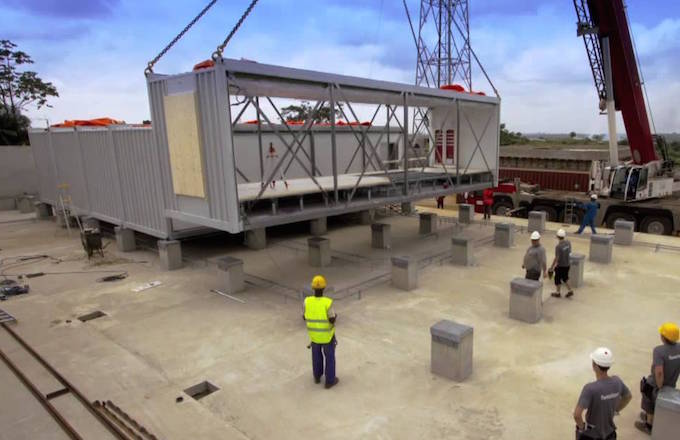
Using the Louros Project server farm, which is located in a Greek forest and used by the Athens government as a backup, we can consider the advantages of a modular approach to the construction of data centers. The implementation of this project took about six months. And this is two times less than the time spent on the construction of a standard data center.
The designers of this complex were given the task - when creating a data center not to damage the ecology of the Luros River (after which the data center was named), flowing nearby. Therefore, experts decided to minimize the area occupied by the data center, increasing the density of equipment indoors. As a result, they managed to build a server farm on 400 square meters and arrange server racks with IT load of 14 kW in the machine rooms. There is a hydroelectric power station on the river, which supplies the data center with electricity.
Next to the server farm are containers with uninterruptible power supplies (UPS) that support the availability of computing infrastructure in the event of a power outage. In the mashrooms themselves there is a "hot" corridor. Using a special cooling system using water from the Luros River, it is possible to prevent overheating of the servers. At the same time, the flora and fauna of the river do not suffer at all. When a particularly hot time comes, the cooling system automatically switches to the well leading to the underground source. Thus, the water used maintains the required temperature.

River Louros
Thanks to the use of electricity from a renewable energy source, Building Management Systems (BMS) and a software package for managing the data center infrastructure (Data Center Infrastructure Management; DCIM), data center operators were able to minimize its negative impact on the environment. They managed to reach a PUE coefficient of about 1.18 units.
The cost of the Louros Project is estimated at 2.5 million euros. This server farm has become an example for designers and builders of other modular data centers.
As another area for creating platforms for computing power, it is worth considering abandoned industrial or commercial buildings. Overhaul of such an object may be more optimal for data center operators than the construction of a new data center. This is exactly the way the Keystone NAP colocation provider went, refitting for its purposes the building of a former metallurgical plant in the state of Philadelphia (USA). Its area is 6000 square meters. The company’s specialists repaired the premises and installed modular containers for IT equipment on three floors of the building.
According to Keystone NAP co-founder Sean Carey:

The factory, which now houses the Keystone NAP data center, Keystone NAP
engineers did not begin to equip full-service halls inside the building. Instead, they used the former factory as a “protective enclosure” to house modular quick-mounted container server farms. The container manufacturer was Schneider Electric. They can accommodate 22 or 44 mounting racks (the maximum power of the IT load is 100 and 200 kW, respectively). The smaller of these containers occupies just under 100 square meters of usable area.
Keystone NAP has enabled its tenants to remotely manage rack servers. But at the same time, if necessary, customers can get physical access to IT systems.
In the process of scaling the commercial data center inside the plant, the company's specialists will connect additional modular containers to the power supply and cooling infrastructure, as well as to their telecommunication network. Customer service level agreements stipulate that different containers may have different levels of reliability. They are equipped with autonomous cooling infrastructure, UPS systems, fire extinguishing and safety. In addition, containers are not designed for quick transportation. Thanks to the preliminary manufacture of containers and equipping them with auxiliary equipment at remote Schneider Electric plants, the cost of building a data center was reduced by about 14% compared to a standard data center.
Another bizarre approach has been taken by Iron Mountain's collocation provider and data protection service provider. The company's specialists built a commercial server farm in Northborough, Massachusetts (USA). The construction of the data center took 12 months.
The main task of designers and builders was to create the proper atmosphere, which would give tenants the feeling that they are working in their own corporate data center. To do this, Iron Mountain specialists provided the server farm with additional facilities for repairing IT equipment outside the hall, equipped with all the necessary tools. They also equipped Northbore's data center with a spacious lounge and showers for third-party IT professionals.
According to Iron Mountain's Product Management Director Sam Gopal:
True, Gopal admitted that in spite of this, many colocation providers serving corporate clients are not always quite efficient and of high quality.
During the construction of the building, standard methods were used, but the designers of the data center provided the possibility of using modular structures and auxiliary infrastructure elements to ensure a high level of repeatability. The latter will contribute to the rapid expansion of the server farm as demand from tenants grows while minimizing capital expenditures.
Iron Mountain engineers designed the data center with the aim of further expansion by quickly duplicating the machinery and auxiliary equipment without the risk of disrupting the performance of the already commissioned infrastructure.
At the moment, the data center has one machine room with an area of 1000 square meters, which can accommodate an IT load of 1.2 megawatts. Twelve-inch concrete walls protect equipment inside the building from external influences. It is also reported that client IT equipment can be placed with a fairly high density (up to 20 kW per rack).
An example of a modular data center from the Greek Louros Project
Using the Louros Project server farm, which is located in a Greek forest and used by the Athens government as a backup, we can consider the advantages of a modular approach to the construction of data centers. The implementation of this project took about six months. And this is two times less than the time spent on the construction of a standard data center.
The designers of this complex were given the task - when creating a data center not to damage the ecology of the Luros River (after which the data center was named), flowing nearby. Therefore, experts decided to minimize the area occupied by the data center, increasing the density of equipment indoors. As a result, they managed to build a server farm on 400 square meters and arrange server racks with IT load of 14 kW in the machine rooms. There is a hydroelectric power station on the river, which supplies the data center with electricity.
Next to the server farm are containers with uninterruptible power supplies (UPS) that support the availability of computing infrastructure in the event of a power outage. In the mashrooms themselves there is a "hot" corridor. Using a special cooling system using water from the Luros River, it is possible to prevent overheating of the servers. At the same time, the flora and fauna of the river do not suffer at all. When a particularly hot time comes, the cooling system automatically switches to the well leading to the underground source. Thus, the water used maintains the required temperature.
River Louros
Thanks to the use of electricity from a renewable energy source, Building Management Systems (BMS) and a software package for managing the data center infrastructure (Data Center Infrastructure Management; DCIM), data center operators were able to minimize its negative impact on the environment. They managed to reach a PUE coefficient of about 1.18 units.
The cost of the Louros Project is estimated at 2.5 million euros. This server farm has become an example for designers and builders of other modular data centers.
Abandoned buildings as data centers
As another area for creating platforms for computing power, it is worth considering abandoned industrial or commercial buildings. Overhaul of such an object may be more optimal for data center operators than the construction of a new data center. This is exactly the way the Keystone NAP colocation provider went, refitting for its purposes the building of a former metallurgical plant in the state of Philadelphia (USA). Its area is 6000 square meters. The company’s specialists repaired the premises and installed modular containers for IT equipment on three floors of the building.
According to Keystone NAP co-founder Sean Carey:
The choice fell on this structure due to its excellent structural characteristics. The former factory is significantly superior to most modern buildings in terms of thickness of concrete and steel reinforcement. Electricity enters the containers through three independent power lines, while river water and H2O from underground aquifers coming from a well near the building are used to cool server equipment.
The factory, which now houses the Keystone NAP data center, Keystone NAP
engineers did not begin to equip full-service halls inside the building. Instead, they used the former factory as a “protective enclosure” to house modular quick-mounted container server farms. The container manufacturer was Schneider Electric. They can accommodate 22 or 44 mounting racks (the maximum power of the IT load is 100 and 200 kW, respectively). The smaller of these containers occupies just under 100 square meters of usable area.
Keystone NAP has enabled its tenants to remotely manage rack servers. But at the same time, if necessary, customers can get physical access to IT systems.
In the process of scaling the commercial data center inside the plant, the company's specialists will connect additional modular containers to the power supply and cooling infrastructure, as well as to their telecommunication network. Customer service level agreements stipulate that different containers may have different levels of reliability. They are equipped with autonomous cooling infrastructure, UPS systems, fire extinguishing and safety. In addition, containers are not designed for quick transportation. Thanks to the preliminary manufacture of containers and equipping them with auxiliary equipment at remote Schneider Electric plants, the cost of building a data center was reduced by about 14% compared to a standard data center.
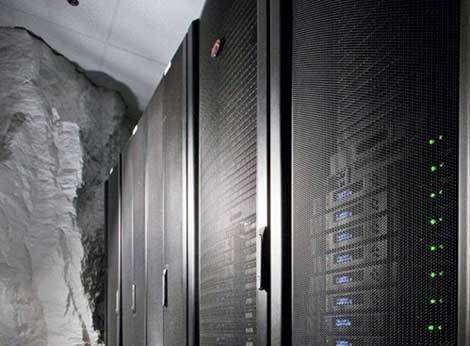
Iron Mountain Server Farm
Another bizarre approach has been taken by Iron Mountain's collocation provider and data protection service provider. The company's specialists built a commercial server farm in Northborough, Massachusetts (USA). The construction of the data center took 12 months.
The main task of designers and builders was to create the proper atmosphere, which would give tenants the feeling that they are working in their own corporate data center. To do this, Iron Mountain specialists provided the server farm with additional facilities for repairing IT equipment outside the hall, equipped with all the necessary tools. They also equipped Northbore's data center with a spacious lounge and showers for third-party IT professionals.
According to Iron Mountain's Product Management Director Sam Gopal:
When deploying computing infrastructures with capacities below six megawatts, corporate clients should seek the assistance of colocation providers instead of building their own data centers. This is the most rational approach from an economic point of view, since it allows minimizing the PUE coefficient and, as a result, operating costs. In addition, owners of commercial data centers are more likely to modernize their supporting infrastructure.
True, Gopal admitted that in spite of this, many colocation providers serving corporate clients are not always quite efficient and of high quality.
During the construction of the building, standard methods were used, but the designers of the data center provided the possibility of using modular structures and auxiliary infrastructure elements to ensure a high level of repeatability. The latter will contribute to the rapid expansion of the server farm as demand from tenants grows while minimizing capital expenditures.
Iron Mountain engineers designed the data center with the aim of further expansion by quickly duplicating the machinery and auxiliary equipment without the risk of disrupting the performance of the already commissioned infrastructure.
At the moment, the data center has one machine room with an area of 1000 square meters, which can accommodate an IT load of 1.2 megawatts. Twelve-inch concrete walls protect equipment inside the building from external influences. It is also reported that client IT equipment can be placed with a fairly high density (up to 20 kW per rack).