May IT News
May is a traditionally fruitful month for events in the IT world. The most notable news, inventions and premieres this month are in the GeekBrains selection .
Last week, a fire broke out in California at one of the largest solar power conversion plants in the world. Due to a computer error, a number of mirrors were located with deviations, a concentrated beam hit the cable system of the tower, which led to a small fire. So much for safe energy.
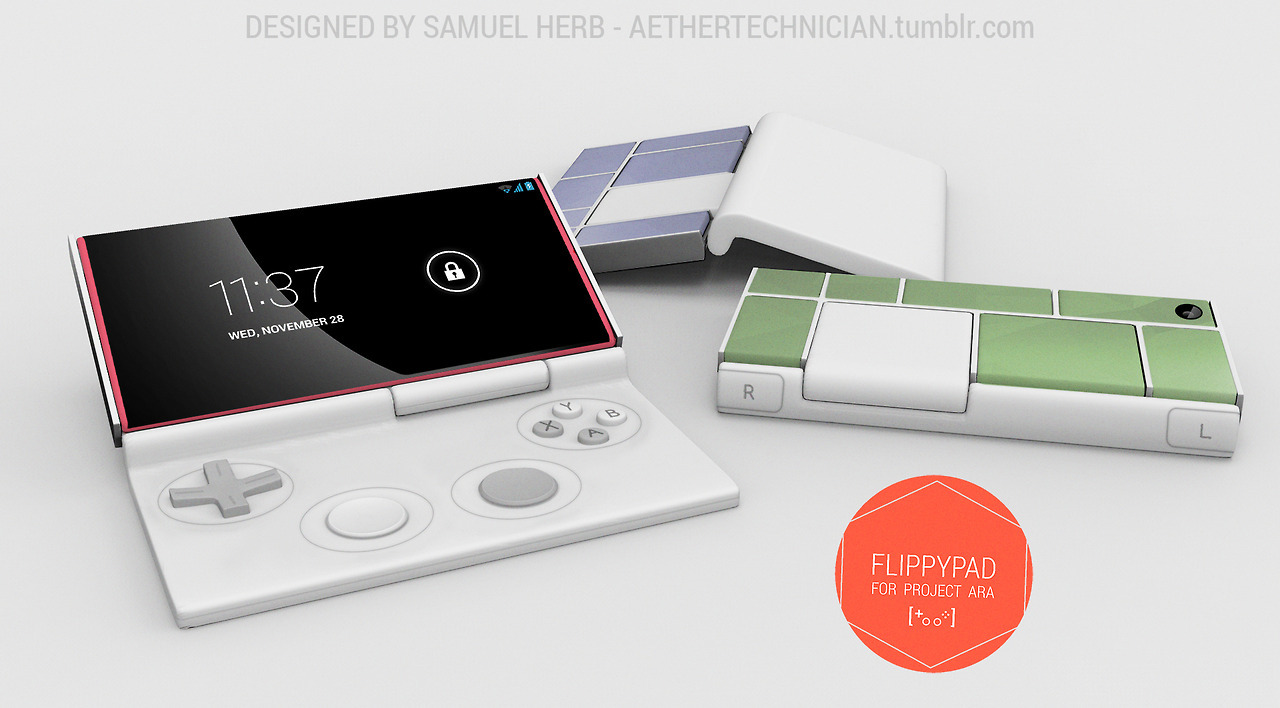
The concept of the module with a gamepad
In 2015, rumors persistently insisted that in early 2016 Android will present the first working prototype of the Ara modular smartphone. On May 20, it was officially announced at the conference that those waiting would have to wait a few more months. And the concept that Ara was so proud of to this day is a thing of the past - the replacement of the processor unit and display for a general upgrade.
Officially, only the back part, where you can connect a camera, an additional display or speakers, will now give in to alteration. And this, as they say, is a completely different story.
Not far from the topic of Google, it is also worth noting the success of the company in the field of creating a home assistant. At the same conference, the Google Home product was presented, which will be a worthy response to the already extremely popular Amazon Echo in North America. This is a small voice-activated desktop hub that connects all home network devices together, and is also compatible with some popular applications, such as Uber or Wikipedia.
It is logical that the assistant from Google, which has been used on mobile platforms for several years, has received a number of important improvements and will certainly surpass Echo in functionality. The only question is whether the development will be competitive in the United States in order to reach Europe and Russia?
Amazon, by the way, also decided to compete with Google, and to create a competitor to one of the most powerful services of our time - Youtube. To attract new authors of interesting videos is supposedly, of course, opportunities to earn.
In addition to including standard commercials before and after your work, you will also be offered options for interacting with Amazon Prime subscribers (earning by streaming time, attracting subscribers, etc.), and $ 1 million will be allocated every month as a reward to the authors of the 100 most popular videos. In general, long live healthy competition.
For the 2020 Olympic Games, the Japanese authorities decided to prepare a gift for the guests and launch a taxi without drivers in the city. Of course, while all this is at the stage of approval of the project, however, the details are also known. Firstly, for any offenses and accidents the transport company providing these cars will be responsible (in this case, however, the regulatory function of the state is not entirely clear). Secondly, the movement and actions of all cars will have to be controlled by operators.
In general, it turns out such a robotic system that they want to implement, but no one trusts it. And rightly so: Skynet is not asleep.

The scope is already understandable
While top manufacturers compete in the opportunity to present the first serial smartphone with a flexible screen, the University of Queens, Ontario, Canada, went a little further, introducing Holoflex. Yes, this is also a flexible smartphone with a 1920x1080 touchscreen, created using FOLED technology, a Qualcomm Snapdragon 810 processor, 1.5 GHz, 2 GB of RAM and other average stuffing.
But there is a feature in it - it gives out a holographic image. The 3D effect from almost any point of view is ensured through the use of 12-pixel blocks and 16 thousand fisheye microlenses. Image quality leaves much to be desired, but the effect is really amazing.
Surely you heard the story of a lawsuit between Apple and the US Department of Justice for the right of the authorities to open the iPhone on demand, thereby violating private rights. Of course, the "apple" court lost, eventually decently updating the safety rules.
The most annoying innovation (and not having anything to do with the initiating incident) is the need to enter a password if Touch ID has not been used to unlock the last 8 hours. That is, in fact - every morning.
Earlier this month, many media outlets were born with joyful news: the legendary Nokia is returning. Yes, very soon we will see Android-smartphones under the brand name of the famous Finnish brand again, only from Nokia there will only be a name.
In fact, this is again the tricks of Microsoft, which created a subsidiary of HMD, and the well-known name is necessary for quick introduction to the market. Well, one can only hope that at least the HMD will worry about quality.

Band 2
Some features of the new Microsoft Band 3 fitness bracelet got into the network. In addition to improved battery consumption and increased productivity, the device also has a UV and barometric sensor. Thanks to them, the user now knows when to apply sunscreen, when to drink water, and when to turn towards the house due to pending clouds. In addition, you can map your route with stops and attractions.
The IBM Security team behind the world-famous AI called Watson seems to have found a way to speed up its training, at least in cybersecurity.
For this, a one-year contract was concluded with 8 universities in the USA and Canada (California Polytechnic in Pomona, Penn State, Massachusetts University of Technology, New York University and the University of Maryland in Baltimore, New Brunswick, Ottawa and Waterloo). During this time, Watson must study over 15 thousand documents, including reports on viruses and threats, hacking strategies, phishing and other attempts at virtual crimes.

Probably. This invention is not in the near future, but Google has seriously thought about how to introduce Android directly into the human eye and create an electronic alternative to lenses and glasses. This is what the patent filed by the company at the USPTO says. The exact operation algorithm is not described, only the reaction of the device to the eye focus is known, and also that an external antenna will be used for operation.
But the patent describes the implantation procedure: in short, the device will be surgically installed together with the capsule, which after the operation begins to dissolve, and the contained “glue” will tightly attach the gadget to the pupil. One can only hope that this is a free fantasy of the developers, and tomorrow the whole world will not go to see a doctor to see completely new dreams.
Sunny fire
Last week, a fire broke out in California at one of the largest solar power conversion plants in the world. Due to a computer error, a number of mirrors were located with deviations, a concentrated beam hit the cable system of the tower, which led to a small fire. So much for safe energy.
Ara returns and disappoints
The concept of the module with a gamepad
In 2015, rumors persistently insisted that in early 2016 Android will present the first working prototype of the Ara modular smartphone. On May 20, it was officially announced at the conference that those waiting would have to wait a few more months. And the concept that Ara was so proud of to this day is a thing of the past - the replacement of the processor unit and display for a general upgrade.
Officially, only the back part, where you can connect a camera, an additional display or speakers, will now give in to alteration. And this, as they say, is a completely different story.
Google settles in homes
Not far from the topic of Google, it is also worth noting the success of the company in the field of creating a home assistant. At the same conference, the Google Home product was presented, which will be a worthy response to the already extremely popular Amazon Echo in North America. This is a small voice-activated desktop hub that connects all home network devices together, and is also compatible with some popular applications, such as Uber or Wikipedia.
It is logical that the assistant from Google, which has been used on mobile platforms for several years, has received a number of important improvements and will certainly surpass Echo in functionality. The only question is whether the development will be competitive in the United States in order to reach Europe and Russia?
Rival Youtube
Amazon, by the way, also decided to compete with Google, and to create a competitor to one of the most powerful services of our time - Youtube. To attract new authors of interesting videos is supposedly, of course, opportunities to earn.
In addition to including standard commercials before and after your work, you will also be offered options for interacting with Amazon Prime subscribers (earning by streaming time, attracting subscribers, etc.), and $ 1 million will be allocated every month as a reward to the authors of the 100 most popular videos. In general, long live healthy competition.
Japanese drones
For the 2020 Olympic Games, the Japanese authorities decided to prepare a gift for the guests and launch a taxi without drivers in the city. Of course, while all this is at the stage of approval of the project, however, the details are also known. Firstly, for any offenses and accidents the transport company providing these cars will be responsible (in this case, however, the regulatory function of the state is not entirely clear). Secondly, the movement and actions of all cars will have to be controlled by operators.
In general, it turns out such a robotic system that they want to implement, but no one trusts it. And rightly so: Skynet is not asleep.
Flexible and holographic
The scope is already understandable
While top manufacturers compete in the opportunity to present the first serial smartphone with a flexible screen, the University of Queens, Ontario, Canada, went a little further, introducing Holoflex. Yes, this is also a flexible smartphone with a 1920x1080 touchscreen, created using FOLED technology, a Qualcomm Snapdragon 810 processor, 1.5 GHz, 2 GB of RAM and other average stuffing.
But there is a feature in it - it gives out a holographic image. The 3D effect from almost any point of view is ensured through the use of 12-pixel blocks and 16 thousand fisheye microlenses. Image quality leaves much to be desired, but the effect is really amazing.
New Apple Security Rules
Surely you heard the story of a lawsuit between Apple and the US Department of Justice for the right of the authorities to open the iPhone on demand, thereby violating private rights. Of course, the "apple" court lost, eventually decently updating the safety rules.
The most annoying innovation (and not having anything to do with the initiating incident) is the need to enter a password if Touch ID has not been used to unlock the last 8 hours. That is, in fact - every morning.
Scam with Nokia
Earlier this month, many media outlets were born with joyful news: the legendary Nokia is returning. Yes, very soon we will see Android-smartphones under the brand name of the famous Finnish brand again, only from Nokia there will only be a name.
In fact, this is again the tricks of Microsoft, which created a subsidiary of HMD, and the well-known name is necessary for quick introduction to the market. Well, one can only hope that at least the HMD will worry about quality.
Microsoft Band 3
Band 2
Some features of the new Microsoft Band 3 fitness bracelet got into the network. In addition to improved battery consumption and increased productivity, the device also has a UV and barometric sensor. Thanks to them, the user now knows when to apply sunscreen, when to drink water, and when to turn towards the house due to pending clouds. In addition, you can map your route with stops and attractions.
Watson goes to university
The IBM Security team behind the world-famous AI called Watson seems to have found a way to speed up its training, at least in cybersecurity.
For this, a one-year contract was concluded with 8 universities in the USA and Canada (California Polytechnic in Pomona, Penn State, Massachusetts University of Technology, New York University and the University of Maryland in Baltimore, New Brunswick, Ottawa and Waterloo). During this time, Watson must study over 15 thousand documents, including reports on viruses and threats, hacking strategies, phishing and other attempts at virtual crimes.
Google will replace Glass with an implant
Probably. This invention is not in the near future, but Google has seriously thought about how to introduce Android directly into the human eye and create an electronic alternative to lenses and glasses. This is what the patent filed by the company at the USPTO says. The exact operation algorithm is not described, only the reaction of the device to the eye focus is known, and also that an external antenna will be used for operation.
But the patent describes the implantation procedure: in short, the device will be surgically installed together with the capsule, which after the operation begins to dissolve, and the contained “glue” will tightly attach the gadget to the pupil. One can only hope that this is a free fantasy of the developers, and tomorrow the whole world will not go to see a doctor to see completely new dreams.