May 25, 2016 at 14:05
How a vacation trip changed the life of Salesforce founder Mark Benioff
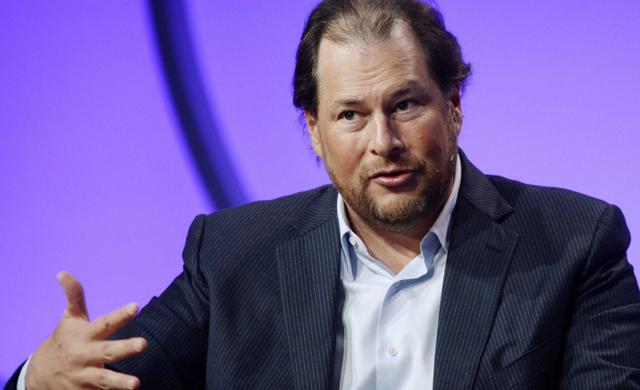
Mark Benioff is a famous California entrepreneur, a successful businessman, a billionaire, the founder of one of the largest cloud providers and developers of CRM systems Salesforce.com . Since August 2012 - Member of the Board of Directors of Cisco .
As it turned out, the creation of special systems for customer relationship management (CRM) is a profitable business. Mr. Benioff “assigned” $ 31.3 million to himself, his subordinates receive an average of $ 151 512. In other words, $ 207 of the remuneration to the CEO falls on the $ 1 salary of a programmer.
Benioff owns a 5% stake in Salesforce with a valuation of $ 56.06 billion. His fortune is estimated at $ 4.2 billion.
May 22, 2015 became aware of the negotiations Microsoftand Salesforce to purchase it, but the parties did not agree on a price. Microsoft offered about $ 55 billion for Oracle’s largest cloud software maker. Mark Benioff raised the price to $ 70 billion.
Interest in Salesforce is also shown by Oracle , IBM and SAP .However, in all likelihood, he expects buyers to offer no more. Benioff still does not intend to sell the company: he later said that he wants to make crucial decisions in the company, and it is now that Salesforce is going through the most interesting period in its entire history.
Come from childhood
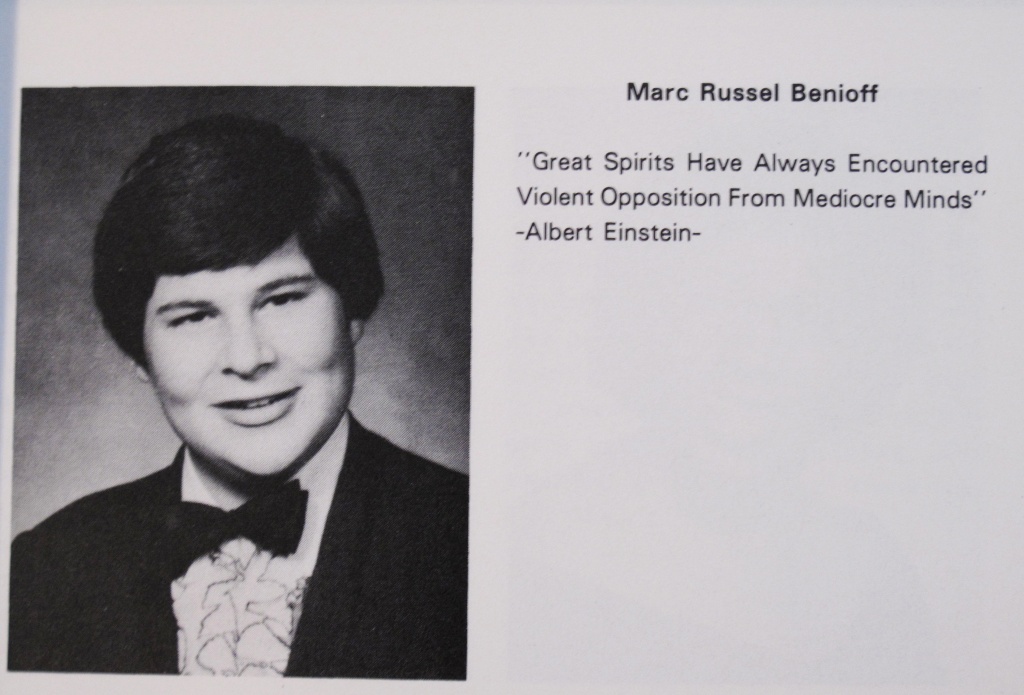
Marc Benioff was born on September 25, 1964 in San Francisco.
Mark began to get involved in computers in his youth. From the age of 14, he did not spend hours on the windows with computers in the RadioShack store. After all, he did not have his own home computer then. However, this did not stop Mark from writing at school a few games for the Atari system, which were sold in a good circulation and allowed him not only to get the new Toyota, but also to pay part of the college tuition.
At the University of Southern California, Benioff showed himself no less brightly. After studying, Mark was awarded a bachelor's degree in science and art, as well as an honorary MBA.
Career
In his student years, Benioff changed many jobs - he worked in the field of trade, marketing and other fields.
But the very next day after receiving the diploma, he was hired by Oracle, where at first he only received calls from customers. Mark quickly became one of the best sales managers; by the age of 23 he had earned the title “Rookie of the Year”. By age 26, he rose to the post of vice president. Oracle noted that he was the youngest vice president of the company.
In his role as vice president, Benioff was responsible for many things, from product development to marketing and sales, but was known more for his “big ideas” and for his ability to launch new products.
Once he organized the launch of a very specific software designed for a narrow circle of clients. Preparation for the presentation of new items was carried out in conditions of increased secrecy. Short messages for the press and partners contained only vague hints of the mysterious "X-Project", and before the start of the press conference, all participants in the event were asked to sign non-disclosure papers and wear special badge bracelets.
As a result, the audience nearly stormed the gates of the San Francisco Convention Center, where the premiere of the product took place. Elevators and escalators were barely able to cope with crowds of people who wanted to attend the presentation, and Benioff himself was met by an intrigued audience with a standing ovation.
However, the product itself hardly deserved such a rapid start to sales.
Former Oracle CEO Ray Lane was convinced that Mark’s good ideas were “offset” by the low revenues that his projects brought, as well as the lack of due respect for the company's policies and its corporate culture.
Evil tongues claimed that Benioff spent more money on merchandising like t-shirts and baseball caps than he could bring in sales of products he was selling. In the end, Larry Ellison formed a separate department for his pet, where he could carry out any crazy projects.
Salesforce: The Beginning
In 1998, taking a vacation, Mark went on a six-month tour of India and Hawaii. He returned as another person who completely revised his life values. “It was not in Judaism, not in Buddhism or Oracle,” Benioff recalls. - Rather, in my understanding of personal leadership - within myself, my family, company and the world as a whole. I wanted to show everyone something new. ”
Mark founded Salesforce in March 1999 with Parker Harris, Dave Mölenhoff, and Frank Dominguez. The initial idea was to specialize in the CRM systems market and provide access to them exclusively as a subscription service.
It is still unclear who the true author of the project was: he himself, Allison, or someone else from the then directors of Oracle. Mark has repeatedly claimed that he never tried to ascribe to himself all the laurels of the discoverer. But once he added: "Actually, it was my idea."
Be that as it may, Larry Ellison suggested that Mark try to implement a project outside of Oracle. And in March 1999, Benioff launched the first Salesforce office - in an empty apartment, directly opposite his own. He had nothing to lose. If the project did not succeed, Mark could return to Oracle at any time. In addition, Ellison also acted as a venture investor, allocating about $ 2 million to launch the company - in addition to the $ 6 million invested by Benioff himself. So, a young company started from a very high position.
Thus, the initial investors of the project were Benioff, Marc Iscaro, Larry Ellison, Helsi Minor, Magdalena Yesil, Igor Sill, as well as the investment company Geneva Venture Partners. The year before the dot-com crash, in March 1999, the company registered with the name Salesforce.com.
The main reasons that the company initially used to convince customers to subscribe to Salesforce.com services were: the possibility of outsourcing information technology, protection from failures and prompt technical support (since all hardware resources are located in the physical accessibility zone of the supplier), reducing the total cost of ownership of information technology.
Salesforce.com itself provides significant resource savings due to multi-tenancy - support for multiple instances of applications on one instance of platform software.Mark hired three young programmers who were commissioned to develop the platform. The idea did not capture them too much, but Benioff’s connections in Silicon Valley seemed very attractive to them in terms of receiving future orders.
The task was quite simple - to write software for the sales department, which would not only be accessible via the Internet, but also as simple as the Amazon or Yahoo interface .
It turned out to be much more difficult for employees to understand Benioff himself, capable of very extravagant actions. The chef either hung photographs of the Dalai Lama around the office, then invited his yoga coach to meetings, then came to important events in Hawaiian shirts, and trusted his girlfriend to conduct interviews with new employees.
Despite such a “creative” atmosphere, by the summer of 1999 the working version of the platform was ready, and Benioff temporarily left all things to Oracle - however, without burning bridges. Soon, Salesforce.com got its first hired CEO, former Oracle employee John Dillon.
Crucial moment
But soon a corporate alma mater, Oracle, suddenly flared up with interest in the new market. The software giant has launched a similar product into development. Benioff was indignant and stopped talking with Ellison, forcing the latter to leave the Salesforce board of directors. And after some time, conflicts began between Benioff and Dillon, who also left the project - transferring all the reins of government to Mark. Observers began to doubt the success of the case. The extravagant methods of Benioff were not liked by many, especially in light of the fact that healthy conservatism in the B2B sector is often much appreciated.
Meanwhile, Benioff continued to amaze the public. He not only explained to customers that his services are profitable and of high quality, but also mastered the role of a technology prophet, repeating everywhere his formula about the “end of software” (of course, traditional - also called “proprietary”). But most importantly, Benioff publicly stated that he would "put an end to Microsoft."
Of course, Microsoft exists to this day, but after three years the company's revenue exceeded $ 50 million, the number of customers exceeded six thousand, and Salesforce itself successfully entered an IPO in 2004.
Salesforce: today
Currently, Salesforce.com provides services and products, which are translated into fifteen languages of the world, to 43,600 customers and have more than 1,000,000 subscribers.
Under the name Force.com, the company provides a PaaS platform for self-development of applications, and under the brand Database.com - a cloud-based database management system. In addition, the company has two internal projects - Sales Cloud and Service Cloud.
The functional part of the CRM-system for supporting sales processes is allocated by the company to the product under the name Sales Cloud. Subscription company sales specialists, using the Sales Cloud, maintain data about potential customers, interact with them, bill them, interact with other sales specialists, conduct marketing campaigns, analyze and segment the customer base.
Service Cloud is a functional part of CRM to provide customer service and support processes. The system allows subscription companies to build a self-service and support site for their customers, support specialists get the opportunity to interact with customers, maintain knowledge bases (Salesoforce.com uses the term knowledge as a service for this functionality - Russian knowledge as a service), managers of the subscription company get tools for analyzing the efficiency of service processes
Force.com is the software platform on which Sales Cloud and Service Cloud are developed, provided to subscribers for self-development of applications and extensions for the Salesforce.com CRM system. For development, users use their own Java-like language Apex and their own design tool Visualforce with an output format based on XML, which provides the generation of custom HTML / AJAX and Flex interfaces. The platform is provided exclusively by subscription, as part of the PaaS concept.
Since 2011, under the brand and corresponding domain name Database.com, the company has been offering subscribers a cloud-based database management system, which is also a data processing layer of the Force.com platform. At the same time, customers can use the databases deployed on this service, both as a data layer for applications on the Force.com platform, and as a whole for third-party applications.
Salesforce.com declares the elasticity of data processing using DBMS in the sense that in case of an unexpected increase in the load on the database, it will immediately be provided with the necessary computing resources.
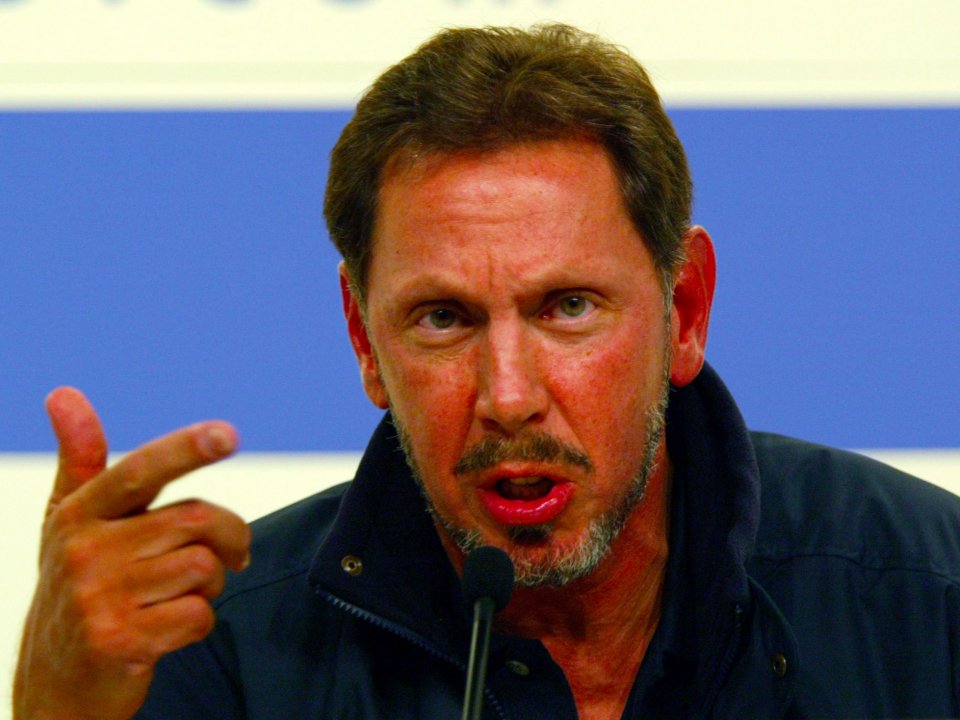
In 2009, Oracle founder and CEO Larry Ellison (the first Salesforce.com investor to provide Benioff with $ 2 million of his own funds) ironically commented on the innovativeness of Salesforce.com solutions and the company's cloud rhetoric. He said that their technological stack is completely built on completely traditional solutions - Oracle Database and Oracle Fusion Middleware.
Save Cisco
On August 2, 2012, Cisco announced the inclusion of Mark Benioff on the company's board of directors. Cisco is confident that joining the Benioff team is in good agreement with the new development strategy, which includes a focus on providing cloud services.
As part of the implementation of this strategy, the head of the company, John Chambers, has been pursuing a policy of “shake” and rotation of top management over the past year. In 2012, the company announced its intention to reduce 2% of its staff (about 1300 jobs).
John Chambers hopes that Mark Benioff will be useful to Cisco for his ideas in the field of cloud computing and social projects.
Charity
In 2000, Mark Benioff founded the Salesforce philanthropic foundation, through which he provides substantial support to many companies and organizations.
In 2014, Mark launched a campaign called SF Gives, which challenged technology companies and urged them to raise $ 10 million in 60 days to implement non-profit programs in San Francisco.
Benioff also urged other corporations to follow his 1/1/1 model, according to which a company should donate 1 percent of its capital, 1 percent of its resources and 1 percent of its employees' time to charity.
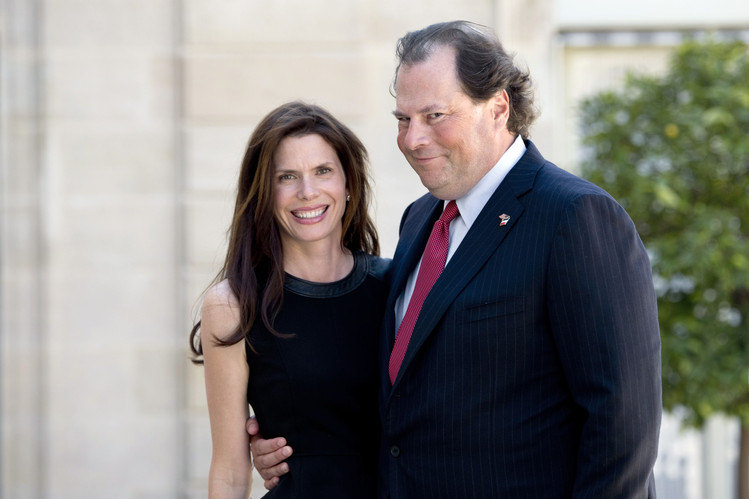
Moreover, he and his wife Lynn personally donated $ 200 million to the University of California San Francisco Children's Hospital.
Hobby
Marc Benioff writes books about business.
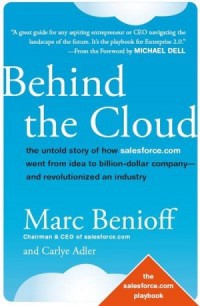
In addition, the billionaire spends a lot of time studying Oriental literature. One of his favorite books is Sun Tzu's The Art of War.