February 28, 2016 at 07:26
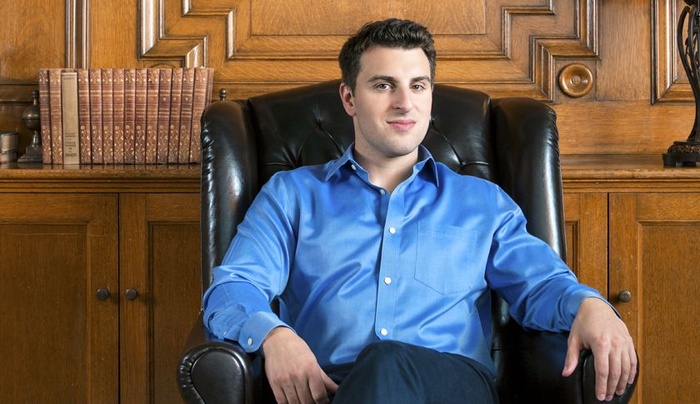
Business person: Airbnb founder Brian Chesky, who used mattresses instead of a “financial pillow”
The new column “Business Person” tells the readers of Megamind about the stories and facts surrounding the most prominent IT entrepreneurs from around the world, the value of the companies under whose management exceeds any reasonable limits. We will not be limited only to the “new wave" of businessmen, and we will talk about those who are usually called the "old school."
Today, a close-up is the life and history of Brian Cesky, the founder of the online search and rental site Airbnb , who became a multimillionaire thanks to a pair of air mattresses.
In 2015, Forbes included Cesky on the list of wealthiest American entrepreneurs under the age of forty. In the same year, he was included in the list of 100 most influential people according to Time magazine.
Childhood, education, hobbies
 Brian was born and raised in Niskayune (NY) in a family of two social workers. Cesky has been obsessed with his hobbies since childhood. “He never did anything superficially, even at a very young age,” says his mother, Deb Chesky. Cesky's first hobby was hockey.
 After he was once presented with a full hockey kit for Christmas, he insisted that he would sleep with equipment - shields, skates, a stick and a helmet. Then his love of drawing and designing Nike sneakers grew into a passion for art. He could disappear in local museums for hours, painting reproductions of paintings.
His leadership potential was revealed at the design school in Rhode Island, where he was the captain of the hockey team. At the graduation ceremony, he was chosen to give a speech. Cesky set himself the task, studied all the found examples of performances for the ceremony; and so as not to be very embarrassed, he went on stage the night before and watched the staff place 6,000 chairs one after another.
"Who else is capable of this?" - wonders Deb Chesky.
experience
After graduating, Gebbia, a friend and classmate of Cesky, said that he had a hunch that they would open their own business together. “Before you get on the plane, I have to tell you something,” said Gebbia. “One day we will open our company, and they will write a book about it.” Cesky first moved to Los Angeles to become an industrial designer, but then decided to join Gebbia in San Francisco.
Looking ahead, we note that Cesky did not really have a chance to work in his specialty - he was destined for a different fate.
Entrepreneurial experience
Starting in any field is always difficult. And a novice entrepreneur also puts his team at risk. But Cesky had no choice but to plunge into managerial affairs; the company had no time to wait. He began to learn to conduct business in practice and from an absolute “zero”. Chesky says he studied in two ways: 1) trial and error; 2) learned to delve into the subject quickly and narrowly, using a method called "dig to the source."
Instead of sitting on each aspect of a separate topic, Chesky found that it would be much more effective to spend time looking for one proven source in this area, and then immediately turn to a knowledgeable person. “Finding the right source makes it faster,” he says.
The first “sources” of Cesky and his partners were their first financial advisors, technical entrepreneurs like Michael Sible and Graham from Y Combinator. Cesky used business heroes such as Steve Jobs or Walt Disney as biography sources. His main book resource on management techniques turned out to be Andy Grove’s book, Highly Effective Management. To learn the basics of hospitality, he went to the Cornell Hospitality Quarterly, a study journal published by the Cornell School of the Hotel Management University.
As the company became known, the sources of Cesky also became more famous. Soon followed by meetings with Mark Zuckerberg of Facebook, Jeff Bezos of Amazon and John Donahaw of eBay. He asked Bob Eager and Mark Benioff for advice to find out how they make their subordinates do more. From Sheryl Sandberg of Facebook, he learned practical tips on how to scale a company internationally.
From communication with former CIA head George Tenet, Chesky learned the importance of the idea of “walking in the park” and Walt Disney’s theory that you need to be a public manager. Chesky said that Tenet taught him to pay attention to the importance of sending handwritten letters to his staff. The former head of the CIA told him that the most significant moments in his work occurred when he saw that the card he had written for an employee many years ago still hangs above his desk. And of course, it was he who shared the theory of the ship with Cesky.

Ship Theory
“Airbnb is like a huge ship. And as CEO, I am the captain of the ship. But in fact, I have two posts: firstly, I have to take care of everything below the waterline; about everything that can pull the ship to the bottom. "
“Secondly,” he continues, “I should be focused on two or three more areas that are of great interest to me. I focus on them, not because they are below the waterline, but because I can bring something useful and unique to them. They really captivate me. If things go uphill in these areas, then the company will change for the better. ” He is responsible for three areas: product, brand and culture. “These three things are familiar to me,” he says. “I entrust other areas to my leaders and try to infiltrate them only if holes appear below the waterline.”
Business idea and business partners
In October 2007, Cesky and Joe Gebbia, two unemployed graduates of the Rhode Island School of Design, were aground and stupidly staring at the approaching rent payment date. Then they came up with the idea of pulling Gebbia's air mattresses out of the pantry and selling a sleeping place in their apartment in the midst of a popular exhibition of designers. They called the shelter Air Bed and Breakfast ("Air bed and breakfast"). The Continental Breakfast consisted of Pop-Tarts frozen cookies. That same weekend, three people stayed overnight. The idea was to draw attention to design blogs.
A few months later, their development friend Nathan Blecharzik joined Cesky and Gebbia as the third co-founder, and in August 2008 a website called Airbedandbreakfast.com saw the light of day. It has become an online platform for people who rent a bed in their home. Cesky naturally aspired to the role of leader, since Gebbia occupied design and Blecharzika occupied technology.
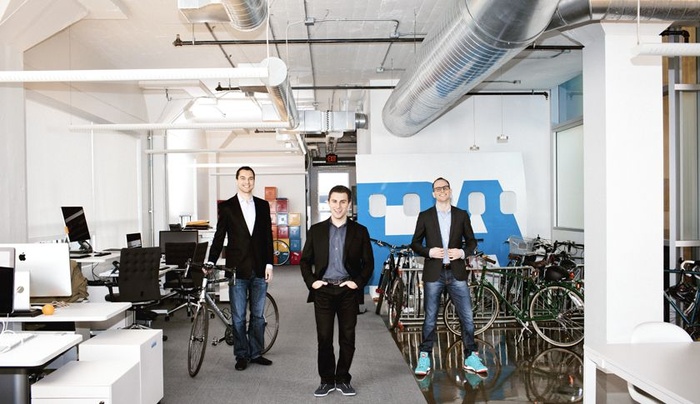
Many experts and luminaries of Silicon Valley were initially extremely skeptical about the concept of Airbnb. But the idea was widespread, and the following spring the founders were accepted into the prestigious startup incubator Y Combinator, which was opened by venture capitalist Paul Graham.
Then they reduced the name to Airbnb and expanded, offering not only a place, but also separate housing, including houses and apartments, castles, boats, tree houses. In November 2010, the trio received their first round of venture capital investments. Today, Airbnb estimates that it employs 2,000 employees from 21 offices worldwide, offering its services in 34,000 cities.
Crisis period
Cesky learned the most important leadership lesson when the company overcame its biggest crisis. He came in June 2011, when a house rented in San Francisco was hacked and looted by tenants. The hostess did not recognize the fact that the company did everything in its power on the blog. While Airbnb lay low, there was a buzz around the story.
At Airbnb, everyone had different opinions about how to deal with the problem. “I had a difficult period, and I came to the conclusion that I can’t just pick up and stop worrying about certain things, then my priorities completely changed,” Cesky says. “Basically, I told myself that I need to stop worrying about the consequences and think about the root cause.” He wanted to apologize, even if it hurt the company.
Chesky composed a letter written in harsh terms, assuming responsibility. “Over the past four weeks, we have broken firewood,” he wrote. He not only apologized, but also said that the company would provide $ 50,000 insurance. “All this is contrary to the advice of others,” Cesky said. - People around said that they need to thoroughly discuss the problem, check everything from and to, and I said "No, we will do it, like this." In times of crisis, you have to take one direction: either right or left. ”
Sharing economy
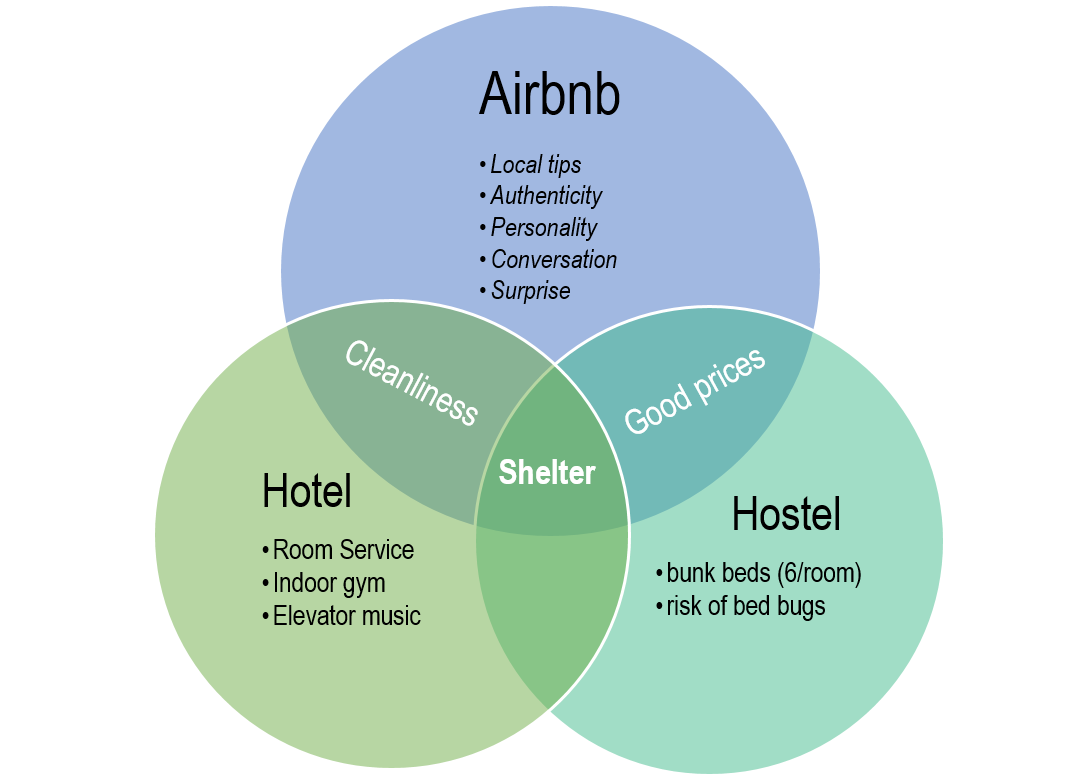
The Airbnb team has become a pioneer in providing services for sharing, and Cesky himself has become one of the main ideologists of the sharing economy (or “shared economy”). Since its founding in 2008, a startup has gone from a simple site without searching, booking, reviews or online payments to an effective platform for providing rental services in 192 countries. Now Airbnb is a company with a capitalization of more than $ 25 billion.
The essence of a shared economy is that the owners of material resources turn to online platforms in order to capitalize the unused part of their property, and consumers are more likely to rent what they need from individuals than to buy or rent from companies.
Dozens of startups using this trend will go broke, because the rule “winner gets it all” applies to sites of this kind. And the winners will have to defend their interests in the fight against regulators. For example, Airbnb has been fighting for several years to legalize its activities in New York and San Francisco.