August 14, 2015 at 02:36
The growing empire of Ilona Mask feeds on billions of government subsidies
- Transfer
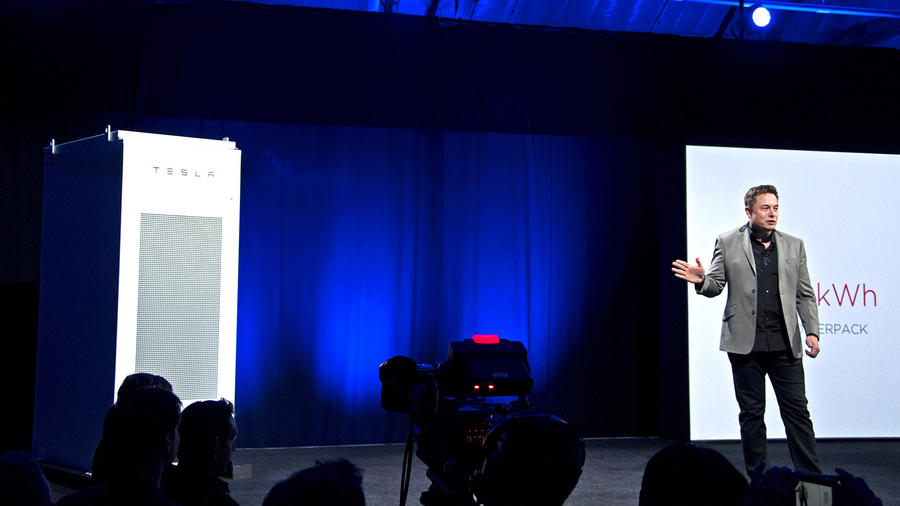
Elon Musk, an entrepreneur from Los Angeles, built a multi-million dollar empire thanks to electric car makers, solar panels and space rockets.
And he built them with the help of multi-billion state subsidies.
Tesla Motors Inc., SolarCity Corp. and Space Exploration Technologies Corp., known as SpaceX, in the amount received about $ 4.9 billion of support from the state, according to data collected by The Times. And this figure characterizes the entire activity of his empire - a public-private financing model based on startups with unguaranteed profitability.
“It definitely goes where there is public finance,” says Dan Dolev, an analyst at Jefferies Equity Research. “It's a great strategy, but someday the state will stop financing you.”
The estimated amount includes grants, tax credits, assistance in building factories, forgiven loans and air pollution quotas sold by Tesla. They also include tax deductions and refunds to buyers of solar panels and electric vehicles.
The only question is whether these companies are moving towards self-sufficiency, according to Dolev, and whether they will be able to cut development costs before this recharge ends.
Tesla and SolarCity are reporting another loss, but their stock is still up to par. Only Musk’s share in firms is worth more than $ 10 billion. SpaceX is not a public company, so its performance has not been disclosed. Musk and his investors enjoy the pleasant side of government subsidies, and taxpayers carry the whole burden.
The public will be able to receive a reward in the form of reducing harmful emissions - but only if the solar panels and electric vehicles get into the mass market. So far, these are still niche products for the rich.
The main figures for subsidies were published, but their full size was not disclosed, since it was being collected gradually, and through different levels in the government.
New York State Spends $ 750 Million To Build A SolarCity Solar Panel Factory In Buffalo. California-based San Mateo will lease them for $ 1 per year. And taxes for this production will not be paid for a decade - despite the fact that the amount of taxes could be $ 260 million. The
government also provides grants and tax deductions to cover 30% of the cost of installing panels. SolarCity reported receiving direct grants worth $ 497.5 million. But this is not the full amount of support.
According to reports, SolarCity has installed 217,595 customers since 2006. Moreover, the average market value of such a system is $ 23,000. It can be estimated that these grants cost the government $ 1.5 billion.
Nevada agreed to provide Tesla with $ 1.3 billion in tax incentives to build a giant factory near Reno. In addition, the company raised more than $ 517 million as a payment for the sale of emission allowances to car manufacturers. This system, existing in ten states, requires car manufacturers to purchase quotas if they do not sell enough cars with zero emissions. Since all Tesla machines do not make emissions, the company simply trades these loans.
SpaceX received about $ 20 million in economic development subsidies from Texas, on which it builds its spaceport there, and won tenders for contracts from NASA and US Air Force for a total of $ 5.5 billion.
Of course, any company that deals with solar panels or electric cars can receive such subsidies. But subsidies for Mask companies are gigantic in size when compared with the size of companies and how much these companies depend on them.
“Government support is the main part of all three companies, without them they simply would not have existed,” said Mark Spiegel, hedge fund manager at Stanphyl Capital Partners, who is playing a downgrade on Tesla. Over the past two years, the company's shares have grown by 157%.
According to Ashley Vance, author of Elon Musk: Tesla, SpaceX and the Search for an Amazing Future, Musk is so skilled at getting government subsidies that the states are competing against each other for the right to give him money. “After the rise of his star, each state wants to have its own piece of Elon Mask.”
And before that, he raised a good amount of $ 1.5 billion after buying by EBay Inc. PayPal payment company, in which Musk owned an 11% stake. With the money from the sale, he founded SpaceX, invested and took leading positions in Tesla and Solar City. He is now the CEO of Tesla and SpaceX and chairman of the SolarCity Board of Directors, and owns parts of all three companies. This is 27% Tesla and 23% SolarCity.
Unpleasant conversations
Revenues of $ 1.3 billion from the Nevada battery factory were preceded by a year of very difficult negotiations. At the end of 2013, Tesla invited officials in charge of economic development in seven states to its Fremont car factory. After the tour, the directors of Tesla told them their plan to build the largest battery factory in the world, and invited to participate in financing.
Nevada offered standard tax incentives, which in this case would be equal to $ 600-700 million, said Steve Hill, director of development for the state. But Tesla directors wanted so much more. They requested a prepayment of $ 500 million. It came to communication in elevated tones.
As a result, an agreement was reached when Hill met in Palo Alto with Tesla Business Development Director Dyarmuid O'Connell, a former state management official. They agreed to issue tax loans in the amount of $ 195 million, which the automaker could sell. To do this, the state had to cut tax exemptions for filmmakers and cancel such exemptions for insurance companies. Officials considered that these expenses would pay off due to the appearance of 6,000 new jobs.
In a report prepared by officials, it is estimated that the economy due to this project will grow by $ 100 billion over 20 years, although some economists criticize these figures.
$ 750 million factory
It has also been successful for Musk to receive subsidies for the SolarCity factory in Buffalo. Currently, she buys a lot of panels in China, but soon promises to enter the production of its own panels. For this, the company will receive investments for the construction of workshops in the amount of $ 750 million and will spend another $ 150 million to start work at the factory.
By the time it opened in 2017, it should become the largest solar panel factory in the Western Hemisphere. New York State officials consider the investment to be profitable because the factory will have to create 3,000 jobs, and replace the long-standing steel mill.
SpaceX is more dependent on government contracts than subsidies. However, she also received her benefits on the device cosmodrome. The infusion will amount to $ 15 million from the state and $ 5 million from local governments.
Key help
Tesla and SolarCity factories urgently need state money to lower the cost of product development and production. At the same time, time is running out - some of the largest subsidies expire. 30% tax incentives for installing solar panels in 2017 will turn into 10% for commercial organizations, and completely disappear for private households.
Tesla car buyers also receive a $ 7,500 tax credit and a $ 2,500 return from the state of California. Officials have set a limit for these discounts on 200,000 cars, and Tesla has already sold a quarter of that amount. In total, buyers received $ 284 million in tax benefits and $ 38 million in returns.
Now California has adopted, but has not yet begun to apply, a law under which not all buyers, but only buyers with a certain income level, will receive $ 2500 tax benefits. Competition on the part of car manufacturers is also running out - if they start to produce more cars that do not make harmful emissions, they will buy less quotas.
In general, the government supports electric cars and solar panels in the hope of their wide distribution, and, as a result, reduction of carbon emissions. True, Musk promised much more active progress in this venture. In 2008, he wrote on his blog that after the production of an expensive sports electric car (which is no longer for sale), "a sedan will be released, costing half the $ 89,000 that Tesla Roadster costs, and the third model will be even cheaper."
In fact, the second model sells for $ 100,000, and the third, which still doesn't appear, will cost about the same money. The price of the next, cheaper, may drop to $ 35,000 - $ 40,000 after subsidies - but this is still unknown.
Battery subsidies
Musk is now moving towards energy storage. During a noisy presentation of batteries for home and business on a concert stage to the music, Musk announced that one day such batteries would make the global energy network unnecessary.
He talked about his vision of inexpensive and clean energy, available in remote villages of underdeveloped countries, and in the homes of industrialized countries, which will be disconnected from conventional power networks. His Nevada factory will produce both Tesla cars and batteries.
But what he did not say about was the already reached agreement on subsidies in the amount of $ 126 million as a company developing energy storage technologies.