March 2, 2016 at 15:24
2nd of March. "Call Jake." History of NIC and RFC
“If you wanted a domain name, you came to Jake.”

There was a time when all the WhoIs, DNS, Google, GoDaddy functions were performed manually. And a girl nicknamed Jake did it.
- Hello, Jake, I want to register myself a symbolic.com domain name, I have a chocolate bar.
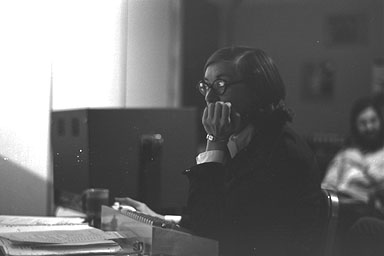
In 1969, Douglas Engelbart liked a librarian with the modest nickname “Baby” and he invited her to his place at the ARC ( Augmentation Research Center , sponsored by DARPA).
Jocelyn Elizabeth "Jake" Feynler (Eng. Elizabeth of Jocelyn Feinler ) was born in Wheeling, West Virginia and graduated from West Free State College (she was the first to attend college in the family).
Feinler went to graduate school in biochemistry at Purdue University, but because of the financial situation, she decided to postpone her dissertation defense for a year or two and went to work in the chemical data service at the American Chemical Society in Columbus, Ohio.
She worked with a lot of chemical data and became interested in systematization.
In 1960, Feinler found out about a job in California at the Stanford University Research Institute, her application was accepted. Initially, she was engaged in data collection and literature search at the institute.
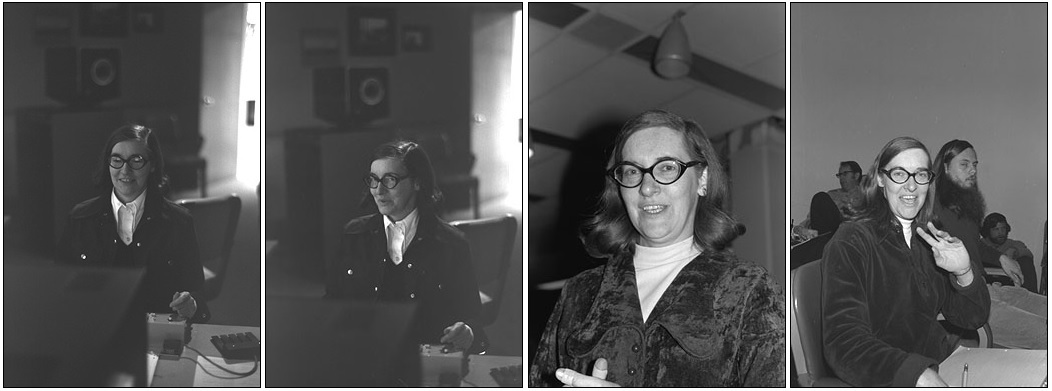
The first challenge for Elizabeth on Engelbart's team was to write a Resource Handbook for the first ARPANET demonstration at the International Computer Communication Conference.
By 1972, when the glorious team was developing the world's first Xerox Alto personal computer , it led the working group to create the new Network Information Center (NIC) for ARPANET.
The center gave users information about people, organizations (similar to the "yellow pages"), communication was carried out by regular mail and phone. Later, communication was carried out via e-mail via ARPANET nodes.
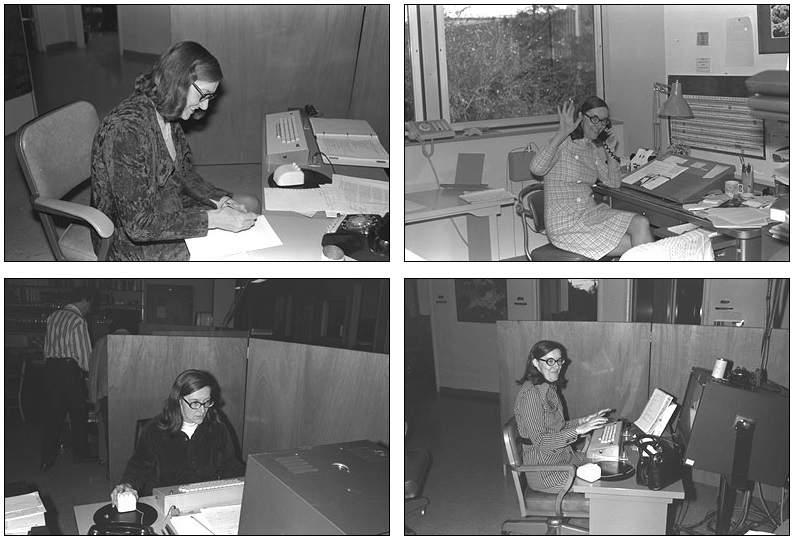
Feinler, along with Steve Crocker , Jon Postel , Joyce Reynolds and other members of the Network Working Group (NWG), developed the RFC (Request for Comments) , a series of numbered white papers containing technical specifications and standards for ARPANET and later for the Internet.
 The RFC format appeared in 1969 when discussing the ARPANET project.
RFC 1 was published on April 7, 1969 and was called “Host Software”.
The first RFCs were distributed in print form on paper in the form of regular letters, but already in December 1969, when the first segments of ARPANET were launched, documents began to be distributed electronically.
Most early RFCs were created at the University of California, Los Angeles and Stanford Research Institute.
From 1969 to 1998 the permanent and only editor of the RFC was John Postel . After his death, the Internet Society ( ISOC ) commissioned the Institute for Information Sciences to edit and publish the RFC. University of Southern California.
An overview of the history of the RFC for 30 years from 1969 to 1999. introduced in RFC 2555 .
In 1974, Elizabeth and the working group developed short text host names ( Host names on-line ).
In ARPANET, the host owner had to send an email to [email protected] to request an address. The HOSTS.TXT file was distributed by the NIC staff and manually installed on each host in the network to provide mapping between all network addresses.
Later, the research team worked on scaling and the WhoIs and DNS services took over the functions of the NIC.
Thanks Feinler there is a modern system of domain names (.com, .gov, .org, .mil).
In 1989, Feinler joined NASA at the Ames Research Center. She retired in 1996 and published the NIC story in 2010.. In 2012, she entered the Internet Hall of Fame.
Elizabeth article on WIRED
The Network Information Center and its Archives
Elizabeth in Stanford University Hall of Fame
Today is Elizabeth's birthday.
Together with Edison, we are launching the spring publication marathon.
I will try to get to the bottom of the source of IT-technologies, to understand how they thought and what concepts were in the minds of the pioneers, what they dreamed about, how they saw the world of the future. Why did they think about “computer”, “network”, “hypertext”, “intelligence amplifiers”, “collective problem solving system”, what meaning they put into these concepts, what tools they wanted to achieve the result.
I hope that these materials will serve as inspiration for those who are wondering how to go “from Scratch to Unit” (to create something that was not even mentioned before). I want IT and "programming" to cease to be just "coding for the sake of dough," and recall that they were conceived as a lever to changemethods of warfare, education, a way of joint activity, thinking and communication, as an attempt to solve world problems and respond to the challenges facing humanity. Something like this.
March 0 Seymour Peypert
March 1. Xerox Alto
March 2 "Call Jake." The story of the NIC and RFC
March 3 Grace “Granny COBOL” Hopper
March 4 Margaret Hamilton: “Guys, I'll send you to the moon”
March 5 Hedi Lamarr. And to shoot a movie in a naked movie and to shoot a torpedo at an enemy
on March 7 The magnificent six: girls who counted a thermonuclear explosion
on March 8 "Video games, I am your father!"
There was a time when all the WhoIs, DNS, Google, GoDaddy functions were performed manually. And a girl nicknamed Jake did it.
- Hello, Jake, I want to register myself a symbolic.com domain name, I have a chocolate bar.
In 1969, Douglas Engelbart liked a librarian with the modest nickname “Baby” and he invited her to his place at the ARC ( Augmentation Research Center , sponsored by DARPA).
Jocelyn Elizabeth "Jake" Feynler (Eng. Elizabeth of Jocelyn Feinler ) was born in Wheeling, West Virginia and graduated from West Free State College (she was the first to attend college in the family).
Feinler went to graduate school in biochemistry at Purdue University, but because of the financial situation, she decided to postpone her dissertation defense for a year or two and went to work in the chemical data service at the American Chemical Society in Columbus, Ohio.
She worked with a lot of chemical data and became interested in systematization.
In 1960, Feinler found out about a job in California at the Stanford University Research Institute, her application was accepted. Initially, she was engaged in data collection and literature search at the institute.
The first challenge for Elizabeth on Engelbart's team was to write a Resource Handbook for the first ARPANET demonstration at the International Computer Communication Conference.
Nic
By 1972, when the glorious team was developing the world's first Xerox Alto personal computer , it led the working group to create the new Network Information Center (NIC) for ARPANET.
“NIC looked like a prehistoric Google,” says Elizabeth. “People came to us for any question.”
The center gave users information about people, organizations (similar to the "yellow pages"), communication was carried out by regular mail and phone. Later, communication was carried out via e-mail via ARPANET nodes.
Feinler, along with Steve Crocker , Jon Postel , Joyce Reynolds and other members of the Network Working Group (NWG), developed the RFC (Request for Comments) , a series of numbered white papers containing technical specifications and standards for ARPANET and later for the Internet.
RFC
The RFC format appeared in 1969 when discussing the ARPANET project. RFC 1 was published on April 7, 1969 and was called “Host Software”.
The first RFCs were distributed in print form on paper in the form of regular letters, but already in December 1969, when the first segments of ARPANET were launched, documents began to be distributed electronically.
Most early RFCs were created at the University of California, Los Angeles and Stanford Research Institute.
From 1969 to 1998 the permanent and only editor of the RFC was John Postel . After his death, the Internet Society ( ISOC ) commissioned the Institute for Information Sciences to edit and publish the RFC. University of Southern California.
An overview of the history of the RFC for 30 years from 1969 to 1999. introduced in RFC 2555 .
WhoIs and domain names
In 1974, Elizabeth and the working group developed short text host names ( Host names on-line ).
In ARPANET, the host owner had to send an email to [email protected] to request an address. The HOSTS.TXT file was distributed by the NIC staff and manually installed on each host in the network to provide mapping between all network addresses.
Later, the research team worked on scaling and the WhoIs and DNS services took over the functions of the NIC.
Thanks Feinler there is a modern system of domain names (.com, .gov, .org, .mil).
In 1989, Feinler joined NASA at the Ames Research Center. She retired in 1996 and published the NIC story in 2010.. In 2012, she entered the Internet Hall of Fame.
Elizabeth article on WIRED
The Network Information Center and its Archives
Elizabeth in Stanford University Hall of Fame
Today is Elizabeth's birthday.
Together with Edison, we are launching the spring publication marathon.
I will try to get to the bottom of the source of IT-technologies, to understand how they thought and what concepts were in the minds of the pioneers, what they dreamed about, how they saw the world of the future. Why did they think about “computer”, “network”, “hypertext”, “intelligence amplifiers”, “collective problem solving system”, what meaning they put into these concepts, what tools they wanted to achieve the result.
I hope that these materials will serve as inspiration for those who are wondering how to go “from Scratch to Unit” (to create something that was not even mentioned before). I want IT and "programming" to cease to be just "coding for the sake of dough," and recall that they were conceived as a lever to change
March 0 Seymour Peypert
March 1. Xerox Alto
March 2 "Call Jake." The story of the NIC and RFC
March 3 Grace “Granny COBOL” Hopper
March 4 Margaret Hamilton: “Guys, I'll send you to the moon”
March 5 Hedi Lamarr. And to shoot a movie in a naked movie and to shoot a torpedo at an enemy
on March 7 The magnificent six: girls who counted a thermonuclear explosion
on March 8 "Video games, I am your father!"