
Usability forms of authorization
Remember what the forms for entering the website of a store or service usually look like? Here is a typical example:
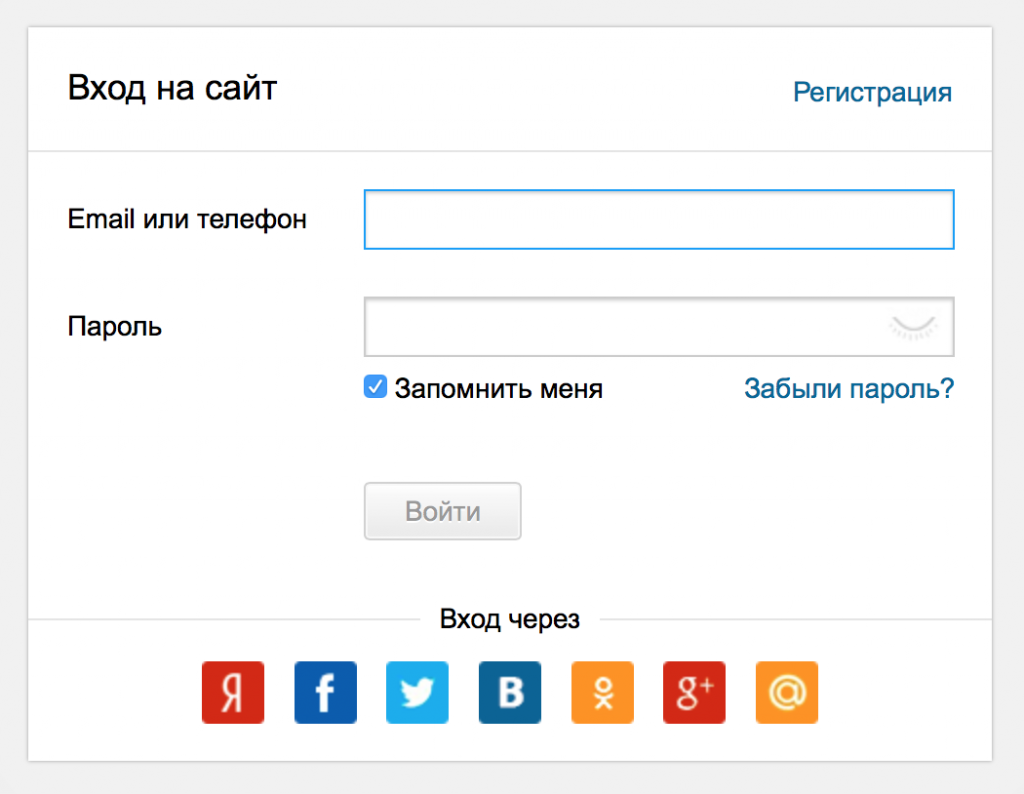
Have you always managed to enter the site using this form the first time? There were no problems? For me personally, these forms are pain and suffering. I use a huge number of different services, so I do not always remember which ones I already registered for and how. And I have 5 mail addresses and a minimum of 6 social. networks. You know, I’m sometimes surprised when it turns out to log in the first time. Is that familiar? Under kat an alternative approach to the interface of entering the site, partially making life easier.
But first, I’ll explain why the classical approach is so bad. There are two main file scenarios.
For some reason, among the leaders of Internet projects, there is an opinion that the more social icons. Networks will be in authorization, the more successful and popular the product will be. I have never noticed such a correlation in my practice, but this is another question. Back to the failure scenario.
I will try to formulate a partial solution, a slightly more friendly approach, which seems to be promising.
First of all, you should forget the terrible words “authorization” and “registration”, because these words refer to the world of the developer, not the user. If you want usability, you first need to at least speak the language of your visitor. There is a “Login” to the site. And that’s all, no technical terms. The rest is system problems, not human problems.
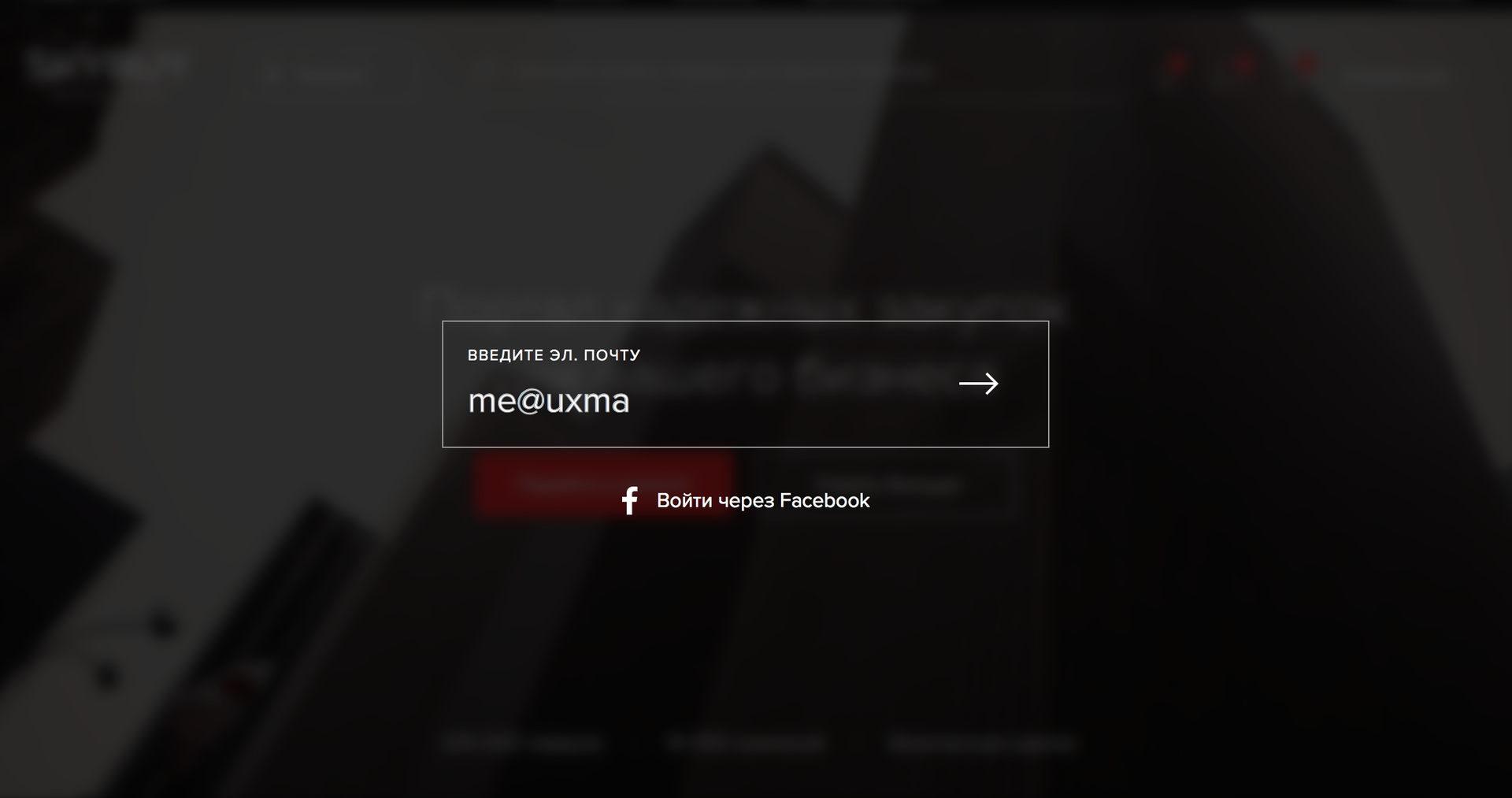
Then the most interesting. Please enter email mail. This is exactly one field, no more:

Click "Enter" or the continuation icon. If the database contains a user with such email. by mail, please enter the password:
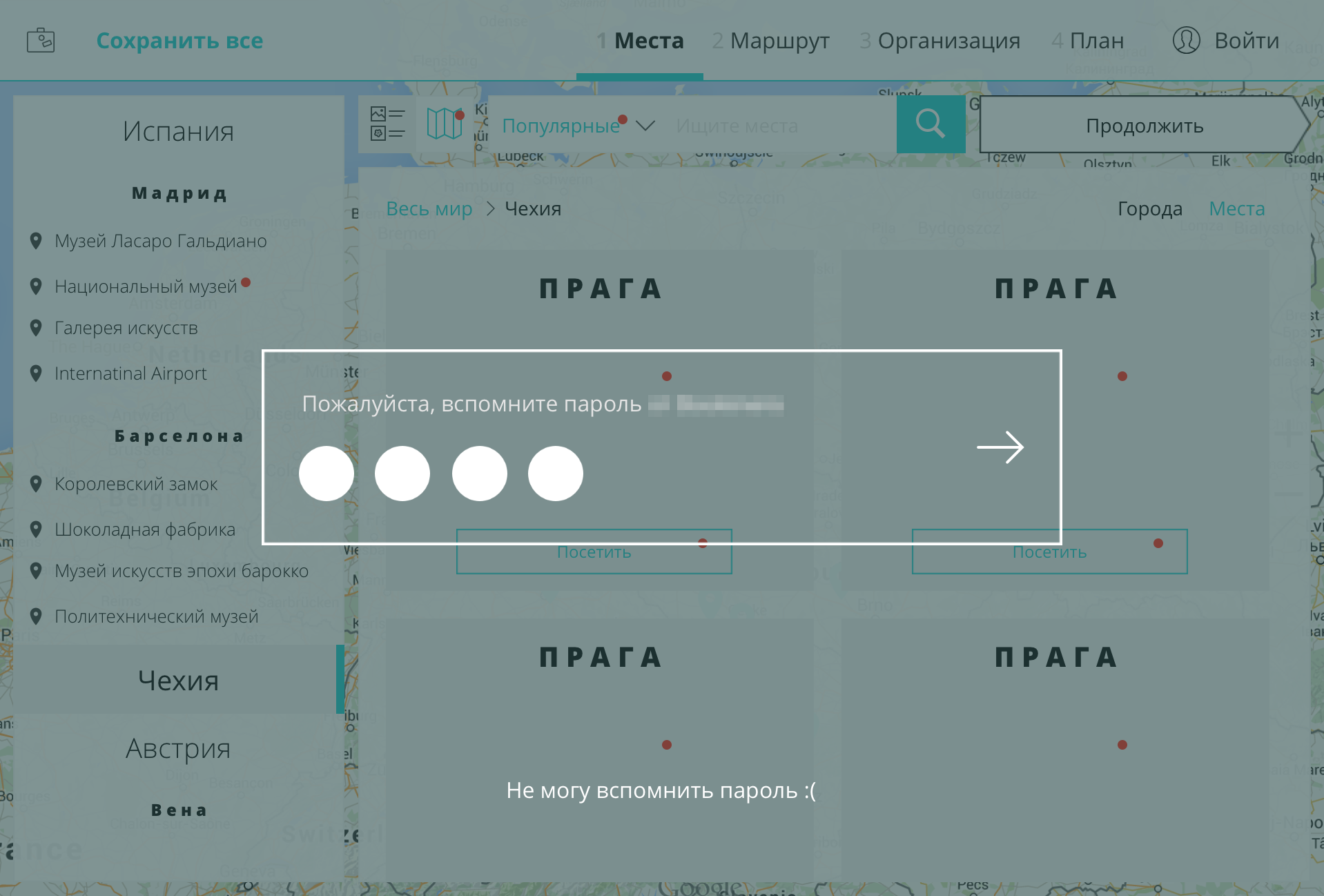
If e- mail the mail is not located, it means the user is most likely new and instead of this screen we show the "Please enter a password" field:

Yes, the user could be sealed in the mail. But the probability is permissible small: there is a visual control of the input, plus most likely this person often enters his email. mail is everywhere and learned to do it without errors. In case of a typo in the password, it can be restored through the same mail. There are links to password recovery and entering a different address.
The pain associated with re-entering the wrong social group. the network (file script No. 2) is partially treated quite clumsily: you need to choose one, the most popular social. the network in which the target audience of the service sits, and leave the entrance only through this social network. network. I said "partially" because there are still two ways to log in (email and social network): the user can still make a mistake. But you must admit, remembering the primary login method when choosing from two options is much easier than when choosing from 8 options (e-mail and 7 social networks).
Needless to say, the best option is an interface with one login method (only email or only one social network). Unfortunately, marketers are generally not ready to go for it. Therefore, the proposed friendly version of the interface is complemented by the login button through the social. network:
I admit that the proposed approach may have some significant drawbacks, due to which it has not yet become popular. In the comments I will be glad to hear your criticism and discuss these same shortcomings. If someone has the opportunity to quickly test this pattern for a large audience in the A / B test mode, I will participate with interest and help with the design: I would like to get a quantitative justification of the suitability of the approach for different audiences.
Have you always managed to enter the site using this form the first time? There were no problems? For me personally, these forms are pain and suffering. I use a huge number of different services, so I do not always remember which ones I already registered for and how. And I have 5 mail addresses and a minimum of 6 social. networks. You know, I’m sometimes surprised when it turns out to log in the first time. Is that familiar? Under kat an alternative approach to the interface of entering the site, partially making life easier.
But first, I’ll explain why the classical approach is so bad. There are two main file scenarios.
Fail script # 1. Random re-registration
- I go to the site in complete confidence that I have not registered yet
- I’m looking for the “Registration” button, I’m upset because of the time that I have to spend on filling out the fields and separately I’m upset because of the captcha:

- Nevertheless, courageously fill all the fields. After which the service happily informs me that I was already registered here and that I entered the captcha incorrectly. In general, memory to hell, and even inattentive:
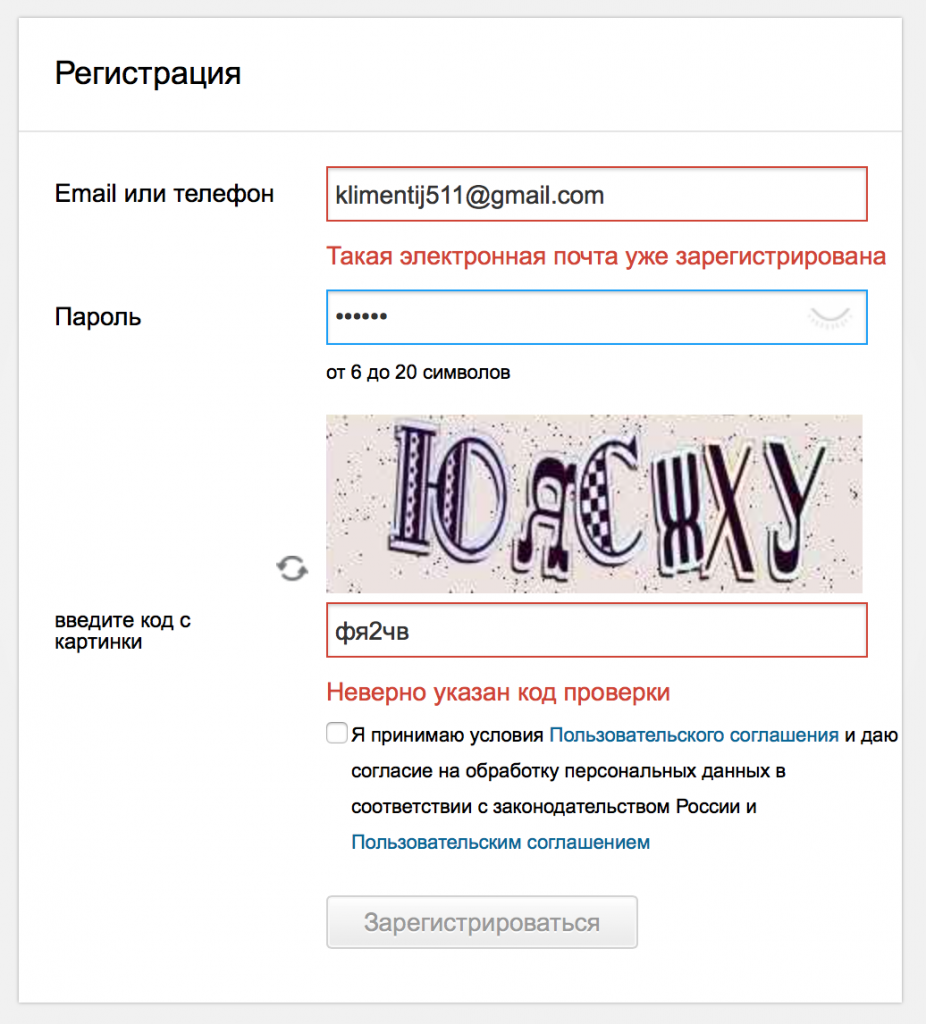
- As a result - a complete failure, 3 minutes of life are irretrievably lost, I return to the login form, I re-enter the email (!) mail and try to remember the password.
Fail script # 2. Re-entry through another social. network
For some reason, among the leaders of Internet projects, there is an opinion that the more social icons. Networks will be in authorization, the more successful and popular the product will be. I have never noticed such a correlation in my practice, but this is another question. Back to the failure scenario.
- I already used this service once, and now I want to log in to my account again. It seems that I entered then through the social. network. But through what? I have 6 or more, and here is such a wide choice:

- Like Vkontakte. I will try.
- I went in. Damn it, my account is empty, although I remember exactly how I filled it:

I understand that I just went through the wrong social network. network: you’ll have to try 3-4 more options, spend another five minutes, but in the end I will find my account. But the average user will decide that the service simply deleted his data and most likely will leave this villainous site forever.
I will try to formulate a partial solution, a slightly more friendly approach, which seems to be promising.
Friendlier approach
First of all, you should forget the terrible words “authorization” and “registration”, because these words refer to the world of the developer, not the user. If you want usability, you first need to at least speak the language of your visitor. There is a “Login” to the site. And that’s all, no technical terms. The rest is system problems, not human problems.
Then the most interesting. Please enter email mail. This is exactly one field, no more:
Click "Enter" or the continuation icon. If the database contains a user with such email. by mail, please enter the password:
If e- mail the mail is not located, it means the user is most likely new and instead of this screen we show the "Please enter a password" field:
Yes, the user could be sealed in the mail. But the probability is permissible small: there is a visual control of the input, plus most likely this person often enters his email. mail is everywhere and learned to do it without errors. In case of a typo in the password, it can be restored through the same mail. There are links to password recovery and entering a different address.
The pain associated with re-entering the wrong social group. the network (file script No. 2) is partially treated quite clumsily: you need to choose one, the most popular social. the network in which the target audience of the service sits, and leave the entrance only through this social network. network. I said "partially" because there are still two ways to log in (email and social network): the user can still make a mistake. But you must admit, remembering the primary login method when choosing from two options is much easier than when choosing from 8 options (e-mail and 7 social networks).
Needless to say, the best option is an interface with one login method (only email or only one social network). Unfortunately, marketers are generally not ready to go for it. Therefore, the proposed friendly version of the interface is complemented by the login button through the social. network:
Conclusion
I admit that the proposed approach may have some significant drawbacks, due to which it has not yet become popular. In the comments I will be glad to hear your criticism and discuss these same shortcomings. If someone has the opportunity to quickly test this pattern for a large audience in the A / B test mode, I will participate with interest and help with the design: I would like to get a quantitative justification of the suitability of the approach for different audiences.