June 28, 2015 at 00:02
Effective Logo Design, Part 1: Symbols, Metaphors, and Intuition Capabilities
- Transfer
No designer ever succeeds in creating amazing work. Creating a good design requires considerable effort, but sometimes you can achieve an amazing result completely without straining. Many designers follow intuition during the creative process, and incorporate generally accepted symbols and metaphors into their work simply because they “feel” their relevance. Any intuition can be used, and it is especially useful in creative activities. It leads designers to solutions consistent with generally accepted knowledge.
There are three reactions to design: yes, no, and CSO! To "wow" and you need to strive.
- Milton Glaser
A good logo opens up great opportunities for advertising. This is exactly what they are trying to achieve. Of course, the work of the intellect plays a significant role in design, but by combining intuition, symbols and metaphors with strategic thinking, you collect information that is necessary to create an outstanding and memorable logo.
Intuition is unconscious perception
- Carl Jung
There are always people who sweep away what cannot be measured. But many thinkers paid tribute to intuition. Albert Einstein, Richard Buckminster Fuller, Karl Jung, Ray Bradbury, Steve Jobs and even Alan Turing, the famous logician and cryptanalyst, understood that mathematical proofs were based on "intuition and genius." Great thinkers and futurists assign intuition a key role in the process of solving problems. For designers, intuition is not something alien, it is more like breathing. In intuition, as in water, many creators swim, while their intellect dictates a formula for the execution and design of the final product.
Although formal schooling teaches us to rely only on intelligence, its correct balance with intuition will allow you to create logos that will respond to a lot more people. In today's connected world, this is very important.

On the one hand, modern technologies help any business to enter the international level. On the other hand, they generate strong background noise, which constantly has to be filtered. And a modern, tough economy requires smaller budgets and smarter solutions. In my experience, the addition of sensuality to the logo, the integration of feelings and thoughts, allows you to instantly create an intuitive connection between a person and him. This allows you not to spend a lot of money on the promotion of the logo. Involving the person’s subconscious in the process, symbols and metaphors allow you to hold the attention of the audience longer, which later makes it easier for people to remember the logo.
Symbols appeared long before languages. Symbols and metaphors give meaning to information, but each is different. Communication with symbols is concise, fast, and metaphors connect certain design elements to more accurately define it.
Describing a symbol with words is like catching a star with a jug, but I will try. Symbols are complete entities, while words are composed of letters. Symbols are processed intuitively and instantly, and the word must be understood, know the language, and then converted to a visual form.
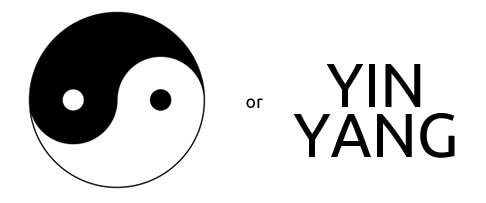
Symbols are understood immediately, and words must first be associated with images.
Symbols refer to patterns and images common to all people. A symbol is a seed, or an egg, that grows into meaning with the participation of an observer, just like seeds and eggs grow into organisms, receiving nutrients. And although the tree does not look like a seed, the shape of a former seed sits in its gut. All people have a belly button, our birth mark connecting us with the round egg from which we evolved.
Circles and spheres indicate the place of origin: molecules, cells, eggs, seeds and planets. Symbols are archetypes of human communication. "Arche-" means the source, "-type" means a species. This term was popularized by Carl Jung. And, as the original species, archetypes are limited in quantity, but universal in value. Archetypal symbols are the basis of the systems we invent and the structures we build.
The soul does not think without images.
- Aristotle
Abstract archetypal symbols, such as a circle, contain knowledge from the collective unconscious (again, Jung) of all people. Snakes and apples are an example of the more complex symbols that underlie culture. The base of the symbol is simple (a spiral instead of a snake). but complicated by adding a cultural context. Different cultures have their own characteristics, so it is important to study the interpretation of the symbol you have chosen to make sure that it supports exactly the meaning that you want to convey.
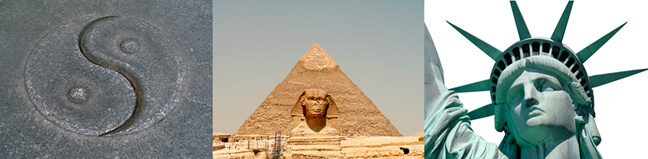
Examples of integrating symbols into structures and systems include the yin-yang symbol, where opposites complement each other to the whole, the base of the pyramid, which shows the unknowable and infinite universe, and the sacred number 7 included in the Statue of Liberty, symbolizing abundance and involvement. A regular polygon with seven sides is the only one of the first ten geometric shapes that cannot be drawn with a compass and ruler, and this stands out.
Symbols are perceived by the senses and the subconscious, and you first have to think about the words before creating a connection between them and the image or idea. Symbols remove this connection, therefore symbolic logos are so much more effective than alphabetic ones. In addition, symbols are universal, and words are associated with language. But they can be used together to expand both meaning and impact.
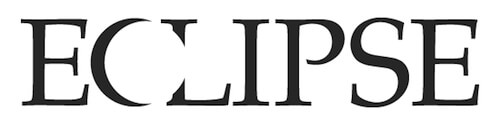
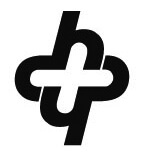
Symbolism was my main instrument when in the 80s I developed a logo for a farm that grows Arabian horses. In the first sketch, I focused on the ratios of the mare and the stallion, which depicted intimacy by touching the faces. In the second sketch, this idea developed into a relationship between a mare and a foal, which is under her protection.
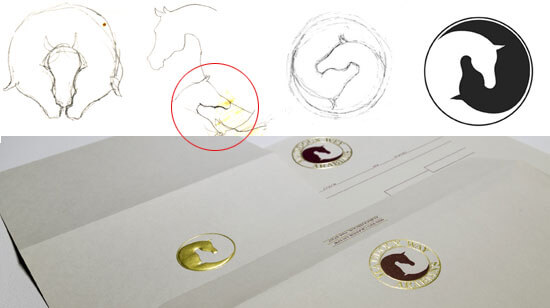
So went the process that led to the result. Symbolism condensed and simplified the logo, giving it universal significance. Visual simplicity is important for the flexibility that a logo needs in order to successfully use it in different situations.
Thanks to the graceful structure of bones in Arabian horses, I was able to successfully combine the muzzle and shoulder. The effect intensified after the conclusion of the logo in a circle, and the result was symbolism with a reference to yin-yang.
The simplicity of the logo makes it look like a symbol that is recognizable everywhere, and which immediately enters into a personal relationship with the observer. In addition, it feels timeless and independent of the changing fashion. Symbols are ideal for long-term branding.
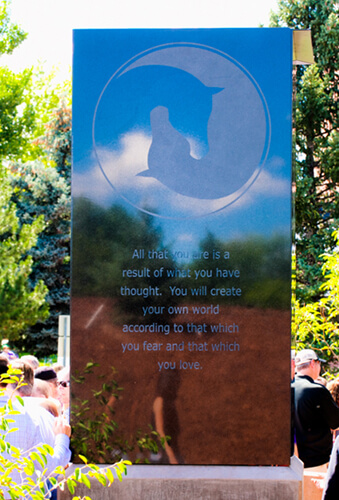
This logo was printed, squeezed, used in the design of jewelry, stamps, and recently even carved in granite.
Metaphors, like symbols, can expand information, but they also bind together unrelated concepts. This ability to combine unexpected things allows you to determine the features of the client and adds interest to the development process. They are remembered because they contain the effect of "aha!"
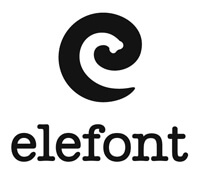
In this example, we used all the possibilities to create a simple but powerful logo that attracts attention at different levels: symbolic, metaphorical and semantic.
Valle Encantado is a partnership of farmers and artisans in Albuquerque, New Mexico. There were many opportunities to create a metaphorical relationship between the name and purpose of the company. The main idea was to use the form of the letter V as an amplification of the name, and as a reference to farming. By activating empty and filled spaces, we maximize the message transmitted by the logo.
V also means five in Roman notation - such happy coincidences enhance the ability to transmit information. As a result, the logo was further reinforced by the slogan “Cultivating Community”.
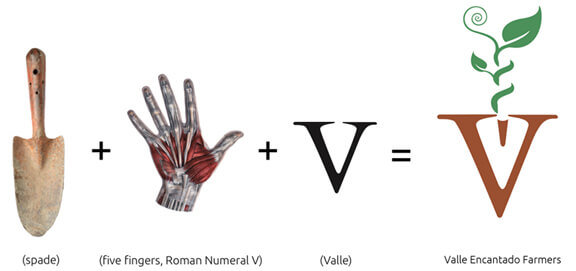
Metaphorical logos are difficult to create, but if you immerse yourself in goals, customer name, and the ability to visually link them together and expand, then several aspects can be combined into one well-packed concept. For 30 years I have been creating recognizable logos in this way, and logos developed decades ago continue to bring new customers (and many of them successfully stole, and therefore there were court cases - it is also important to protect your work). Logos that convey information simply and deeply benefit everyone: customers, audiences and designers.
Symbols and metaphors help to establish a connection between the client and the logo, and the logo and audience. If you use words, complement them with a visual component. Second, consider color, styling, and typography. This may need to be updated over time, but if the logo is essentially symbolic, then minor updates will not spoil the brand. Symbols preserve the brand when styles and trends change.
I often turned to early sketches during the development process and found something that I had not seen before. Sometimes great thoughts can be used to create a more complex or complete option. Concepts developed for one client can play for others. Respect your creativity and keep it. Practice being a conductor between the past and the future to maximize your creativity.
If the logo plays in two colors, it will work in any situation - from color solutions to engraving. The simpler you indicate the meaning of the logo and the relationship between the negative and the positive, the more clearly the symbolism of your concept will be defined. If possible, optimize the transfer of logo information using empty spaces as well as filled ones.
Create a logo in vectors so that it scales without any problems. They must be ready for any scale - from mobile sites to giant billboards. If it does not work in a small size, remove the excess. If something is lost, make sure that it is not critical to convey meaning. If it looks rough in a large size, see how it can be changed.
Turn it upside down, make a mirror image or turn. Ideally, it should look balanced anyway. Such a process reveals imperfections that are not visible in its usual position.
The designer's job is to find solutions that no one can find. Work out instincts for working with subtle things at all levels: visual, symbolic, metaphorical, pun, intuition. The following exercises will help you with this.
Tasks are not problems, but opportunities for developing your creativity and problem-solving skills. This exercise will help you understand how you process information to make a decision. The most important thing is to pay attention to how your internal resources relate to external ones.
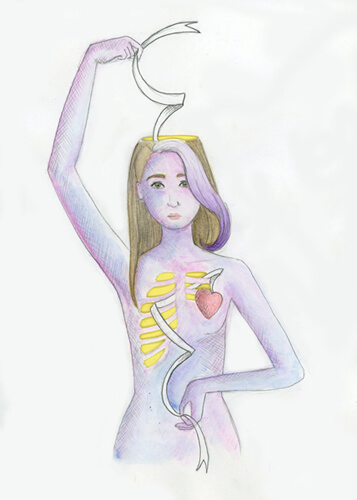
This picture of a student shows her difficulties in connecting the head and heart in the design process. The top of the head and chest are cut off and the tape is threaded through - in this way a voluminous work is created that enhances her desire to combine the subconscious aspect of creativity with the practice of developing solutions for the real world.
Designing a logo is a difficult task, but it brings satisfaction. Good logos are smart, but not condescending. They are simple, but deep enough to be interesting. They are understandable and intuitive, but well remembered. And they are relevant and timeless.
Designing a good logo is the pinnacle of creativity. The process makes you find brief images for the relationship between entities. Development practice improves your skills of working with intuition and recognition of non-obvious, but effective solutions, and teaches you to find connections that do not lie on the surface. These are the basic principles for solving any problems, not just logo design, and these methods can also be used to solve personal problems. As the British sculptor, photographer and artist Andy Goldsworthy says, "All things inside contain the energy of their creation." And, as I tell my students, learn to create a good logo, and you will learn how to create a good life.
Part 2
There are three reactions to design: yes, no, and CSO! To "wow" and you need to strive.
- Milton Glaser
A good logo opens up great opportunities for advertising. This is exactly what they are trying to achieve. Of course, the work of the intellect plays a significant role in design, but by combining intuition, symbols and metaphors with strategic thinking, you collect information that is necessary to create an outstanding and memorable logo.
Intuitive Design Process
Intuition is unconscious perception
- Carl Jung
There are always people who sweep away what cannot be measured. But many thinkers paid tribute to intuition. Albert Einstein, Richard Buckminster Fuller, Karl Jung, Ray Bradbury, Steve Jobs and even Alan Turing, the famous logician and cryptanalyst, understood that mathematical proofs were based on "intuition and genius." Great thinkers and futurists assign intuition a key role in the process of solving problems. For designers, intuition is not something alien, it is more like breathing. In intuition, as in water, many creators swim, while their intellect dictates a formula for the execution and design of the final product.
Although formal schooling teaches us to rely only on intelligence, its correct balance with intuition will allow you to create logos that will respond to a lot more people. In today's connected world, this is very important.
On the one hand, modern technologies help any business to enter the international level. On the other hand, they generate strong background noise, which constantly has to be filtered. And a modern, tough economy requires smaller budgets and smarter solutions. In my experience, the addition of sensuality to the logo, the integration of feelings and thoughts, allows you to instantly create an intuitive connection between a person and him. This allows you not to spend a lot of money on the promotion of the logo. Involving the person’s subconscious in the process, symbols and metaphors allow you to hold the attention of the audience longer, which later makes it easier for people to remember the logo.
Symbols appeared long before languages. Symbols and metaphors give meaning to information, but each is different. Communication with symbols is concise, fast, and metaphors connect certain design elements to more accurately define it.
Symbolic principles in logo design
Describing a symbol with words is like catching a star with a jug, but I will try. Symbols are complete entities, while words are composed of letters. Symbols are processed intuitively and instantly, and the word must be understood, know the language, and then converted to a visual form.
Symbols are understood immediately, and words must first be associated with images.
Symbols refer to patterns and images common to all people. A symbol is a seed, or an egg, that grows into meaning with the participation of an observer, just like seeds and eggs grow into organisms, receiving nutrients. And although the tree does not look like a seed, the shape of a former seed sits in its gut. All people have a belly button, our birth mark connecting us with the round egg from which we evolved.
Circles and spheres indicate the place of origin: molecules, cells, eggs, seeds and planets. Symbols are archetypes of human communication. "Arche-" means the source, "-type" means a species. This term was popularized by Carl Jung. And, as the original species, archetypes are limited in quantity, but universal in value. Archetypal symbols are the basis of the systems we invent and the structures we build.
The soul does not think without images.
- Aristotle
Abstract archetypal symbols, such as a circle, contain knowledge from the collective unconscious (again, Jung) of all people. Snakes and apples are an example of the more complex symbols that underlie culture. The base of the symbol is simple (a spiral instead of a snake). but complicated by adding a cultural context. Different cultures have their own characteristics, so it is important to study the interpretation of the symbol you have chosen to make sure that it supports exactly the meaning that you want to convey.
Examples of integrating symbols into structures and systems include the yin-yang symbol, where opposites complement each other to the whole, the base of the pyramid, which shows the unknowable and infinite universe, and the sacred number 7 included in the Statue of Liberty, symbolizing abundance and involvement. A regular polygon with seven sides is the only one of the first ten geometric shapes that cannot be drawn with a compass and ruler, and this stands out.
Symbols versus letters
Symbols are perceived by the senses and the subconscious, and you first have to think about the words before creating a connection between them and the image or idea. Symbols remove this connection, therefore symbolic logos are so much more effective than alphabetic ones. In addition, symbols are universal, and words are associated with language. But they can be used together to expand both meaning and impact.
Using symbols in logo design
Symbolism was my main instrument when in the 80s I developed a logo for a farm that grows Arabian horses. In the first sketch, I focused on the ratios of the mare and the stallion, which depicted intimacy by touching the faces. In the second sketch, this idea developed into a relationship between a mare and a foal, which is under her protection.
So went the process that led to the result. Symbolism condensed and simplified the logo, giving it universal significance. Visual simplicity is important for the flexibility that a logo needs in order to successfully use it in different situations.
Thanks to the graceful structure of bones in Arabian horses, I was able to successfully combine the muzzle and shoulder. The effect intensified after the conclusion of the logo in a circle, and the result was symbolism with a reference to yin-yang.
The simplicity of the logo makes it look like a symbol that is recognizable everywhere, and which immediately enters into a personal relationship with the observer. In addition, it feels timeless and independent of the changing fashion. Symbols are ideal for long-term branding.
This logo was printed, squeezed, used in the design of jewelry, stamps, and recently even carved in granite.
Using metaphors
Metaphors, like symbols, can expand information, but they also bind together unrelated concepts. This ability to combine unexpected things allows you to determine the features of the client and adds interest to the development process. They are remembered because they contain the effect of "aha!"
In this example, we used all the possibilities to create a simple but powerful logo that attracts attention at different levels: symbolic, metaphorical and semantic.
Valle Encantado is a partnership of farmers and artisans in Albuquerque, New Mexico. There were many opportunities to create a metaphorical relationship between the name and purpose of the company. The main idea was to use the form of the letter V as an amplification of the name, and as a reference to farming. By activating empty and filled spaces, we maximize the message transmitted by the logo.
V also means five in Roman notation - such happy coincidences enhance the ability to transmit information. As a result, the logo was further reinforced by the slogan “Cultivating Community”.
Metaphorical logos are difficult to create, but if you immerse yourself in goals, customer name, and the ability to visually link them together and expand, then several aspects can be combined into one well-packed concept. For 30 years I have been creating recognizable logos in this way, and logos developed decades ago continue to bring new customers (and many of them successfully stole, and therefore there were court cases - it is also important to protect your work). Logos that convey information simply and deeply benefit everyone: customers, audiences and designers.
Some final thoughts on creating a good logo
Use symbols and metaphors as a base for conveying information
Symbols and metaphors help to establish a connection between the client and the logo, and the logo and audience. If you use words, complement them with a visual component. Second, consider color, styling, and typography. This may need to be updated over time, but if the logo is essentially symbolic, then minor updates will not spoil the brand. Symbols preserve the brand when styles and trends change.
Collect your work and check with them in the process
I often turned to early sketches during the development process and found something that I had not seen before. Sometimes great thoughts can be used to create a more complex or complete option. Concepts developed for one client can play for others. Respect your creativity and keep it. Practice being a conductor between the past and the future to maximize your creativity.
Design in black and white
If the logo plays in two colors, it will work in any situation - from color solutions to engraving. The simpler you indicate the meaning of the logo and the relationship between the negative and the positive, the more clearly the symbolism of your concept will be defined. If possible, optimize the transfer of logo information using empty spaces as well as filled ones.
Make sure the logo is scalable.
Create a logo in vectors so that it scales without any problems. They must be ready for any scale - from mobile sites to giant billboards. If it does not work in a small size, remove the excess. If something is lost, make sure that it is not critical to convey meaning. If it looks rough in a large size, see how it can be changed.
Balance logo
Turn it upside down, make a mirror image or turn. Ideally, it should look balanced anyway. Such a process reveals imperfections that are not visible in its usual position.
Notice the subtleties
The designer's job is to find solutions that no one can find. Work out instincts for working with subtle things at all levels: visual, symbolic, metaphorical, pun, intuition. The following exercises will help you with this.
Exercise: Intuition and Synchronistic Development
Tasks are not problems, but opportunities for developing your creativity and problem-solving skills. This exercise will help you understand how you process information to make a decision. The most important thing is to pay attention to how your internal resources relate to external ones.
This picture of a student shows her difficulties in connecting the head and heart in the design process. The top of the head and chest are cut off and the tape is threaded through - in this way a voluminous work is created that enhances her desire to combine the subconscious aspect of creativity with the practice of developing solutions for the real world.
- Think about the design task you're working on, or a personal problem.
- Draw a sketch to help present the task (this is not a question of drawing skills). It will be abstract or realistic - it should be related to an important issue for you.
- Tell yourself that you need help to find a solution, or to establish a relationship with this task or project, and that you are open to all ideas that may lead to a solution.
- Over the next few days, pay attention to what is happening around you, what you dream about, or what happens in situations where you are not busy with a meaningful solution to a problem (for example, in the shower). External manifestations will appear spontaneously if you bother to notice them. In particular, notice repeated things, even if they do not seem relevant to your task.
- If images, numbers or other entities arise in different and unrelated events, try to trace their connection with your task. Watch your emotions (they also give clues). Are you worried? Are you comfortable? What connection does the task have, you and the repeating objects or phenomena? Is there a connection between them and your past experience?
- Sometimes a problem that is not related to a task does not allow a solution to be found. It is very important to respect everything that your subconscious mind gives you and try to interpret how this relates to your current task.
Conclusion
Designing a logo is a difficult task, but it brings satisfaction. Good logos are smart, but not condescending. They are simple, but deep enough to be interesting. They are understandable and intuitive, but well remembered. And they are relevant and timeless.
Designing a good logo is the pinnacle of creativity. The process makes you find brief images for the relationship between entities. Development practice improves your skills of working with intuition and recognition of non-obvious, but effective solutions, and teaches you to find connections that do not lie on the surface. These are the basic principles for solving any problems, not just logo design, and these methods can also be used to solve personal problems. As the British sculptor, photographer and artist Andy Goldsworthy says, "All things inside contain the energy of their creation." And, as I tell my students, learn to create a good logo, and you will learn how to create a good life.
Part 2