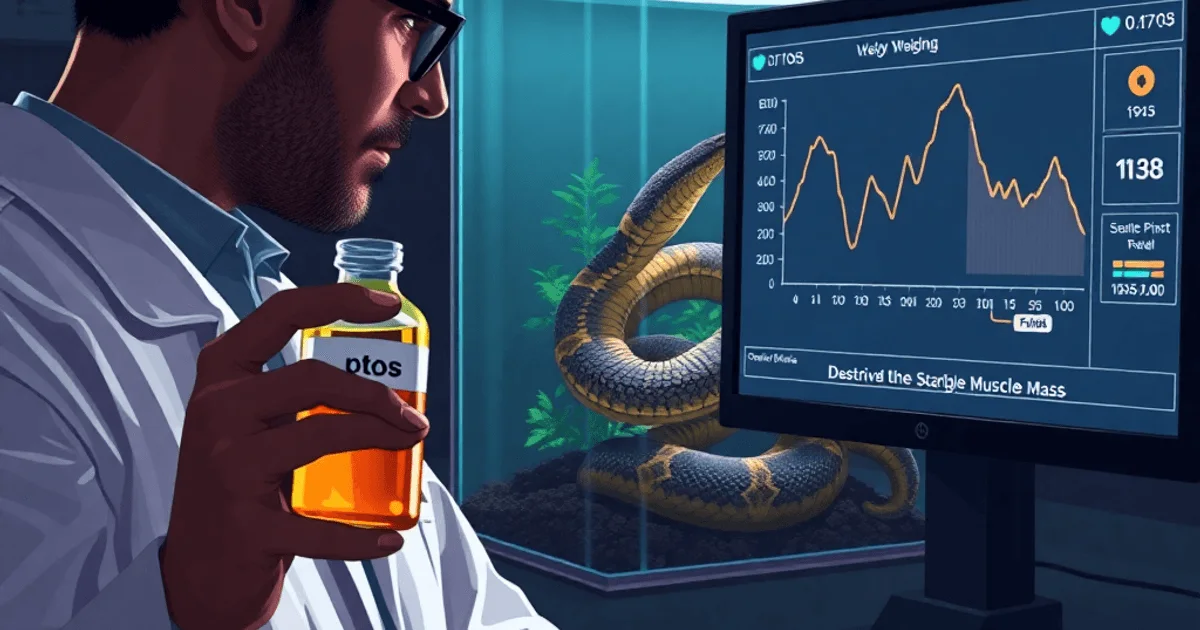
pTOS: Python Blood Metabolite Suppresses Appetite Without GLP-1 Side Effects
Researchers at the University of Colorado have discovered a metabolite called para-tyramine-O-sulfate (pTOS) in python blood. When injected into mice, it curbs appetite and promotes weight loss without the nausea or muscle loss typically seen with GLP-1 drugs. This breakthrough, published in Nature Metabolism, stems from studying the snakes' extreme metabolism, which lets them go months without eating after a big meal.
Python Metabolic Superpowers as a Source of Inspiration
Burmese and ball pythons show remarkable adaptations: after devouring a meal as big as their body, their metabolism ramps up 40-fold, and their hearts grow 25% to handle digestion. Yet they maintain muscle mass and cardiovascular health during months-long fasts. Exploring these extreme physiological processes led Leslie Leinwand's team to hypothesize the existence of unique regulatory molecules.
Key research milestones:
- Blood samples collected from pythons before and after feeding (once every 28 days).
- Metabolomic analysis using mass spectrometry.
- Identification of 208 metabolites that spiked significantly post-meal.
- Discovery of para-tyramine-O-sulfate (pTOS), whose levels surged 1,000-fold.
How pTOS Works and Preclinical Trials
pTOS is a product of the python's gut bacteria metabolism. It's absent in mice naturally but appears in trace amounts in human urine, rising after meals. To test its effects, scientists ran experiments on mouse models of obesity and normal weight.
High doses of pTOS in these mice produced:
- Appetite suppression by targeting hypothalamic neurons that control hunger and satiety.
- Weight loss through reduced food intake.
- No side effects like those of GLP-1 agonists (Ozempic, Wegovy): no nausea, gut issues, muscle wasting, or reduced activity.
"Essentially, we've found an appetite suppressant that works in mice without some of the side effects of GLP-1 drugs," noted Leslie Leinwand.
Google AdInline article slot
Head-to-Head: pTOS vs. Current Therapies
GLP-1 receptor agonists dominate the obesity and type 2 diabetes market today. Interestingly, their development drew from nature too—a hormone in Gila monster venom. But real-world use brings tolerability issues.
Key advantages
- Novel mechanism: pTOS works via a non-GLP-1 pathway, unlocking a fresh therapeutic target.
- Better safety profile: Preclinical data avoids the main pitfalls of existing drugs.
- Biomimetic strategy: Hunting drug candidates in extremophile metabolites has proven effective.
- Combo therapy potential: pTOS could stand alone or pair with other treatments.
- Proof of concept: The study validates using unconventional model organisms for biomedicine.
Path to Market and Next Steps
Building on this, researchers from the University of Colorado Boulder, Stanford, and Baylor launched startup Arkana Therapeutics. The goal: develop and commercialize therapies based on synthetic pTOS analogs. Upcoming steps include:
- Optimizing the molecule's structure for better stability and bioavailability.
- Expanded toxicology studies.
- Phase I clinical trials to test safety in humans.
Scientists emphasize this fits a broader pharma trend: extreme animal adaptations yielding innovative molecules. Probing the metabolism of racehorses, deep-sea fish, or hibernating animals could spark breakthroughs in cardiology, neurology, and regenerative medicine.
— Editorial Team










No comments yet.