USA and Taiwan Team Up on Silicon Carbide Wafers for 6G and AI
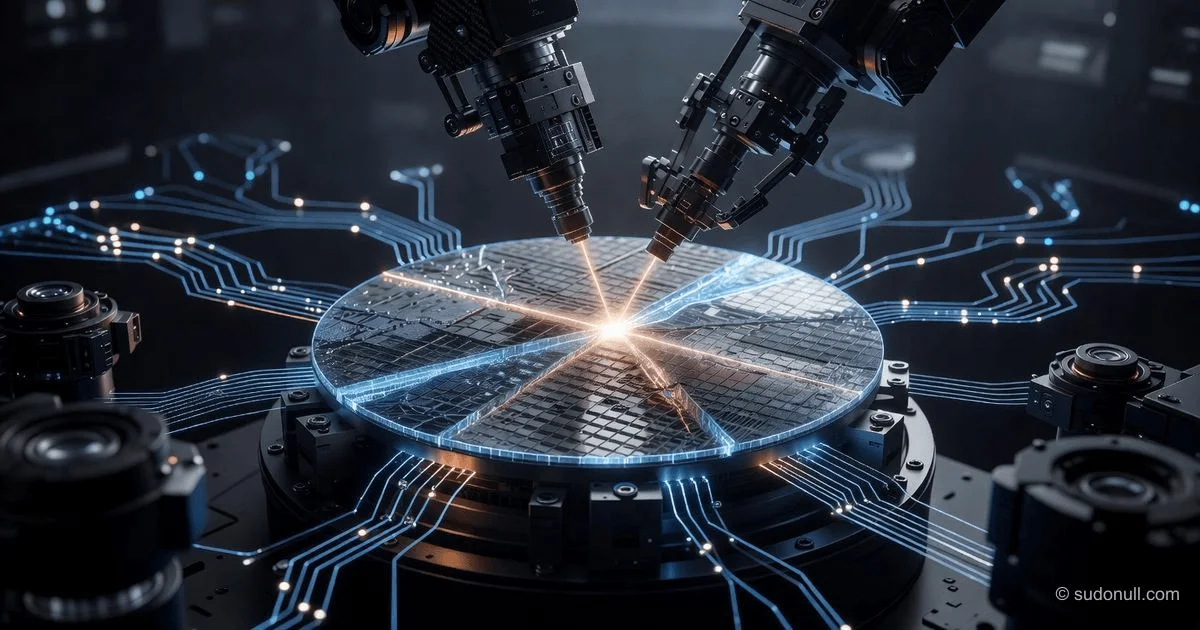
A new US-Taiwan partnership aims to produce silicon carbide wafers needed for faster, more energy-efficient chips for 6G communications and AI systems.
Silicon Carbide Deception: Why the New US-Taiwan Deal Is Panic, Not Progress
You’ve seen the headlines. On May 28, 2026, Purdue University and Taiwan’s GeChi Compound Semiconductor (GCCS) signed a five-year memorandum of understanding to develop 8- and 12-inch silicon carbide wafers. Taiwanese firms are investing at least $250 billion in US manufacturing, with the Taiwanese government backing another $250 billion in loans.
It sounds like another move in the race for technological supremacy. Silicon carbide (SiC) really is better than silicon: it handles temperatures above 200°C, switches faster, and wastes less energy.
But let’s be honest. What I see as an analyst tracking the semiconductor and materials market is not an engineering triumph. It is an act of desperation dressed up as strategic partnership. Here’s why.
[The Core]: What’s Really Happening
The US-Taiwan “silicon bridge” is not a technological breakthrough. It is a desperate attempt to build an alternative to China’s silicon carbide monopoly before it is too late.
Here’s what Purdue’s press release won’t tell you. The global silicon carbide market is already carved up. Wolfspeed (USA) controls roughly 60% of SiC wafer production. The problem is that over the past two years China has flooded the market with cheap wafers, triggering a price war. Standard SiC wafers have dropped 60-70% in price in just six months. This is not normal competition. It is Beijing’s strategy to push Western producers out of the segment.
Now that prices have collapsed, Americans and Taiwanese suddenly “unite” to create a “resilient supply chain.” Too late. And too obvious.
The insider detail that changes everything: watch the dates. On January 15, 2026, the “Silicon Pact” was signed—a major US-Taiwan agreement to move chip production to Arizona. TSMC is expanding from 6 to 11 fabs in the USA. Then, just four months later, this silicon carbide partnership appears.
It is no coincidence. It is a planned campaign to create the appearance of localized production. The irony: GCCS is Taiwanese. Purdue is an American university. They will “research ways to eliminate crystal defects.” Yet the leading silicon carbide growth technology remains with Chinese firms and Wolfspeed. The Americans are essentially renting intellectual property from Taiwan because they have none of their own.
Timeline and Context
Let’s trace the chain of events to understand Washington’s level of desperation.
2021-2024: China ramps up SiC production capacity. For three years no one in the USA raises alarms because the market is considered “niche.”
January 2025: US tariffs on semiconductors from unfriendly countries take effect—25% on high-performance chips. The signal: “Build here.”
May 2025: The US administration shifts course and signs a “Tariff Offset Program Agreement” with Taiwan. The deal: build a fab in the USA and receive duty-free import quotas up to 2.5 times your US production volume.
January 15, 2026: The “Silicon Pact” is signed. Taiwanese companies commit to investing $250 billion in US manufacturing. In return, the USA lowers retaliatory tariffs from 20% to 15%.
May 28, 2026: The Purdue-GCCS silicon carbide partnership is announced.
June 1-2, 2026: The story spreads through global media as a “breakthrough for 6G and AI.”
Notice the gap between the Silicon Pact (January) and the SiC partnership (late May). The first covered logic and advanced packaging. The second covers materials. In other words, the USA first arranged to move assembly, then remembered that assembly needs wafers. Strategic planning at the level of “let’s buy outlets first, then think about wiring.”
Winners and Losers
There are winners in this story, but they are not the ones shown on television.
The biggest winner is China. Seriously. While the USA and Taiwan spend $250 billion building capacity that will come online in 3-4 years, China already controls 60-70% of the global SiC wafer market. Its companies (Xi'an San'an, Tianke Heda, Shandong Tianyue) keep increasing output and undercutting prices. By the time American lines reach full capacity, Chinese wafer costs will be so low that US producers will be unable to compete without ongoing government subsidies.
The second winner is TSMC and Taiwanese investors. They gain access to the US market, tax breaks, and tariff protection. Yes, they are putting in $250 billion, but Taiwan Semiconductor Manufacturing Company will receive tax credits and grants from the US government under the CHIPS Act. It is the perfect scheme: Taiwanese money and technology, American land and taxpayers footing the bill.
Wolfspeed is caught in turbulence. The company that led SiC for decades now faces a US-Taiwan government project duplicating its technology. Wolfspeed controls 60% of the market but lacks $250 billion in state backing. GCCS gets a powerful government-funded head start. Wolfspeed will either be acquired or pushed aside.
Europe loses, but no one is talking about it. Europe has no industrial-scale silicon carbide production of its own. The only major player, STMicroelectronics (Franco-Italian), relies on supplies from China and the USA. After this deal, Europe will be fully dependent on US SiC imports for its auto and industrial sectors. With rising tariff barriers, European companies will pay 20-30% more per chip.
What the Media Is Not Saying
Journalists write about a “materials breakthrough for 6G” and a “new era of semiconductors.” I will share three facts that turn this story from technological to political.
Insider Point #1: Silicon carbide manufacturing is brutally difficult and expensive.
Silicon carbide has a physical problem that money cannot solve. It must be grown at temperatures above 1500°C. Even a small deviation creates micro-defects in the crystal. Its extreme hardness also makes cutting and polishing extremely challenging.
In practice this means the yield on new GCCS lines in the USA will be catastrophically low for the first 2-3 years. Analysts estimate starting yields for 8-inch SiC wafers at a new producer will be 30-40%, while Chinese and Wolfspeed lines have already reached 70-80%. At that rate, the cost of an American wafer will be two to three times higher than a Chinese one. The USA will subsidize the difference. This is not business. It is politics.
Insider Point #2: The 6G connection is marketing, not reality.
Press releases claim silicon carbide is essential for 6G. That is only half true. Yes, SiC devices can operate at higher frequencies. But commercial 6G deployment is not expected before 2030-2032.
By then, newer materials—such as diamond substrates or aluminum-gallium nitride—may prove even more effective. The USA is pouring billions into a technology that could become obsolete before it generates revenue. It is a bet on a horse that may already have lost the race.
Insider Point #3: American engineers are the bottleneck.
Running 11 new TSMC fabs in Arizona plus the new GCCS lines will require roughly 30,000 highly skilled engineers and technicians. The USA does not have that talent pool. Even with aggressive immigration and retraining, it takes 3-5 years to prepare one specialist in silicon carbide crystal growth.
In practice, US companies will start poaching engineers from each other, salaries will skyrocket, and production costs will keep rising. Some operations may have to be outsourced back to Taiwan or China—completely undermining the idea of a “sovereign supply chain.”
Outlook: Next 30 Days and 90 Days
Forget the “breakthrough.” Here is what will actually happen once the press-release noise fades.
Next 30 days: A wave of skepticism from engineers and analysts.
Within a month, trade publications (Semiconductor Today, EE Times) will run pieces in which experts question the realism of 12-inch wafers on the stated timeline. Wolfspeed shares will first drop (investors fear competition) then partially recover once it becomes clear GCCS poses no immediate threat.
At the same time, rumors will circulate that Chinese SiC producers (Xi'an San'an, Tianke Heda) are preparing another 20-30% price cut. This will be Beijing’s response to the US-Taiwan partnership. The price war will continue, and US producers with higher costs will lose money from day one.
Next 90 days: Political turbulence and a talent crisis.
In September 2026, Purdue University will announce a new “semiconductor materials” program. Enrollment will fall short. Engineering majors are unpopular with American youth who prefer IT and finance. The government will have to either sharply raise salaries (increasing costs) or relax immigration rules for engineers from India and China—an option that is politically explosive.
In the longer term (2-3 years) the USA will get its silicon carbide production lines. They will operate on government subsidies, producing wafers at two to three times the cost of Chinese ones. Buyers will be either government entities (defense, NASA) or companies required by national-security law to purchase them. Real market competition will not materialize.
This is not “sovereignty.” It is socialism for semiconductors—taxpayers paying for what Chinese firms already make cheaper and better. And no one in the news will tell you that.
— Editorial Team










No comments yet.