Cerebras on the Path to IPO: From Losses to Profits and Strategic Partnership with OpenAI
Cerebras Systems, maker of specialized AI chips, has filed for an IPO in the US, demonstrating a sharp financial turnaround: net profit of $88 million in 2025 versus a loss of $485 million the previous year. The key growth driver is a contract with OpenAI worth over $20 billion, which not only provides revenue but also includes potential minority participation by the customer in the supplier.
Financial Turnaround in One Year
In 2025, Cerebras boosted revenue by 76% to $510 million, up from $290.3 million in 2024. The standout achievement was shifting from a substantial loss ($484.8 million) to net profit ($87.9 million). In its S-1 filing, the company highlights strong customer loyalty: the top 10 buyers increase their purchases by an average of 80% in the first 12 months after their initial deal. This points to sustained demand for its solutions in inferencing large language models.
However, revenue remains concentrated. In 2024, 87% of income came from the Emirati holding G42, raising concerns from the U.S. Committee on Foreign Investment in the United States (CFIUS) and leading to the withdrawal of the initial IPO filing. By 2025, G42's share dropped to 24%, but the bulk of revenue (62%) shifted to another Emirati client—the Mohamed bin Zayed University of Artificial Intelligence (MBZUAI).
Strategic Partnership with OpenAI as a New Direction
In 2026, the customer base structure is expected to shift again: OpenAI will become the primary revenue source. In January, a contract was signed for 750 MW of compute power for inference through 2028. In April, its value doubled to more than $20 billion over three years. In exchange, OpenAI may receive a minority stake in Cerebras, creating a unique interdependent model between AI infrastructure consumer and producer.
The contract includes exclusive terms limiting Cerebras's collaboration with OpenAI competitors. This structure aims to reduce regulatory risks: U.S. authorities are more likely to approve the IPO if the company's key partner is a flagship of the national AI sector rather than foreign state-linked entities from the Middle East.
Architectural Edge and Market Niche
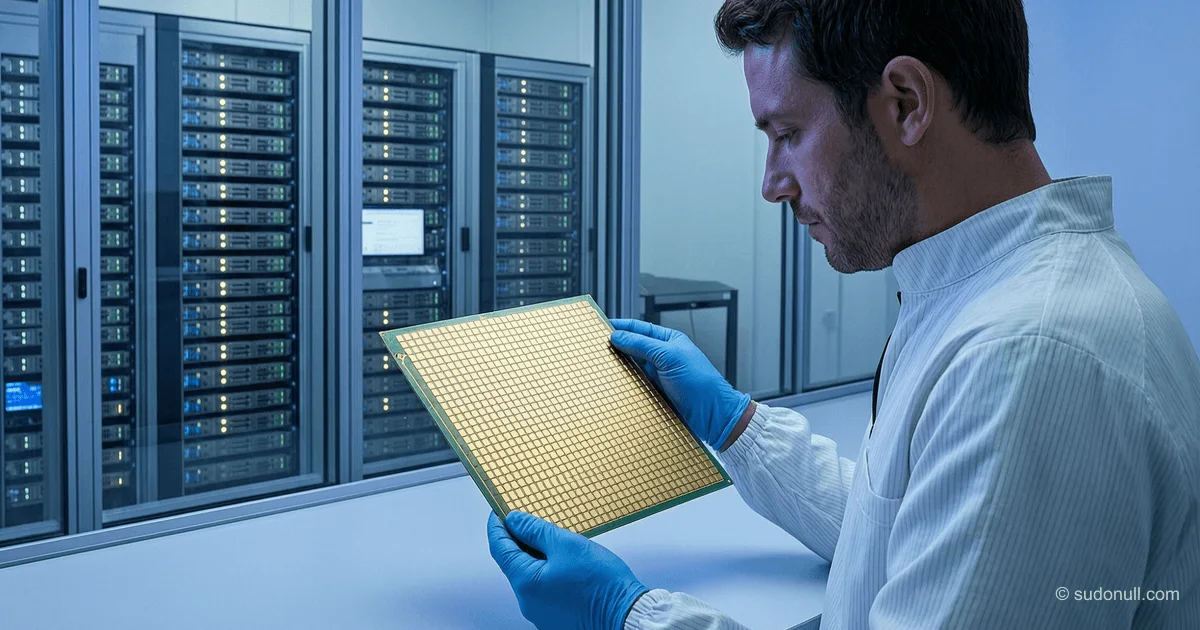
Cerebras is known for its Wafer-Scale Engine (WSE) architecture, where the entire chip occupies a single silicon wafer. This enables unprecedented compute density and minimizes inference latency. Unlike Nvidia's general-purpose GPU solutions, Cerebras focuses on specialization—accelerating inference for large models with minimal energy per query.
After Nvidia's acquisition of Groq's assets for $20 billion last December, Cerebras remains virtually the only independent player in the premium inference accelerator market. If the IPO happens at a $35 billion valuation, it would rank among the ten largest semiconductor listings in history and mark the first public debut for a wafer-scale architecture company.
Risks and Outlook
Despite the impressive financial turnaround, key risks persist:
- High customer concentration: Reliance on one or two major clients leaves the business vulnerable to shifts in their strategies.
- Regulatory uncertainty: Even with key clients moving from the Middle East to the US, CFIUS may demand additional assurances.
- Technological competition: Nvidia continues to dominate the AI accelerator market, with new architectures like Blackwell also optimized for inference.
- Contract exclusivity: Restrictions on working with OpenAI competitors could limit long-term monetization opportunities.
That said, growing demand for efficient inference—especially amid rising costs of running LLMs—creates a favorable environment for specialized solutions. Cerebras positions itself not as a Nvidia replacement but as a complementary technology for specific use cases.
Key Takeaways
- Cerebras achieved a net profit of $88 million in 2025 after a $485 million loss in 2024.
- The OpenAI contract worth over $20 billion includes 750 MW of capacity and potential minority participation.
- Revenue remains concentrated: 62% from MBZUAI in 2025, with OpenAI set to dominate in 2026.
- Wafer-Scale Engine architecture provides advantages in inference speed and energy efficiency.
- The IPO could be one of the largest in semiconductor industry history at a $35 billion valuation.
— Editorial Team










No comments yet.