# Endosymbionts as Programmable Tools for Regenerative Medicine
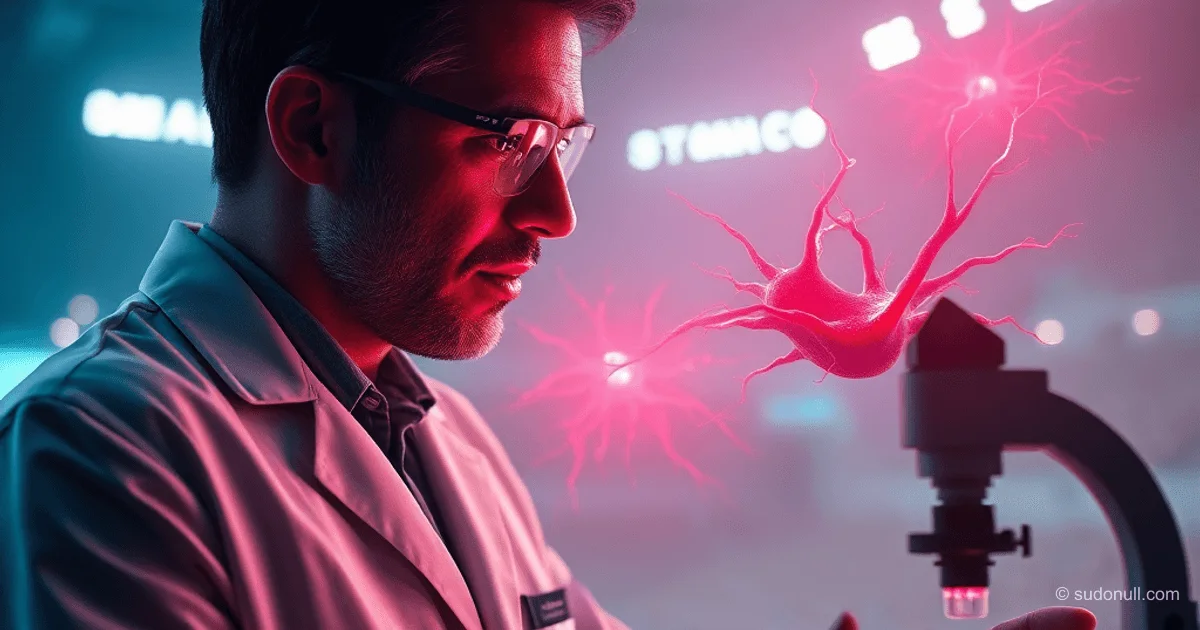
Modern regenerative medicine is pushing beyond the limits of traditional transplantology by introducing bioengineered solutions based on artificial endosymbionts. These genetically modified bacteria can reprogram a patient's cells in vivo, bypassing the risks of immune rejection and donor organ shortages. The technology paves the way for controlled tissue regeneration in neurodegenerative diseases, heart attacks, and chronic injuries without the need for surgery.
Fundamentals of Endosymbiont Therapy: From Theory to Practice
The concept of using endosymbionts as therapeutic tools is based on symbiogenesis mechanisms similar to the origin of mitochondria and chloroplasts. Unlike viral vectors, endosymbionts maintain an isolated genome and interact with the host cell through membrane receptors without integrating into chromosomes. The team led by Professor Chris Contag (University of Michigan) has developed a platform where E. coli bacteria are modified to:
- Introduce genes encoding light-sensitive proteins (e.g., mCherry)
- Create genetic circuits with defined logical operations
- Form spatiotemporal patterns of expression
A key advantage is the ability to monitor system activity through bioluminescence. When introduced into brain tissue, endosymbionts with dopamine receptors activate expression of the transcription factors ASCL1 and NURR1 only in areas with pathologically low neurotransmitter levels. This enables targeted restoration of dopaminergic neurons in Parkinson's disease without systemic effects.
Technical Mechanisms of Cellular Reprogramming
The system operates on the principle of a biological finite state machine. The endosymbiont's genetic circuit includes:
- Sensor modules — membrane receptors that recognize biomarkers (e.g., IL-6 in inflammation)
- Logic gates — promoters activated by combinations of transcription factors
- Effector blocks — genes encoding therapeutic proteins (BDNF, GDNF)
In experiments with mouse models, targeted delivery to the striatum showed that endosymbionts expressing LMX1A increased the neuron population by 37±5% over 8 weeks. Notably, there were no signs of teratoma formation — a critical advantage over iPSC technologies. Specificity is achieved through two-stage activation: a primary signal (e.g., 39°C temperature) triggers sensor expression, while a secondary signal (dopamine < 0.5 nM) activates the therapeutic gene.
Control and Safety: Addressing Systemic Challenges
The main risks of the technology — uncontrolled proliferation and cross-reactivity — are mitigated by:
- Autolimiting genetic circuits with microRNA feedback
- Temperature-sensitive promoters (pL/pR systems)
- Magneto-activatable endosymbionts with Fe₃O₄ nanoparticles
In Contag et al. (2025), it was shown that applying an alternating magnetic field (15 Hz, 20 mT) increases target gene expression by 8.3-fold. This allows dynamic regulation of therapeutic protein dosage via an external trigger, avoiding overdosing. Importantly, the endosymbiont lifecycle is limited to 72 hours, after which the bacteria lyse under the action of an inducible holin gene.
What's Important
- Programmability: Endosymbionts implement AND/OR logic operations through promoter combinations
- Safety: No genome integration reduces the risk of oncogenesis
- Spatial Control: 3D transcriptomic mapping enables tracking regeneration at the tissue ensemble level
- Clinical Outlook: First human trials are planned for 2027 for Parkinson's disease therapy
The technology has already demonstrated effectiveness in restoring cardiomyocytes after a heart attack. In pig experiments, endosymbionts with VEGF and FGF2 genes reduced scar tissue area by 62% over 4 weeks. The key challenge is scaling the system for multicellular ensembles. Modern spatial transcriptomics algorithms (Visium, MERFISH) allow real-time adjustment of endosymbiont activity through feedback from proteomic data.
Transitioning from in vitro to in vivo requires addressing immune tolerance issues. The MIT team developed an E. coli strain with msbB gene deletion for LPS synthase, reducing proinflammatory response by 15-fold. Parallel work is underway on "masking" bacteria as autologous cells via CD47 expression — a "don't eat me" signal for macrophages. These advances bring us closer to the era of personalized regenerative medicine, where treatments are tailored to the molecular profile of a patient's specific tissue.
— Editorial Team









No comments yet.