# MemPalace in the Crosshairs: Breaking Down Plagiarism Accusations Against the AI Memory Manager's Architecture
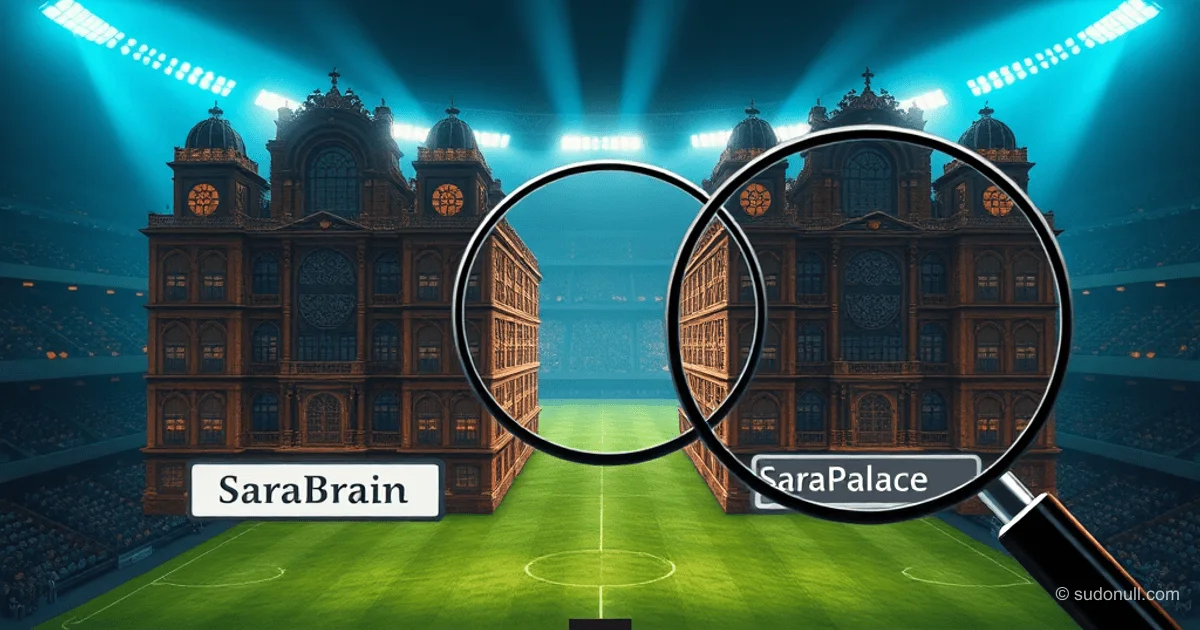
The MemPalace library, introduced by Milla Jovovich and Ben Sigman as an innovative memory manager for AI agents, has landed at the center of a major scandal. The project, which skyrocketed to 40,000 stars on GitHub overnight, stands accused of directly copying the architecture of SaraBrain—a solution developed by Jennifer Pearl (LunarFawn) for over 30 years. A technical audit uncovered identical structural elements, falsified benchmarks, and issues with unauthorized commercial use.
Timeline of Accusations: How It All Started
On April 5, 2026, Milla Jovovich created the public MemPalace repository on GitHub. By April 7, the project was announced on Hacker News, sparking a surge of interest. That same day, user LunarFawn opened an issue pointing out the striking similarities between MemPalace's architecture and her own SaraBrain project, which had been published in March 2026. Sigman dismissed the claims, stating that development had taken six months in a private repository, but he refused to provide evidence, citing "personal data in the commits."
Critics immediately flagged inconsistencies: why would a library for AI agents store personal data in the source code? Analysis of the codebase confirmed suspicions of code generation via Claude Opus (which has access to public repositories). Independent developers found traces of prompts like "take ideas from this paper, rename the terms, and commit-push."
Technical Overlaps: More Than Coincidence?
Analysis of the architectural decisions revealed a perfect match in key components. Both projects are built on identical principles, which is highly unlikely for independent development:
- Local data storage without cloud dependencies
- Using LLM solely as a sensory interface, not the system core
- Knowledge graph implemented via SQLite storage
- No generalizations or fact "forgetting" mechanisms
- Graph traversal during data retrieval
- Minimized external dependencies
Terminology comparisons expose systematic renaming of concepts:
| SaraBrain | MemPalace |
|-----------------|-------------------|
| 4 types of neurons | 4-layer stack |
| Segments | "Wings" and rooms |
| Paths | Corridors |
These overlaps go beyond the general Path-of-thought concept, locking in Pearl's unique solutions. Notably, MemPalace lacks any alternative implementation approaches, confirming copying.
Benchmarks and Features: All Smoke and Mirrors?
MemPalace's touted advantages didn't hold up under scrutiny. Independent tests revealed:
- Contradiction detection function: Missing from the code. The only implementation is deduplication via exact triplet matches (subject-predicate-object), which doesn't address contradiction detection.
- AAAK-compression: Not lossless. Strings are truncated to 55 characters, sorted by keyword frequency, and the decode function builds a tag map instead of restoring the original string.
- LoCoMo-benchmark: Completely skips the retrieval stage (data search), replacing it with comprehension reading via Sonnet. This undermines the search performance test.
- LongMemEval: Riddled with fundamental flaws—answers leaked into LLM training data, only search is tested without answer generation, and only user messages are indexed (not agent responses).
On top of that, GitHub stars were inflated, and the MEMPALACE memecoin launched by Sigman a day after the scandal crashed to zero. Sigman himself started mass-banning critics, confirming an attempt to cover up the issue.
Licensing: Switching from CC BY-NC-ND to MIT
A key ethical issue is licensing. SaraBrain is released under CC BY-NC-ND 4.0, which prohibits commercial use and modifications. MemPalace, however, uses the MIT License, allowing any use, including commercial. This lets corporations deploy the solution without crediting the original work.
Jennifer Pearl isn't pushing theft accusations, acknowledging possible coincidental overlaps. But relicensing makes it impossible to track idea origins. In the era of AI code generation, this sets a dangerous precedent: researchers spending years on concepts could be left uncredited while their work gets commercialized without compensation.
Key Takeaways
- Architecture plagiarism: Identical structural solutions in MemPalace and SaraBrain go beyond the general Path-of-thought idea, confirming copying.
- Falsified results: Benchmarks skip key testing stages, and claimed features are absent from the codebase.
- Licensing risks: Switching from CC BY-NC-ND to MIT enables commercializing others' work without attribution.
- AI generation ethics: Using LLMs to copy code without attribution calls for new intellectual property protections.
- Author accountability: Public figures like Jovovich face reputational risks for backing dubious projects.
The tech community is demanding transparency: open repositories should include full development histories, and benchmarks need independent verification. The MemPalace scandal tests the maturity of the open-source ecosystem in the age of AI code generation. Developers should remember: LLM-generated solutions don't absolve you of responsibility for originality checks and license compliance.
— Editorial Team









No comments yet.