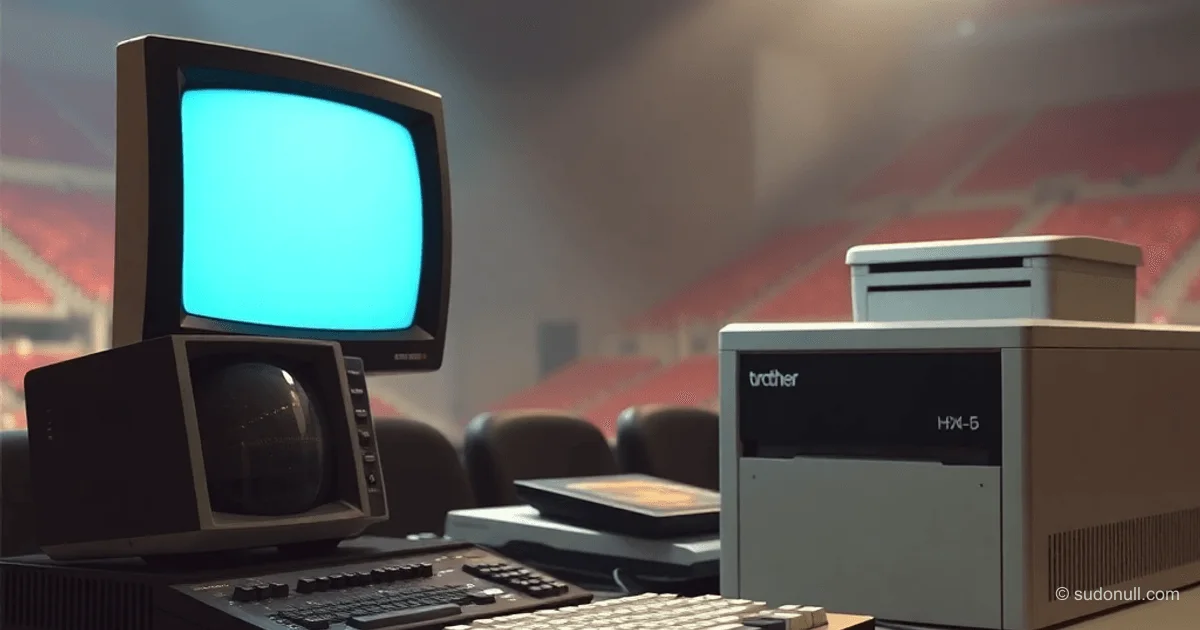
Tatung Einstein: The Unsung Giant of 1980s Game Development
Tatung Einstein was a computer that never conquered the mass market but became an indispensable tool for game developers in the mid-1980s. Released by the Taiwanese corporation Tatung in British labs, this 8-bit machine offered unique capabilities for cross-platform development, speeding up the release of hits for the Spectrum and Commodore 64. Let's break down why engineers preferred it over the Atari ST and PC.
Architecture: Power in the Details
Tatung Einstein TC-01 and its improved version Einstein 256 are built on the Zilog Z80A processor clocked at 4 MHz. Key specifications:
- RAM: 64 KB (192 KB in Einstein 256)
- Video RAM: 16 KB (up to 192 KB in Einstein 256)
- Graphics: TMS9918 (256×192, 16 colors, 32 sprites) or Yamaha V9938 in Einstein 256 (512×424, 512-color palette)
- Audio: AY-3-8910 (3 channels + noise)
- Interfaces: Centronics for printer, RS232-C, two analog-to-digital ports, "Tatung Pipe" interface for direct Z80A data bus addressing
A key feature was support for an 80-column monochrome display via an additional video card, which was crucial for professional tasks. The chassis, assembled in Bradford, was bulky and included a branded monitor (monochrome or color) with built-in speakers. The system's price (500 £ in 1984) made it pricier than competitors, but engineers valued its reliability and expanded capabilities.
Development Environment: From Machine Code to EBASIC
Upon boot-up, the computer loaded a simple machine code monitor called MOS (Machine Operating System). For disk operations, it ran Xtal DOS, developed in Torquay. The primary tool was the Xtal BASIC interpreter—an advanced dialect with built-in graphics and sound support. The Einstein 256 introduced EBASIC, optimized for its enhanced graphics features.
Programmers had access to a full stack of languages:
- COBOL, FORTH, LISP, LOGO
- PL/1, Prolog, Pascal, C
- Z80 Assembler
The Einstein User Magazine (19 issues, 1984–1991) published ready-to-use algorithms and technical solutions. The master disk included EBASIC, EDOS, and utilities for reading data from magnetic tape, making debugging a breeze.
Cross-Platform Development: The Secret to Success
The Tatung Einstein's killer feature was emulation of target systems via the "Tatung Pipe" interface. Developers at Imagine Software and Ocean Software used it to build games for the Spectrum and Commodore 64. Code was sent over cable to the target hardware and executed in real time, slashing testing cycles.
Two standout solutions:
- Speculator—a hardware adapter for 50 £ that emulated the ZX Spectrum via the Pipe interface. It featured a sound chip and a cassette deck connector.
- Amrun—software for emulating the Amstrad CPC.
These tools powered hits like Ghost ’n Goblins and Ghouls ’n Ghosts. Despite the computer's commercial flop, it stayed essential for developers until the Atari ST and TT arrived.
Legacy: From Archives to Today
Today, the Tatung Einstein is a retrocomputing enthusiast favorite. The platform boasts over 400 software titles, including dBase, VisiCalc, and WordStar, along with 135 games. The fan site tatungeinstein.co.uk (online since 2004) connects owners of original units and archives documentation.
Key takeaways:
- Tatung Einstein wasn't a commercial hit, but it was a powerhouse for developing games on popular 8-bit platforms.
- The "Tatung Pipe" interface enabled direct Z80A data bus access, vital for cross-platform debugging.
- EBASIC and Xtal DOS support, with advanced graphics, accelerated content creation.
- Hardware adapters like Speculator delivered precise, developer-friendly Spectrum emulation.
— Editorial Team










No comments yet.