September 25, 2014 at 10:40
How Peter Thiel distinguishes an insanely cool startup from an insane
- Transfer
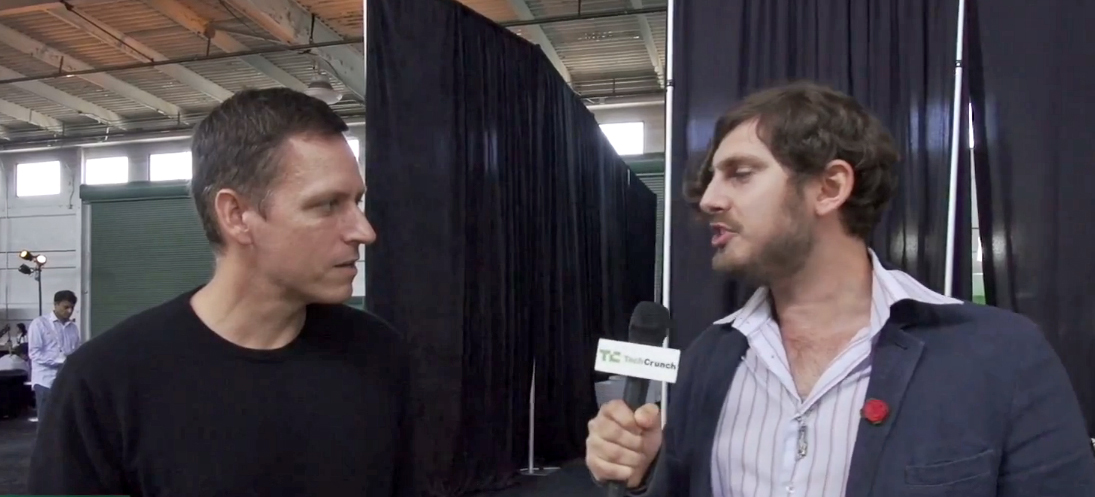
Recently, one of the most prestigious events for startup developers, TechCrunch Disrupt SF, was held in San Francisco. TechCrunch talked to Peter Thiel, a well-known venture investor, co-founder of PayPal and the first external Facebook investor, during the conference. He and his partners launched and funded many successful startups of the last decade: including LinkedIn, Yelp, SpaceX, Friendster, Quora, and Geni. You can watch the video of the interview with Peter Thiel on YouTube , and we at Alconost translated this conversation into Russian - to the delight of all startups, IT people and more.
- You talked a lot about the fact that you need to choose ideas and projects that may seem crazy to an ordinary person. Indeed, someone has probably already realized ordinary, “normal” ideas. How do you distinguish a simply insane project from an insanely cool project that has every chance of success?
- Studying an idea or project, you need to try to understand their real value and look into the essence. For example, to assess whether the technology is operational, under what conditions it will work. In addition, it is worth asking the founders about their common history: did they work together before, would they abandon their project when the first difficulties appeared? You should always focus on the essence of the project: there are no easy ways.
- Do you try to avoid bias by evaluating which idea may work in the future and which not?
- Yes, there is always the temptation to do with simplified criteria, and we [venture investors, - approx. perev. ] like no other sin this. But I think you should always try to find a highlight, not trying to immediately say “yes” or “no”; really get to the bottom of it every time and keep an open mind.
- When you come up with an idea that makes you wonder if it really works, what questions do you ask entrepreneurs making a presentation? For example, questions about their philosophy, their long-term vision, the likelihood of success?
- I evaluate three key components: team, technology and business strategy. All of these components should be equally complete. Therefore, when I see that people are focusing, for example, on technology, I would rather want to talk with them about the team and business strategy. That is, I turn to topics about which entrepreneurs themselves do not want to talk a lot.
- I want to ask you a little about your philosophy and the philosophy of the “nouveau riche” that came from the world of technology. Do you think the value systems differ between those who have made good money on technology and those who make money on a business that is far from technology?
- Generalizing is always difficult. But I think these are quite different things: when you made money on computers or, say, mining resources in the Congo or something similar. Of course, I am a little biased, but I really believe in it.
As for my philosophy - I think that such a concept as charity deserves to be rethought. I always like to ask uncomfortable questions; if in business it is: “What great companies does nobody found?”, then in charity this question would sound something like this: “What kind of good deeds does nobody want to support?”. And one more question that I always like to ask: “Why is this good cause unpopular?” I do not want to allocate funds for good deeds that are popular: it seems to me that they are already well funded. In my opinion, unpopular good deeds deserve to get more.
- The one who makes a fortune in five years may have the feeling that the money earned does not really belong to him, that he received it by pure chance. But the one who consistently and purposefully built a career, working every day for 20 years, will have confidence that everything that he came to as a result, really belongs to him. Have you noticed that it seems to people that they really do not have rights to the money earned in IT, and it is better for them to give this money to someone? What is the philosophy of these people making big donations to charity?
“Well, I think, for the most part, they just want to return something to society.” Not sure what they think about whether they deserve all of their fortune or only part of it.
In fact, what is unusual in the Silicon Valley IT industry is that most inventions bring at least some benefit to their creators. After all, the history of innovation is for the most part a story about people to whom their own inventions bring nothing. For example, the Wright brothers invented the plane, but did not become rich. You can still recall the famous confrontation between Edison and Tesla: they say Tesla was a great inventor and did everything right, but Edison somehow supplanted Tesla ... As you can see, usually most inventions generally bring nothing to their authors.
To make money, you need to do two things. First: create something valuable to the world. Second: to wrap part of the created value in your favor. And just the second people often fail completely. I think Silicon Valley is special in that there is an extensive class of innovators able to capitalize on the value they invented.
- That is, now we have entrepreneurs who have grown rich on what the whole world needs, and hoping that they can benefit the world?
- Yes, and I always say that making the world a better place is not due to the need for status or respect. In charity, you need to be as brave as in founding a business.
“Well, be brave and make donations!”
About the translator
Translation of the article was done in Alconost.
Alconost localizes applications, games and sites in 60 languages. Native-language translators, linguistic testing, cloud platform with API, continuous localization, project managers 24/7, any format of string resources.
We also make advertising and training videos - for sites that sell, image, advertising, training, teasers, expliner, trailers for Google Play and the App Store.
Read more: https://alconost.com
How to evaluate ideas and startups
- You talked a lot about the fact that you need to choose ideas and projects that may seem crazy to an ordinary person. Indeed, someone has probably already realized ordinary, “normal” ideas. How do you distinguish a simply insane project from an insanely cool project that has every chance of success?
- Studying an idea or project, you need to try to understand their real value and look into the essence. For example, to assess whether the technology is operational, under what conditions it will work. In addition, it is worth asking the founders about their common history: did they work together before, would they abandon their project when the first difficulties appeared? You should always focus on the essence of the project: there are no easy ways.
- Do you try to avoid bias by evaluating which idea may work in the future and which not?
- Yes, there is always the temptation to do with simplified criteria, and we [venture investors, - approx. perev. ] like no other sin this. But I think you should always try to find a highlight, not trying to immediately say “yes” or “no”; really get to the bottom of it every time and keep an open mind.
- When you come up with an idea that makes you wonder if it really works, what questions do you ask entrepreneurs making a presentation? For example, questions about their philosophy, their long-term vision, the likelihood of success?
- I evaluate three key components: team, technology and business strategy. All of these components should be equally complete. Therefore, when I see that people are focusing, for example, on technology, I would rather want to talk with them about the team and business strategy. That is, I turn to topics about which entrepreneurs themselves do not want to talk a lot.
Charity: helping those whom few help
- I want to ask you a little about your philosophy and the philosophy of the “nouveau riche” that came from the world of technology. Do you think the value systems differ between those who have made good money on technology and those who make money on a business that is far from technology?
- Generalizing is always difficult. But I think these are quite different things: when you made money on computers or, say, mining resources in the Congo or something similar. Of course, I am a little biased, but I really believe in it.
As for my philosophy - I think that such a concept as charity deserves to be rethought. I always like to ask uncomfortable questions; if in business it is: “What great companies does nobody found?”, then in charity this question would sound something like this: “What kind of good deeds does nobody want to support?”. And one more question that I always like to ask: “Why is this good cause unpopular?” I do not want to allocate funds for good deeds that are popular: it seems to me that they are already well funded. In my opinion, unpopular good deeds deserve to get more.
Big jackpot and universal injustice
- The one who makes a fortune in five years may have the feeling that the money earned does not really belong to him, that he received it by pure chance. But the one who consistently and purposefully built a career, working every day for 20 years, will have confidence that everything that he came to as a result, really belongs to him. Have you noticed that it seems to people that they really do not have rights to the money earned in IT, and it is better for them to give this money to someone? What is the philosophy of these people making big donations to charity?
“Well, I think, for the most part, they just want to return something to society.” Not sure what they think about whether they deserve all of their fortune or only part of it.
In fact, what is unusual in the Silicon Valley IT industry is that most inventions bring at least some benefit to their creators. After all, the history of innovation is for the most part a story about people to whom their own inventions bring nothing. For example, the Wright brothers invented the plane, but did not become rich. You can still recall the famous confrontation between Edison and Tesla: they say Tesla was a great inventor and did everything right, but Edison somehow supplanted Tesla ... As you can see, usually most inventions generally bring nothing to their authors.
To make money, you need to do two things. First: create something valuable to the world. Second: to wrap part of the created value in your favor. And just the second people often fail completely. I think Silicon Valley is special in that there is an extensive class of innovators able to capitalize on the value they invented.
- That is, now we have entrepreneurs who have grown rich on what the whole world needs, and hoping that they can benefit the world?
- Yes, and I always say that making the world a better place is not due to the need for status or respect. In charity, you need to be as brave as in founding a business.
“Well, be brave and make donations!”
About the translator
Translation of the article was done in Alconost.
Alconost localizes applications, games and sites in 60 languages. Native-language translators, linguistic testing, cloud platform with API, continuous localization, project managers 24/7, any format of string resources.
We also make advertising and training videos - for sites that sell, image, advertising, training, teasers, expliner, trailers for Google Play and the App Store.
Read more: https://alconost.com