November 26, 2013 at 12:21
Zend Framework 2.0 Web Application Development
Hello!
I want to present you our new book on the subject of Zend Framework:
“Zend Framework 2.0 Web Application Development”
Author: Krishna Shasankar
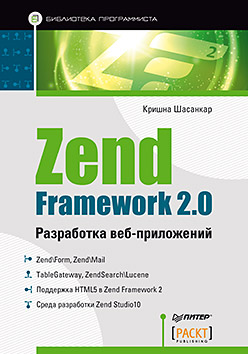
The book is intended for those who want to quickly start working in this framework. If you are a PHP developer who is not familiar with the Zend Framework but wants to quickly learn this framework in practice, then this book is for you.
It is assumed that you have basic knowledge in the field of object-oriented programming in the PHP language.
In paper and electronic form is available HERE
CONTENTS
PASSAGE
A special discount of 20% for habrozhiteley!
Promo Code: 2ab5e5
Chapter 1, “Getting Started with the Zend Framework,” focuses on configuring your development environment. In it, we will set up a PHP application server, install the MySQL DBMS, and create a database that will be used in practical exercises on the Zend Framework in subsequent chapters.
Chapter 2, “Creating the First Application Using the Zend Framework,” talks about creating a Zend Framework 2 project; We will learn about key aspects of developing an MVC application in Zend Framework 2 by creating modules, controllers, and views. The module that we will create will be expanded in subsequent chapters of this book.
Chapter 3“Creating a communication application” introduces the reader to the Zend / Form component. In this chapter, we will create our first registration form and configure the mechanism for logging in and authenticating registered users using the Zend Framework components.
Chapter 4, “Data Management and Document Sharing,” discusses data and file management concepts in the Zend Framework. In this chapter, we will introduce you to various aspects of using the Zend Framework, including the service manager, the TableGateway pattern, file upload handling and sharing.
Chapter 5Chat and Email, talks about using JavaScript in your application. As an example, which explains the use of JavaScript features in the development of web applications, the implementation of group chat is used. In addition, this chapter discusses sending emails using the Zend \ Mail component, as well as the Zend Framework Event Manager.
Chapter 6, “Sharing Media,” introduces developers to managing and sharing images and videos in the Zend Framework. This chapter uses various Zend Framework external modules for working with images and videos.
Chapter 7“Searching with the Lucene Library,” talks about developing a search engine based on the Lucene library using the Zend Framework. At the beginning of the chapter, we are talking about installing the ZendSearch \ Lucene module, and then the implementation of search mechanisms in the database and document files is discussed in detail.
Chapter 8, “Creating a Simple Store,” serves as an introduction to e-commerce systems. In this chapter, we will create a simple online store that will demonstrate the shopping cart development process. To process payments, we will use the PayPal Express Checkout payment system.
Chapter 9HTML5 Support is dedicated to supporting the HTML5 specification in Zend Framework 2. Unlike the previous version of Zend Framework, version 2 provides comprehensive support for various HTML5 features; This chapter discusses two key aspects of using HTML5 — new data entry elements and multiple file uploads.
Chapter 10 “Creating Mobile Applications” introduces the reader to the creation of “native” mobile applications using Zend Framework 2 and the Zend Studio 10 development environment. In this chapter, we will learn the basics of creating cloud mobile applications in the Zend Framework and consider setting up a cloud-based PHP development environment applications.
I want to present you our new book on the subject of Zend Framework:
“Zend Framework 2.0 Web Application Development”
Author: Krishna Shasankar
The book is intended for those who want to quickly start working in this framework. If you are a PHP developer who is not familiar with the Zend Framework but wants to quickly learn this framework in practice, then this book is for you.
It is assumed that you have basic knowledge in the field of object-oriented programming in the PHP language.
In paper and electronic form is available HERE
CONTENTS
PASSAGE
A special discount of 20% for habrozhiteley!
Promo Code: 2ab5e5
Summary:
Chapter 1, “Getting Started with the Zend Framework,” focuses on configuring your development environment. In it, we will set up a PHP application server, install the MySQL DBMS, and create a database that will be used in practical exercises on the Zend Framework in subsequent chapters.
Chapter 2, “Creating the First Application Using the Zend Framework,” talks about creating a Zend Framework 2 project; We will learn about key aspects of developing an MVC application in Zend Framework 2 by creating modules, controllers, and views. The module that we will create will be expanded in subsequent chapters of this book.
Chapter 3“Creating a communication application” introduces the reader to the Zend / Form component. In this chapter, we will create our first registration form and configure the mechanism for logging in and authenticating registered users using the Zend Framework components.
Chapter 4, “Data Management and Document Sharing,” discusses data and file management concepts in the Zend Framework. In this chapter, we will introduce you to various aspects of using the Zend Framework, including the service manager, the TableGateway pattern, file upload handling and sharing.
Chapter 5Chat and Email, talks about using JavaScript in your application. As an example, which explains the use of JavaScript features in the development of web applications, the implementation of group chat is used. In addition, this chapter discusses sending emails using the Zend \ Mail component, as well as the Zend Framework Event Manager.
Chapter 6, “Sharing Media,” introduces developers to managing and sharing images and videos in the Zend Framework. This chapter uses various Zend Framework external modules for working with images and videos.
Chapter 7“Searching with the Lucene Library,” talks about developing a search engine based on the Lucene library using the Zend Framework. At the beginning of the chapter, we are talking about installing the ZendSearch \ Lucene module, and then the implementation of search mechanisms in the database and document files is discussed in detail.
Chapter 8, “Creating a Simple Store,” serves as an introduction to e-commerce systems. In this chapter, we will create a simple online store that will demonstrate the shopping cart development process. To process payments, we will use the PayPal Express Checkout payment system.
Chapter 9HTML5 Support is dedicated to supporting the HTML5 specification in Zend Framework 2. Unlike the previous version of Zend Framework, version 2 provides comprehensive support for various HTML5 features; This chapter discusses two key aspects of using HTML5 — new data entry elements and multiple file uploads.
Chapter 10 “Creating Mobile Applications” introduces the reader to the creation of “native” mobile applications using Zend Framework 2 and the Zend Studio 10 development environment. In this chapter, we will learn the basics of creating cloud mobile applications in the Zend Framework and consider setting up a cloud-based PHP development environment applications.