N=1: CRISPR 'Pencil' Saves Infant from Deadly Genetic Defect
Doctors in Philadelphia edited a newborn's liver not by the book, but by assembling a therapy specifically for the mutation of one particular child. This trick of ultra-precise 'base editing' has opened the door to a new era, where the FDA is scratching its head over how to stamp out drugs for single patients.
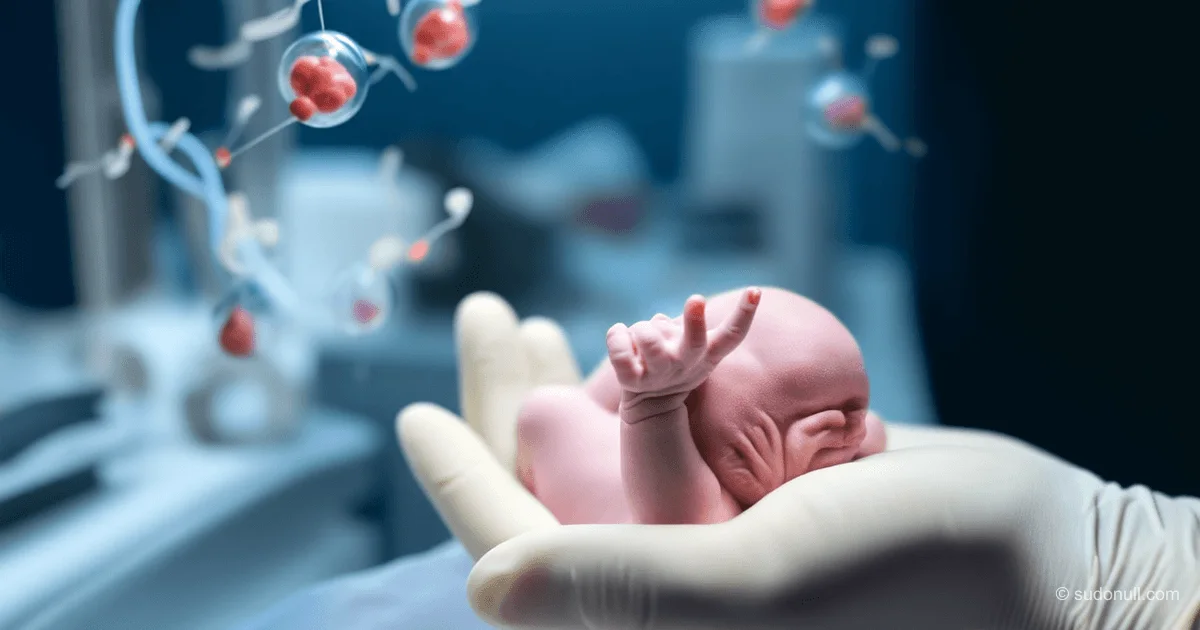
Doctors at the Children's Hospital of Philadelphia pulled off what just yesterday was called medical science fiction. They assembled a gene therapy for a single infant—editing the cells of his liver precisely to target a mutation that no one else in the world has. The child was born with a fatal urea cycle disorder. Without treatment, such children die within days. Now he is alive, healthy, and his case is breaking the very idea of a drug as a mass-produced product.
The results of this experiment were accepted for publication by the journal Nature in spring 2026, and from that moment, N=1 ceased to be a theoretical exercise for bioethics conferences. Dr. Bryan Kip, who led the procedure, called his tool a 'CRISPR pencil.' He and his colleagues used base editing—a technology that does not cut DNA outright but chemically replaces one 'letter' of the genetic code with another. The infant's mutation turned out to be a point mutation: a single nucleotide substitution in the ornithine transcarbamylase gene turned the liver into a toxic reactor. The base editor fixed the typo without breaking the chromosome—and without the risk of causing cancer at the intervention site.
Not a Platform, but a Custom Tool
Conventional gene therapy works like an assembly line. A viral vector (AAV) is taken, loaded with a healthy copy of the gene, and administered to the patient. The problem is that AAV can only carry a limited amount of DNA, and the immune system often attacks the viral shell before it reaches the cells. Plus, in infants, the liver grows so fast that the effect of standard therapy fades within months. Editing directly in liver cells solved both problems: no external virus, no temporary patch—only a chemical correction of the mutation in the genome of hepatocytes.
Kip's team delivered the base editor to liver cells using lipid nanoparticles—the same fat bubbles used in mRNA vaccines against COVID-19. The difference is that here the nanoparticles carried not a temporary instruction for a spike protein, but a permanent tool for genome correction. Targeted delivery solved the main headache of editing: how to hit the liver and nothing else.
A Regulatory Puzzle Worth Billions
The case of the Philadelphia infant puts the FDA in a position the agency has avoided for decades. All clinical trials are built on statistics: a group of patients, a control group, a p-value. When there is only one patient, there is no statistics. You cannot conduct a double-blind placebo-controlled study. You cannot prove efficacy on a sample. You cannot extrapolate results to a population.
Peter Marks, director of the FDA's Center for Biologics Evaluation and Research, spoke publicly as early as late 2025: 'We must create a regulatory pathway for therapies with ultra-small populations, down to a single patient. The current system is not designed for this.' His statement came before the Philadelphia case, but it was this precedent that turned an abstract discussion into an urgent problem. Congress is already preparing amendments to the Orphan Drug Act—the law on rare diseases that incentivizes pharmaceutical companies with tax breaks to develop drugs for populations of fewer than 200,000 patients. Now the talk is about populations of fewer than ten. Or fewer than one.
The cost of one such therapy is estimated at $2–3 million per patient—roughly the same as the most expensive approved gene therapy, Libmeldy. But the difference is fundamental: Libmeldy is produced for hundreds of patients with metachromatic leukodystrophy, and development costs are spread out. A therapy for a single patient involves the entire R&D cycle, preclinical animal tests, and safety checks, compressed into months and paid for out of the hospital's pocket, a charitable foundation, or the parents.
Winners and Losers
The primary winners are patients with ultra-rare mutations—there are about 30 million such people in the US, according to NIH estimates. Each disease individually affects a handful of people, but together they form a huge population that the pharmaceutical industry has ignored for decades. Editing for a specific mutation turns this neglected territory into an addressable market.
Technology platforms also win: Verve Therapeutics, Beam Therapeutics, Prime Medicine—companies built around base and prime editing. Their stocks jumped on the news from Philadelphia because the infant case is the best proof of concept imaginable.
Losers are the classic AAV vector manufacturers that have dominated gene therapy for the past five years. If direct organ editing works, expensive viral platforms lose their competitive edge. Insurance companies lose—actuarial models do not account for a one-time payment of $2 million for a single insured person. Regulators in jurisdictions with strict clinical trial rules lose—Europe and Japan have not even begun to discuss N=1 legislative adaptation.
From One Child to a Platform: What's Next
The Philadelphia team has already launched a protocol for three more patients with other point mutations in the same gene. The idea is that the technology platform—nanoparticle delivery to the liver—remains unchanged. Only the guide RNA that directs the editor to the specific mutation changes. This is like swapping a tip on a tool: the basic machinery is the same, the target is different.
In the next two years, hospitals like CHOP and Boston Children's Hospital will begin creating internal 'N=1 therapy' units—essentially mini-biotech startups within medical institutions with their own production lines. The FDA will likely launch a pilot program for accelerated approval of ultra-orphan editing therapies in 2027–2028.
The main shift has already happened. The drug has ceased to be a product. It has become a service—just like an emergency operation, but at the genome level. And the first patient who survived thanks to the 'CRISPR pencil' has proven: it works. Now the healthcare system will have to catch up.
— Editorial Team








No comments yet.