January 27, 2010 at 17:44
Disassembly: Artificial Intelligence VCR
 The 90s of the last century is a very unusual time, including in terms of technology. See for yourself: in the 80s reel tape recorders and turntables were still actively used. In the 90s, "turntables" and "bobbinniki" massively went to a landfill, and instead, musical centers and video recorders took over the minds. In the "zero" cheap DVD-players and multi-channel speakers replaced the "Vidic". 10 years is a very short time, but if in the 95th year I was told that an expensive VCR with many functions would soon not cost anything at all, I would be very surprised.
However, I am glad that the VCRs still come across in the apartments of friends and acquaintances, which means that there is an opportunity to make out the next piece of iron and see how it works. And there is something to see there: the tape drive mechanism of Vidiks is much more complicated than that of ordinary reel tape recorders. To be torn to pieces, I was not given the most perfect, but a typical model of the late nineties - a video player with recording function LG H102W.
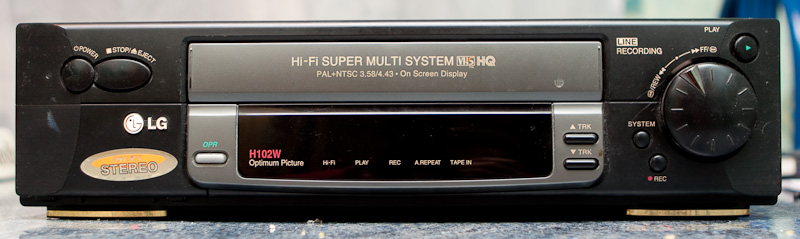
To begin, let's decide on the classification. A poor relative in the VHS world was considered a simple video player, without a recording function. And the most advanced is a VCR that can record TV shows on its own, sometimes even according to a predefined schedule. The strange verbal construction of a “writing video player” means something in between: on the one hand, a simple device without bells and whistles, on the other - a red button that records unnecessary video on top of even more unnecessary, nevertheless, there is one. The LG H102W is just such a model, but completely different functions are advertised on the front panel.
Let's try to decrypt. “Hi-Fi” - this hints that the model is capable of recording and reproducing stereo sound. In the instructions for the device, I was surprised to find on the siteLG, the frequency range of 20-20 000 Hz is indicated for stereo mode, while for a monophonic track of the usual format, it is 100-10 000 Hz. According to Wikipedia , the sound quality of such systems in terms of signal-to-noise ratio is second only to CDs. Move on. “Super Multi System” says that the VCR can play back tapes recorded in both the PAL standard and the NTSC standard. A feature of the latter is a higher speed of the tape. On the “European” four-hour NTSC video cassette, only 2 hours 53 minutes of video can be recorded. At one time, I ran into this problem, trying to watch videotapes brought from the USA. Fortunately, I found a VCR that also supported both formats.
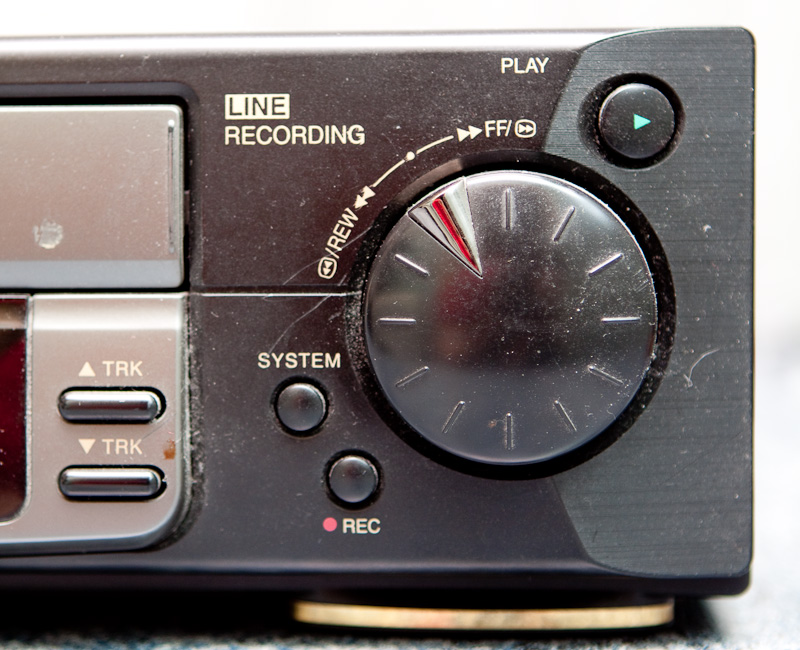
Close-up control buttons. Notice the two TRK buttons in the lower left. They in any video recorder were responsible for adjusting the head position to achieve maximum image quality. In early video rentals, cassettes were rented, it was not clear from which copy they were copying at home. The image quality on such recordings ranged from just bad to terrible, and “tracking” (manual or automatic) allowed at least getting rid of the bars at the top and bottom of the screen.
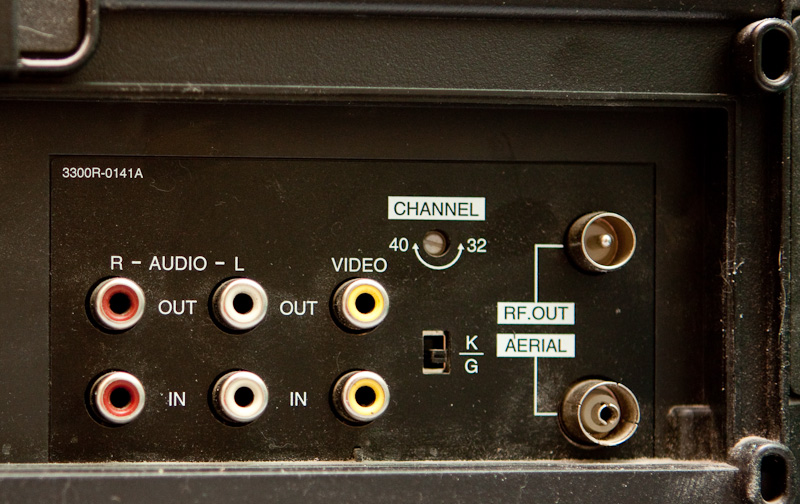
Connectors on the back. Two antenna connectors are designed for convenient connection of a VCR to a TV. The antenna is connected to the bottom connector, and the TV itself to the top. As a result, when the VCR is turned on, you watch a video from it, when turned off - ordinary TV programs. Composite video output is also present, but the model is designed to connect to the simplest TVs that are equipped only with an antenna input. You can’t record TV programs directly from the antenna using the LG H102W, only through the line input.
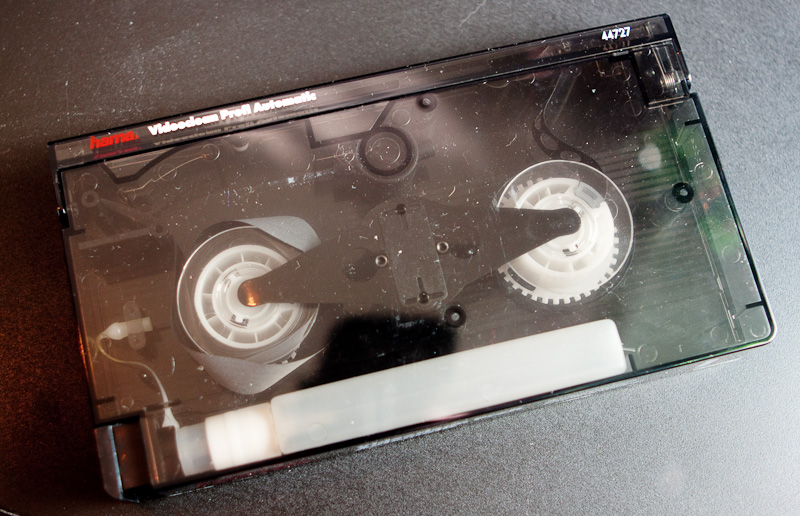
Before moving on to disassembly, let's take a look at another artifact from the past. A cleaning video cassette with an “endless” tape seems to be a useful accessory, but I personally have never used it. By the way, the LG VCR has an automatic head cleaning system.
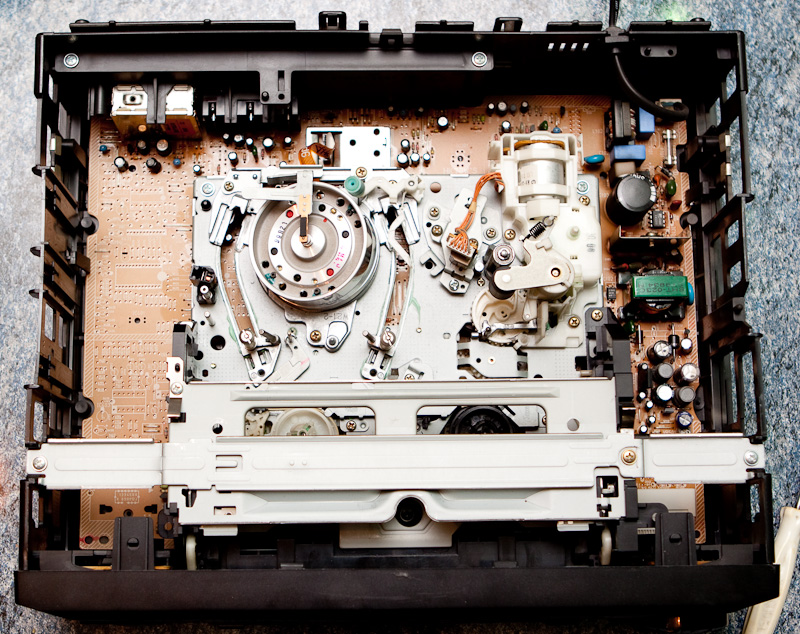
Top view with cover removed. Since the VCR is fully operational, I did not disassemble it into separate parts, especially since all the insides are already so clearly visible. A large part of the internal space is occupied by a complex tape drive mechanism.
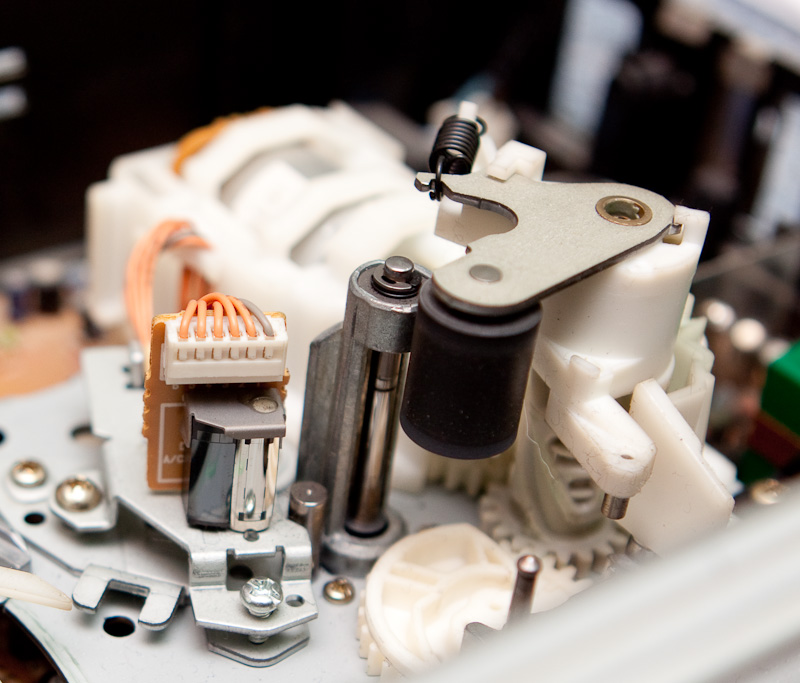
Pinch roller and separate head for the sound path. Judging by the information from Wikipedia, when recording high-quality stereo sound, the audio signal is mixed in with the video signal and recorded by the main head. The magnetic head shown in the photo is then used as an auxiliary one.
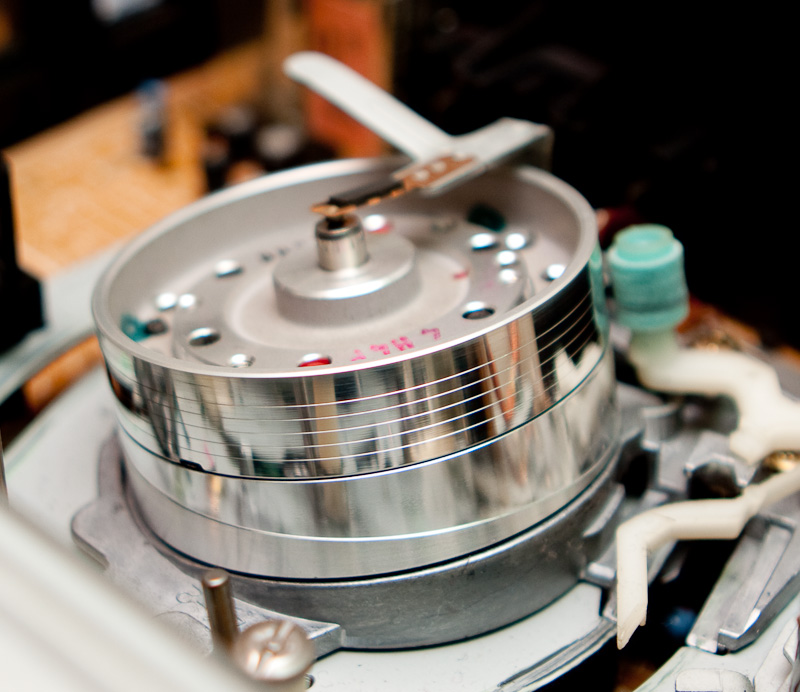
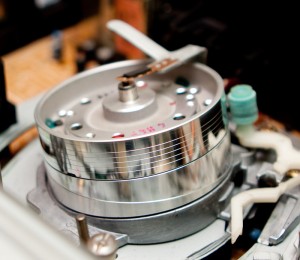
And here is the main “drum” with video heads. I can hardly remember that the number of magnetic heads in the drum may differ, and the image quality depends on it. The presence of 6 video heads was considered a sign of a “good” VCR. And one manufacturer actively advertised "diamond" heads that can work almost forever. “Eternity,” however, was not useful.
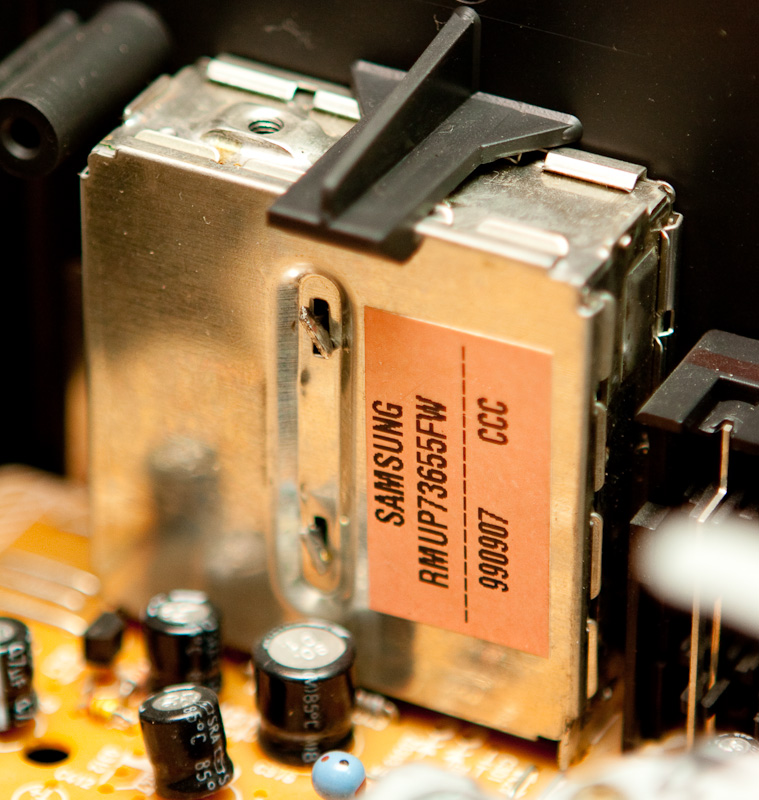
Suddenly , a part made by a competitor is detected in an LG VCR: a Samsung radio module.
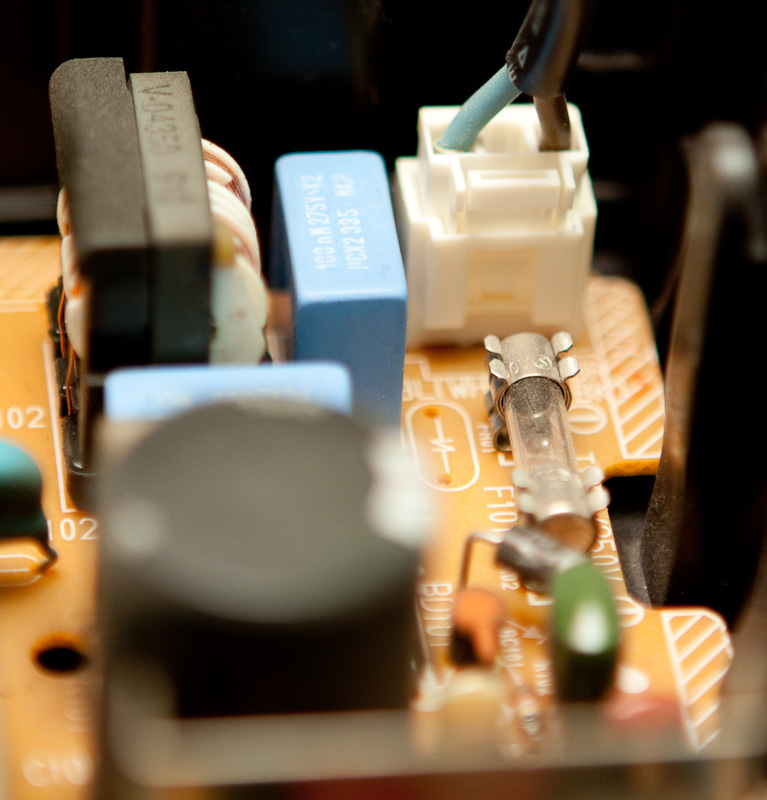
Batteries on the board and fuse.
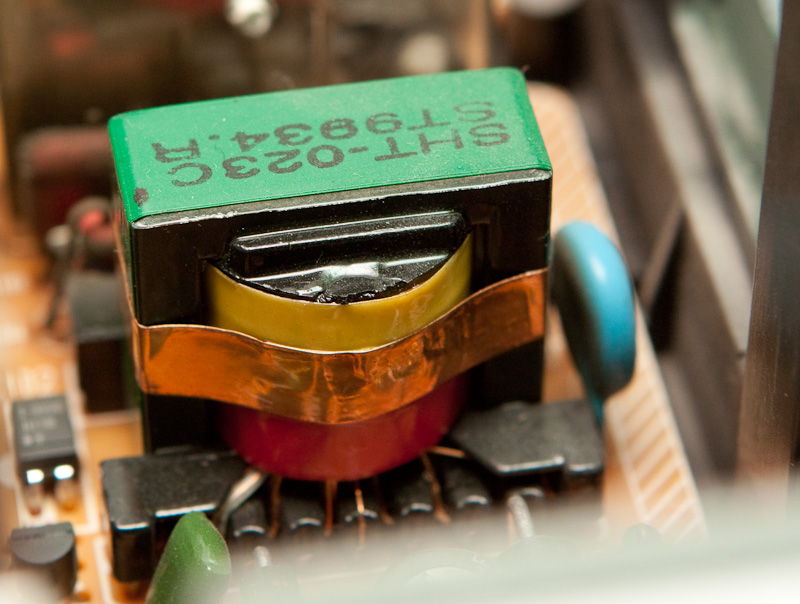
details ...
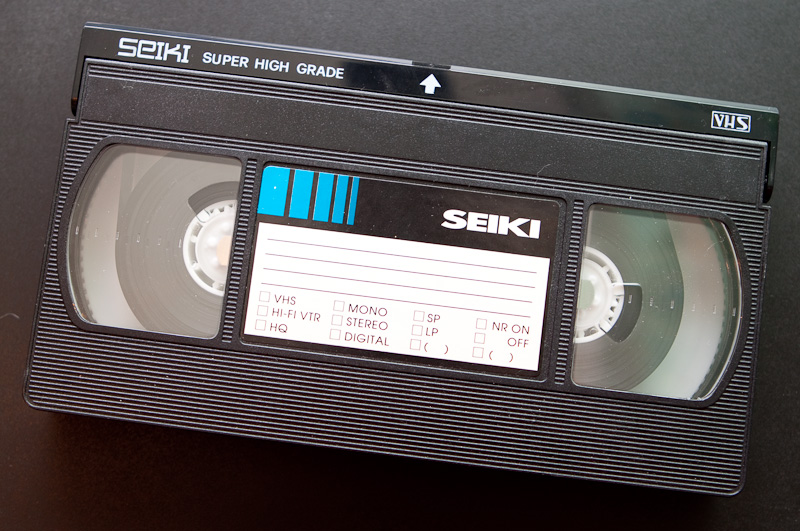
And in all its glory is the now obsolete medium. By the way, how many people remember the domestic development called " Arvid "?
Finally, let me explain what does “artificial intelligence” have to do with it. In the end, this is a rather primitive device that does not even have its own display! But the thing is this: initially I wanted to record a video demonstrating the process of loading and unloading cassettes. After removing the top cover, I found that the tape does not want to load, although before that everything worked fine! An acquaintance who participated in the showdown immediately suggested that "he is shy." I began to look for the contact that controls the top cover - well, what if they put protection from a fool (that is, from me)?
It turned out that the girl was right. I found out experimentally by turning off the light in the room. In the dark, the tape recorder immediately loaded the tape and began to play the video without any problems. It is impossible to shoot a video in the dark, and yet I decided to find a photo sensor. It’s noticeable in the video that I’m covering with my fingers the place where it is hidden under the tape drive. When I remove my hand, the tape recorder spits out the cassette on its own, without pressing a button! What the sensor does exactly there and what it is responsible for, I still do not understand. At the same time, you can evaluate how much easier it is to play videos from the same DVD: no clips or numerous levers for you. Although, of course, much more power and knowledge is invested in digital video than in analog.
As usual, the video is better to watch in 720p.
Unlike vinyl, VHS has left us forever. One can still argue about the advantages of analog and digital sound, but nobody (I hope!) Casts doubt on the clear advantage of DVD over VHS? Not to mention high-definition video and Blu-ray discs. The quality of modern video formats is so obvious that video cassettes lose outright. But, by the way, there are fans of laser video discs that have not become any more popular. After all, there, despite the similarities with the CD, an analog signal is recorded! However, this is a topic for a separate material.