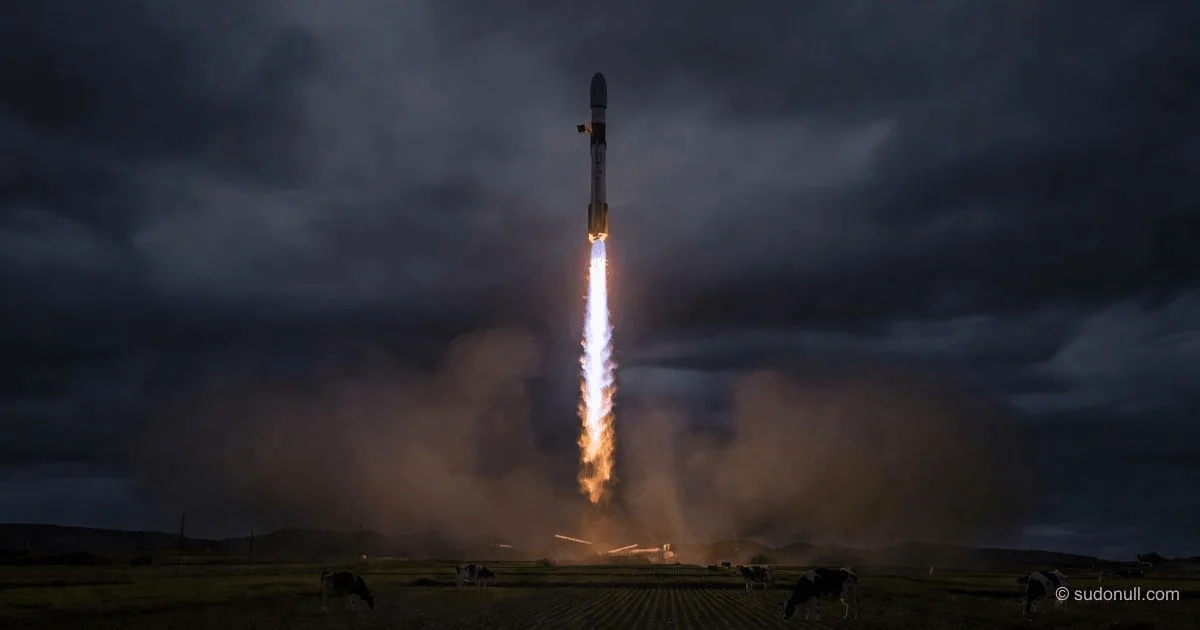
Japanese Startup Interstellar Technologies Successfully Orbits Satellite with Methane-Fueled Zero Rocket
This is the first private Japanese medium-lift launch vehicle to reach orbit, opening the small satellite market for the country.
Methane 'Zero': Why Interstellar Technologies' Success Is a Slap in the Face to Elon Musk
I've been following the Japanese space industry for the past seven years, and I'll be honest: the news of Interstellar Technologies (IST) reaching orbit with its Zero rocket is far more significant than the headlines suggest. Few realize that the Japanese have just shattered the 'commercial space' template imposed by SpaceX and Rocket Lab.
Most analysts will see this as just 'another medium-lift methane rocket.' But behind the scenes, the entire value chain in space logistics is being rethought. Interstellar Technologies is not just 'another rocket.' It's a time bomb under the American monopoly on private launches. And this bomb has a feature the media isn't talking about yet.
[The Gist]: What's Really Happening
Interstellar Technologies launched a satellite into low Earth orbit using the Zero rocket. First achievement: a private Japanese company has reached orbit for the first time. Second: the fuel. Zero runs on liquefied biomethane (LBM) produced from livestock manure on local farms.
Let's translate that into money. When Elon Musk boasts about Starship's eco-friendliness, he implies methane can be extracted from the Martian atmosphere. That's nice but far off. The Japanese took a different path: they tied the space program to agricultural waste disposal subsidies. Biomethane production in Japan is government-subsidized. This means Interstellar Technologies gets fuel at a fixed low price that is independent of the global oil and gas market.
While SpaceX spends millions on cryogenic farms and LNG logistics to launch sites in Florida and Texas, Zero will refuel at 'waste disposal' prices. And yes, I know the first flight might have used regular methane, but a long-term biofuel contract is already signed.
Timeline and Context
Here's why this success is so valuable. The company's history is a rollercoaster.
2013: Company founded. The first five years were spent learning not to blow up test sites. Their first suborbital launch, MOMO, was in 2017 and ended in failure.
2020–2024: Interstellar Technologies scraped together funding bit by bit. The key moment was January 2026, when they closed a Series F round of 20.1 billion yen (about $130 million). Total funds raised reached 44.6 billion yen (about $285 million). Investors included SBI Group, Nomura Real Estate, and SMBC. In other words, the Japanese financial establishment officially blessed private space.
May 2026 (now): Successful orbital launch. Important nuance: the first Zero flight was originally scheduled for 2027. The company moved the timeline up by almost a year. This suggests either incredible luck or a massive engineering safety margin that allowed skipping ground test phases.
Who Wins and Who Loses
Japan wins. Instantly. The country gained independent access to orbit for small satellites, no longer dependent on weather in Russia (Soyuz) or New Zealand (Electron). According to an IMARC report, Japan's small satellite market will grow to $1.03 billion by 2034 (21% CAGR). Zero is the key to this market.
Japan's agriculture wins. Interstellar Technologies promises to buy biomethane from local farms. For a country with a serious manure disposal problem (especially in Hokkaido), this is a goldmine. The space program has become a driver for the agricultural sector.
Rocket Lab loses. Until now, Rocket Lab (USA/New Zealand) was the king of small satellites with a launch price of about $7.5 million for Electron. Interstellar Technologies announced a launch price of 800 million yen, about $5.2 million. That's cheaper. And with biofuel, much cheaper.
SpaceX loses. Not directly, but indirectly. Starlink is killing the telecom satellite market. But Zero targets scientific, defense, and observation satellites for Japan and ASEAN countries. This is a segment SpaceX serves with rideshares on Falcon 9 (inconvenient if you need your own orbit). Now Asia has its own 'taxi.'
What the Media Isn't Saying
The main non-obvious insight: Interstellar Technologies has shown not a rocket, but a new economic model for space—'regionally closed logistics.'
Look at what the Americans did. SpaceX built a giant centralized empire. Everything flies from one place (Cape Canaveral, Boca Chica). It's cheap due to volume, but vulnerable to disruptions and expensive in component delivery logistics.
The Japanese built a 'mini-factory next door.' The rocket is assembled in Tokyo? No, in Tokyo. Fuel from manure at a neighboring farm. The satellite is made by Toshiba or Mitsubishi nearby. This is a fully localized cycle. While SpaceX waits for liquid oxygen deliveries from Louisiana, Interstellar Technologies has already refueled and flown.
And another point about competition. The Chinese are also actively testing methane engines—Landspace is conducting fire tests of a 220-ton BF engine for heavy rockets. But in China, it's a state or semi-state startup. In Japan, it's private. That's a fundamental difference. For investors from Singapore and Malaysia, it's easier to invest in a Japanese private startup than in a Chinese state-owned conglomerate.
Forecast: Next 30 Days and 90 Days
Next 30 days (June 2026):
Interstellar Technologies will announce launch contracts with at least two government agencies. Most likely JAXA (space agency) and Japan's Ministry of Defense. They need to show profitability. Also expect news from Toyota. Toyota has long collaborated with IST on hydrogen technologies for space. An announcement that the Zero engine will be adapted for hydrogen is likely—that's the next step.
Next 90 days (August 2026):
A scramble in the 'cheap access' market will begin. Rocket Lab will be forced to announce price cuts for Electron. If not, some customers from Australia and India will switch to the Japanese.
Second Zero launch. It will be dedicated to commercial payload. For example, a communications satellite for KDDI or Softbank. If the second launch succeeds, Interstellar Technologies will transition from 'promising startup' to 'national champion.'
And finally: watch for an IPO. A successful launch and stable contracts are the perfect trigger for going public. The company's valuation is currently around $1.2-1.5 billion. After a second successful launch, it will grow to $2.5 billion. SBI Group is likely pushing for a listing on the Tokyo Stock Exchange in Q1 2027.
Conclusion: What the Japanese have done is not just a technical victory. It's an economic sabotage against American space monopolism. Zero won't become a 'Falcon 9 killer'—it's too small. But it will become a role model for Europe and India: 'How to build space on a shoestring using cow manure and insurance company money.' And that's far scarier for old players than another heavy Chinese launch vehicle.
— Editorial Team









No comments yet.