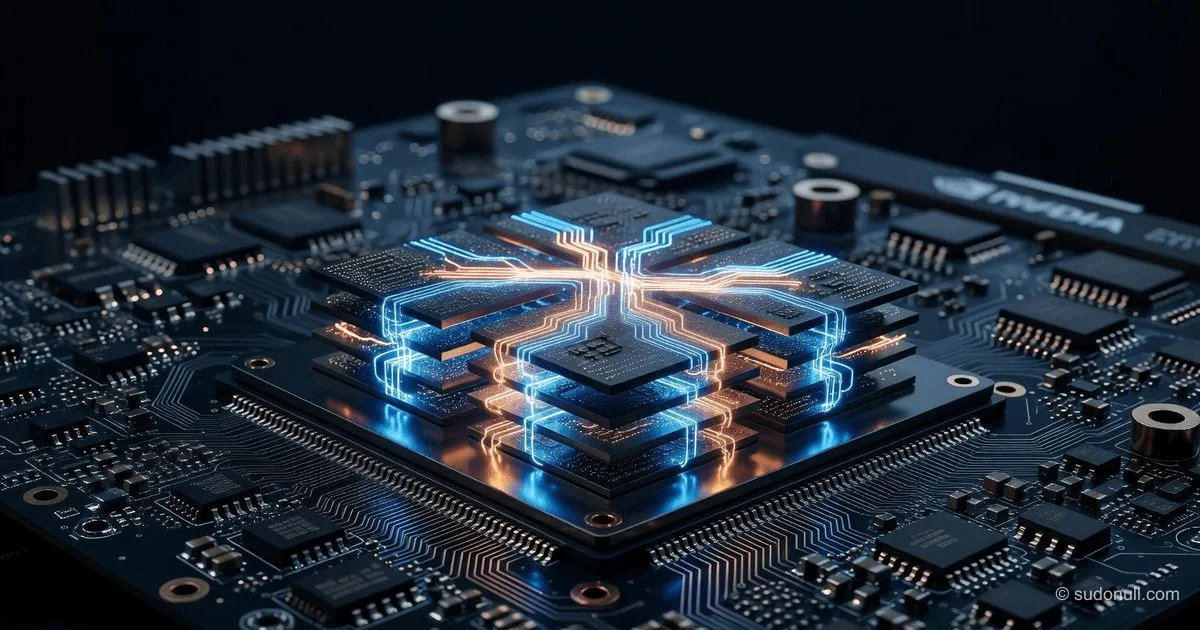
Samsung and SK Hynix Begin Mass Production of HBM4 Chips for NVIDIA's Next-Gen AI Accelerators
New memory delivers over 2 TB/s per stack, double HBM3E, with shipments starting in Q3.
HBM4: No Winners. Why Samsung and SK Hynix Are Selling You an Illusion
When I see headlines about "mass production of HBM4" with double bandwidth, I know the industry is playing the old game of "declare victory before reality hits." Yes, Samsung and SK Hynix have indeed started shipments. But almost no one talks about what's happening behind the scenes of this race. And trust me, it's far from the rosy picture painted by press releases.
The problem is that NVIDIA, the main customer for all this memory, is currently trying to save its flagship Rubin from technical collapse. And HBM4 isn't the solution—it's the source of the problem. While Korean manufacturers ramp up volumes, engineers in Santa Clara are frantically revising chip specs and redesigning cooling systems. Let me explain why a billion-dollar contract could turn into a disaster for all parties involved.
The Real Story: What's Actually Happening
Official version: Samsung and SK Hynix have begun mass production of HBM4, with bandwidth exceeding 2 TB/s per stack, double HBM3E. Shipments start in Q3 2026. Sounds like a breakthrough.
Reality: NVIDIA demands data transfer rates above 10 Gb/s from memory makers, while the JEDEC standard specifies only 8 Gb/s. This means Korean companies are forced to operate at the edge of technological capabilities. And not everyone is coping.
Samsung, reportedly, has passed NVIDIA's qualification at two levels: 10 Gb/s and 11 Gb/s. That's why the Korean giant started shipments first. SK Hynix, long the HBM market leader, is still optimizing its product to pass the 11 Gb/s test. This is a serious blow to the reputation of a company accustomed to being ahead.
But the most alarming news, which the media largely ignores: Micron engineers failed to meet the stated specs, and NVIDIA has pushed the American manufacturer to the sidelines. Now Micron will supply memory only for lower-end Rubin CPX models (for inference), not for the flagship Vera Rubin. This is a geopolitical knockout for the US in the battle for AI memory.
Timeline and Context
Many have forgotten how this story unfolded. And it's revealing.
September 2023: Samsung sent the first engineering samples of HBM4. Yield was a paltry 30%. The project was considered a failure; insiders said the Koreans were a year behind SK Hynix.
November 2024: Thanks to a shift to the 1c-nanometer process (sixth generation of the 10nm class), Samsung raised yield to 50%. It became clear the fight wasn't over.
March 2026: Samsung announced stabilization of mass production at 60% yield and set a target of 85% by year-end. The breakeven point for HBM4 is around 50%, so from this point on, each batch of memory starts generating profit.
May 2026 (now): Samsung reports sending the first engineering samples of HBM4E (an enhanced version) to clients. Bandwidth reaches 3.6 TB/s, data rate 14 Gb/s.
The real problem is different: while Samsung was catching up in the performance race, NVIDIA faced catastrophic issues on its own front. And HBM4 is just part of the bigger picture.
Who Wins and Who Loses
Winner: Samsung. Paradoxically, Samsung is now in a better position than SK Hynix. They have three aces: their own 4nm logic process for the HBM4 base die, advanced hybrid bonding technology (though yield is still low, around 10%), and, crucially, cheap conventional DRAM. NVIDIA needs volume, and Samsung can dictate terms: want HBM4? Buy server DRAM too. It's a blunt business approach that has suddenly proven effective in a shortage.
Winner: NVIDIA? No, NVIDIA loses. All reports agree that the Rubin platform faces serious technical problems. Due to low chip quality from Micron and SK Hynix, NVIDIA had to revise specs. The main cause is warpage—substrate bending. The CoWoS-L package used by NVIDIA suffers from thermal expansion: the organic interlayer expands much more than silicon memory chips when heated. As a result, the platform bends, and contacts lose connection.
Loser: SK Hynix. They were leaders in HBM3 and HBM3E. But their share of the HBM market in bits has fallen from 59% in 2025 to 50% in 2026, while Samsung grew from 20% to 28%. SK Hynix has yet to announce mass shipments of HBM4. Each week of delay costs them millions of dollars and fractions of market share.
Loser: European auto industry and cloud providers. They were promised affordable AI accelerators on Rubin. Now, due to memory issues, NVIDIA is forced to lower specs. For Rubin Ultra, they originally planned 16-layer HBM4E with a total capacity of 1 TB. Due to yield problems at SK Hynix and Micron, the target was reduced to 12 layers and 768 GB. That's a 25% capacity loss before sales even start. The price per kilobyte of memory will rise, and data centers in Europe and the US will pay more for less.
What the Media Isn't Saying
The key non-obvious insight: HBM4 is not a product to boost performance; it's a crutch to save Rubin from overheating and warpage.
Consider this: the original design of Rubin Ultra assumed 16 stacks of HBM4E. Now there will be 12, because 16 layers simply don't fit within the 775-micron maximum package height set by JEDEC. SK Hynix is trying to solve this with its MR-MUF technology, which allows packaging chips as thin as 30 microns (instead of the usual 50). But this is at the edge of physical limits.
Moreover, power issues are also linked to memory. HBM4 consumes enormous amounts of energy. NVIDIA had to abandon a dual-radiator cooling system in favor of a single-radiator one, and even switch from an indium-graphite thermal interface to a plain graphite one, because the former couldn't handle the thermal loads.
And another point: the market price of HBM4 has already reached $700 per chip, 20-30% higher than HBM3E. Meanwhile, conventional DRAM used in servers has become so expensive that its production is almost as profitable as HBM. Samsung is already using this argument in negotiations with NVIDIA: we can either make expensive HBM4 with low yield or cheap DRAM with high yield. Choose, Jensen Huang.
Forecast: Next 30 Days and 90 Days
Next 30 days (June 2026):
Samsung will aggressively tout its HBM4E successes. They've already announced sending engineering samples, and will now push that they are a full year ahead of SK Hynix in the HBM4E race. Expect a series of interviews with Samsung top managers hinting that NVIDIA is shifting major volumes to them.
SK Hynix will try to seize the initiative by showing the first working 16-layer HBM4 stack at some tech forum. But the problem is that 16 layers won't pass NVIDIA qualification before Q1 2027.
NVIDIA will remain silent. The company won't comment on Rubin's issues. Instead, at GTC (which was in March, but results are just emerging), they'll announce "expanded partnerships" with three memory makers to hide the fact that none can deliver the required volume and quality.
Next 90 days (August 2026):
The first batches of Rubin servers will ship. But don't expect records. My sources in the assembler channel say the first Rubins will run at reduced memory frequencies. NVIDIA will prefer to lower stated specs rather than admit technical problems. Classic: remember the RTX 3000 series?
The main blow will hit cloud providers. AWS, Google Cloud, and Microsoft Azure, which planned to launch Rubin instances in Q4 2026, will delay to Q1 2027. Reason: shortage of validated HBM4 stacks with the required specs.
And the most important forecast: SK Hynix will lose its status as NVIDIA's primary HBM supplier by end of 2026. Samsung, currently supplying 30% of HBM4 volumes, will increase its share to 45%. SK Hynix will drop from 60% to 45%, and Micron will remain at 10% for secondary products.
This will be a historic reversal. The company that dominated the HBM market for the last three years will cede leadership because it couldn't pass NVIDIA's qualification tests at 11 Gb/s. And Samsung, written off in 2023, will return to the throne. But there's nothing to celebrate: the price of this return is $700 per chip and a 25% capacity loss for end users. In this war, there are no winners—only those who lost less.
— Editorial Team










No comments yet.