July 9, 2019 at 08:13
What you can learn from the design of hyper-casual games
- Transfer
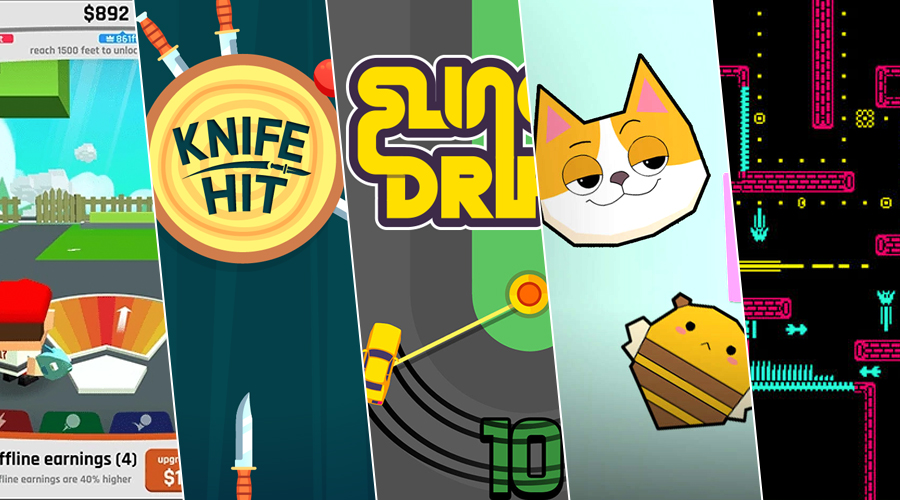
Some might say that hyperkazualki is probably one of the simplest genres to analyze game design. Someone may say that hyper-casual games are not even worth analyzing, because this trend will disappear soon, but I have a different opinion.
I can’t say that they are a specialist in hypercausal games. I am a simple consumer who no longer enjoys games as a consumer thanks to my professional deformation - I am an analytical game designer. Recently, I played a lot of hyper-casual games on a mobile platform (and analyzed them), so I decided to briefly write about their attractiveness and what game designers can learn from them. I repeat, this is not a ready-made guide to creating hyper-casual games, but a brief overview of various game-design solutions and systems that help hyper-casual games to be fun.
Hyper ... what?
If any of you have lived in a cave for the past few years, I’ll inform you that a hyper-casual game is an extremely simple game that creates an addictive gameplay cycle, complemented by minimalistic graphics, and usually requires nothing but touching the screen (“tapes”). Often such games have straightforward goals - to score the most points ( Stack ), complete levels ( Phases ) and the like. They seemed to be designed for game jam, but have higher production quality and meta (meta).
If you are like me and weekly explore the latest App Store news, you'll notice that hyper-casual games have filled the App Store, and there are good reasons. These games are based on minimalism, which means developers can create them quickly, in a matter of months, if not weeks. This is part of the strategy that brought hyperclub success, and you can see that all major publishers of hypercausal games like Ketchapp, Voodoo, Appsolute Games release at least one game per week. And people like them - for 2018, hyper-casual games have been downloaded over 100 million times!
But enough about numbers and analytics, while getting down to business!
Let me play already!
For the sake of simplicity and due to the inability to play all the hyper-casual games for mobile platforms, when studying various branches of the genre, I will use some of the most popular projects as examples.
So, let's get down to learning .
Once I was bored and climbed on Instagram. So I came across a game called Ball Blast . A short 30-second video, showing only its best features, made me download the game. The video showed how easy it is to play the game and win it. She looked fascinating. I wanted to start playing it right away, and this was possible thanks to the very small size of the downloaded file - a critical feature of hypercools .
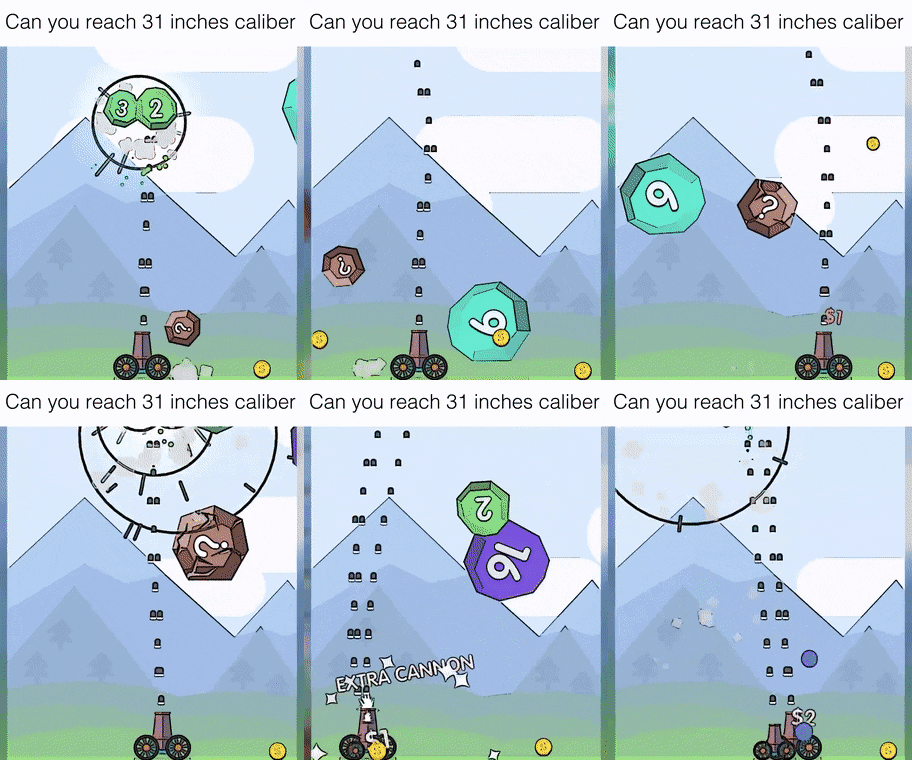
An example of advertising shown on social networks
Now you understand how most users find these games. Most hypermarkets rely on User Acquisition campaigns on social media. If a person flips through one of these social media channels, it can be assumed that he is bored. He is looking for a way to get rid of boredom, and here, like a knight in white armor , hypercools appear, in a hurry to save the user.
The principle is to quickly inform potential players that the game is extremely exciting and allow them to instantly start playing it. They hang on the Internet from the phone, which means that there is a possibility that a mobile tariff is being used. Nobody likes to download gigabytes of data on a mobile tariff. Even if you are connected to Wi-Fi with a good download speed, it’s hard to endure, having learned from the advertisement about how exciting the game looks. Hence the small amount of downloaded files .
So, the player managed to download the game and he is ready to enter the game world. What's next? We move on to the next topic - entering the game .
It takes the player about 7 seconds to figure out if the game is interesting and whether it is worth the space spent on the phone. Such a short window means that there should not be any long tutorials or transitions on the UI ! That is exactly what Ball Blast did . At the time of launch, you see a game screen that says “ swipe to shoot ”, and this is the only “gameplay” tutorial that you will see. The player touches the screen, and the gun begins to shoot.

How friendly!
When you start shooting, you will notice that the gun can also move horizontally, following the finger. When the brain gets used to the idea of shooting and moving, a lot of numbered balls will appear in the playing area that need to be shot. You shoot at balls, see how they explode, scattering coins, and you understand that large balls are broken into small ones. It's simple, isn't it?
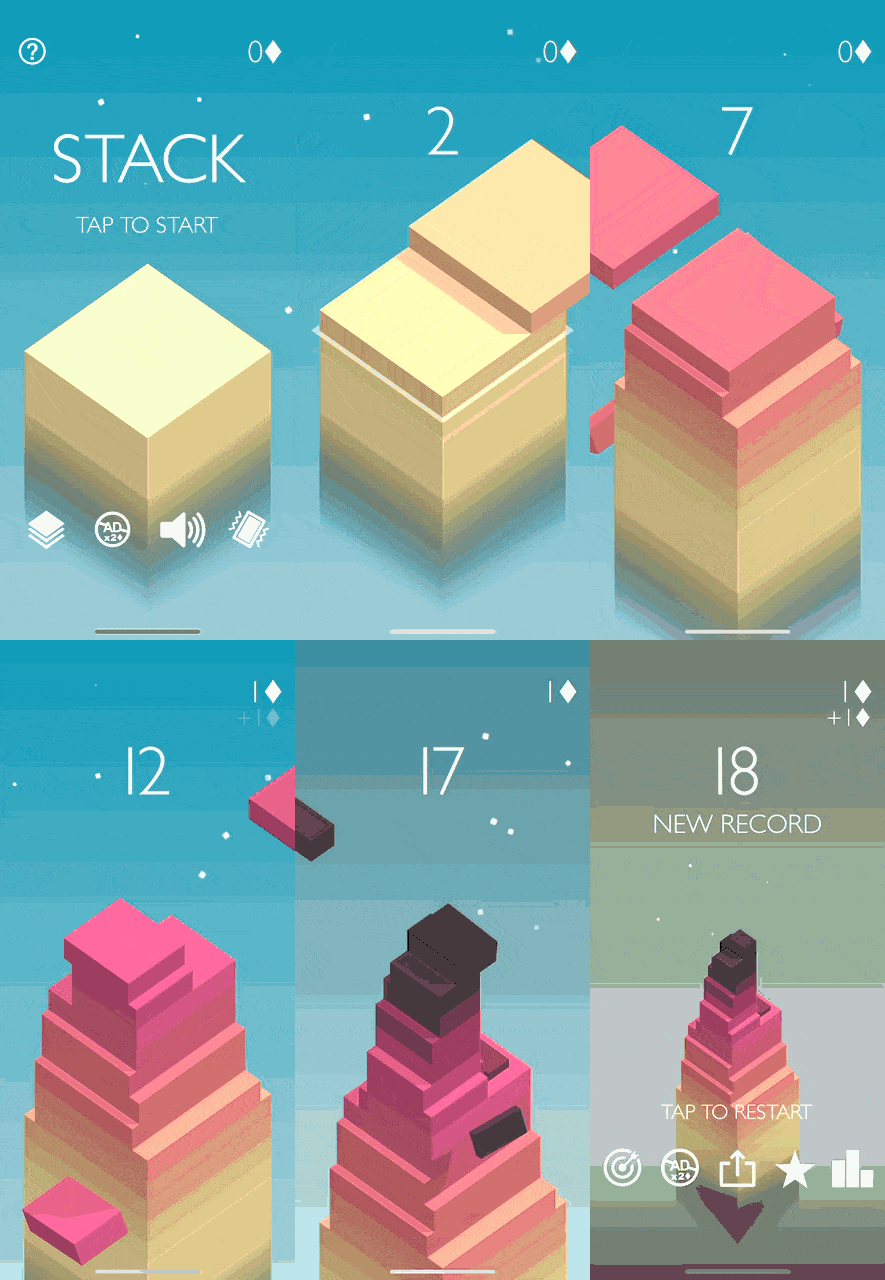
The same goes for Ketchapp's cute tiny game called Stack: at startup, it displays the game screen, allowing the player to start the game by touching anywhere on the screen. As soon as he touches the screen, he will see the squares moving from different sides and will understand that when you touch the screen, the moving square falls on the stack of squares below it, and all its parts outside the stack are cut off. Since these games boast the only simple mechanics, it’s easy enough to learn how to play them without complicated tutorials. The player learns by failing and coping with difficulties. The gameplay is " suitable for Youtube ", that is, it is easy for him to learn, just by watching .
Enter and exit!
Have you noticed how quickly and easily you can start playing a hyper-casual game on your phone? You take the phone, unlock it, touch the game icon and after 2 seconds you are already in the game! Is not that great?
This is exactly what the brain needs when it is mortally bored and needs a magic potion to instantly stimulate interest. I start the game, play one session, lose a couple of times, set my new record and get my rewards. From this is a short feedback loop of the basic gameplay. Actions affecting success or failure, the player reads instantly. We combine this with upgrades ( about them below ), and we get a powerful positive feedback loop that gives a reward, very exciting and at the same time short.

Feedback loop circuit. The player is improving thanks to failures.
If you managed to create a game with an exciting gameplay “hook” and the players love it, then keep in mind - perhaps this is the only thing that matters to them in your game. Ball Blast plunges into the thick of action immediately after the start of the game, because it understands my need - instant entertainment. No wandering around the UI, cutscenes or text.
Even if I start the game a week later, thanks to the super-simple mechanics and the lack of previous development, I will know how to interact with it. Entering and exiting a gaming session is another critical aspect to the success of such games.
At work, I often take breaks in the form of short game sessions on the phone, and for the same reason I use hypercools for this. I know that I have neither the time nor the place for something " complicated ." Hyper-casual games give me my dose of entertainment where and when I want it .
Give me all the power!
Everything becomes more interesting here. As mentioned above, players are attracted to the game by the basic gameplay. It is simple, but addictive and increasing skill in it encourages players to return. You can recall Ball Blast and ask yourself - what is so fascinating about constantly shooting balls? It also interested me when I first saw the game’s advertisement - “Well, yes, it looks fun, but will it be fun in a couple of days?” I will answer this question - yes, I was still interested, and interesting even now!
To better understand what is the basis of fascination, you need to talk about its key reason - upgrades !
Ball blastrewards you for destroying balls with coins and jewelry - the game’s internal currency. Let's talk about coins, because jewelry allows you to buy only jewelry and does not particularly affect the gameplay. Coins are used to upgrade guns. There are four types of upgrades:
- Fire Speed : increases the speed of fire.
- Fire Power : Increase projectile damage.
- Coins Drop : increases the denomination and frequency of coins falling out after firing.
- Offline Earnings : increases the number of coins received when the game runs in the background.
If you carefully look at the upgrades, you can see that all of them are needed together to increase the " strength " of the player in the game. For example, upgrading Coins Drop upgrades allows you to collect more coins per session, which simplifies the accumulation of coins and the purchase of other upgrades. Gun upgrades make the player feel stronger, because they allow you to quickly destroy balls, even large ones, which are more difficult to destroy at a certain stage. And this is a feature of the base cycle of the game. After each session, the player feels that he has become stronger . The player is always hungry for power, which can only be achieved by playing more, earning coins, and then spending them to upgrade his strength.
The levels are carefully balanced so as to reinforce this cycle: they give the player areas to demonstrate his strength, and then they introduce more durable balls into the game, motivating to upgrade the gun even more. The development process is not only significant, but also easy to understand. Allow the game only five minutes, and you will understand what I'm talking about.
Another game in which such a technique is applied fairly well is Mr. Gun by Ketchapp . A player kills enemies, coins drop out of them, which can then be spent on increasing damage and firing frequency, increasing your "strength" in the game. The player gets his first powerful gun quite quickly, as a gift, and so the game teaches him upgrades: they are presented in the form of weapons, which gives an advantage in sessions.
I would like to take this opportunity and compare this type of hyper-casual games with the dungeon crawler genre.
If you played Diablo or any other dungeon crawler, then you know that at first you have mediocre equipment and you fight enemies of the first level , which are quite simple, but still require a few hits. Continuing your adventure, you get powerful equipment that allows you to kill these first-level enemies with one swipe. Suddenly, you begin to feel very powerful, now nothing will stop you ...
... Until you reach a new level and the game throws second level enemies at you , and soon you will realize that your powerful equipment is no longer so powerful. Once feltmaximum power , you want to return it back. Once again, you crave to feel the power, and the cycle continues.
Ball Blast similarly allows you to feel the power, but instead of more powerful equipment, it allows you to upgrade / upgrade the gun, and levels with a carefully thought out pace make you crave more power.
And if there are no upgrades?
You may ask - " upgrades are, of course, good, but what about games that don't have them? " “Good question,” I will answer! You know games whose goal is to achieve the maximum score among all players or among friends. These games use a special kind of power . Let’s take Stack as an example , where the player’s task is to achieve the best score by repeating sessions. Of course, he cannot “ upgrade ” anything , but the more he plays, the better he masters the game. Instead of pumping a game element, the player will upgradeown skills. This motivates him to continue to do this. And if you also make him compete with friends, as most games do using the leaderboard, then the matter is already becoming personal and competitive - another bait that forces you to return to the game. “I will never let Mark get around me in this game!”
Such implicit upgrades make the player feel smart or strong, and give a sense of development. The same applies to puzzle-based hyper-casual games, where the player feels smarter by solving more and more puzzles, the complexity of which is gradually growing.
Today, hyperchairs are often found, divided into levels. Instead of endless gameplay, they break down the gameplay into specially designed levels, and each level has something unique with increasing complexity. This creates curiosity that encourages players to continue to play and “win” the game. In addition, the transition from level to level is a great way to inspire the player with a sense of development.
Secret ingredient
So far, we have only talked about the fact that hyper-casual games attract players with aggressive advertising in social networks, keeping them fast immersed in the game and enthralling with simple mechanics in which he craves more power, but is that all?
No .
A magical element invisible to the naked eye and, in my opinion, the most important aspect of the game is Gratification .
What is " satisfaction "? Here is the definition from the dictionary:
pleasure, in particular, obtained through the fulfillment of desire.
In order to better understand it from the point of view of game design, satisfaction can be defined as the type of visual / sound / emotional feedback obtained after performing an active or passive action in a game, which makes the actions joyful and meaningful. The action can be simple: walking, jumping or shooting.
Here are a few examples:
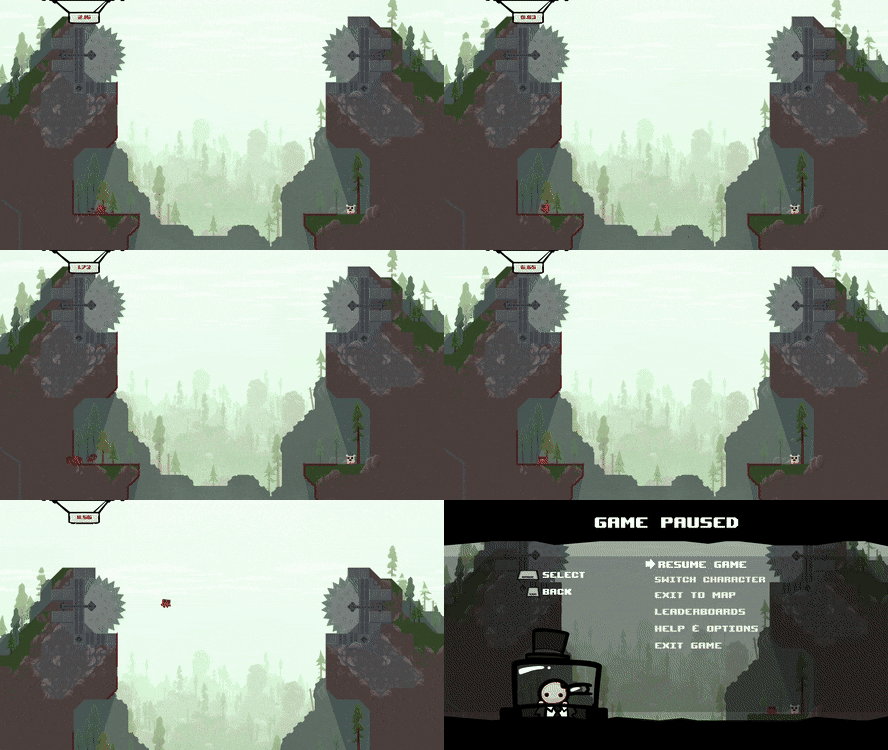
Have you noticed how clear and responsive your character’s movements are in Super Meat Boy? As soon as you press the jump button, the character gracefully bounces along the arc, taking into account the impulse, and all this is complemented by animation with perfectly matched timing. From making the perfect jump to cross an abyss or obstacle, the player receives a return. Since the game requires fast and accurate movements from the player, the entire game system is designed to give the user satisfaction in the form of effects, obstacles and problem solving.
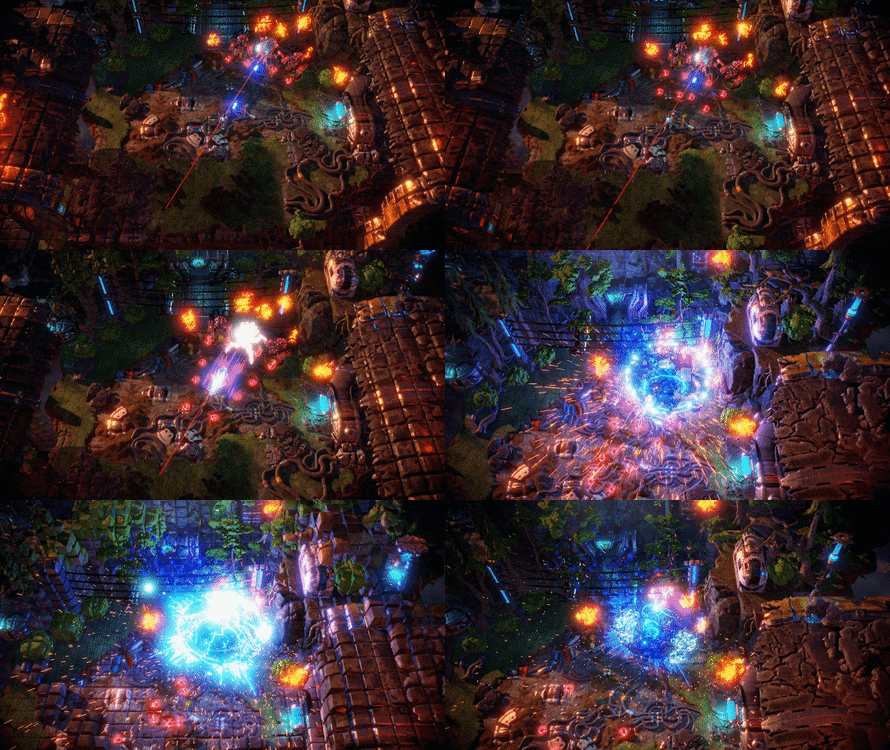
Housemarque's Nex Machina ( Masters in Realizing Satisfaction ) - when a bullet hits an enemy, the player receives confirmation of a successful hit in the form of a small white flash on the enemy, after the death of which there is a big explosion of cubes, accompanied by appropriate sound effects. This gives the player a sense of satisfaction and euphoria when killing just one enemy. Now imagine killing a boss! Different types of weapons, enemies and levels at each stage bring user satisfaction. I recommend playing this game.
You probably already understood that satisfaction (Gratification) is such an extensive topic that it requires a separate post. Here I talked about it in order to emphasize how well hyper-casual games understand the principle of satisfaction and use it to provide an exciting gameplay.
Recall Ball Blast . The supersensitive control of the gun, which exactly follows the movement of the finger, feedback in the form of the designation of hits on balls and how they break up into smaller balls, the effect of temporary bonuses on the game and, of course, “ upgrades ” - all these elements work together and provide fascinating feedback throughout the game.
Take any good game, analyze the factors that ensure satisfaction from actions and make them bring joy. You will see how these small details, often invisible, increase satisfaction and involvement in the game. Hyperkazualki in this sense are no different, and experienced designers take into account satisfaction when creating such systems . Another great example is Stack Fall (from Voodoo). The player controls a galloping ball that falls when it touches the screen for a long time, breaking a stack of blocks along the way. Splashes of paint, tactile feedback, breaking down blocks are some of the elements that increase satisfaction and improve gameplay.
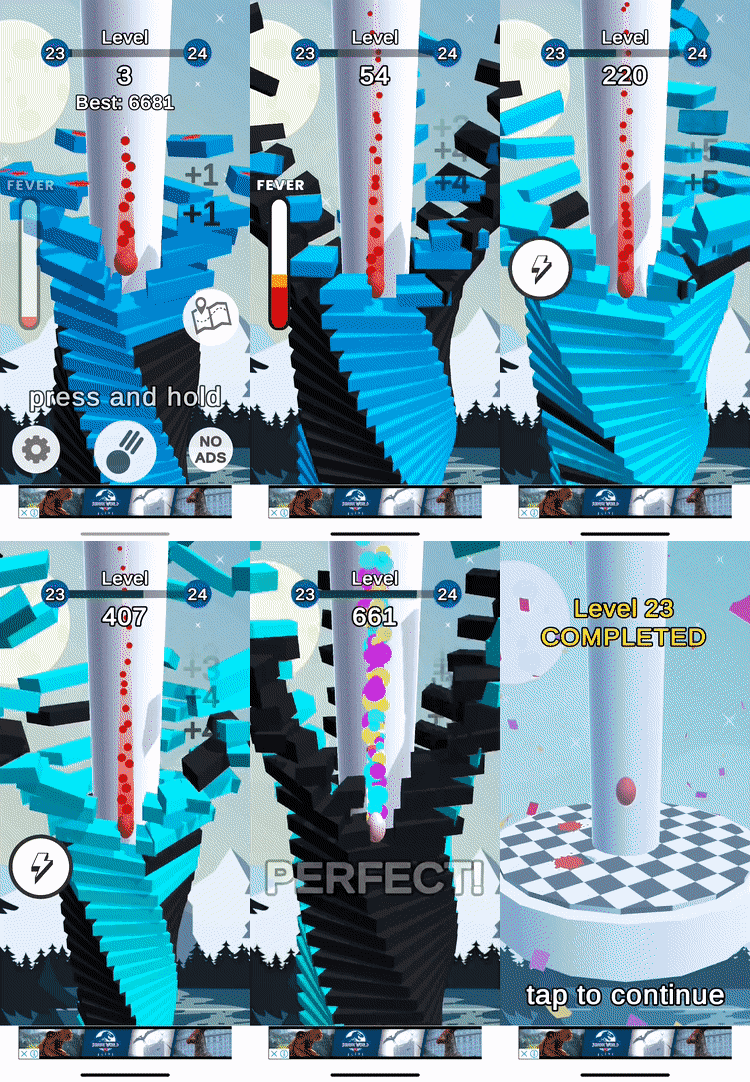
Whatever the action, the player must feel satisfaction through it. Imagine the platformer in which the character jumps, but when he lands, there is no animation reporting a change in state or dust effects in the place where he landed. Imagine how strange and boring it would feel. And this principle is not limited to game actions: you can give the player satisfaction through the UI, using appropriate and subtle effects and animations. I can cite Homescapes as an example . After passing the level, a lot of effects and animations begin to play, emphasizing the player’s victory and rewarding him for this achievement. Even more reward if the level is difficult and you finally manage to pass it: the satisfaction received from the screen " Level Cleared"makes it clear that it was worth it. Not only the UI, but also every action performed by the player at the level brings deep satisfaction and is pleasing to the eye.

That's what I call GIF in HD quality!
A fascinating base cycle, combined with elements that increase satisfaction, are the main ingredients necessary to create an interesting hyper-casual game.
Conclusion
Once I was afraid of hyper-casuals, and there were my reasons: the lack of graphics, almost no originality, aggressive promotion, and much more. I believed that innovative games fall into the shadow of this horde of hypercools that appear weekly on the App Store.
I am one of those who consider games a form of art, carefully thought out and elaborate works, and that is why it takes several years to release them. For all these reasons, at first glance, hyper-casual games did not make the best impression on me.
We, as designers, are proud to create complex gaming systems with multi-layer depth, but often neglect the simplest elements. Hyperkazualki made me pay attention to smaller details. They allowed me to take a fresh look at the development of game design, the fundamental essence of the game, which determines its fascination.
- A mechanic that is difficult to get confused about and does not require any tutorials.
- Satisfaction to stimulate player action and create fun.
- Short feedback loops.
- Easy to enter and exit the game.
- Feeling of power / intelligence in the form of development.
- Simple meta that supports basic gameplay.
Who knows what the future awaits hyperkazualki. I don’t know if they will be preserved, but this genre has a lot to learn, and lessons learned can help to design your game in any genre.
I understand that this genre and business model have problems, but let us leave them for later consideration.
What do you think of hypercools? Do you think that they allow you to take a fresh look at the design of games? Have you learned anything from this genre?