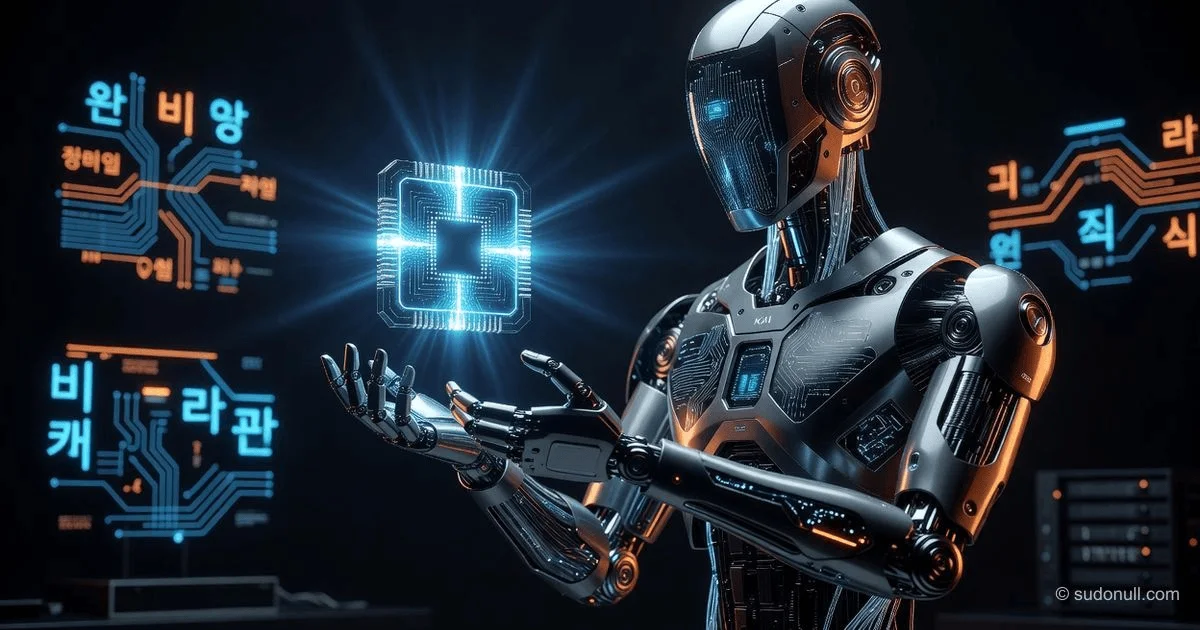
WEF Names 100 Technology Pioneers for 2026 with Record Representation from South Korea
The World Economic Forum has announced a list of 100 startups developing breakthrough technologies in AI, energy, biotech, and quantum computing. South Korea achieved record representation in the categories of AI, robotics, and quantum technologies.
Korea's Breakthrough You Missed: Why the WEF Bet on Startups from Seoul, Not Silicon Valley
Insider Analysis from Those Working with Innovation Ecosystems
[The Gist]: What's Really Happening
On June 10, 2026, the World Economic Forum announced the list of 100 Technology Pioneers. At first glance, it's a standard ceremony: 23 countries, 100 startups, five structural shifts in industry. But those who see only these numbers miss the main point: this list is the first official document where South Korea is called not "catching up" but "leading" in the categories of AI, robotics, and quantum technologies.
Consider the context. In previous years, Korean startups made it into the Technology Pioneers list as a "nice addition" to the dominance of the US, China, and Israel. In 2024, there were two. In 2025, three. In 2026, there are four, but that's not the main point. The main point is the quality composition: A-Robot (humanoid robots), RLWRLD (foundation models for physical interaction), bitsensing (radars for autonomous systems), and SDT (edge computing).
What's hidden behind the lines of the press release? The WEF acknowledged that Korea is no longer just a manufacturer of chips and displays. The country now has an independent startup layer outside the chaebols, capable of competing with American and European counterparts. Bitsensing, for example, builds radars using 4D technology that outperforms lidars from Luminar and Ouster in price/performance ratio. RLWRLD is doing what American Physical Intelligence and Skild AI are attempting — foundation models for robots that can operate in any physical environment without retraining.
But there's another layer that 99% of analysts missed. Not a single Korean startup made it into the "pure quantum computing" category, even though the WEF explicitly listed that category. Instead, five Korean companies operate at the intersection of AI, robotics, and edge computing. This is a signal: Korea is betting not on abstract quantum computers (where the US and China lead), but on physical AI, where it has an advantage in chip manufacturing, robotics, and industrial automation. And this bet is already paying off.
Timeline and Context
To understand the scale of the shift, we need to look at the dynamics of country representation in the Technology Pioneers program over the past five years. The program has existed for 26 years, and its geography has always reflected the real distribution of innovative forces. But 2026 is the first year when the US lost absolute dominance in percentage terms.
| Year | US | China | India | South Korea | UK | Other Countries | Total Countries |
|---|---|---|---|---|---|---|---|
| 2022 | ~55 | ~12 | ~4 | 2 | ~8 | ~19 | ~20 |
| 2023 | ~52 | ~14 | ~5 | 2 | ~8 | ~19 | ~21 |
| 2024 | ~50 | ~12 | ~6 | 2 | ~9 | ~21 | ~22 |
| 2025 | ~48 | ~11 | ~7 | 3 | ~8 | ~23 | ~22 |
| 2026 | 43 | 10 | 9 | 4 | 8 | 26 (16 countries) | 23 |
Table compiled based on data from the Technology Pioneers list 2022–2026. Data for 2022–2025 are reconstructions from open sources.
Key observation: The US lost 12 percentage points in four years, China lost 2 points (but that's due to geopolitical pressure on Chinese startups). India and Korea are the only ones growing steadily. But Korea's growth — from 2 to 4 companies — looks modest compared to India's 9. So why does the WEF call this "record representation"? Because four companies is the maximum in the program's history for Korea. And they made it into the "hottest" categories, where Korea previously had zero.
Here's how Korean companies were distributed by technology direction in 2026:
| Company | Technology | Why It Matters |
|---|---|---|
| A-Robot | Humanoid and service robots | Competes with Tesla Optimus and Figure 02, but with a focus on "coexistence" (Korean cultural context) |
| RLWRLD | Foundation models for robots | Direct competitor to Physical Intelligence (US) — one of three companies in the world making foundation models for physical interaction |
| bitsensing | 4D radars for autonomous systems | Technology that could replace lidars in commercial drones and urban traffic management systems |
| SDT | Edge computing for enterprise | Solves latency issues in industrial IoT systems at the hardware level |
But there is also a fifth company that was not officially included in the list but received a separate mention in the Korean press: Vesl AI. It is an AI infrastructure company working with GPU clouds and "fluid computing." It didn't make the main list but was named a "company to watch," and its CEO, Jaeman Ahn, will attend the forum in Dalian (June 23–25) to expand global partnerships. This shows that the real Korean presence at the forum will be even larger — it's just that not all startups passed the rigorous selection.
Who Wins and Who Loses
Winner #1: South Korea. The country just received free marketing worth $50 million equivalent. Inclusion in Technology Pioneers automatically means an invitation to the Annual Meeting of the New Champions in Dalian (June 23–25), access to a network of 800+ previous pioneers (including Google, PayPal, Airbnb), and direct interaction with ministers from 100+ countries. For startups seeking global market entry, this is invaluable. But the main win is image-related: Korea is now in the same league as the US, China, and Israel in terms of "innovation quality," not venture capital volume.
Winner #2: The physical AI ecosystem in Asia. The 2026 list includes not only Korean but also Japanese (5 companies), Singaporean (3), and Indian (9) startups. But it's the Koreans who are the only ones building a full stack: from chips (through partnerships with Samsung and SK Hynix, which we covered separately) to robots (A-Robot) and software for them (RLWRLD). This creates an alternative in Asia to the American stack (Nvidia + Figure + Physical Intelligence). Koreans have every chance to become the "third pole" after the US and China.
Loser #1: Europe. In the 2026 list, Europe is weakly represented: Germany — 2 startups, UK — 8, France — 1, others one each. And in none of the key areas (physical AI, quantum, energy) do Europeans have leadership. Even Switzerland, a traditional innovation hub, contributed only 2 companies. The WEF is clearly signaling: European deep tech is lagging, and investments are flowing to Asia and the US. If Europe does not take action (an analog of the CHIPS Act, but for startups), it risks becoming a periphery of the next technological wave.
Loser #2: Startups from BRICS countries (except India and China). Brazil contributed 1 startup, South Africa 0, Russia 0 (and this is not due to sanctions, but due to a lack of competitive applications). The technological gap between "new" and "old" developing economies is only widening. The WEF selected 23 countries, but 15 of them are represented by 1–2 startups, and the real concentration of innovation comes from only 5–6 countries. All others are statistical noise.
What the Media Isn't Saying
Insight #1: Korean startups on the list are not a coincidence but the result of a targeted government policy that is not discussed in the West. In 2024, the South Korean government launched the "K-Startup Global Acceleration" program, allocating $500 million to support deep tech startups with a focus on AI, robotics, and quantum. Part of this money went to preparing applications for the WEF. The Korean Ministry of SMEs and Startups paid consultants to prepare pitch decks and go through qualification. This is not an "organic" ecosystem growth but a planned state campaign to capture global attention. And it worked.
Insight #2: The 2026 list is a manifesto against "large language models." The WEF explicitly stated: "The next era of AI will depend not on large models, but on infrastructure." 70% of startups on the list do not build LLMs. They build the "plumbing" — payments for AI agents, identity verification, energy grids, edge computing, robots. This is a direct signal to venture funds: investments in OpenAI-like companies are over; now money will go into hardware, security, and physical interaction. Korean startups were in the right place at the right time — they have always been strong in hardware, and the WEF legitimized that.
Insight #3: The geopolitical subtext of choosing Dalian. The Annual Meeting of the New Champions 2026 will be held in China, in Dalian, from June 23 to 25. This is the first time in several years that the WEF holds a major event in China amid the trade war with the US. The choice of venue is a diplomatic gesture: the WEF shows it is not joining US sanctions against Chinese technology. Korean startups that go there will find themselves at the center of this diplomatic game. They will represent their country, but their technologies could come under scrutiny from US regulators if China starts using them for its own purposes.
Forecast: Next 30 Days and 90 Days
Next 30 Days (by mid-July 2026)
From June 23 to 25, the Annual Meeting of the New Champions will take place in Dalian — the main event for Technology Pioneers. It is there that Korean startups are expected to announce their first major deals. Watch for announcements from RLWRLD and A-Robot. If they announce partnerships with Chinese manufacturers (e.g., BYD or Xiaomi), it will mean Korea is betting on the Chinese market, bypassing US restrictions. If they announce deals with American funds, it means they have chosen a side.
Also, within 30 days, we should expect the publication of the full list of startups with the amounts of investments raised. Currently, only names are known. When the numbers come out, we will see which of these startups are real players (with revenue and product) and which are "naked kings" with beautiful presentations and zero sales. Based on this data, venture funds will reassess their portfolios.
Key indicator: The stock price of South Korean venture funds (e.g., Korea Investment Partners) and accelerators that invested in these pioneers. If the market believes, quotes will rise by 5–7% in July.
90-Day Horizon (by September 2026)
By September, we will see the first wave of follow-on investments in Korean pioneers. Inclusion in the WEF list automatically opens access to global funds that previously did not consider Korea. I predict that A-Robot and RLWRLD will raise $30–50 million each from American and European funds as early as August–September. This will double their current valuation.
At the same time, the Indian government, seeing Korea's success, will launch its own program to promote startups in global rankings. India already has 9 companies on the list, but they want more. Expect an announcement from India's Ministry of Electronics and Information Technology about creating a "single window" for submitting applications to the WEF — a direct imitation of the Korean strategy.
Geopolitical scenario: If a conflict arises at the Dalian meeting between Korean and Chinese delegates (e.g., over technology espionage or intellectual property), the US could use it to persuade Korea to join a "clean network" in robotics, analogous to 5G. This would create a new fault line: robots made with Korean technology could not be supplied to China, and vice versa. Korean startups would find themselves at the epicenter of a new Cold War, and their success would depend on their ability to balance between Washington and Beijing.
Final assessment: The WEF has just made Korea the main beneficiary of the shift from LLMs to physical AI. But this status is not forever. Korean startups must prove they are not just "beautiful stories on paper" but real companies with product and revenue. They have 12–18 months before investor attention shifts to the next "hot" country (likely Vietnam or Indonesia). The bet is placed. Now let's see if they can cash it in.
— Editorial Team




No comments yet.