About the Spreadtrum SC7731G chipset using the DEXP Ursus NS210 tablet as an example
Hello. Over the past couple of years and until recently, almost all budget tablets from local Russian brands have been equipped with MediaTek chipsets. The latter was able to actually “wipe out” Rockchip and Allwinner from this market, however now MediaTek is destined to face competition from a relatively new player - Spreadtrum. It’s not that it was completely new, but I personally (I personally) drew attention to it at the moment when its solutions began to be used in Samsung devices - Galaxy Ace NXT smartphones, Galaxy Pocket 2, Z1 and Z3, as well as the Galaxy Tab tablet E. Previously, Koreans had everything strictly - either their own chipsets, or Qualcomm. And here - here you are: some kind of Spreadtrum. There were even rumors that Samsung had invested certain amounts in Spreadtrum, so that it would receive a “court” manufacturer of budget chipsets.
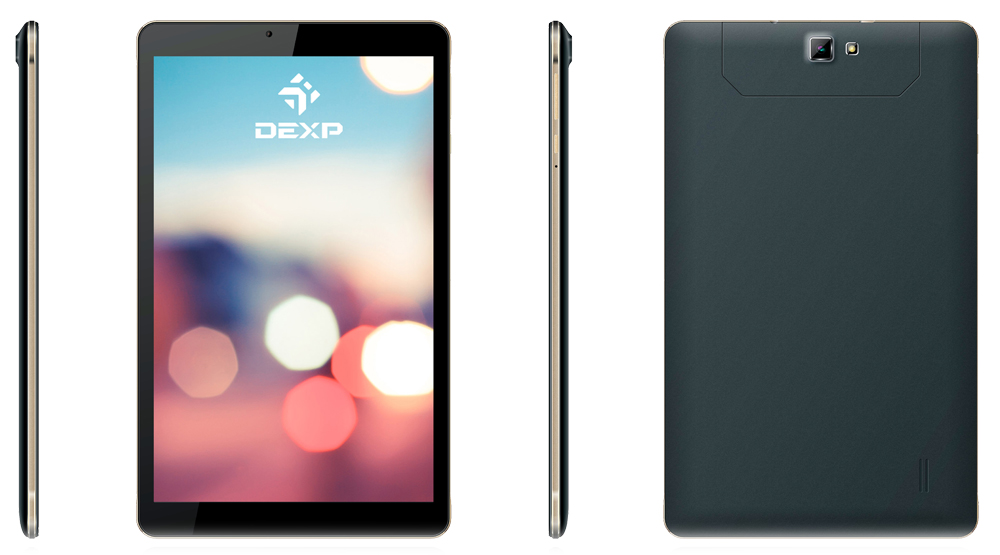
DEXP Ursus NS210
One way or another, I decided to check - what are the products of this office in practice, given that soon they (products, that is, chipsets) may well appear in a galaxy of inexpensive tablets. I tested in practice the DEXP Ursus NS210 with the Spreadtrum SC7731G - it's such a 10-inch tablet (1280 x 800 pixels) with 1 GB of RAM and 8 GB of internal memory, a pair of cameras (0.3 and 2 megapixels), a 3G modem with the ability to make calls etc. The device is running the Android 4.4 KitKat operating system, but soon DEXP promises to release firmware with Android 5.1 Lollipop. Incidentally, this is a plus in the piggy bank not only DEXP, but also Spreadtrum: as you know, to release firmware with a new OS release, you need not only the desire of the device manufacturer, but also support from the chip maker. In this case, it appears to be.
I'll start with personal feelings. After running a half-dozen benchmarks and an hour in Asphalt 8, the tablet remained barely warm - no hellish heatings that periodically complain about browsers dealing with devices on Spreadtrum SC7731G were recorded. However, like the friezes in the chart - provided that the average settings are set. However, with regard to heat dissipation, this is a difficult question - perhaps praising the tablet’s “cold temper” should be not so much Spreadtrum as DEXP. Nevertheless, the absence of heat - this can be a merit of the “cold” processor, as well as a competently designed case.
I’ll say the following about compatibility: I launched Asphalt 8 games (which I’ve already mentioned), NOVA 3, Modern Combat 5 and a number of others on DEXP Ursus NS210. Launch problems have never arisen. It is clear that the Spreadtrum SC7731G includes completely standard components from ARM (4 core ARM Cortex-A7 and graphics Mali-400MP2), which are used, say, in the most popular MediaTek MT6582, and yet. It used to be that certain 3D games run on one device, but on another, with the same graphics and architecture of the cores, they no longer exist.
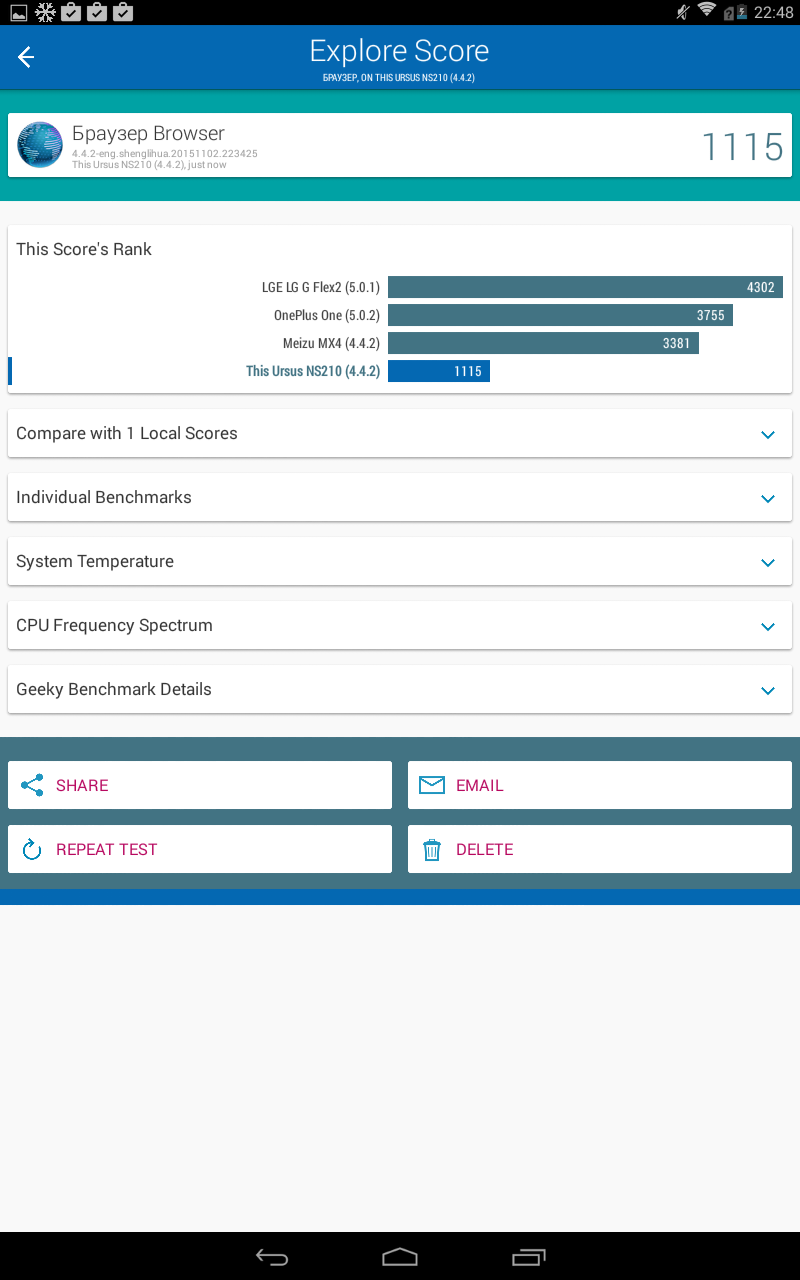
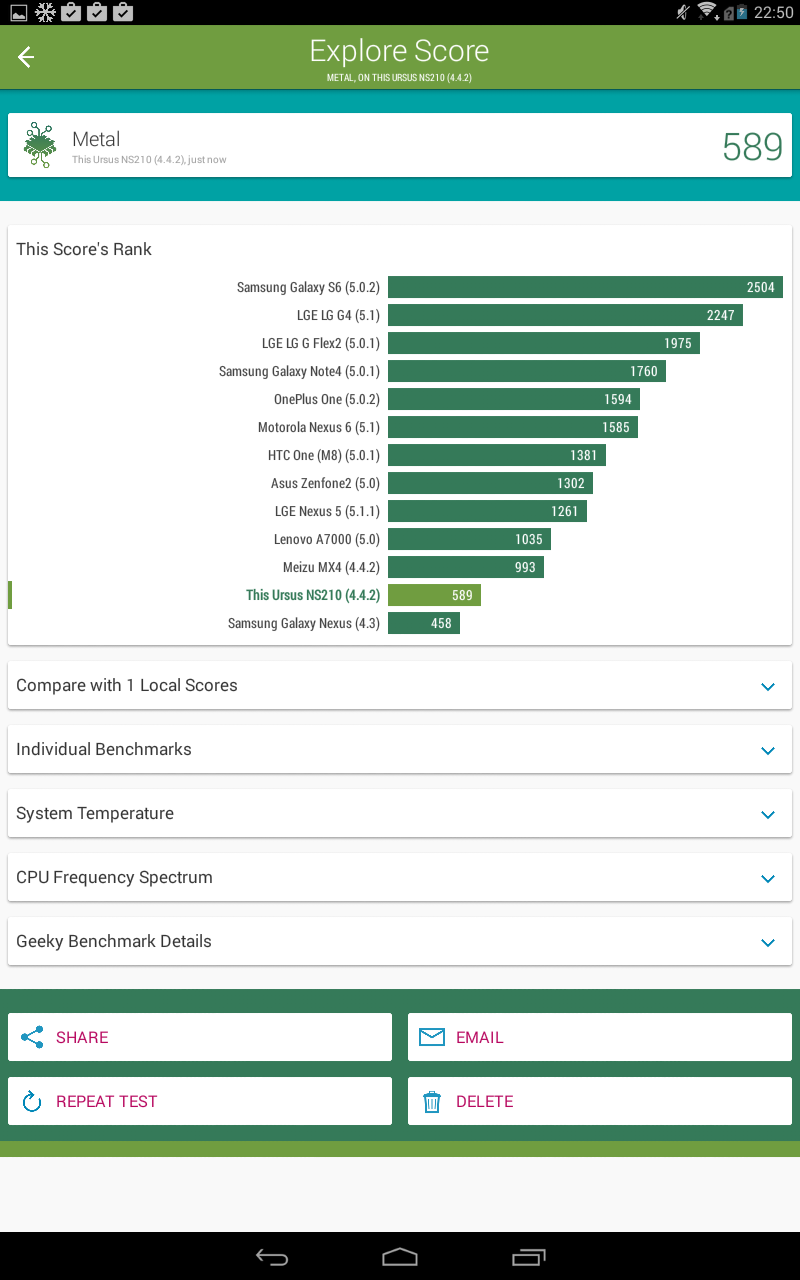
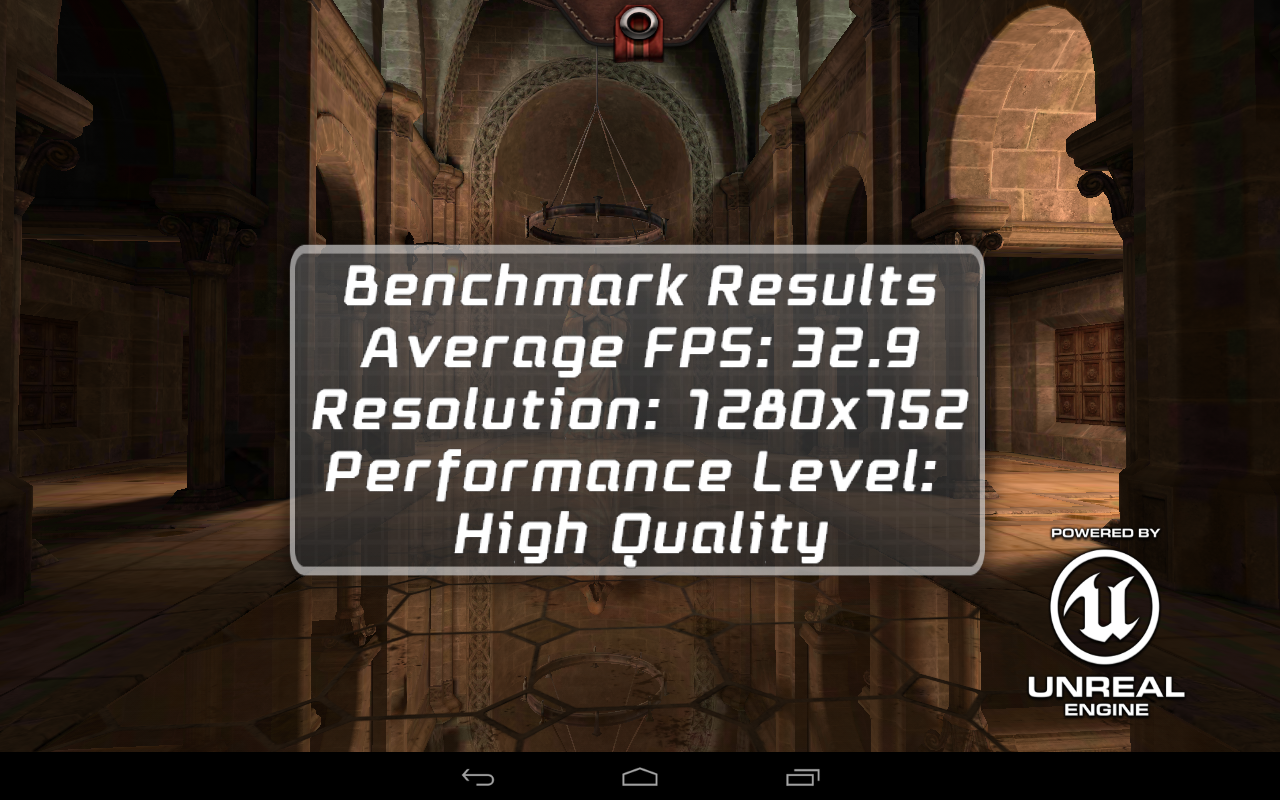
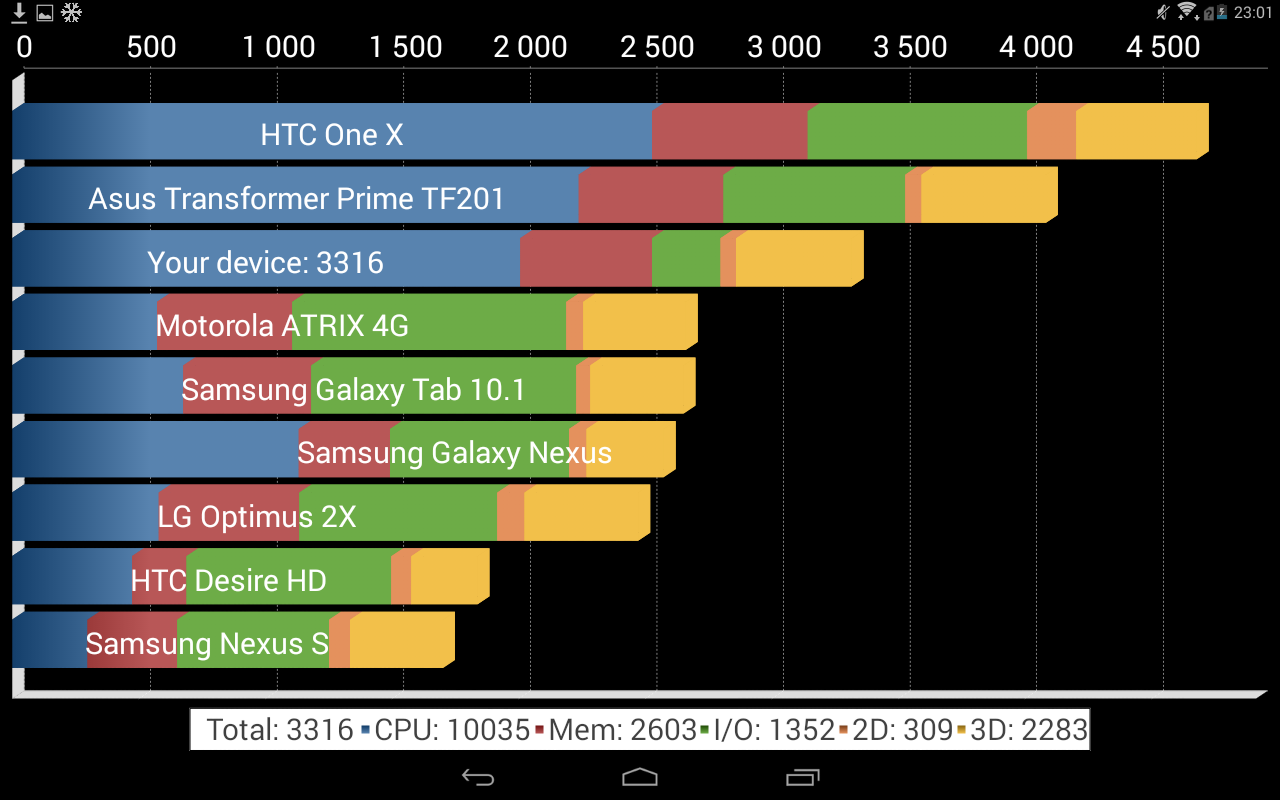
Finally, I will give a selection of results in benchmarks. I can’t say that they amaze the imagination - the numbers are about 5-10 percent lower than for tablets with the MediaTek MT8382 chipset similar in most parameters (also 4 core Cortex-A7 and Mali-400MP2), 1 GB of RAM and an HD screen .
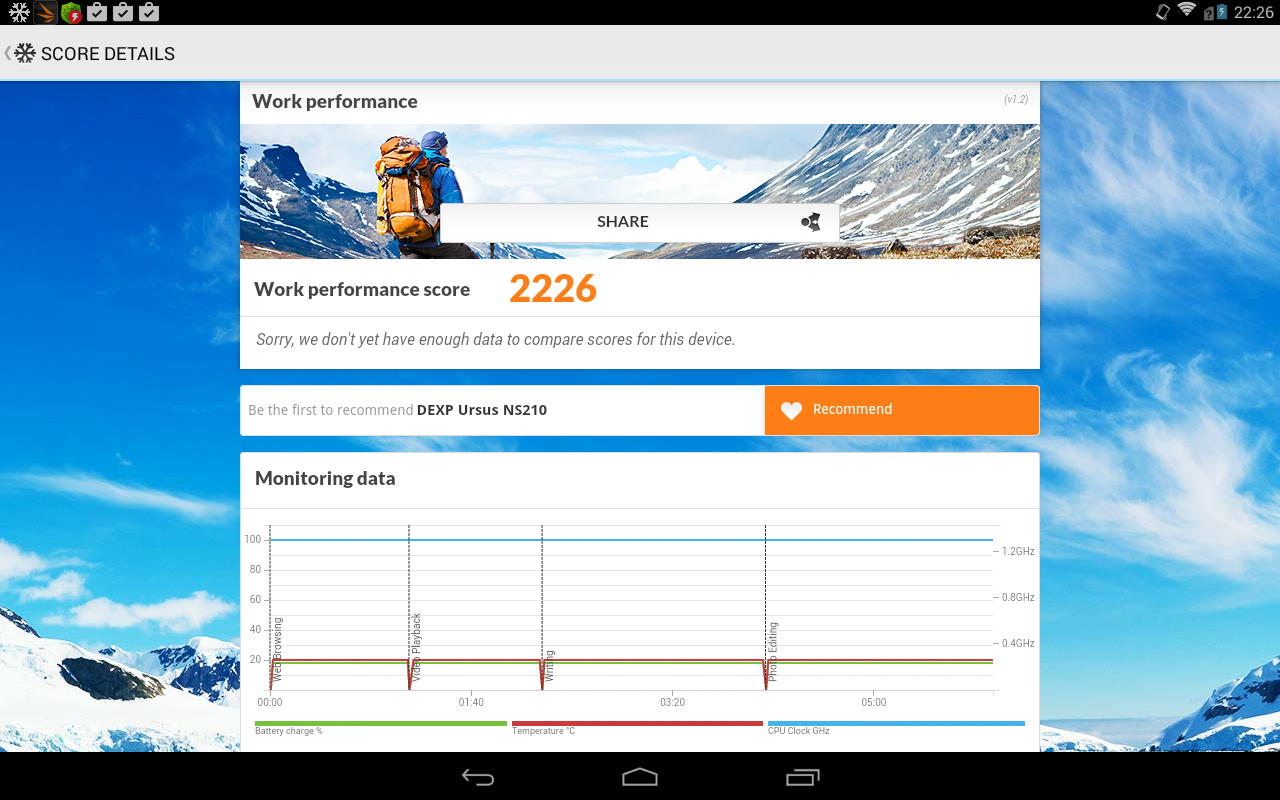
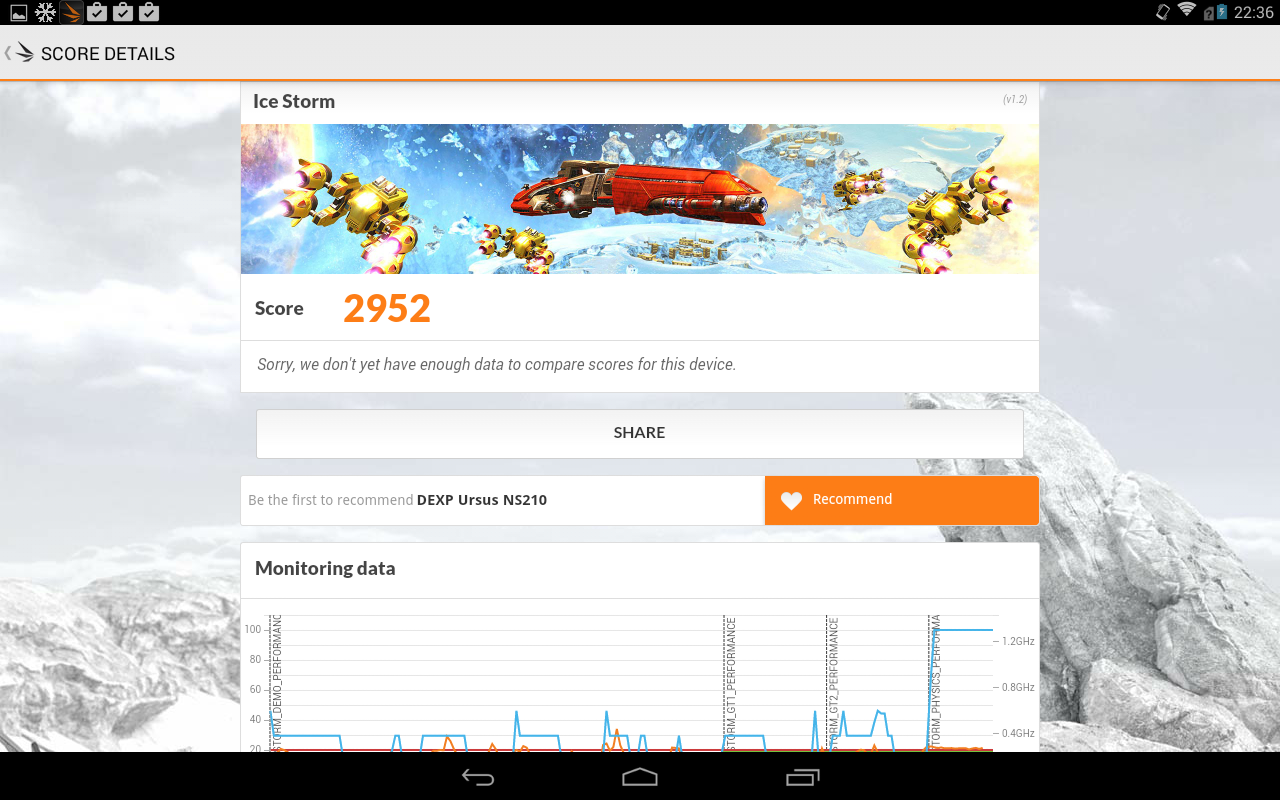


GPS performance (the corresponding module is part of the chipset) I can evaluate to four with a minus. Yes, satellites are searched and found, which is far from being achieved in every budget Android tablet. However, searching for about a dozen satellites and connecting to four of them took more than a minute - this is not the best result on the market. However, I repeat that for an inexpensive tablet this is rather good than bad.
DEXP Ursus NS210 with its Spreadtrum SC7731G costs 6,990 rubles, and the vast majority of analogues on MT8382 cost around 8 and a half thousand (data from Yandex.Market). This suggests that the use of the chipset to which this post is dedicated has a positive effect on the price of the device. And Spreadtrum managed to occupy its niche.
DEXP Ursus NS210
One way or another, I decided to check - what are the products of this office in practice, given that soon they (products, that is, chipsets) may well appear in a galaxy of inexpensive tablets. I tested in practice the DEXP Ursus NS210 with the Spreadtrum SC7731G - it's such a 10-inch tablet (1280 x 800 pixels) with 1 GB of RAM and 8 GB of internal memory, a pair of cameras (0.3 and 2 megapixels), a 3G modem with the ability to make calls etc. The device is running the Android 4.4 KitKat operating system, but soon DEXP promises to release firmware with Android 5.1 Lollipop. Incidentally, this is a plus in the piggy bank not only DEXP, but also Spreadtrum: as you know, to release firmware with a new OS release, you need not only the desire of the device manufacturer, but also support from the chip maker. In this case, it appears to be.
I'll start with personal feelings. After running a half-dozen benchmarks and an hour in Asphalt 8, the tablet remained barely warm - no hellish heatings that periodically complain about browsers dealing with devices on Spreadtrum SC7731G were recorded. However, like the friezes in the chart - provided that the average settings are set. However, with regard to heat dissipation, this is a difficult question - perhaps praising the tablet’s “cold temper” should be not so much Spreadtrum as DEXP. Nevertheless, the absence of heat - this can be a merit of the “cold” processor, as well as a competently designed case.
I’ll say the following about compatibility: I launched Asphalt 8 games (which I’ve already mentioned), NOVA 3, Modern Combat 5 and a number of others on DEXP Ursus NS210. Launch problems have never arisen. It is clear that the Spreadtrum SC7731G includes completely standard components from ARM (4 core ARM Cortex-A7 and graphics Mali-400MP2), which are used, say, in the most popular MediaTek MT6582, and yet. It used to be that certain 3D games run on one device, but on another, with the same graphics and architecture of the cores, they no longer exist.
Finally, I will give a selection of results in benchmarks. I can’t say that they amaze the imagination - the numbers are about 5-10 percent lower than for tablets with the MediaTek MT8382 chipset similar in most parameters (also 4 core Cortex-A7 and Mali-400MP2), 1 GB of RAM and an HD screen .
GPS performance (the corresponding module is part of the chipset) I can evaluate to four with a minus. Yes, satellites are searched and found, which is far from being achieved in every budget Android tablet. However, searching for about a dozen satellites and connecting to four of them took more than a minute - this is not the best result on the market. However, I repeat that for an inexpensive tablet this is rather good than bad.
DEXP Ursus NS210 with its Spreadtrum SC7731G costs 6,990 rubles, and the vast majority of analogues on MT8382 cost around 8 and a half thousand (data from Yandex.Market). This suggests that the use of the chipset to which this post is dedicated has a positive effect on the price of the device. And Spreadtrum managed to occupy its niche.