How to optimize and legalize the organization’s IT infrastructure
Creating an integrated and sustainable information infrastructure is currently the focus of most organizations. Whether for digital conversion, cybersecurity, or increasing net cost-effectiveness. Currently, an increasing number of organizations are striving to optimize their IT infrastructure.
But how to properly manage these assets to get perfect results?
In this article, we will discuss the best hardware and software asset management solutions that each company can apply to itself. And since these assets have traditionally been part of the corporate network, we will also look at some network management tips.
For the most efficient operation of the company, proper management of software and software assets is necessary. But before you analyze their work, you need to understand what it is and make an idea of each of the programs.
Software management is a set of proven IT practices that bring people, processes and technologies together to manage and optimize the use of software in an organization. SAM can help you control costs as well as manage business and legal risks, optimize investments in software licensing, and align IT investments with business needs.
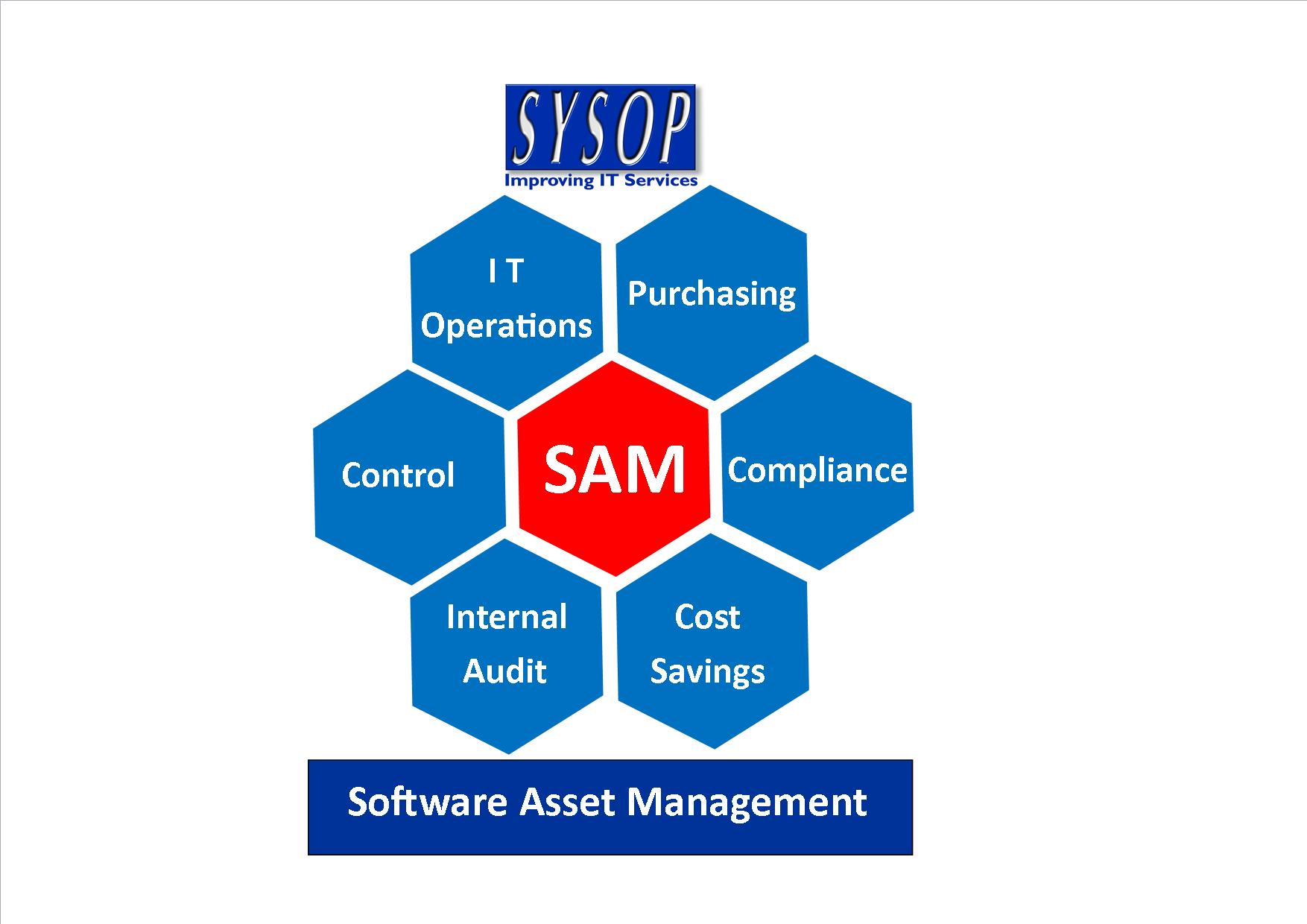
10 reasons why you should use SAM:
Hardware management is the management of physical components (personal computers, laptops) and computer networks from the procurement stage to the time they are written off. HAM should be part of the organization’s general business, and processes should be aligned with other IT processes to ensure that HAM is a key part of IT.
Like software, hardware must be managed correctly so that the organization makes the most of this asset. Processes must be created to manage the asset from the point of request until the asset is deleted.
Effective hardware asset management can also affect the amount of time it takes to resolve hardware problems.
Hardware Asset Management (HAM) and Software Asset Management (SAM) go hand in hand. The SAM project will not work efficiently or successfully without the use of HAM processes or any form of HAM management structure.

It is important to remember that for any projects related to new software, hardware considerations must be taken into account. This is especially true for any new software that is not on the list of approved programs. Technical software or high-performance graphics software may require specialized hardware for correct and high-speed operation.
1. Build a solid foundation for your SAM program. A SAM
program cannot work well without a solid foundation. Before you start optimizing your software management, make sure that you have received full support from the management. Without good management, you will not have enough financial and human resources to carry out effective activities.
The integral parts of the process will be:
2. Determine which software tools you have and where they are located.
After all the preparatory processes are completed, you must perform a full analysis of the software. You need to know exactly which applications run on your systems and which of them have the appropriate licenses and other relevant information about them.
Since each company will have many applications that work on a wide range of devices (servers, laptops, desktop PCs, and even mobile devices), manual analysis without errors will be extremely difficult. You can save time and avoid errors if you conduct analysis using an automated system (using a tool that scans the network) combined with manual verification (in cases where automatic scanning is not possible).
Information that needs to be collected usually includes hardware configurations, disk usage, license type, contract terms, etc. The software constantly receives patches and updates that must be downloaded in a timely manner in order to avoid a decrease in the speed of work.
3. Monitoring the use of software
Even after conducting a software research, it is impossible to obtain all the necessary information. For more information, you must constantly monitor the use of the software.
Actual usage data can help determine which applications are used by most (or minority) employees. You can also use this data to discover applications that unnecessarily load the network (for example, non-work streaming) or to control the workflow of employees by restricting non-work activities (for example, online games or visiting sites on social networks )
4. Conformity assessment of software and licenses of the hardware component of the company.
It is important to determine how the number of licenses relates to actual inventory and usage data. If the number of licenses exceeds the number of devices, then this may mean that the company has acquired excess licenses that it does not need. Less is not good either, as this may mean that some people in your organization are using unlicensed software.
The process of comparing and reconciling all these pieces of information can be very long if the data sources are in different places. Storing all the necessary information in a centralized database will greatly simplify the process.
Even if the organization uses cloud storage, there is a high probability that the bulk of your IT infrastructure is still on your company's equipment. This means that hardware management is extremely important to maintain at the same high level.
Advanced hardware management techniques (HAMs) share similarities with SAM management techniques. But in any case, if you want to have strong enough support at the development stage, the company needs to get the approval of senior management who can sponsor the HAM program.
Of course, companies also need to take an inventory of all the hardware. It is necessary to record their physical location, special configurations, financial details associated with them, etc. Because hardware may undergo various changes during use, it is necessary to include several processes in the HAM program, such as deployment, decommissioning, and removal. To optimize these processes, it is strongly recommended that updates be made as often as possible.
Just like in SAM, hardware asset management can be done more efficiently using the right technology. HAM scanning your hardware network and storing all relevant information in a centralized repository or asset database can simplify many time-consuming and error-prone tasks.
The network is a key foundation that supports and connects all software and hardware assets. Therefore, it is extremely important to manage them correctly. The following are a few examples for this control.
1. Use network management solutions from suppliers that are not tied to a specific manufacturer.
At the moment, it is almost impossible to find a corporate network, which consists of devices from one manufacturer. Major manufacturers of network devices are making their proposals for network management solutions.
Since most networks have their own characteristics, it would be more practical and efficient to use a network management system that can support a wide variety of devices, regardless of their purpose and manufacturer.
Such a management system will increase the autonomy and flexibility of the network, as well as simplify the situation from a managerial point of view, because there will be no need to study several management interfaces (one for each set of devices).
2. Take more active steps to troubleshoot.
Network administrators can detect errors by monitoring certain values, such as CPU utilization, network bandwidth, and network latency monitoring. By setting thresholds and generating alerts that notify administrators when these thresholds are reached, performance can increase several-fold. This will allow system administrators to take corrective actions before something goes wrong.
3. The inclusion of virtual and cloud infrastructures in the system.
Currently, most enterprises use cloud and virtual infrastructure. Often there are additional difficulties in managing networks, as employees need to combine various infrastructures (cloud, virtual, as well as physical).
Therefore, it is imperative to choose tools that easily integrate virtual machines and cloud assets into their management, monitoring, and inventory modules. Without this feature, the organization will not be able to analyze its corporate network in detail.
SAM, HAM, and network management initiatives can offer tangible benefits to every company. Having gained a deeper understanding about the technical equipment of the company, you can more consciously engage in the acquisition of additional equipment, which will minimize costs, avoiding unnecessary purchases, and also agree on the best contracts.
Thanks to the better visualization of hardware and software, it is possible to optimize the operation of devices with ease, as well as to ensure safety, which ultimately will avoid significant fines for violations. Finally, you can increase productivity, because well-informed support staff will be able to quickly solve problems in various areas of the company.
SAM processes should include HAM, and vice versa. The work of one of the products cannot be as effective as possible without a second product. Software has an effect on hardware (it is a hardware specification powerful enough to run software). The interaction of the two solutions is the best way to effectively manage IT assets, while at the same time ensuring compliance with the requirements for both hardware and software.
But how to properly manage these assets to get perfect results?
In this article, we will discuss the best hardware and software asset management solutions that each company can apply to itself. And since these assets have traditionally been part of the corporate network, we will also look at some network management tips.
For the most efficient operation of the company, proper management of software and software assets is necessary. But before you analyze their work, you need to understand what it is and make an idea of each of the programs.
Software Asset Management (SAM)
Software management is a set of proven IT practices that bring people, processes and technologies together to manage and optimize the use of software in an organization. SAM can help you control costs as well as manage business and legal risks, optimize investments in software licensing, and align IT investments with business needs.
10 reasons why you should use SAM:
- increase financial security;
- The best discounts on licenses from various companies;
- high level of protection against license problems;
- good corporate governance;
- increasing employee satisfaction;
- smoother operations;
- providing detailed information about unused software;
- increasing market position;
- increase in long-term business value;
- flexibility for the future.
Hardware Asset Management (HAM)
Hardware management is the management of physical components (personal computers, laptops) and computer networks from the procurement stage to the time they are written off. HAM should be part of the organization’s general business, and processes should be aligned with other IT processes to ensure that HAM is a key part of IT.
Like software, hardware must be managed correctly so that the organization makes the most of this asset. Processes must be created to manage the asset from the point of request until the asset is deleted.
Effective hardware asset management can also affect the amount of time it takes to resolve hardware problems.
HAM & SAM
Hardware Asset Management (HAM) and Software Asset Management (SAM) go hand in hand. The SAM project will not work efficiently or successfully without the use of HAM processes or any form of HAM management structure.
It is important to remember that for any projects related to new software, hardware considerations must be taken into account. This is especially true for any new software that is not on the list of approved programs. Technical software or high-performance graphics software may require specialized hardware for correct and high-speed operation.
Best Software Management Solutions
1. Build a solid foundation for your SAM program. A SAM
program cannot work well without a solid foundation. Before you start optimizing your software management, make sure that you have received full support from the management. Without good management, you will not have enough financial and human resources to carry out effective activities.
The integral parts of the process will be:
- cooperation with people in your organization with technical, legal and managerial experience;
- setting goals to measure your results;
- definition of indicators, time frames and processes;
- Choosing the right software asset management tool.
2. Determine which software tools you have and where they are located.
After all the preparatory processes are completed, you must perform a full analysis of the software. You need to know exactly which applications run on your systems and which of them have the appropriate licenses and other relevant information about them.
Since each company will have many applications that work on a wide range of devices (servers, laptops, desktop PCs, and even mobile devices), manual analysis without errors will be extremely difficult. You can save time and avoid errors if you conduct analysis using an automated system (using a tool that scans the network) combined with manual verification (in cases where automatic scanning is not possible).
Information that needs to be collected usually includes hardware configurations, disk usage, license type, contract terms, etc. The software constantly receives patches and updates that must be downloaded in a timely manner in order to avoid a decrease in the speed of work.
3. Monitoring the use of software
Even after conducting a software research, it is impossible to obtain all the necessary information. For more information, you must constantly monitor the use of the software.
Actual usage data can help determine which applications are used by most (or minority) employees. You can also use this data to discover applications that unnecessarily load the network (for example, non-work streaming) or to control the workflow of employees by restricting non-work activities (for example, online games or visiting sites on social networks )
4. Conformity assessment of software and licenses of the hardware component of the company.
It is important to determine how the number of licenses relates to actual inventory and usage data. If the number of licenses exceeds the number of devices, then this may mean that the company has acquired excess licenses that it does not need. Less is not good either, as this may mean that some people in your organization are using unlicensed software.
The process of comparing and reconciling all these pieces of information can be very long if the data sources are in different places. Storing all the necessary information in a centralized database will greatly simplify the process.
Optimal Hardware Management Solution
Even if the organization uses cloud storage, there is a high probability that the bulk of your IT infrastructure is still on your company's equipment. This means that hardware management is extremely important to maintain at the same high level.
Advanced hardware management techniques (HAMs) share similarities with SAM management techniques. But in any case, if you want to have strong enough support at the development stage, the company needs to get the approval of senior management who can sponsor the HAM program.
Of course, companies also need to take an inventory of all the hardware. It is necessary to record their physical location, special configurations, financial details associated with them, etc. Because hardware may undergo various changes during use, it is necessary to include several processes in the HAM program, such as deployment, decommissioning, and removal. To optimize these processes, it is strongly recommended that updates be made as often as possible.
Just like in SAM, hardware asset management can be done more efficiently using the right technology. HAM scanning your hardware network and storing all relevant information in a centralized repository or asset database can simplify many time-consuming and error-prone tasks.
Network Management Best Practices
The network is a key foundation that supports and connects all software and hardware assets. Therefore, it is extremely important to manage them correctly. The following are a few examples for this control.
1. Use network management solutions from suppliers that are not tied to a specific manufacturer.
At the moment, it is almost impossible to find a corporate network, which consists of devices from one manufacturer. Major manufacturers of network devices are making their proposals for network management solutions.
Since most networks have their own characteristics, it would be more practical and efficient to use a network management system that can support a wide variety of devices, regardless of their purpose and manufacturer.
Such a management system will increase the autonomy and flexibility of the network, as well as simplify the situation from a managerial point of view, because there will be no need to study several management interfaces (one for each set of devices).
2. Take more active steps to troubleshoot.
Network administrators can detect errors by monitoring certain values, such as CPU utilization, network bandwidth, and network latency monitoring. By setting thresholds and generating alerts that notify administrators when these thresholds are reached, performance can increase several-fold. This will allow system administrators to take corrective actions before something goes wrong.
3. The inclusion of virtual and cloud infrastructures in the system.
Currently, most enterprises use cloud and virtual infrastructure. Often there are additional difficulties in managing networks, as employees need to combine various infrastructures (cloud, virtual, as well as physical).
Therefore, it is imperative to choose tools that easily integrate virtual machines and cloud assets into their management, monitoring, and inventory modules. Without this feature, the organization will not be able to analyze its corporate network in detail.
Company financial benefits
SAM, HAM, and network management initiatives can offer tangible benefits to every company. Having gained a deeper understanding about the technical equipment of the company, you can more consciously engage in the acquisition of additional equipment, which will minimize costs, avoiding unnecessary purchases, and also agree on the best contracts.
Thanks to the better visualization of hardware and software, it is possible to optimize the operation of devices with ease, as well as to ensure safety, which ultimately will avoid significant fines for violations. Finally, you can increase productivity, because well-informed support staff will be able to quickly solve problems in various areas of the company.
SAM processes should include HAM, and vice versa. The work of one of the products cannot be as effective as possible without a second product. Software has an effect on hardware (it is a hardware specification powerful enough to run software). The interaction of the two solutions is the best way to effectively manage IT assets, while at the same time ensuring compliance with the requirements for both hardware and software.