November 29, 2017 at 09:30
Nuclear-powered icebreaker Lenin - almost like a spaceship, only an icebreaker
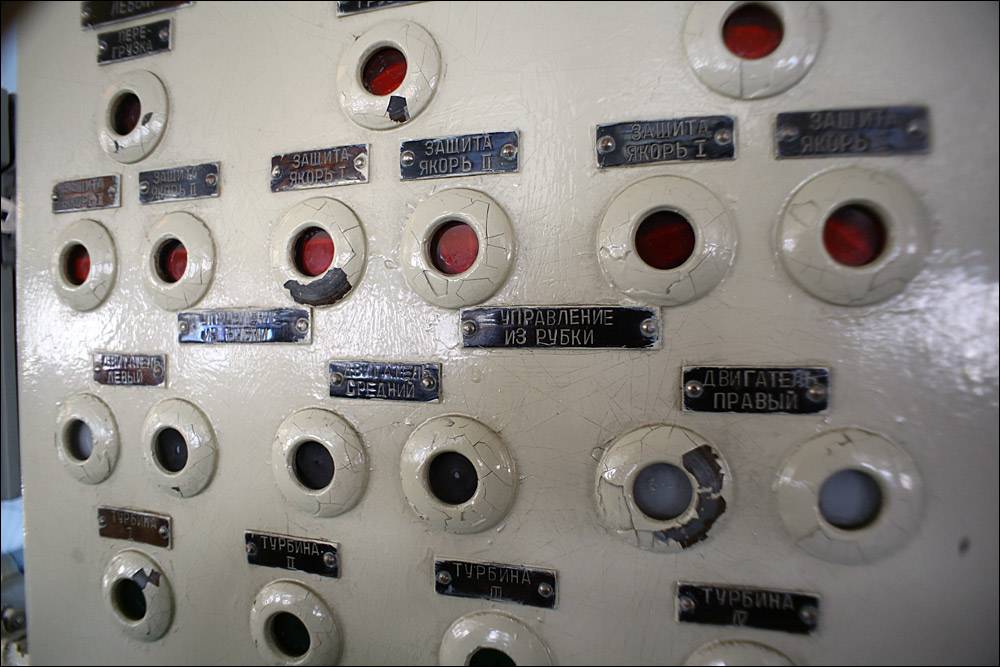
Along with space in the USSR, we conquered all other frontiers. In particular, the Arctic - for her in 1953 it was decided to build the first nuclear powered ship. This project in terms of importance, scope and coverage was almost consistent with the conquest of space. And there was also a race with the Americans: they finished their aircraft carrier Enterprise 2 years later.
To understand why “Lenin” is so important, you need to start with a short description of the situation.
He was really needed. Our economy depended on transport routes through the Arctic, and normal navigation there is only possible 3-4 months. Ordinary icebreakers require too much fuel, and as a result, they are not very large (that is, they cannot drive large vessels and caravans). Soviet science has proven that a nuclear installation perfectly solves the issue. If you build a power system on it, then you can make the icebreaker large, heavy, wide - and autonomous for 2-3 years. And Kurchatov with a scientific group came up with how to do this.
It was an amazing opportunity. Because it was possible to prove to the whole world that our atom is really peaceful. And to show how the peoples of the USSR once again overpowered the forces of nature and pushed the boundaries accessible to the human.
And then an extremely interesting project began. I will go over the main points that really hooked me.
Impression
The first thing that catches your eye on " Lenin " during a visit is its monumentality. It was created to amaze. If it was impossible to send anything particularly large into space (even astronauts were selected for growth), then here the designers had a huge scope for possible work. See how unusual it is trimmed:
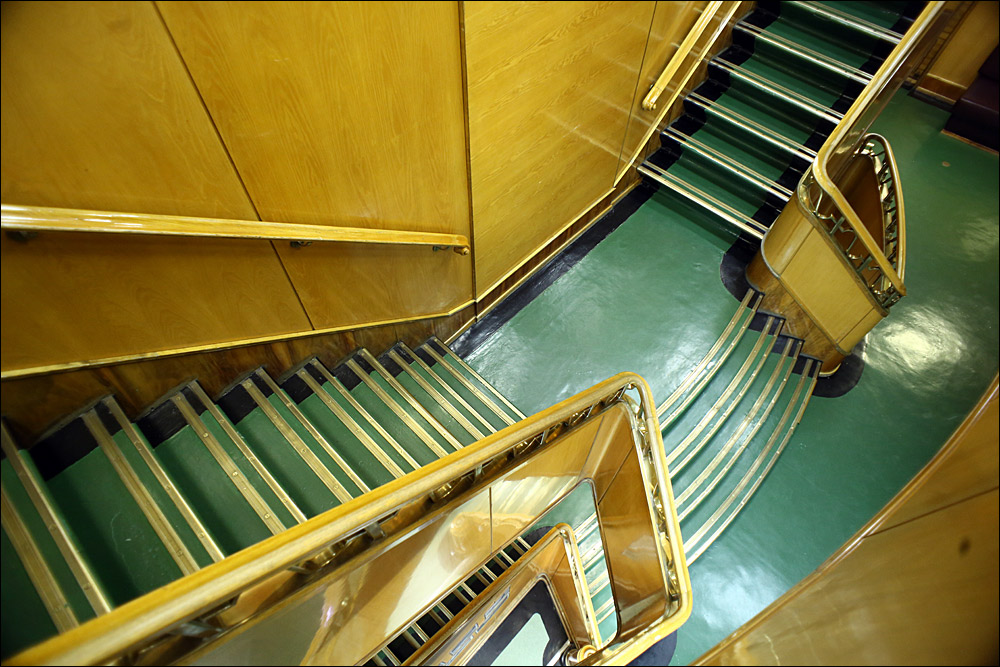
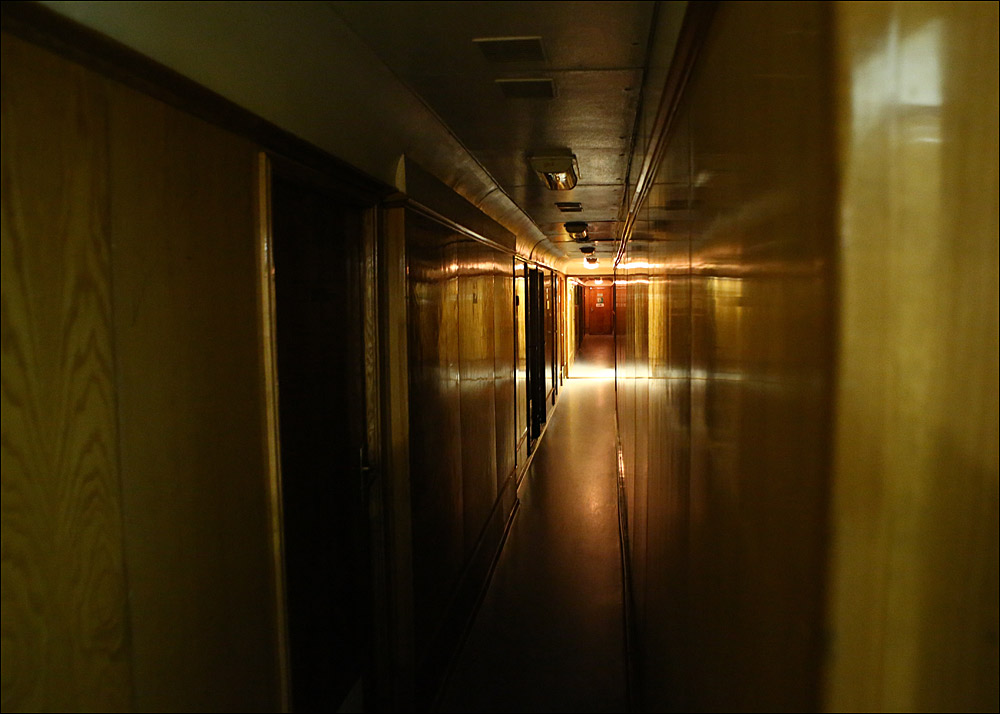
Expensive tree. There is no saving here - neither in mass nor in material. Let me remind you that even the first subway cars were already sheathed with fabric-based plastic, like this (I shot this in the reconstructed motor subway car of Series A No. 1):
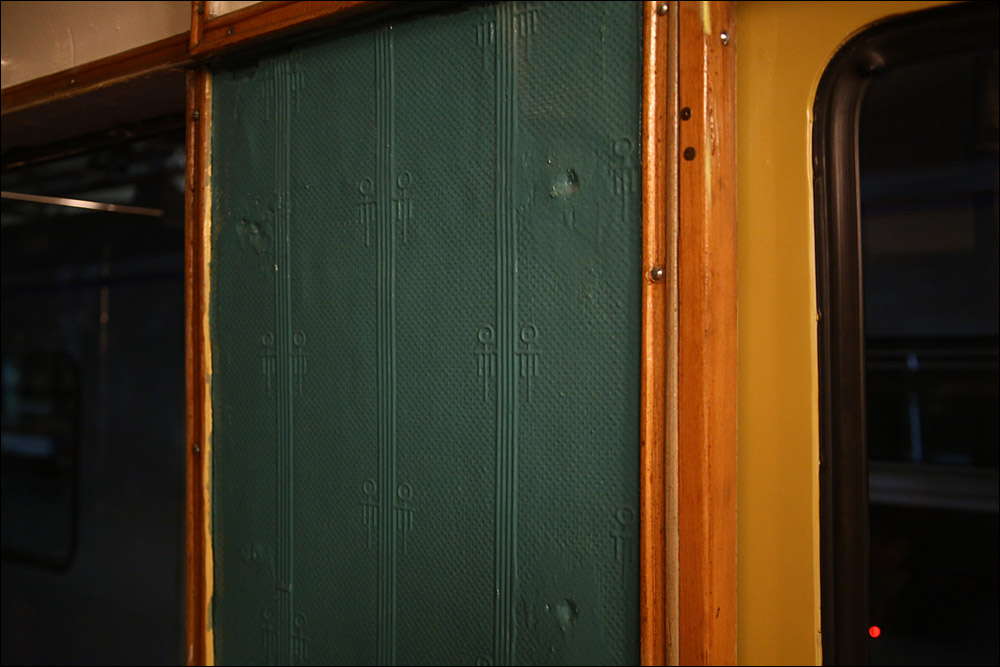
The same plastic was used for steamboats to make them easier. “Lenin” did not begin to facilitate. Why? Because firstly, wood trim creates a feeling of warmth and comfort. This is very important in critical work, it is very important in long transitions. But more importantly, the nuclear-powered ship carried the same function as the first metro stations. He was a symbol of our capabilities. And, therefore, had to hit, and hit right away, at first glance.
They wrote about icebreakers for many years, and there was something to show. And those who visited him had something to remember. It is really incredibly spacious.
Naturally, it was equipped with the latest technology, and prepared almost like a spaceship for an autonomous system. On board was a full-fledged hospital with an incredibly modern technology - an X-ray unit (not all mainland large hospitals had this - and this is yet another proof of the peacefulness of the atom!). On board was a hairdresser, shoe shop, tailor's workshop, lounge, library with reading room, smoking room. The dining room was used as a cinema hall. In the conference room under the wheelhouse, you could deploy a large command center or hold an official reception.
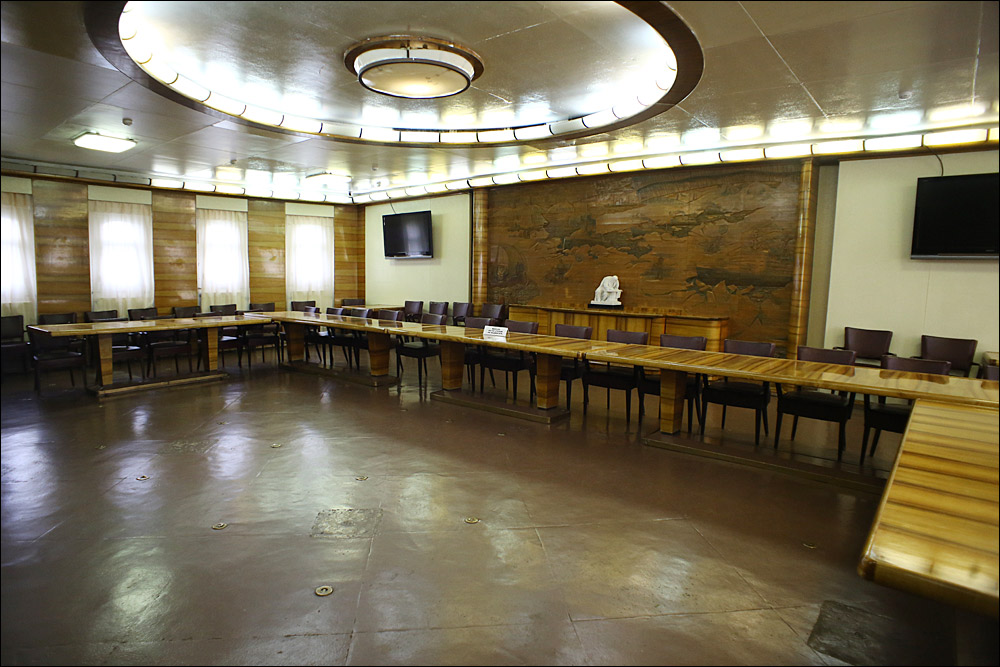
Everything was taken on the road - even chess, in case someone would need to discuss the issue behind the party.

Incredible attention was paid to the comfort of the captain and ship officers. Their cabins were more luxurious than the apartments of many officials. True, less than these apartments - only the captain had a really large one, and it was used for meetings including (plus a dedicated "kitchen" for tete-a-tete). A lot of custom furniture was made for the entire nuclear-powered ship - they took care of the ergonomics of everything and everything.

Automation in the years of construction was not enough. For autonomy, 150 crew members were enough (in fact, about 230 came on board). The second generation of nuclear-powered ships reduced this number to 100 people. And on the new fourth generation, icebreakers twice as large in size, already 75 people.
Design solutions
The first big problem was the layout of the engine room. Several hundred enterprises of the USSR worked on the nuclear submarine, and specifically in the engine room there were a lot of subcontractors - it was necessary to supply about 6 thousand units of equipment, and often it was not delivered at all in the way that was traditionally done. Just changing the technology of soldering pipes for welding has changed a lot in the ideas about 75 kilometers of icebreaker pipes.
Therefore, the engine room was assembled from wood. Naturally made a model of wood and began to assemble there all the nodes. Remaking a wooden block on a layout was much faster than moving real equipment inside a real building. Later, the same technique was used during repairs - they were tried with wooden parts, after which they set the main ones, if the operation was worked out normally. The reactor is nearby though.
At the time of leaving the dock in St. Petersburg (then Leningrad), another wildly ridiculous problem arose by modern standards: the draft was 10 meters and the channel depth was 9 meters. It was possible to deepen the channel, it was possible to build supporting pontoons - a lot of things could be done. But they calculated the tide and decided to wait for the rise of water by 2.5 meters: this was supposed to happen statistically. They saved a lot of money on this country, but could lose time - for the symbol of propaganda it was very important to get on the right date, that is, on November 6, the 59th, this is the 42nd anniversary of the Revolution. The party wanted to show the people on the anniversary what was achieved by common forces. It was impossible to delay the deadline - it was the very deadline in the literal sense, where if something was wrong,
They waited a month for water. In the end, the author of the idea, A. Leibman, was summoned to the Specialists “to speak.” He left the building and immediately met an assistant who said that the water would be at night. He returned to the building and reported this to the special officers. They immediately shone:
- You see, as soon as we tackled this issue, and water immediately appeared!
The water held for 2 hours 20 minutes, the icebreaker was spent a little less than 2 hours. By the anniversary they managed to test and pass.
Performance of tasks
In fact, no other country needed nuclear submarines as much as the USSR. We had a huge sector of the Arctic, and we had to go through it. “Lenin” solved this problem perfectly. From the 59th year to the 89th year - 30 years on the routes of the Arctic. Following him, more nuclear-powered ships were built, and they were combined into one scheme. It turned out year-round navigation by caravans. Autonomy is unlimited, it is possible to load fuel once every 4-6 years, and given that about 45 grams of fuel is consumed per day, it could (in theory, in practice never work out) be thrown in a container by plane or helicopter.
Here is the fuel, in fact, the thin tubes themselves in the context:
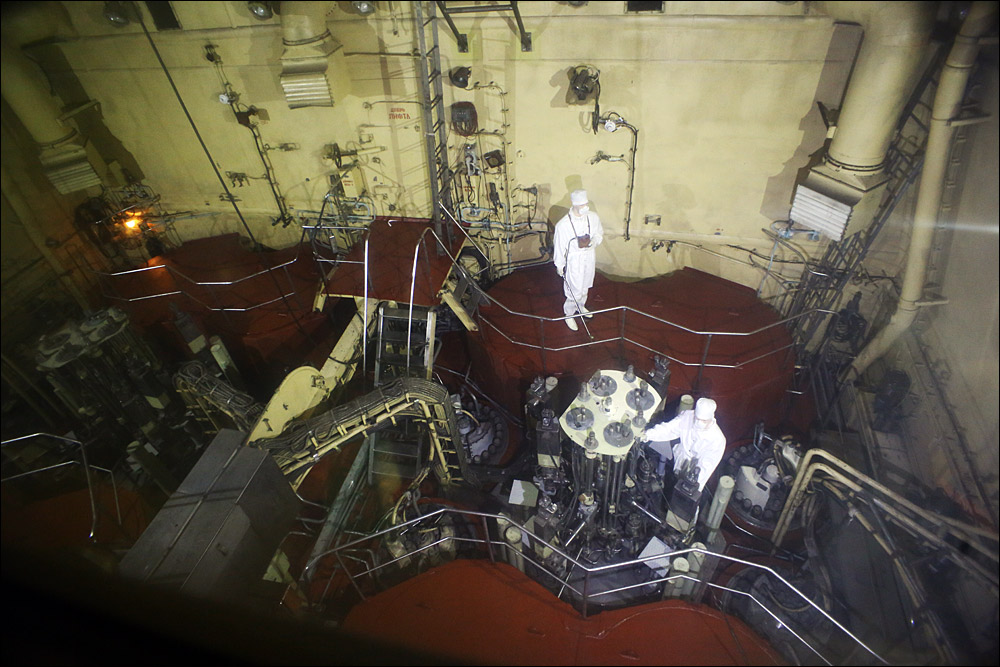
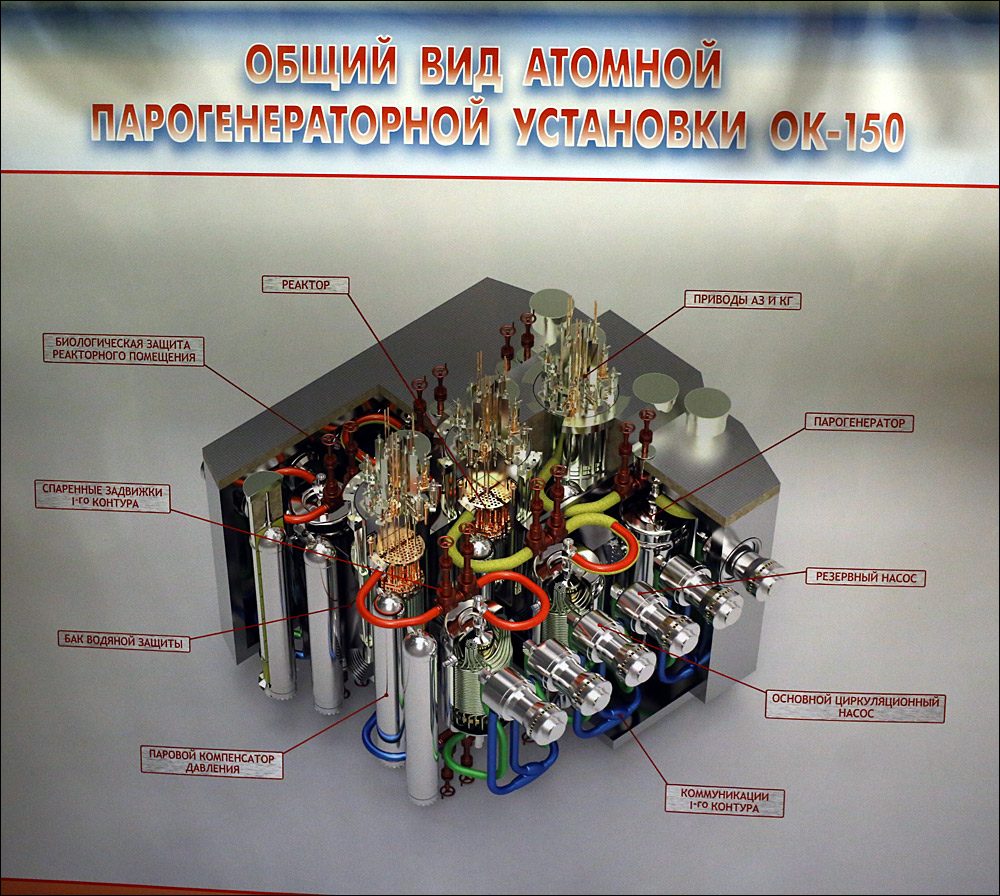
There were three pieces of reactor units at once (after upgrading from OK-150 to OK-900 — two units), generating steam for 4 power plants — more precisely, 4 turbine generators supplying 3 propeller motors with current.
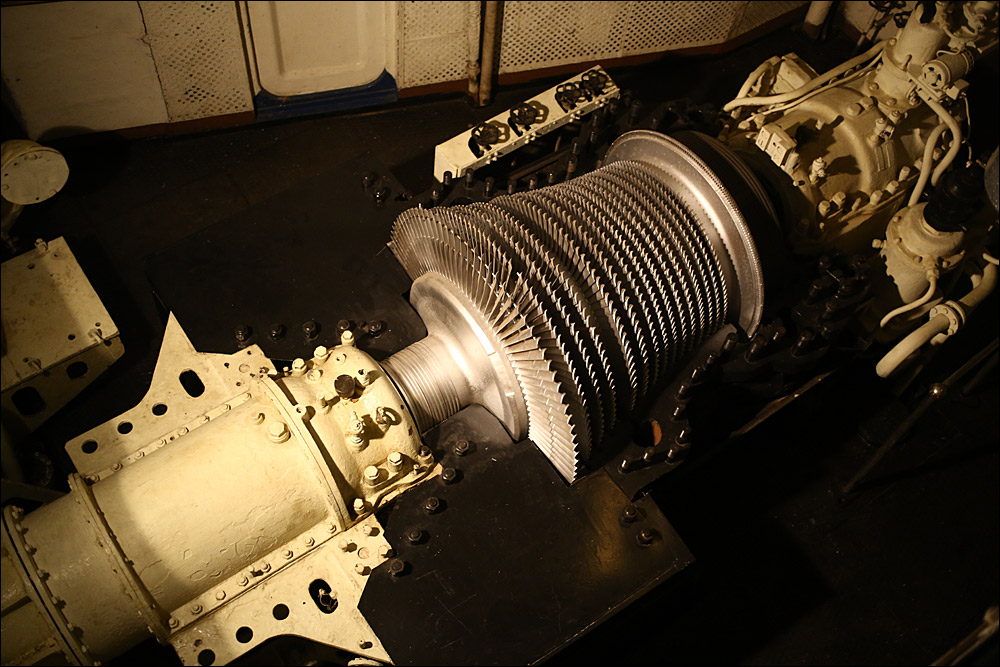
All other nodes are also at least duplicated. In the event of a complete failure of the reactor facilities there were diesel stations, plus 500 tons of diesel fuel.
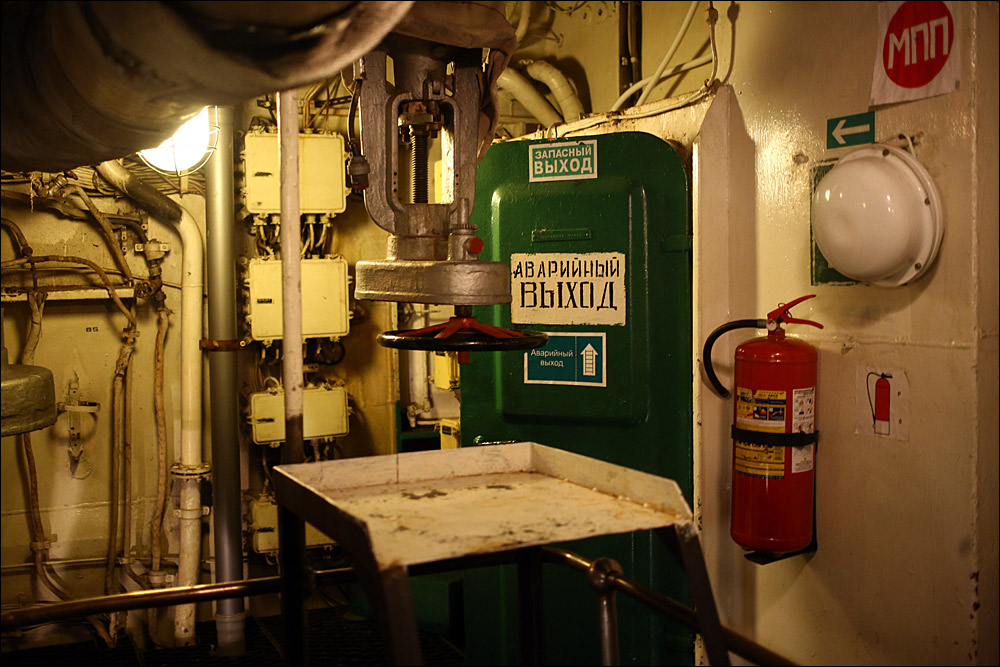
Here is the reactor compartment in its modern form (all are dimensional models):
On the icebreaker, the helipad is on top for ice reconnaissance. The same helicopter from polar stations could take urgent patients to the hospital "Lenin".
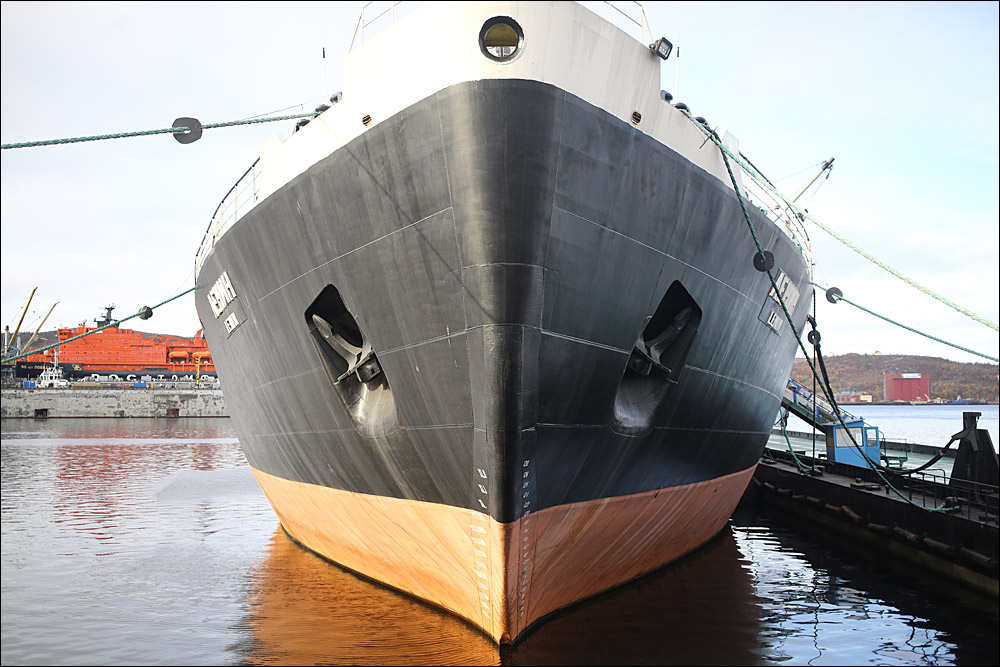
In general, here we need to tell a little about how, in fact, it helps transport to pass through the ice. First and foremost, the icebreaker’s hull shape is not suitable for normal navigation: it is not optimal from the point of view of walking in the usual water area. The bow was sloping, so that the icebreaker “crawled” onto the ice, and then chipped it with its mass:
That is, it does not “butt” the ice, as it seems to many, but breaks it and sends it to the sides. The function of the icebreaker is to make a passage in the ice field so that transport ships pass through this passage. When breaking, it scours a little, that is, it turns out the passage is slightly wider than the body, but from the sides - with ice, then with ice porridge, and in the middle it is clean.
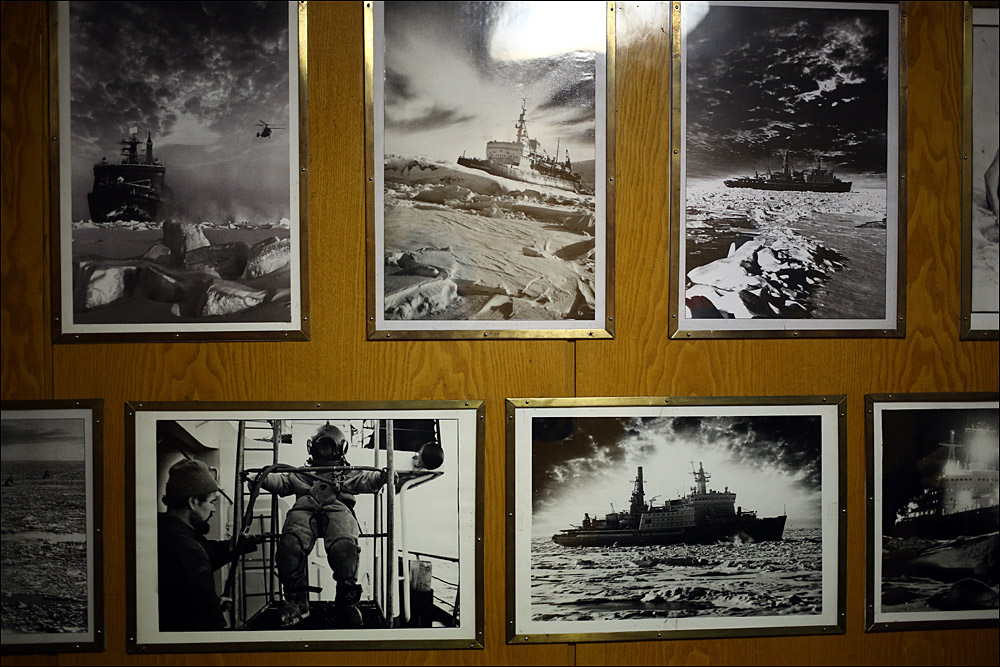
Of course, this is by no means always the case - there are ice of such thickness that the icebreaker simply cannot break through. Therefore, you need to evaluate very well what is ahead - sometimes you need to leave the caravan for ice exploration by the hull, sometimes - lead with a complex zigzag, sometimes - return. About 60 basic maneuvers: for example, reconnaissance by the hull, and then carrying out a caravan in tow, one vessel at a time, through the ice bridge. On complex jumpers, you can take ice not with a continuous course, but with acceleration from acceleration. When you need a wide passage, for example, when ice is closed - you can lay a channel "herringbone", moving back and forth at angles. You can turn around and lay the second passage next to the first, if there is a danger of compression or one of the vessels is already sandwiched with ice. Many maneuvers are designed for two icebreakers: there are schemes of parallel movement,
If interested, the journey through the links can start here .
If the icebreaker wedges, then it begins to swing. Usually this is done by moving the screws back and forth, but on the Lenin there are special ballast tanks on the sides, into which you can pump water from left to right and vice versa - this makes it possible to swing the icebreaker “from the inside”.
Mounting for furniture in the floor in case of pitching:

A dining room chairs are already fixed from the very beginning: Lozga
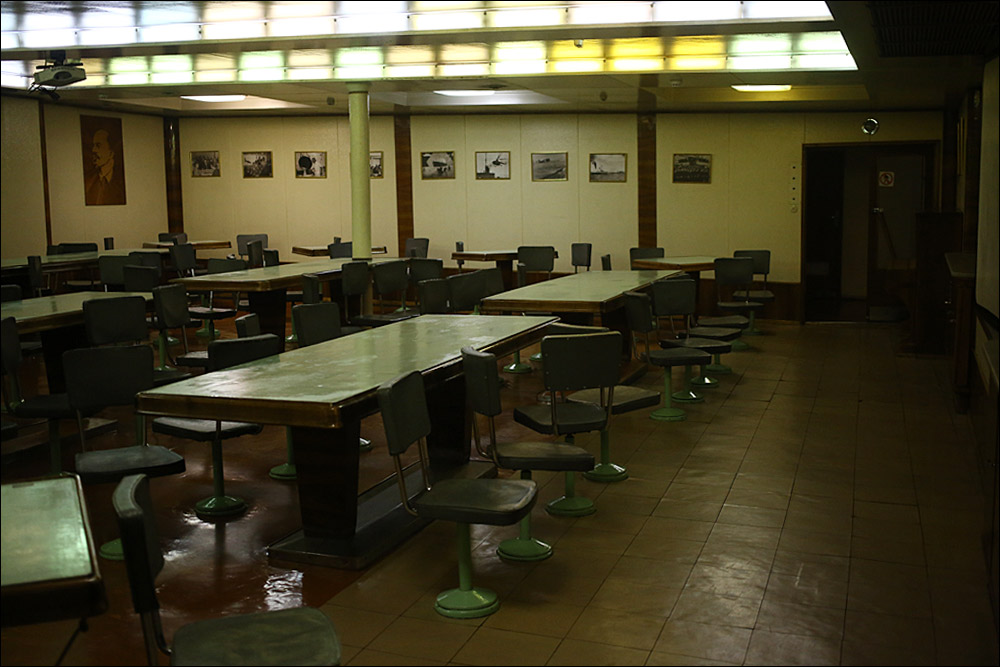
wrote more about interiors and the power system here . Now pay attention to the screw control (three handles): The telegraph for communication with the engine room is found three times in the wheelhouse: left, right, and center. Here it is on the other hand:
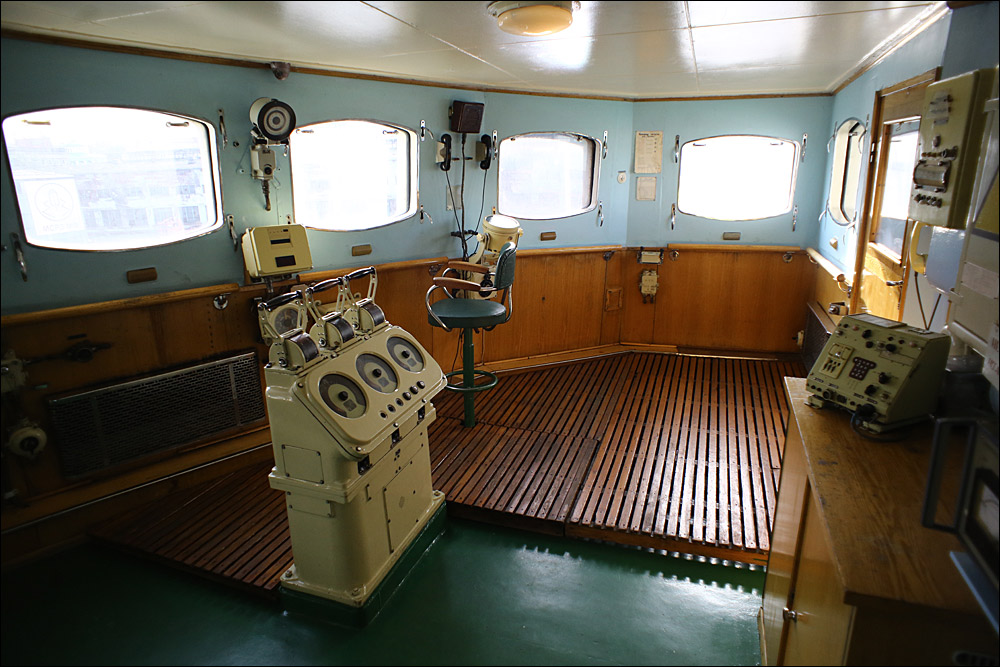
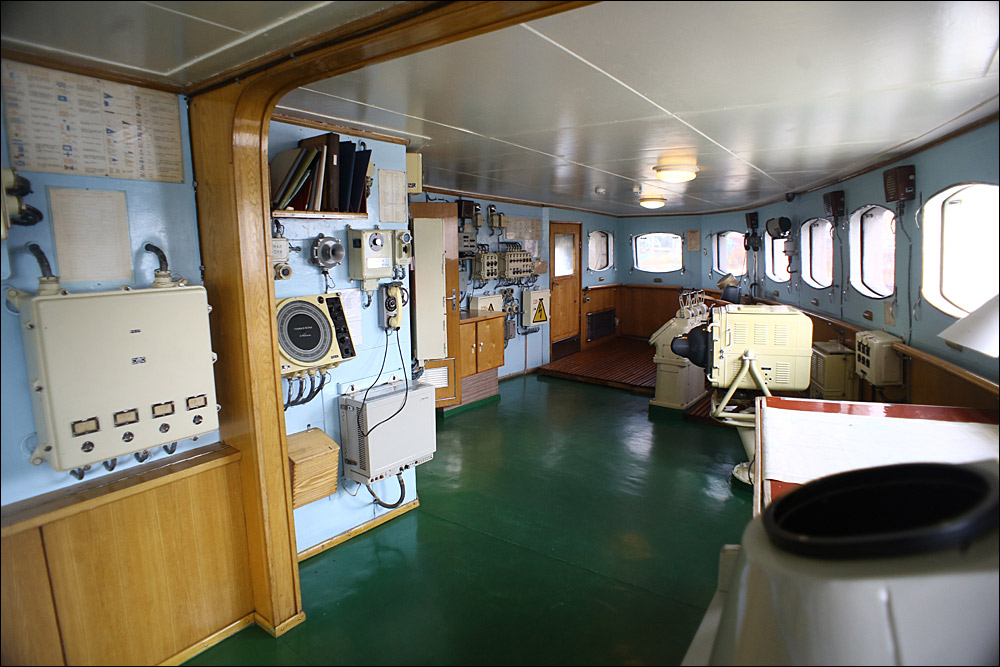
Pay attention to the magazines on the left, they give out a museum reconstruction of the wheelhouse. After a sailing trip near Greenland, for me, this regiment looks like a source of danger - it will definitely fly into the head with a magazine when it is rocking. And yes, I clarified, specifically this regiment appeared after the transformation of the nuclear-powered submarine into a museum, the usual pitching is quite strong.
As you can see, a panoramic view is available in the windows. Therefore, the main control of the maneuver is done from where the person stands - so as not to run to look and back.
All devices of the early automatic era:
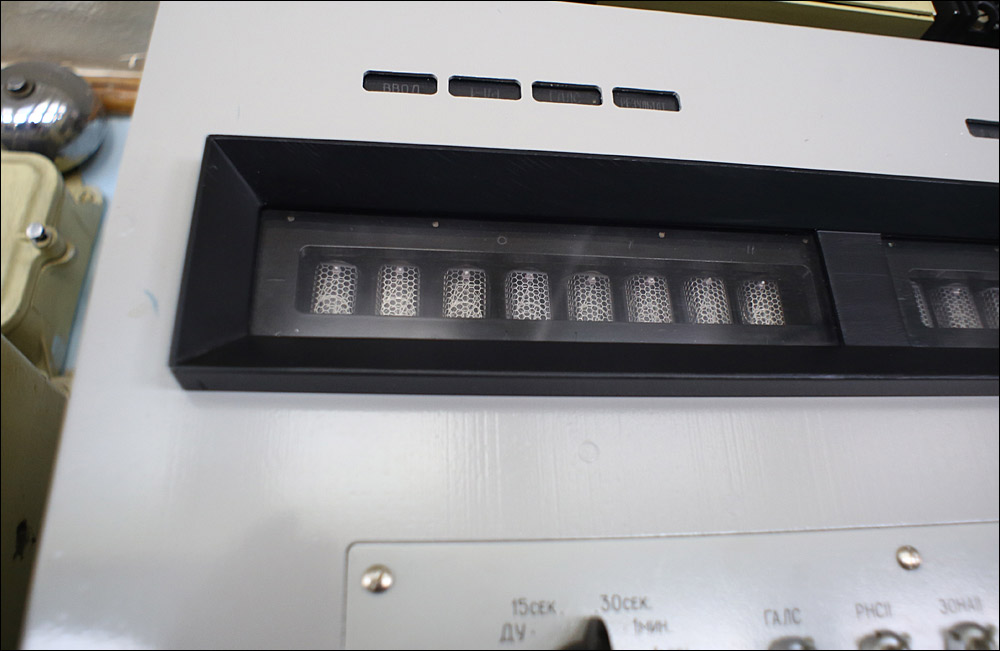
This is the radar screen:
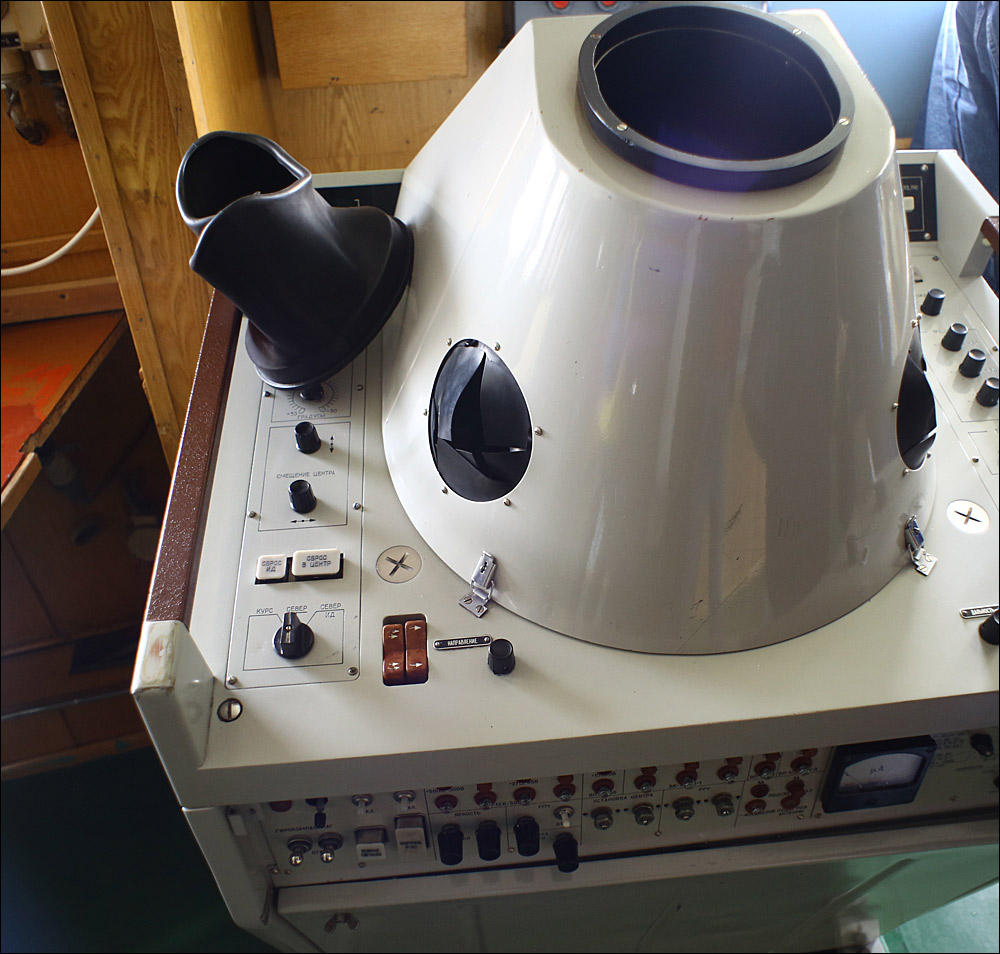
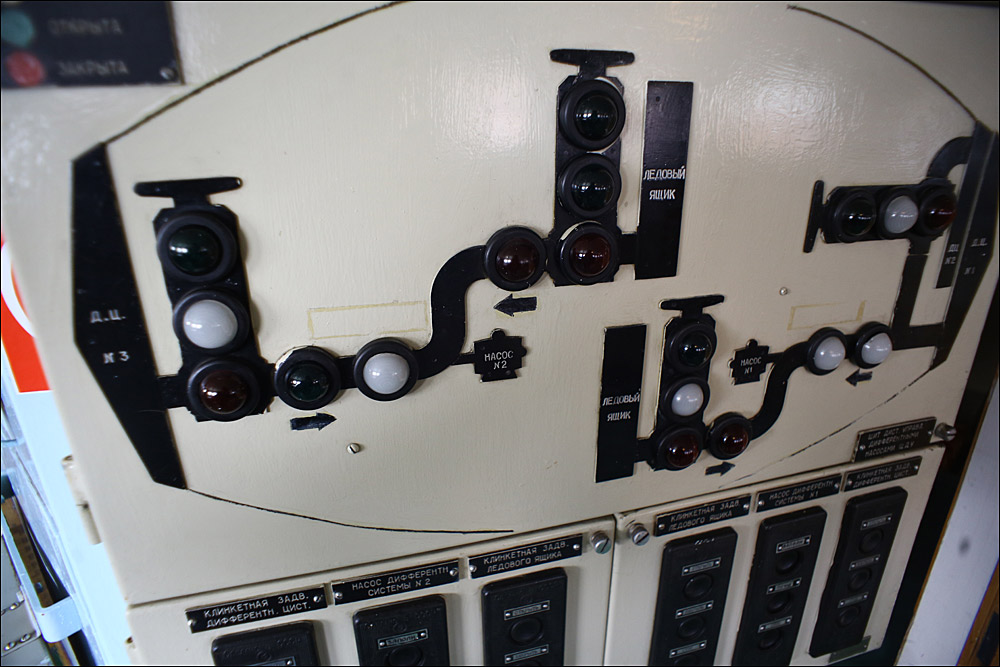
Everything is very clear and unambiguous:
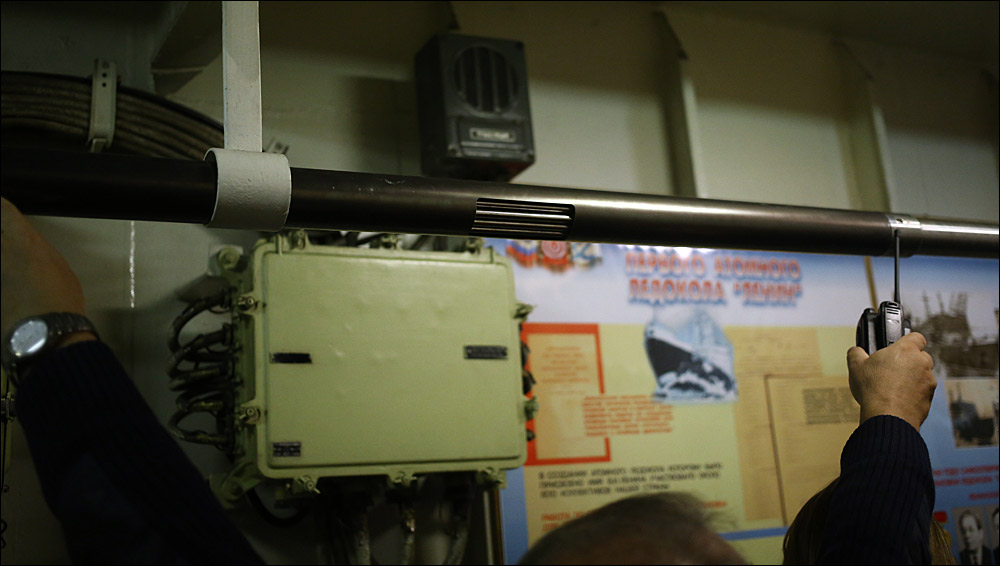
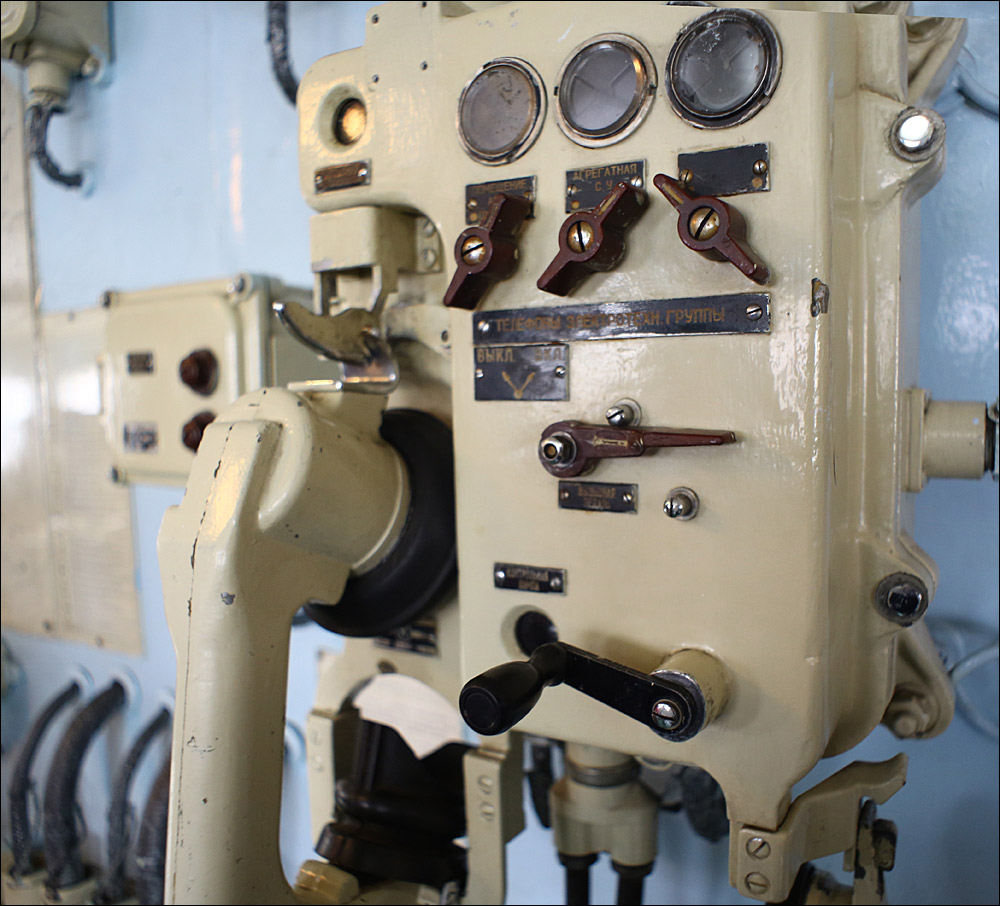
The icebreaker is equipped with hundreds of posts of the internal telephone network:
If you are interested in learning how all this happened before the nuclear powered ships, visit the Museum of the Russian Arctic in St. Petersburg, there are amazing layouts that make everything clear right away.
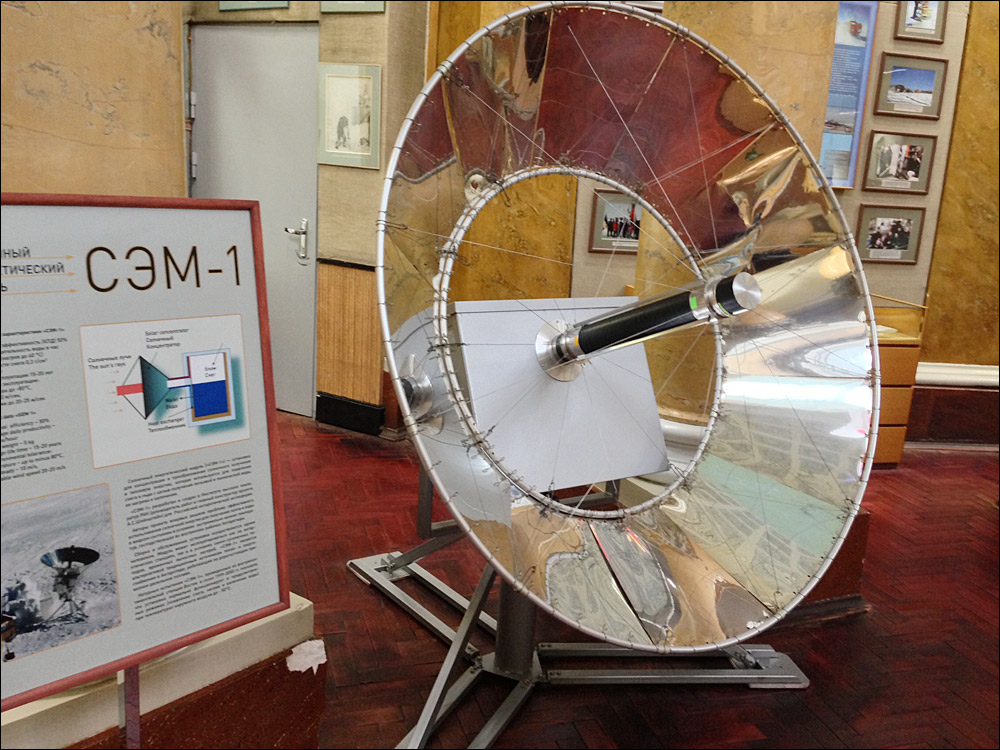
This is a fragment of the exposition, a device for melting snow that struck me with its elegance. Nearby there is a mock Arctic station and many more interesting pieces.
Oh yes! For nuclear powered ships, serious calculations of optimal maneuvers were made: the captain and officers knew not only ice physics, but also taught serious applied mathematics of processes.
Change operation
During the operation, many practical things were found out. And if, for example, the color of the paint was important as an experience, but it didn’t have a very strong influence on history - just then they began to paint instead of dark colors in Arctic red - but with energy it was not so commonplace.
One of the most interesting things that happened to Lenin was how the bottom was blown up to flood the reactor blocks. In short, the story is as follows: at some point it became clear that the mounted nuclear systems were not made in the most optimal way. Yes, according to knowledge, about 55-57 years everything was perfect. But this was the first atomic surface ship, and during operation it became clear that something could be done better. In 1965, the first serious accident occurred, requiring the unloading of fuel and its burial at a depth in a special container.
The second accident occurred just two years later (even less). In the fall of 67th year, it was decided to unload the equipment for 3,700 tons. This is a block of 22.5 x 13 x 12 meters, that is, a fragment seven-story high in the center of the building. The icebreaker got to the burial place of the reactor compartment, then it was prepared for unloading - they filled everything that they could to protect the ocean floor from radiation, cut what they could, laid cumulative charges, put special bulkheads so that after the explosion the compartment would not jam. And then an explosion pulled out the middle of the hull and "caught" on the pontoon. She was towed a little to the side, and she sank calculatedly. An icebreaker with a flooded compartment was towed to the dock to restore the hull. Then, later, he was once again docked, but already in Severodvinsk - for the installation of new OK-900 reactors,
Here are the "pencil" diagrams of the process.
And here is a citation of journal entries:
"22.15. The water level in the central compartment reached 9.0 meters. The bow and stern clinkets are blocked, the compartment is not filled with seawater.
22.22. The captain declared a 5-minute readiness.
22.27. Explosion fired. The compartment went into the water. The emergency parties began to inspect their posts "
Now
Now "Lenin" is a museum. They wanted to write it off, but then they realized that this, although from the USSR, was still a symbol. They removed everything that was not related to the museum program and put it in the port of Murmansk. It has a crew and a captain. Guided tours several times a day, however, not in all compartments. As they said on the spot, it is planned to model a helicopter from above (it seems like they are looking for a decommissioned helicopter to put it on the site), and now they have also dismantled part of the crew’s cabins and made an interactive exhibition (in particular, about how polar bears open canned condensed milk from the icebreaker by tourists). If you are in those parts - be sure to check it out. The icebreaker impresses not even with its interest, but with the kind of strong things we did already in the 60s.
Of the 150 flights to the North Pole, our fleet made 114 (in the fall of 2017, the first flight was a little over 40 years ago). Now you can take a ticket and walk about 80 hours to the North Pole on the other nuclear ship “50 years of Victory” (10-11 days the whole expedition). This pleasure costs about 30-40 thousand dollars, and, according to unverified data, the tickets for the next year are almost completely bought out by Chinese tourists.
But it seems to me that this is still the dream of every kid born in the USSR. How to fly into space.