
 October 3, 2016 at 17:44
What is VPS hosting really and how to choose a reliable VPS provider
Everyone who creates a website is faced with a number of problems, and one of the most difficult tasks is the choice between numerous offers. The budget for most beginners is very limited, so they don’t have a lot of options.
One suitable option is shared hosting. This is an ideal choice for sites that have not yet become popular, that is, with low traffic. But if the load on the site can grow significantly in the near future, or a highly loaded project, for example, an e-commerce platform, is hosted on the same physical server, then this option is not the best. In such situations, VPS hosting is preferable - a virtual private server. For a slightly higher price you will get better functionality, security and a number of other advantages.

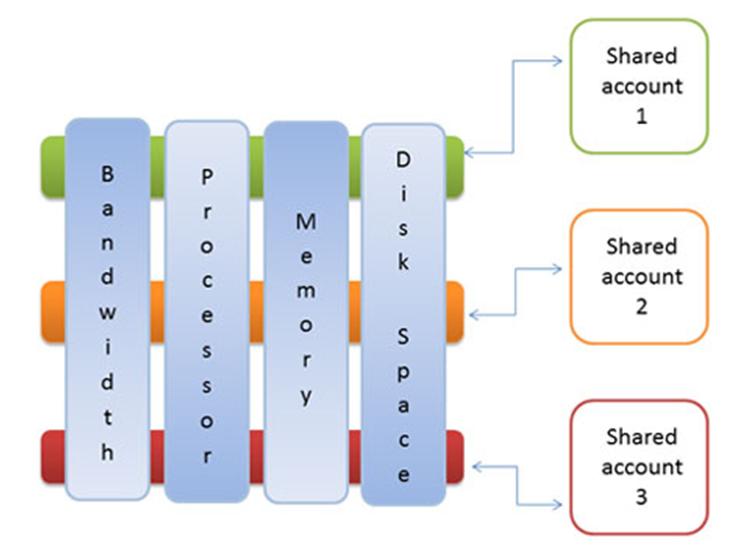
Anatomy of a virtual VPS hosting.
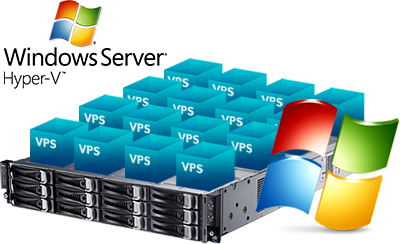
 In the case of VPS hosting, each website is hosted on a virtual private server, which is located on a fairly powerful physical server. The physical system is divided into several virtual ones: the software isolates the virtual servers and manages their collaboration. Virtual servers operate independently of each other, so that when multiple sites are hosted on a physical server, they do not affect performance from each other. Each virtual server receives resources allocated to it. VPS
Ownergets full access (root) to its virtual server and can work with it in the same way as with a dedicated physical server. In the case of VPS, virtual servers share the resources of their physical server - its processors, RAM, storage subsystem capacity and network bandwidth. Thus, VPS hosting gives you full control over your server and almost the same advantages as a dedicated physical server. At the same time, a virtual server costs much less than a dedicated server, and its performance is higher than with shared hosting.
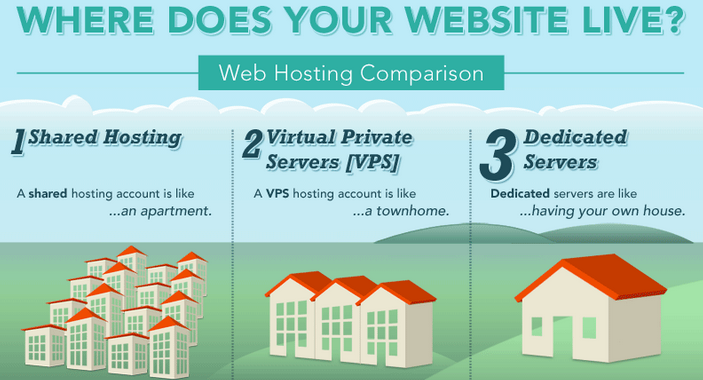
VPS hosting is the golden mean between shared and dedicated hosting. It combines the acceptable cost of shared hosting and the independence of the dedicated. Unlike shared hosting, where resources are shared and neighbors can influence your site, the picture is different. Each virtual partition is an isolated environment, and all the features of a physical server are available to you, but at a much lower price.
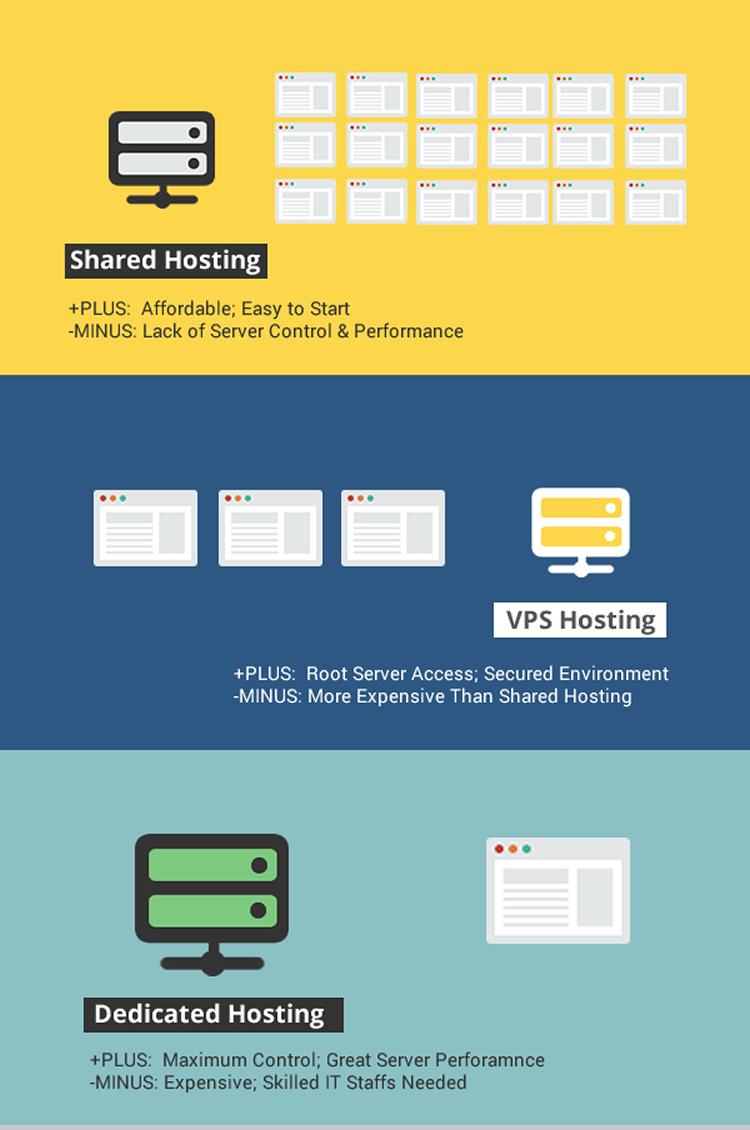
Virtual hosting
+ easy start, low cost
- insufficient level of control and performance
VPS hosting
+ root access, safe environment
- a bit more expensive than shared hosting ( VPS for 65 rubles )
Dedicated hosting
+ maximum control, good server performance
- high cost, you need qualified personnel
As long as the site’s traffic is small, you don’t need to increase the budget - it will feel quite well on shared hosting. However, with increasing traffic, most shared hosting servers will no longer be able to provide the desired performance. One of the signs may be the increased page loading time. Overloading can also lead to frequent inaccessibility of the site from the outside (it regularly “crashes”). If such symptoms appear, then shared hosting for good website robots is no longer enough.
Sometimes hosters notify customers that their site has run out of resources for the current month. In this case, it's time to switch to VPS hosting. If your site has a lot of multimedia content, then it will also require a more powerful VPS hosting.
All VPS services can be controlled using a user-friendly interface - control panel : Plesk, cPanel or another web console. Sometimes hosters offer their own tools.

A good option is the ISPmanager 5 Lite panel . This is a unique set of services that allow you to simultaneously configure and administer the web server, domains, mail, databases, and user access control.

If you decide to switch to VPS hosting, then when choosing a provider you need to take into account a number of factors. Moreover, unlike shared hosting, when choosing a VPS hosting that is really useful for your project, you have to consider a lot more factors. We list the main ones.

With virtual hosting, you do not have access to the server with root privileges, so the question of server management is not worth it. But in the case of VPS, the entire virtual server is yours. Therefore, it is necessary for someone to look after him, to control performance. If these functions are taken over by the VPS provider, then this is managed hosting (managed VPS), and in the case of unmanaged (unmanaged VPS), you yourself are responsible for your virtual server.
Unmanaged VPSs are prepared only for root access, and users will need to independently install and configure software, a control panel, provide server protection and its maintenance / maintenance. Unmanaged hosting will require you to monitor the performance of the virtual server and maintain its health.
If the server "crashed", or some security problems appeared, then you are the only one to solve them - you are the only administrator of your VPS. This option is more suitable for specialists with professional server management skills. So if you are an experienced geek and are familiar with such things as the correct shutdown of a system, its recovery, restart, server reboot, then unmanaged hosting may be a suitable option.
As for the "normal" users and business owners, they should pay a little more and use a managed VPS: a professional system administrator will monitor the server in 24x7 mode. And users can do more familiar business.

Again, the degree of this management may be different and depends on the host and hosting plans. This should be borne in mind when comparing different VPS plans or hosters.
Another important point is the server operating system. Most hosters offer popular Windows and Linux. Linux as Open Source costs less than Windows. Linux hosting is user friendly and supports a wide range of applications. In many cases, this is a good (maybe even better) choice. However, there are applications that are either not supported on Linux at all, or are better supported on Windows. If you need to use software such as ASP or ASP.NET, then your choice is Windows-based VPS. A Windows server is often required for development on .NET or for deploying Microsoft applications and other applications for this platform.
Server configuration plays an important role in site speed and performance. How much processor power, RAM and disk memory you get - all this matters. In addition, it makes sense to ask on which physical server your VPS will host. It is better if it is a sufficiently powerful equipment of a famous brand. And if the foundation is weak, it is difficult to expect the stability of the entire structure.

 Many VPS hosters guarantee 99.9% reliability. However, the claimed indicator may differ from the real one, and it is always useful to get acquainted with the reviews on the Internet. For reliable and relatively uninterrupted operation of the site, this figure should not be lower than 99.95%.
Redundancy usually involves reserving resources, especially in the data center. For example, in the event of a main power failure, UPS and diesel generators start to work. If the ISP has problems, then there should be alternative communication channels. If one physical server is overloaded, a backup one should be provided, etc. Scalability, in turn, means the ability to cope with a sharp increase in server load, usually due to backup resources. All this means increased uptime and consistently high performance.

Most VPS providers limit the bandwidth for a virtual server and may incur additional charges. When choosing a VPS hoster, you should make sure that you don’t have to pay too much for enough network bandwidth.
Regardless of the efficiency of your hosting provider and the proposed functionality, there are always some problems. In this case, convenient and effective support is needed. If the hoster is not able to provide 24/7 support, it is simply not worth your money. When your site is idle for a long time, this can lead to an outflow of visitors, and possibly serious financial losses. It is useful to first test the support service of the hosting provider, and then decide whether it makes sense to contact him.
Of course, in order to choose a hoster, you need to know the cost of its services. The price depends on the type of service (managed or not) and allocated resources. Which hosting plan best suits your needs is up to you.
A very important point, not all hosting providers have a money back guarantee if the customer does not like the hosting.
The closer the server is to your audience, the more effective the access of users to it will be and the higher the chances to rise in the ratings of search engines. Web analytics tools will help you understand where the target audience is concentrated, and find the VPS closer. You can also create a copy of the VPS, but you should take into account the distances when transferring data and the responsibilities for ensuring communication between remote servers.
They may be required in several situations:
As your site grows and develops, VPS hosting at some point becomes a necessity, and you should very carefully choose a service that meets your preferences. To do this, you must, at a minimum, know these requirements, so use a calculator and try to quantify them.
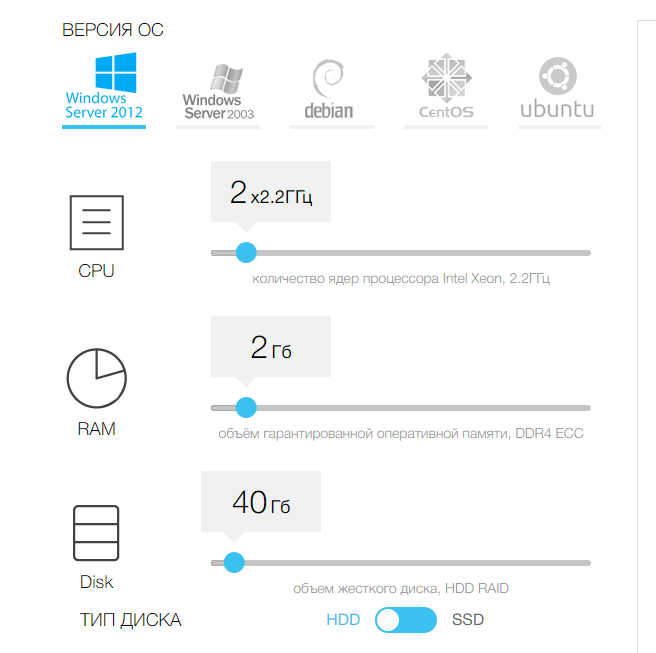
Virtual private servers scale easily: if necessary, you can add memory, disk capacity or computing resources in a few clicks.
However, you need to know the initial requirements, including the required network bandwidth, the number of IP addresses, what additional services are needed (for example, protection against DDoS attacks ). An important parameter is the capacity of RAM. A minimum of 512 MB is recommended. This will provide the required speed and reserve for the development of the site. This option will be a good starting point for those who switch to VPS from shared hosting.

If you need high performance, then your choice is the SSD VPS. Due to the high input / output speed of solid state drives, VPS performance will be an order of magnitude higher than in the case of HDD. Enterprise-class SSDs with eMLC memory type, disks integrated into RAID arrays achieve data transfer speeds of up to 100 thousand IOPS, and Windows VPS starts within 7 seconds.
Anatomy of a virtual VPS hosting.
What is a VPS?
In the case of VPS hosting, each website is hosted on a virtual private server, which is located on a fairly powerful physical server. The physical system is divided into several virtual ones: the software isolates the virtual servers and manages their collaboration. Virtual servers operate independently of each other, so that when multiple sites are hosted on a physical server, they do not affect performance from each other. Each virtual server receives resources allocated to it. VPSOwnergets full access (root) to its virtual server and can work with it in the same way as with a dedicated physical server. In the case of VPS, virtual servers share the resources of their physical server - its processors, RAM, storage subsystem capacity and network bandwidth. Thus, VPS hosting gives you full control over your server and almost the same advantages as a dedicated physical server. At the same time, a virtual server costs much less than a dedicated server, and its performance is higher than with shared hosting.
VPS hosting
VPS hosting is the golden mean between shared and dedicated hosting. It combines the acceptable cost of shared hosting and the independence of the dedicated. Unlike shared hosting, where resources are shared and neighbors can influence your site, the picture is different. Each virtual partition is an isolated environment, and all the features of a physical server are available to you, but at a much lower price.
Virtual hosting
+ easy start, low cost
- insufficient level of control and performance
VPS hosting
+ root access, safe environment
- a bit more expensive than shared hosting ( VPS for 65 rubles )
Dedicated hosting
+ maximum control, good server performance
- high cost, you need qualified personnel
Why might you need to switch to VPS?
As long as the site’s traffic is small, you don’t need to increase the budget - it will feel quite well on shared hosting. However, with increasing traffic, most shared hosting servers will no longer be able to provide the desired performance. One of the signs may be the increased page loading time. Overloading can also lead to frequent inaccessibility of the site from the outside (it regularly “crashes”). If such symptoms appear, then shared hosting for good website robots is no longer enough.
Sometimes hosters notify customers that their site has run out of resources for the current month. In this case, it's time to switch to VPS hosting. If your site has a lot of multimedia content, then it will also require a more powerful VPS hosting.
Website Management on VPS
All VPS services can be controlled using a user-friendly interface - control panel : Plesk, cPanel or another web console. Sometimes hosters offer their own tools.
A good option is the ISPmanager 5 Lite panel . This is a unique set of services that allow you to simultaneously configure and administer the web server, domains, mail, databases, and user access control.
How to choose a VPS: important factors
If you decide to switch to VPS hosting, then when choosing a provider you need to take into account a number of factors. Moreover, unlike shared hosting, when choosing a VPS hosting that is really useful for your project, you have to consider a lot more factors. We list the main ones.
Factor 1: Managed or Unmanaged
With virtual hosting, you do not have access to the server with root privileges, so the question of server management is not worth it. But in the case of VPS, the entire virtual server is yours. Therefore, it is necessary for someone to look after him, to control performance. If these functions are taken over by the VPS provider, then this is managed hosting (managed VPS), and in the case of unmanaged (unmanaged VPS), you yourself are responsible for your virtual server.
Unmanaged VPSs are prepared only for root access, and users will need to independently install and configure software, a control panel, provide server protection and its maintenance / maintenance. Unmanaged hosting will require you to monitor the performance of the virtual server and maintain its health.
If the server "crashed", or some security problems appeared, then you are the only one to solve them - you are the only administrator of your VPS. This option is more suitable for specialists with professional server management skills. So if you are an experienced geek and are familiar with such things as the correct shutdown of a system, its recovery, restart, server reboot, then unmanaged hosting may be a suitable option.
As for the "normal" users and business owners, they should pay a little more and use a managed VPS: a professional system administrator will monitor the server in 24x7 mode. And users can do more familiar business.
Again, the degree of this management may be different and depends on the host and hosting plans. This should be borne in mind when comparing different VPS plans or hosters.
Factor 2: Windows or Linux
Another important point is the server operating system. Most hosters offer popular Windows and Linux. Linux as Open Source costs less than Windows. Linux hosting is user friendly and supports a wide range of applications. In many cases, this is a good (maybe even better) choice. However, there are applications that are either not supported on Linux at all, or are better supported on Windows. If you need to use software such as ASP or ASP.NET, then your choice is Windows-based VPS. A Windows server is often required for development on .NET or for deploying Microsoft applications and other applications for this platform.
Factor 3: server configuration
Server configuration plays an important role in site speed and performance. How much processor power, RAM and disk memory you get - all this matters. In addition, it makes sense to ask on which physical server your VPS will host. It is better if it is a sufficiently powerful equipment of a famous brand. And if the foundation is weak, it is difficult to expect the stability of the entire structure.
Factor 4: Reliability
Many VPS hosters guarantee 99.9% reliability. However, the claimed indicator may differ from the real one, and it is always useful to get acquainted with the reviews on the Internet. For reliable and relatively uninterrupted operation of the site, this figure should not be lower than 99.95%.Factor 5: Redundancy and Scalability
Redundancy usually involves reserving resources, especially in the data center. For example, in the event of a main power failure, UPS and diesel generators start to work. If the ISP has problems, then there should be alternative communication channels. If one physical server is overloaded, a backup one should be provided, etc. Scalability, in turn, means the ability to cope with a sharp increase in server load, usually due to backup resources. All this means increased uptime and consistently high performance.
Factor 6: bandwidth quota
Most VPS providers limit the bandwidth for a virtual server and may incur additional charges. When choosing a VPS hoster, you should make sure that you don’t have to pay too much for enough network bandwidth.
Factor 7: customer support
Regardless of the efficiency of your hosting provider and the proposed functionality, there are always some problems. In this case, convenient and effective support is needed. If the hoster is not able to provide 24/7 support, it is simply not worth your money. When your site is idle for a long time, this can lead to an outflow of visitors, and possibly serious financial losses. It is useful to first test the support service of the hosting provider, and then decide whether it makes sense to contact him.
Factor 8: price
Of course, in order to choose a hoster, you need to know the cost of its services. The price depends on the type of service (managed or not) and allocated resources. Which hosting plan best suits your needs is up to you.
A very important point, not all hosting providers have a money back guarantee if the customer does not like the hosting.
Factor 9: VPS Location
The closer the server is to your audience, the more effective the access of users to it will be and the higher the chances to rise in the ratings of search engines. Web analytics tools will help you understand where the target audience is concentrated, and find the VPS closer. You can also create a copy of the VPS, but you should take into account the distances when transferring data and the responsibilities for ensuring communication between remote servers.
Factor 10: Additional IP Addresses
They may be required in several situations:
- SSL certificate installation;
- assigning a dedicated IP to each site on your virtual server (otherwise they will automatically get the IP address of the VPS server);
- different IPs for different channels (website, mobile applications, etc.);
- different IPs for different services (CMS, database, etc.);
- assigning several IPs to one site, for example, having domains in different languages (mysite.co.uk, mysite.ru, mysite.it, mysite.ca, etc.).
Summary
As your site grows and develops, VPS hosting at some point becomes a necessity, and you should very carefully choose a service that meets your preferences. To do this, you must, at a minimum, know these requirements, so use a calculator and try to quantify them.
Virtual private servers scale easily: if necessary, you can add memory, disk capacity or computing resources in a few clicks.
However, you need to know the initial requirements, including the required network bandwidth, the number of IP addresses, what additional services are needed (for example, protection against DDoS attacks ). An important parameter is the capacity of RAM. A minimum of 512 MB is recommended. This will provide the required speed and reserve for the development of the site. This option will be a good starting point for those who switch to VPS from shared hosting.
If you need high performance, then your choice is the SSD VPS. Due to the high input / output speed of solid state drives, VPS performance will be an order of magnitude higher than in the case of HDD. Enterprise-class SSDs with eMLC memory type, disks integrated into RAID arrays achieve data transfer speeds of up to 100 thousand IOPS, and Windows VPS starts within 7 seconds.