Happy birthday, Alan Kayǃ (or how to get +80 to IQ)
“I was never a strong programmer, and this encouraged me to create powerful new languages. Today I work in two directions: metaprogramming and “childish” programming, for children aged 9-14. ”
- Alan Curtis Kay.
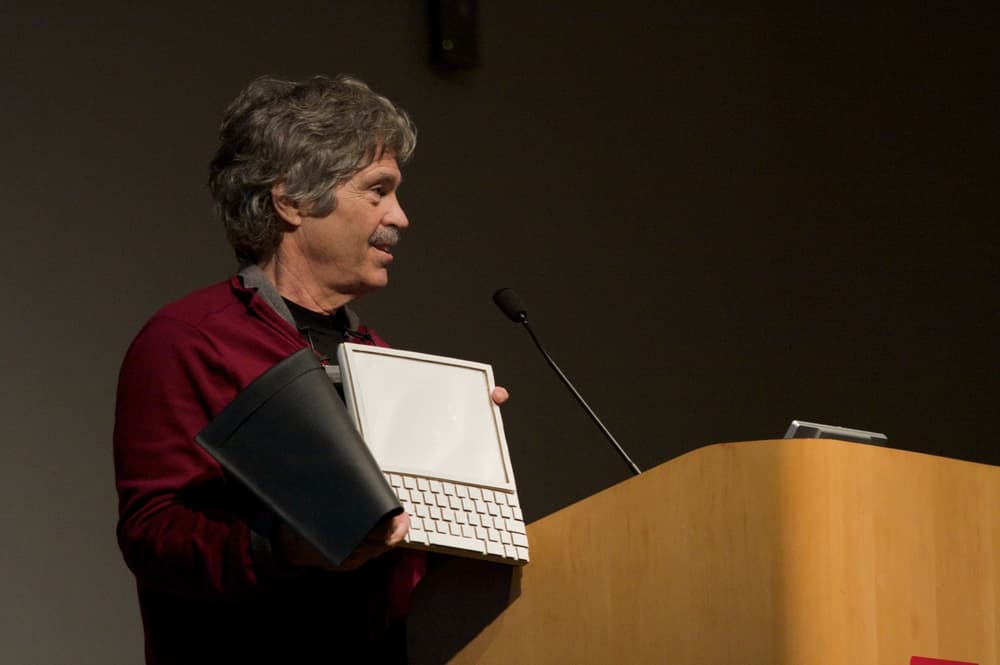
It seems that this guy participated in all the institutes of advanced developments related to IT.
- Worked in the legendary Xerox PARC, Atari, Apple, Disney, HP.
- He proposed the concept of Dynabook (in 1968), which determined the conceptual basis for a laptop, tablet computer and e-book.
- One of the "founding fathers" of object-oriented programming ( SmallTalk , 1969).
- Participated in the creation of the first personal computer Xerox Alto(1973).
- The initiator of the useful movement "Every child has a laptop."
- In 2001, he founded the Viewpoints Research Institute , a nonprofit organization dedicated to children, learning, and cutting-edge software development.
- In 2006, he challenged the industry - he announced the possibility of creating an operating system with a graphical interface of 20,000 lines of code .
“
A change in perspective is worth 80 IQ points”
And again, Alan Kay is a key figure in IT, with only one and a half translated articles on the Internet. And they know about him, most likely, from his quotes. Under the cut - quotes and some extracts from Kay’s articles. Well, and a great performance at TED.
Together with colleagues from EDISON Happy Birthday to Alan Kay!
“The best way to predict the future is to invent it.” (Actually the author of the quote is Dennis Gabor, the investigation is here .)
“The future does not creep before us like a road. This is something that we choose for ourselves, and as long as we do not violate any laws of the universe, we can make it work the way we want. "
“Technology is all that was not when you were born.”
“Those who are serious about software development make their own hardware.”
“The Internet has been made so well that many people think of it as a natural resource like the Pacific Ocean, and not as something made by man. When was the last time a technology of this magnitude worked without errors? In comparison, the web is a joke. Amateurs made the web. ”
“LISP is the greatest programming language ever created.”
“It finally dawned on me that half the page of code at the bottom of the thirteenth page of the LISP 1.5 manual is LISP, written on my own. For software development, it's like Maxwell’s equations for physics. ”
"I coined the term" object-oriented, "and I assure you that I did not mean C ++."
“I regret that I came up with the term“ objects ”many years ago, because it makes people concentrate on small ideas. The really big idea is the messages. ”
“Thanks to mathematical education, I realized that every object can have several algebras associated with it, maybe even whole families, and they can be very, very useful.”
"The key to making large and expandable systems is to think of how the modules will communicate with each other, rather than taking care of their internal properties and behavior."
“I thought of objects as living cells or as separate computers on a network that exchange messages.”
“One of the key ideas is to make systems that continue to work during testing, and especially during changes. Even large changes must be incremental and spend no more than a second before taking effect. ”
“I think the only type of science that programming can be like is the science of building bridges. "Someone builds bridges, while others dismantle them, put forward more advanced theories, and thus the construction continues."
“The second step was to understand the LISP language and use that understanding to make the structures stronger and more connected.”
“Until we figure out how to really develop software, the solution could be to create dynamic systems with extremely late binding in all its manifestations.”
"Late binding allows you to embody ideas in the later stages of development with exponentially less effort than traditional early binding in C, C ++, Java, and other similar languages."
“If you use a language with early binding, as most people do, instead of a language with late binding, you will be locked up in the work done. Reformulating something will not be easy. ”
“Object-oriented programming for me means only sending messages, local retention and protection, as well as hiding state processes, and extremely late binding of everything. This can be done in Smalltalk and in LISP. There may be other systems where this is possible, but they are unknown to me. "
"I am not against types, but I do not know of any system with types that would not cause excruciation, so I am still for dynamic typing."
“It is well known that I wanted to destroy Smalltalk in the late seventies. There were several years when he was the most powerful tool in the world. He responded to the need for a more compact and beautiful way than all that came before him. But time has passed. When we understood more and became more ambitious, we decided that Smalltalk had a lot of things that didn't scale as they should. For example, the reflection mechanism that was there. Smalltalk was one of the first languages that could “see itself,” but at that time we already knew how to make different levels of reflection better, and we had to realize this understanding. ”
“When I went to school, I already read a couple of hundred books. I knew in the first grade that they lied to me because I already had my own point of view. They (the teachers) did not like the idea of different points of view, so it was a battle. ”
Alan Kay identified three teaching methods.
“The first is memorizing instructive stories; sometimes they are formulated in the form of aphorisms, proverbs and sayings. These are folk traditions, folklore ... The
second method is a method of logical reasoning, a method of studying chains of cause and effect relationships. This is the path of mathematics and formal logic.
The third method is the system dynamics method. The method of creating intuitive patterns in the brain of the behavior of various objects and systems belonging to the outside world. "
“The book - the main Keeper of the achievements of Civilization - is suitable for the transfer of knowledge using the first and second of the methods considered. In the book you can collect wonderful stories, wise aphorisms and instructive sayings. In the book you can set out mathematical discipline. But the book is practically not suitable for the transfer of knowledge by the method of "system dynamics". "
Alan himself says he reads 300 books a year
Biography of Alan Kay and
PCweek's Key Achievements
(Extracts from some articles by Alan Kay)
“American business is completely fucked up because it is all about competition. But our world is created for mutually beneficial cooperation, and this is exactly what people need to be trained. The best analogy is team sports. ”
Why Alan Kay doesn’t like Wikipedia, PowerPoint, OOP and programming patterns
Thousand-
fold code compactness Thousand-fold code compactness] [
How to grow People from our kids using IT
Why do kids think in the categories of differential geometry
Alan Kay about the future of programming
Computerra
STEPS system: twenty thousand lines of code that will change programming, operating systems and the Internet.
Counterargument on HEDR
TED A powerful idea about ideas P.S. If anyone is ready to help with the translation of an article by Alan Kay, The Future of Reading Depends on the Future of Learning Difficult to Learn Things , please contact in person or by mail (in profile).
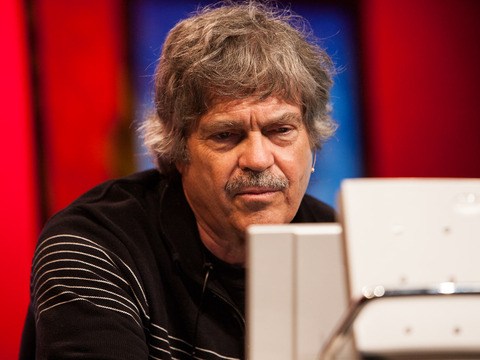

- Alan Curtis Kay.
It seems that this guy participated in all the institutes of advanced developments related to IT.
- Worked in the legendary Xerox PARC, Atari, Apple, Disney, HP.
- He proposed the concept of Dynabook (in 1968), which determined the conceptual basis for a laptop, tablet computer and e-book.
- One of the "founding fathers" of object-oriented programming ( SmallTalk , 1969).
- Participated in the creation of the first personal computer Xerox Alto(1973).
- The initiator of the useful movement "Every child has a laptop."
- In 2001, he founded the Viewpoints Research Institute , a nonprofit organization dedicated to children, learning, and cutting-edge software development.
- In 2006, he challenged the industry - he announced the possibility of creating an operating system with a graphical interface of 20,000 lines of code .
“
A change in perspective is worth 80 IQ points”
And again, Alan Kay is a key figure in IT, with only one and a half translated articles on the Internet. And they know about him, most likely, from his quotes. Under the cut - quotes and some extracts from Kay’s articles. Well, and a great performance at TED.
Together with colleagues from EDISON Happy Birthday to Alan Kay!
Quotes
“The best way to predict the future is to invent it.” (Actually the author of the quote is Dennis Gabor, the investigation is here .)
“The future does not creep before us like a road. This is something that we choose for ourselves, and as long as we do not violate any laws of the universe, we can make it work the way we want. "
“Technology is all that was not when you were born.”
“Those who are serious about software development make their own hardware.”
“The Internet has been made so well that many people think of it as a natural resource like the Pacific Ocean, and not as something made by man. When was the last time a technology of this magnitude worked without errors? In comparison, the web is a joke. Amateurs made the web. ”
“LISP is the greatest programming language ever created.”
“It finally dawned on me that half the page of code at the bottom of the thirteenth page of the LISP 1.5 manual is LISP, written on my own. For software development, it's like Maxwell’s equations for physics. ”
"I coined the term" object-oriented, "and I assure you that I did not mean C ++."
“I regret that I came up with the term“ objects ”many years ago, because it makes people concentrate on small ideas. The really big idea is the messages. ”
“Thanks to mathematical education, I realized that every object can have several algebras associated with it, maybe even whole families, and they can be very, very useful.”
"The key to making large and expandable systems is to think of how the modules will communicate with each other, rather than taking care of their internal properties and behavior."
“I thought of objects as living cells or as separate computers on a network that exchange messages.”
“One of the key ideas is to make systems that continue to work during testing, and especially during changes. Even large changes must be incremental and spend no more than a second before taking effect. ”
“I think the only type of science that programming can be like is the science of building bridges. "Someone builds bridges, while others dismantle them, put forward more advanced theories, and thus the construction continues."
“The second step was to understand the LISP language and use that understanding to make the structures stronger and more connected.”
“Until we figure out how to really develop software, the solution could be to create dynamic systems with extremely late binding in all its manifestations.”
"Late binding allows you to embody ideas in the later stages of development with exponentially less effort than traditional early binding in C, C ++, Java, and other similar languages."
“If you use a language with early binding, as most people do, instead of a language with late binding, you will be locked up in the work done. Reformulating something will not be easy. ”
“Object-oriented programming for me means only sending messages, local retention and protection, as well as hiding state processes, and extremely late binding of everything. This can be done in Smalltalk and in LISP. There may be other systems where this is possible, but they are unknown to me. "
"I am not against types, but I do not know of any system with types that would not cause excruciation, so I am still for dynamic typing."
“It is well known that I wanted to destroy Smalltalk in the late seventies. There were several years when he was the most powerful tool in the world. He responded to the need for a more compact and beautiful way than all that came before him. But time has passed. When we understood more and became more ambitious, we decided that Smalltalk had a lot of things that didn't scale as they should. For example, the reflection mechanism that was there. Smalltalk was one of the first languages that could “see itself,” but at that time we already knew how to make different levels of reflection better, and we had to realize this understanding. ”
Books
“When I went to school, I already read a couple of hundred books. I knew in the first grade that they lied to me because I already had my own point of view. They (the teachers) did not like the idea of different points of view, so it was a battle. ”
Alan Kay identified three teaching methods.
“The first is memorizing instructive stories; sometimes they are formulated in the form of aphorisms, proverbs and sayings. These are folk traditions, folklore ... The
second method is a method of logical reasoning, a method of studying chains of cause and effect relationships. This is the path of mathematics and formal logic.
The third method is the system dynamics method. The method of creating intuitive patterns in the brain of the behavior of various objects and systems belonging to the outside world. "
“The book - the main Keeper of the achievements of Civilization - is suitable for the transfer of knowledge using the first and second of the methods considered. In the book you can collect wonderful stories, wise aphorisms and instructive sayings. In the book you can set out mathematical discipline. But the book is practically not suitable for the transfer of knowledge by the method of "system dynamics". "
Alan himself says he reads 300 books a year
List of Recommended Books
Technology & Media – Технологии и СМИ
Gutenberg Galaxy by MARSHALL MCLUHAN
Маршалл Мак-Люэн — Галактика Гутенберга
Understanding Media by MARSHALL MCLUHAN
Маршалл Мак-Люэн – Понимание Медиа
The Myth of the Machine by LEWIS MUMFORD
Льюис Мамфорд – Миф машины
Technics and Civilization by LEWIS MUMFORD
Льюис Мамфорд – Техника и цивилизация
Technology, Management, and Society
by PETER DRUCKER
Innovation and Entrepreneurship by PETER DRUCKER
Питер Друкер – Инновации и предпринимательство
Amusing Ourselves to Death
by NEIL POSTMAN
The Disappearance of Childhood
by NEIL POSTMAN
Conscientious Objections
by NEIL POSTMAN
Learning & Creativity – Обучение и творчество
The Psycology of the Child
by JEAN PIAGET
To Understand is to Invent
by JEAN PIAGET
Thought and Language
by LEV VYGOTSKY
Mind in Society
by LEV VYGOTSKY
The Psychology of Art
by LEV VYGOTSKY
Towards a Theory of Instruction
by JEROME BRUNER
The Relevance of Education
by JEROME BRUNER
Instead of Education
by JOHN HOLT
Teach Your Own
by JOHN HOLT
Essays into Literacy
by FRANK SMITH
Lateral Thinking
by EDWARD de BONO
Six Thinking Hats
by EDWARD de BONO
The Inner Game of Tennis
by TIM GALLWEY
Nurtured by Love
by SHINICHI SUZUKI
The Secret of Childhood
by MARIA MONTESSORI
School and Society
by JOHN DEWEY
Freedom and Culture
by JOHN DEWEY
Act of Creation
by ARTHUR KOESTLER
The Ghost in the Machine
by ARTHUR KOESTLER
Mindstorms
by SEYMOUR PAPERT
The Childrens’ Machine
by SEYMOUR PAPERT
Anthropology & Psychology – Антропология и психология
Myths to Live By
by JOSEPH CAMPBELL
The Masks of God
by JOSEPH CAMPBELL
Language and Species
by DEREK BICKERTON
The Psychology of Literacy
by SILVIA SCRIBNER & MIKE COLE
The Origin of Consciousness in the Breakdown of the Bicameral Mind
by JULIAN JAYNES
The Interpretation of Cultures
by CLIFFORD GEERTZ
Beyond Boredom and Anxiety
by MIHALY CSIKSZENTMIHALY
Flow
by MIHALY CSIKSZENTMIHALYI
New World, New Mind
by ROBERT ORNSTEIN & PAUL ERLICH
Maps of the Mind
by CHARLES HAMPTON-TURNER
Man and his Symbols
by CARL JUNG
Modern Woman in Search of a Soul
by CARL JUNG
Society of Mind
by MARVIN MINSKY
Archetypes
by ANTHONY STEVENS
Philosophy – Философия
Timeaus
by PLATO
Republic
by PLATO
History of Western Philosophy
by BERTRAND RUSSELL
Human Knowledge, Its Scope and Limits
by BERTRAND RUSSELL
Sceptical Essays
by BERTRAND RUSSELL
The Passion of the Western Mind
by RICHARD TARNAS
Ascent of Man
by JACOB BRONOWSKI
Wisdom, Information & Wonder
by MARY MIDGLEY
Science as Salvation
by MARY MIDGLEY
The Human Condition
by HANNAH ARENDT
Science and Sanity
by COUNT KORZYBSKI
Science is not Enough
by VANNEVAR BUSH
What I Believe
by MARK BOOTH (Ed)
Te-Tao Ching
by LAO-TZU
Zen Mind, Beginners’ Mind
by SHUNRYU SUZUKI
Art & Perception – Искусство и восприятие (осознание)
Civilisation
by KENNETH CLARK
What is a Masterpiece
by KENNETH CLARK
Art and Illusion
by ERNST GOMBRICH
Eye and Brain
by RICHARD GREGORY
Visual Thinking
by RUDOLF ARNHEIM
Design – Дизайн
Notes on a Synthesis of Form
by CHRISTOPHER ALEXANDER
Gossamer Odyssey
by MORTON GROSSER
Vehicles
by VALENTINO BRAITENBERG
The Living Brain
by W. GRAY WALTER
The Visual Display of Quantitative Information
by EDWARD TUFTE
Envisioning Information
by EDWARD TUFTE
Science & Mathematics – Наука и математика
The Machinery of Life
by DAVID GOODSELL
The Ring of Truth
by PHILIP MORRISON
The Animal in Its World
by NIKO TINBERGEN
Relativity Visualized
by L.C. EPSTEIN
Engines of Creation
by ERIC DREXLER
The Blind Watchmaker
by RICHARD DAWKINS
The Selfish Gene
by RICHARD DAWKINS
Dragons of Eden
by CARL SAGAN
Broca’s Brain
by CARL SAGAN
Neuroethology
by EWERT
The Character of Physical Law
by RICHARD FEYNMAN
QED
by RICHARD FEYNMAN
The God Particle
by LEON LEDERMAN
From Quarks to Cosmos
by LEON LEDERMAN
The Double Helix
by JAMES WATSON
Fractal Geometry
by BENOIT MANDELBROT
Politics & Economy – Политика и экономика
An American Primer
by DANIEL BOORSTIN
The Americans
by DANIEL BOORSTIN
The Federalist Papers
by MADISON, et al
The Anti-Federalist Papers
by RALPH KETCHAM (Ed)
Common Sense
by TOM PAINE
The Rights of Man
by TOM PAINE
The Age of Reason
by TOM PAINE
An Aristocracy of Everyone
by BENJAMIN BARBER
The Zero Sum Society
by LESTER THUROW
Economics Explained
by LESTER THUROW
Head to Head
by LESTER THUROW
Made in America
by MIKE DERTUOZOS (Ed)
Computers Компьютеры
Building Large Knowledge-Based Systems
by DOUG LENAT
LISP 1.5 Manual (MIT Press)
by JOHN McCARTHY
Computation: Finite and Infinite Machines
by MARVIN MINSKY
The Architecture Machine
by NICHOLAS NEGROPONTE
Soft Architecture Machines
by NICHOLAS NEGROPONTE
Gutenberg Galaxy by MARSHALL MCLUHAN
Маршалл Мак-Люэн — Галактика Гутенберга
Understanding Media by MARSHALL MCLUHAN
Маршалл Мак-Люэн – Понимание Медиа
The Myth of the Machine by LEWIS MUMFORD
Льюис Мамфорд – Миф машины
Technics and Civilization by LEWIS MUMFORD
Льюис Мамфорд – Техника и цивилизация
Technology, Management, and Society
by PETER DRUCKER
Innovation and Entrepreneurship by PETER DRUCKER
Питер Друкер – Инновации и предпринимательство
Amusing Ourselves to Death
by NEIL POSTMAN
The Disappearance of Childhood
by NEIL POSTMAN
Conscientious Objections
by NEIL POSTMAN
Learning & Creativity – Обучение и творчество
The Psycology of the Child
by JEAN PIAGET
To Understand is to Invent
by JEAN PIAGET
Thought and Language
by LEV VYGOTSKY
Mind in Society
by LEV VYGOTSKY
The Psychology of Art
by LEV VYGOTSKY
Towards a Theory of Instruction
by JEROME BRUNER
The Relevance of Education
by JEROME BRUNER
Instead of Education
by JOHN HOLT
Teach Your Own
by JOHN HOLT
Essays into Literacy
by FRANK SMITH
Lateral Thinking
by EDWARD de BONO
Six Thinking Hats
by EDWARD de BONO
The Inner Game of Tennis
by TIM GALLWEY
Nurtured by Love
by SHINICHI SUZUKI
The Secret of Childhood
by MARIA MONTESSORI
School and Society
by JOHN DEWEY
Freedom and Culture
by JOHN DEWEY
Act of Creation
by ARTHUR KOESTLER
The Ghost in the Machine
by ARTHUR KOESTLER
Mindstorms
by SEYMOUR PAPERT
The Childrens’ Machine
by SEYMOUR PAPERT
Anthropology & Psychology – Антропология и психология
Myths to Live By
by JOSEPH CAMPBELL
The Masks of God
by JOSEPH CAMPBELL
Language and Species
by DEREK BICKERTON
The Psychology of Literacy
by SILVIA SCRIBNER & MIKE COLE
The Origin of Consciousness in the Breakdown of the Bicameral Mind
by JULIAN JAYNES
The Interpretation of Cultures
by CLIFFORD GEERTZ
Beyond Boredom and Anxiety
by MIHALY CSIKSZENTMIHALY
Flow
by MIHALY CSIKSZENTMIHALYI
New World, New Mind
by ROBERT ORNSTEIN & PAUL ERLICH
Maps of the Mind
by CHARLES HAMPTON-TURNER
Man and his Symbols
by CARL JUNG
Modern Woman in Search of a Soul
by CARL JUNG
Society of Mind
by MARVIN MINSKY
Archetypes
by ANTHONY STEVENS
Philosophy – Философия
Timeaus
by PLATO
Republic
by PLATO
History of Western Philosophy
by BERTRAND RUSSELL
Human Knowledge, Its Scope and Limits
by BERTRAND RUSSELL
Sceptical Essays
by BERTRAND RUSSELL
The Passion of the Western Mind
by RICHARD TARNAS
Ascent of Man
by JACOB BRONOWSKI
Wisdom, Information & Wonder
by MARY MIDGLEY
Science as Salvation
by MARY MIDGLEY
The Human Condition
by HANNAH ARENDT
Science and Sanity
by COUNT KORZYBSKI
Science is not Enough
by VANNEVAR BUSH
What I Believe
by MARK BOOTH (Ed)
Te-Tao Ching
by LAO-TZU
Zen Mind, Beginners’ Mind
by SHUNRYU SUZUKI
Art & Perception – Искусство и восприятие (осознание)
Civilisation
by KENNETH CLARK
What is a Masterpiece
by KENNETH CLARK
Art and Illusion
by ERNST GOMBRICH
Eye and Brain
by RICHARD GREGORY
Visual Thinking
by RUDOLF ARNHEIM
Design – Дизайн
Notes on a Synthesis of Form
by CHRISTOPHER ALEXANDER
Gossamer Odyssey
by MORTON GROSSER
Vehicles
by VALENTINO BRAITENBERG
The Living Brain
by W. GRAY WALTER
The Visual Display of Quantitative Information
by EDWARD TUFTE
Envisioning Information
by EDWARD TUFTE
Science & Mathematics – Наука и математика
The Machinery of Life
by DAVID GOODSELL
The Ring of Truth
by PHILIP MORRISON
The Animal in Its World
by NIKO TINBERGEN
Relativity Visualized
by L.C. EPSTEIN
Engines of Creation
by ERIC DREXLER
The Blind Watchmaker
by RICHARD DAWKINS
The Selfish Gene
by RICHARD DAWKINS
Dragons of Eden
by CARL SAGAN
Broca’s Brain
by CARL SAGAN
Neuroethology
by EWERT
The Character of Physical Law
by RICHARD FEYNMAN
QED
by RICHARD FEYNMAN
The God Particle
by LEON LEDERMAN
From Quarks to Cosmos
by LEON LEDERMAN
The Double Helix
by JAMES WATSON
Fractal Geometry
by BENOIT MANDELBROT
Politics & Economy – Политика и экономика
An American Primer
by DANIEL BOORSTIN
The Americans
by DANIEL BOORSTIN
The Federalist Papers
by MADISON, et al
The Anti-Federalist Papers
by RALPH KETCHAM (Ed)
Common Sense
by TOM PAINE
The Rights of Man
by TOM PAINE
The Age of Reason
by TOM PAINE
An Aristocracy of Everyone
by BENJAMIN BARBER
The Zero Sum Society
by LESTER THUROW
Economics Explained
by LESTER THUROW
Head to Head
by LESTER THUROW
Made in America
by MIKE DERTUOZOS (Ed)
Computers Компьютеры
Building Large Knowledge-Based Systems
by DOUG LENAT
LISP 1.5 Manual (MIT Press)
by JOHN McCARTHY
Computation: Finite and Infinite Machines
by MARVIN MINSKY
The Architecture Machine
by NICHOLAS NEGROPONTE
Soft Architecture Machines
by NICHOLAS NEGROPONTE
Articles
Biography of Alan Kay and
PCweek's Key Achievements
(Extracts from some articles by Alan Kay)
“American business is completely fucked up because it is all about competition. But our world is created for mutually beneficial cooperation, and this is exactly what people need to be trained. The best analogy is team sports. ”
Why Alan Kay doesn’t like Wikipedia, PowerPoint, OOP and programming patterns
Thousand-
fold code compactness Thousand-fold code compactness] [
How to grow People from our kids using IT
Why do kids think in the categories of differential geometry
Alan Kay about the future of programming
Computerra
STEPS system: twenty thousand lines of code that will change programming, operating systems and the Internet.
Counterargument on HEDR
TED A powerful idea about ideas P.S. If anyone is ready to help with the translation of an article by Alan Kay, The Future of Reading Depends on the Future of Learning Difficult to Learn Things , please contact in person or by mail (in profile).