May 10, 2016 at 17:20
[Peter] Meeting about OpenOnload: high-performance network stack for Linux
On Thursday, May 12, at 20:00 in the St. Petersburg office of Odnoklassniki, CodeFreeze will meet with Konstantin Ushakov , OKTET Labs Director. The topic of the meeting is Solarflare OpenOnload , a network stack for Linux that reduces latency, CPU load and packet transmission speed.
Solarflare OpenOnload is a high-performance network stack that drastically reduces latency, CPU load and packet transmission speed. This is achieved without changes in your application itself, whether it be C / C ++ / Java or something using the BSD Sockets API). Although the idea of stacks working partially or fully in userland is not new, Onload's radical difference is in providing the BSD Sockets API.
The report will affect the technical
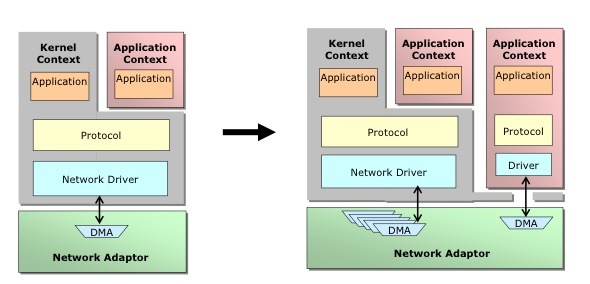
implementation side:
Konstantin will show why the simple idea underlying is not so simple to implement (with examples of "unsuccessful" attempts). There will be numbers and there will be details of how the Linux kernel is trying to achieve similar performance (including DPDK).
Participation is free. Register here .

Konstantin Ushakov - CEO OKTET Labs, Russia, St. Petersburg. More than 10 years working in OKTET Labs on projects with Solarflare (and Level5). Participates in the development and validation of the Onload stack and other products of the company.
He started as a junior developer, now he is a gene. At the same time, the director continues to take an active part in technical management, optimizing performance, porting the stack to new platforms / architectures (for example, Power) and maintaining the framework used to validate the Onload Socket API with respect to the Linux implementation.
implementation side:
- sharing resources between the core and the process;
- packet routing;
- polling mechanisms (poll, epoll, etc.);
- socket caching.
Konstantin will show why the simple idea underlying is not so simple to implement (with examples of "unsuccessful" attempts). There will be numbers and there will be details of how the Linux kernel is trying to achieve similar performance (including DPDK).
Participation is free. Register here .
About Speaker
Konstantin Ushakov - CEO OKTET Labs, Russia, St. Petersburg. More than 10 years working in OKTET Labs on projects with Solarflare (and Level5). Participates in the development and validation of the Onload stack and other products of the company.
He started as a junior developer, now he is a gene. At the same time, the director continues to take an active part in technical management, optimizing performance, porting the stack to new platforms / architectures (for example, Power) and maintaining the framework used to validate the Onload Socket API with respect to the Linux implementation.